
Peach hybrids represent a stunning blend of the best qualities of their parent crops, combining flavor, aroma, and tolerance to a variety of growing conditions. In recent years, these unusual fruits have won the hearts of gardeners and gourmets thanks to their unique properties and numerous benefits.
Popular hybrids
Today, there are many popular peach hybrids. Below are detailed descriptions, features, and characteristics. When choosing, it's important to consider the pros and cons of the varieties.
| Name | Frost resistance | Ripening period | Tree height |
|---|---|---|---|
| Sharafuga | up to -26°C | late August-early September | compact with a spreading crown |
| Nectarine | up to -20°C | 4 months | 3-7 m |
| Picerin | up to -30°C | end of July-beginning of August | 4-6 m |
| Mango nectarine | up to -25°C | 120 days | 4-6 m |
| Nectacotum | corresponds to diploid plums | 2-3 years after planting | growing quickly |
| Plum nectarine (Nectaprium) | adapts to various climatic conditions | first ten days of August | moderate growth |
| Apple nectarine | up to -20°C | mid-August - early September | up to 4 m |
| Fig peach | not specified | not specified | up to 5 m |
- ✓ Consider the climate zone of your region to select a hybrid with suitable frost resistance.
- ✓ Pay attention to the ripening time so that the fruits have time to ripen before the onset of cold weather.
- ✓ Consider the size of the mature tree when planning plantings on the site.
Sharafuga
This hybrid has three heat-loving "parents"—peach, apricot, and plum. The plant itself is frost-hardy and can grow in cooler conditions. It is successfully grown both in the south and in temperate climates.
Externally, the tree resembles a common plum tree, with the same leaves and thorns. The fruits are similar in shape and size to apricots, and the pit, like a peach's, is easily separated from the flesh and has a distinctive pattern.
Other distinctive features:
- The taste of the fruit depends on its degree of ripeness: unripe ones have a plum-like flavor, while ripe ones resemble apricots, with sweet or sour, juicy and pleasant flesh.
- The tree is compact with a spreading, medium-density crown. Annual shoot growth is 50-70 cm. The branches are thorned, and the leaves have a curling appearance, similar to that of a peach.
- The fruits are large (6-7 cm), shaped like apricots. The skin can be purple or orange, depending on the variety.
- The apricot aroma is barely perceptible.
- The fruits do not fall off and ripen in late August or early September. They have a versatile use: they are eaten fresh and used to make compotes, jams, and preserves.
- The fruits tolerate long-distance transportation well.
Nectarine
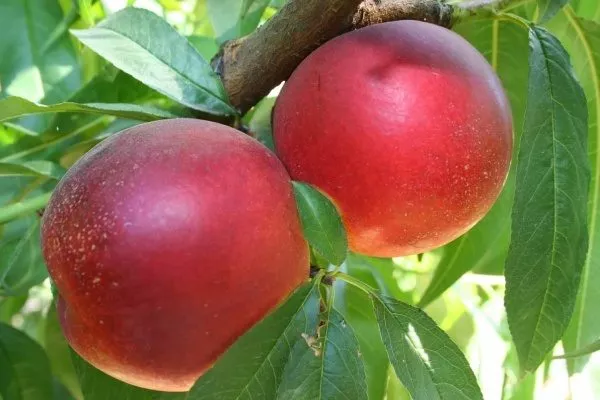
The nectarine is a subspecies of the common peach, distinguished by its smooth, glossy, fuzz-free skin. The name comes from the word "nectar," which aptly describes the sweet taste of its fruit.
Key characteristics of the culture:
- Trees 3-7 m high with crowns up to 4 m in diameter.
- Lanceolate, elongated leaves with a serrated edge.
- Spring blooms give the garden a gorgeous pink appearance.
- Fruits similar in shape to peaches, but with smooth skin, the color of which varies from light yellow to burgundy and cherry.
- The pulp is juicy and dense, and ripens in about 4 months.
- Early maturity: the first harvest is collected 3-4 years after planting the seedlings.
Picerin
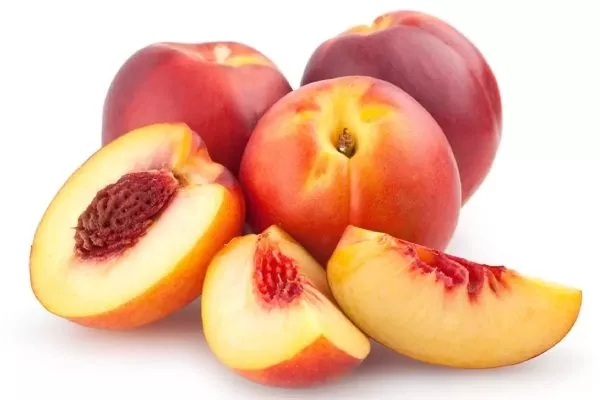
This is one of the most popular nectarine varieties, recognized for its excellent flavor and high yield. Its successful combination of ornamental and fruit-bearing qualities makes it popular among gardeners and farmers.
Description and specifications:
- The trees reach a height of 4-6 m. They have a dense, spreading crown, which can reach a diameter of up to 3-4 m.
- The leaves are lanceolate, elongated with a serrated edge, bright green in color.
- The fruits are large, round, and have smooth, shiny, fuzz-free skin. Their color ranges from light yellow to deep red, often with a blush.
- The pulp is juicy, dense, aromatic, yellow in color.
- The taste is sweet with a slight sourness, highly valued for its richness and balance.
- The fruits ripen in late July to early August. The ripening period lasts about four months.
- Characterized by high yields. The first harvest is carried out 3-4 years after planting. Maximum yield is reached at 7-10 years of age.
The Picerin nectarine is highly frost-resistant, withstanding temperatures down to -30°C. This makes it suitable for growing in a variety of climates, including regions with cold winters. Trees live and bear fruit for 20-25 years.
Mango nectarine
This unique nectar variety is renowned for its exotic aroma and mango-like flavor. It has gained popularity among gardeners and fruit lovers due to its exceptional characteristics and versatility.
Features and differences:
- The trees grow up to 4-6 m in height, have a medium-developed, spreading crown with a diameter of up to 3-4 m.
- The leaves are elongated, lanceolate, with a serrated edge, dark green in color.
- Flowering occurs in spring, the tree is decorated with bright pink flowers, which add decorative value.
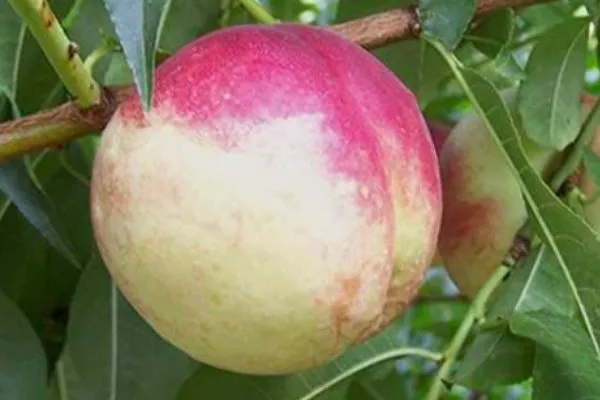
- The fruits are large, round, and have smooth, shiny, fuzz-free skin. The skin color ranges from bright yellow to deep orange, often with a red blush.
- The flesh is juicy, dense, with a distinct mango flavor. The aroma is intense and exotic.
- The fruits ripen in late July to early August. The ripening period is approximately 120 days.
- It has good frost resistance, withstanding temperatures down to -25°C. This makes it suitable for growing in a variety of climates, including regions with mild winters.
Nectacotum
It is a complex interspecific hybrid, obtained by crossing plums, apricots, and nectarines from the stone fruit family. It was created accidentally, through open pollination of an apricot, and is not the result of genetic engineering.
Specifications and description:
- Nectacotum grows and fruites quickly, and is highly resistant to diseases and pests. This allows it to be grown with minimal chemical treatments, resulting in an environmentally friendly product.
- The first harvests are obtained as early as the second or third year after planting, and sometimes fruits appear as early as the second year. Maximum marketability and flavor are achieved in the third year, when yields reach nominal levels.
- The trees bear fruit abundantly and are well pollinated. Frost resistance is comparable to that of diploid plums.
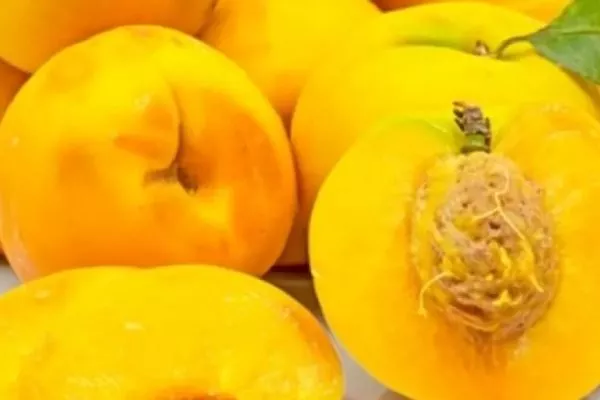
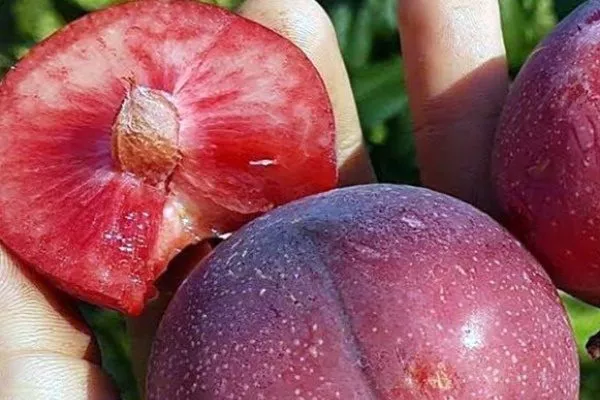
- The fruits are large, weighing 100-150 g, round-oval in shape, ruby-red in color with a bluish bloom and small white subcutaneous dots.
The fruits have a beautiful appearance and a unique, exotic flavor, combining notes of several fruit varieties. To best develop their flavor, the fruits are picked slightly unripe and left in the shade for a couple of days, after which the flavor and aroma will become more intense.
Plum nectarine (Nectaprium)
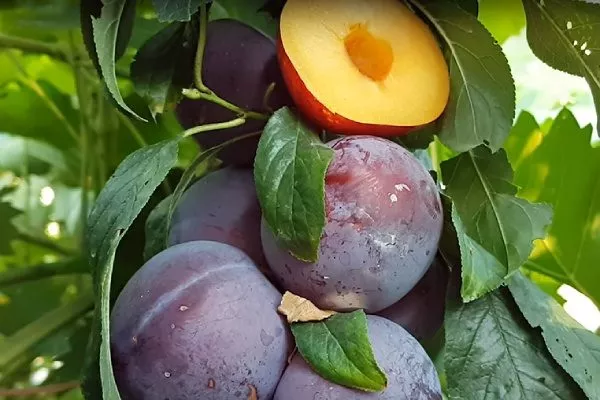
This unique fruit, a plum-nectarine hybrid, was recently bred in England. This exclusive fruit, combining the best flavors of its parents, offers an unforgettable, delightful, and unusual taste. The harvest ripens in the first ten days of August.
Description and specifications:
- The plants are moderately sized, vigorous, and compact, with large, dark green leaves and well-proportioned branches. They are more similar in appearance to peach trees, although the leaf structure is similar to that of common diploid plums.
- The fruits are large, weighing about 100 g, round in shape with a seam, slightly flattened at the top.
- The skin is smooth, shiny, strong and easily peeled off.
- The color is garnet-violet with scattered red and white subcutaneous dots, unevenly distributed over the surface, with a bluish pruinose coating.
- The pulp is creamy yellow with a greenish tint, medium density, very juicy, sweet and sour with a high sugar content.
- The taste is delicious, very memorable, reminiscent of a combination of nectarine and plum.
- The stone is semi-detached.
This variety is suitable for cultivation in all regions of Russia where gardening is possible. Nectaprium adapts well to a variety of climatic conditions.
Apple nectarine
A medium-sized tree, reaching a height of up to 4 m. It has a spreading crown and dark green leaves.
Fruit characteristics:
- Peel - pinkish tint, very smooth and glossy.
- Pulp – juicy, easily separated from the stone, delicate cream color, sometimes with a white tint.
- Form - rounded, sometimes slightly elongated.
- Weight - up to 120 g
Apple nectarines ripen in mid-August to early September. The fruits begin to reach maturity within 3-4 months after flowering. Trees begin bearing fruit in the second or third year after planting. On average, a mature tree yields 30-40 kg of fruit per season.
The crop is characterized by moderate frost resistance, withstanding temperatures down to -20°C. It demonstrates good resistance to the main diseases of stone fruit crops, including scab, powdery mildew, and clasterosporium.
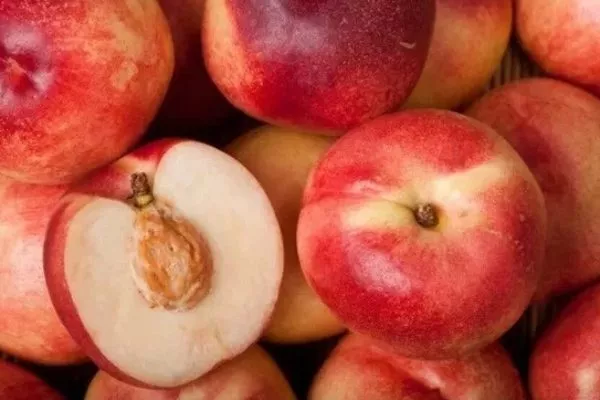
Fig peach
One of the most interesting and sought-after varieties of peach trees is the fig tree. They are distinguished by their unusually flattened fruit and excellent taste.
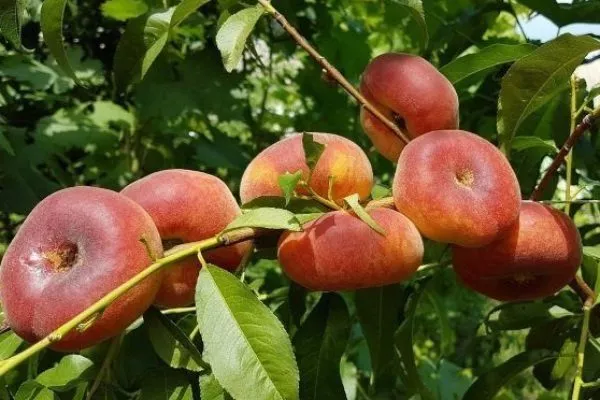
The fig peach is easily recognized by its distinctive shape. Unlike traditional varieties with round fruits, these have flattened fruits reminiscent of figs or turnips. Despite the similarity in shape, this species is not botanically related to the fig.
In some European countries, the fig peach is called a "donut" because of the round indentation in the center of the fruit that remains after the pit has been removed.
Brief botanical description:
- Tree - reaches up to 5 m in height, it has a spreading crown.
- Leaves - lanceolate, dark green above and greyish below.
- Flowers – pale pink, reminiscent of rose hips.
- Fruits – A flat peach with a less hairy skin than regular peaches. Its color ranges from yellow to orange with a red blush. It weighs between 100 and 200 grams, is up to 7 cm in diameter, and has a small pit.
Fruit trees are actively grown in Western China, Central Asia, Transcaucasia, the eastern regions of Tajikistan and Turkmenistan, and other Asian republics of the former USSR.
The fig peach has a unique chemical composition, making it an excellent preventative for various diseases. This low-calorie fruit is beneficial not only for its composition, but even its aroma can help combat depression.
Peculiarities of crop crossing
Crossbreeding various crops, including peaches, is an important tool in horticulture. This process allows for the creation of new varieties with improved characteristics, such as disease resistance, yield, or fruit flavor.
Interesting facts:
- One of the main goals is to create varieties resistant to diseases and pests. For example, crossbreeding with a wild peach variety could result in new varieties with increased resistance to fungal diseases.
- Crossbreeding helps improve the taste and aroma of the fruit, sweetness, acidity or texture of the pulp.
- By crossing, varieties are created that are better adapted to different climatic conditions, for example, cold winters or dry summers.
- Crossbreeding results in more productive varieties that yield greater yields.
There are such methods:
- Genetic crossing. This is a traditional method in which pollen from one plant (the father) is transferred to the stigma of another plant (the mother). This process is done manually or naturally with the help of insects.
- Mutagenesis. In some cases, mutagens are used to create new varieties. This method involves exposing plants to chemical or physical mutagens to induce mutations and select for beneficial traits.
- Cloning and tissue culture. This method allows the creation of new species based on the cells or tissues of existing plants. It is used to preserve or enhance desired traits in future generations.
Is it possible to propagate a hybrid on your plot?
Several methods are used for this purpose, each with its own characteristics and requirements. Here are the main methods for propagating peach hybrids:
- Seeds. This method doesn't always produce plants identical to the parent variety. First, collect seeds from ripe fruits and stratify them for 2-3 months. In the spring, plant the seeds in soil at a depth of 5 cm. Ensure regular watering and weeding.
- Cuttings. Take 20-30 cm long cuttings with 2-3 buds in early spring or late fall. Place them in water or damp sand until roots appear. Plant the cuttings in soil once roots appear.
- Graft. Select a strong, healthy rootstock, such as plum or cherry plum. Take cuttings from a hybrid peach. Use a copulation or cultural grafting method (e.g., cleft or bark grafting). Wrap the graft site with tape or plastic film and monitor its condition.
- Layers. In spring, bend the lower branches down to the ground and bury them. Where the branch will touch the ground, make cuts in the bark and treat with rooting stimulants. After rooting (usually in the fall or the following spring), separate the new plant from the mother plant and replant.
Propagating a peach hybrid requires attention and care, but with the right approach, you can grow healthy and productive plants.
Reviews
Peach hybrids open up new horizons for gardeners, offering unique and delicious fruits that thrive in a wide range of climates. They not only add variety to your garden but also provide delicious and healthy fruits for the whole family. Their resistance to disease and frost makes them an excellent choice for those seeking minimal maintenance.