
The Donetsk Yellow Peach is a cultivated plant that is extremely popular among fruit lovers due to its incomparable juiciness and unique flavor. This variety boasts a number of unique characteristics, making it a true treasure for gardeners and those who simply appreciate freshness.
History of variety selection
The development of the unique Donetsk Yellow variety dates back to 1960, and was developed by the distinguished agronomist Lilia Ivanovna Taranenko, who worked at the Donetsk Horticultural Research Station.
To develop the variety, Taranenko used seeds brought from Gelendzhik, a city in the southern Krasnodar Krai, Russia. This variety has been propagated at the research station for many years, and its seedlings are widely used for planting in the Donetsk, Luhansk, and Rostov regions of Russia, among other places. Other popular peach varieties can be found here. here.
The appearance of the tree
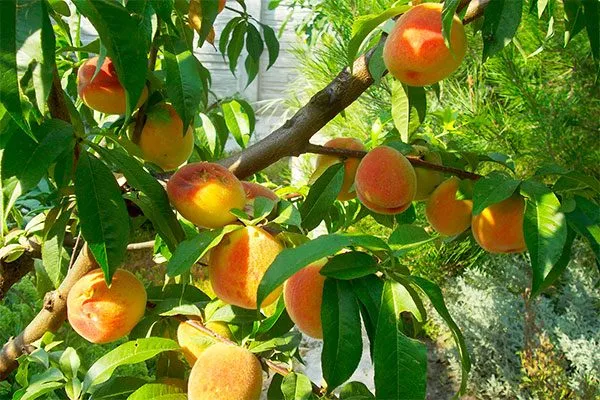
The Donetsk Yellow Peach is a tree that is characterized by its rapid growth, which usually reaches a height of 3-4 m, but can also grow higher than the specified limits.
Other varietal characteristics:
- The crown has a spreading appearance and a rounded shape, it is filled with many branches and decorated with a dense mass of dark green, narrow-oval leaves with a shiny surface.
- The leaf blades are large and evenly distributed on the shoots, which makes the tree look particularly slender and harmonious.
- The flowering crown is adorned with an abundance of large flowers of pink-raspberry shades, which spread a sweet aroma around themselves and begin to bloom in the middle of the season.
Fruits and their taste characteristics
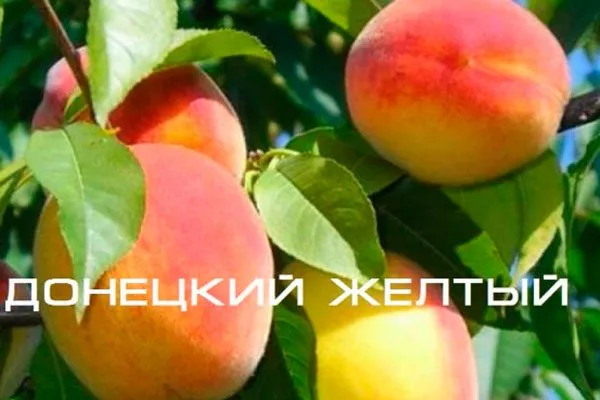
Donetsk Yellow belongs to the class of fruits with large sizes, reaching a weight of 150 to 250 g. These fruits are distinguished by their uniform appearance and are suitable for sale.
Other differences:
- Their shape resembles a round sphere with a slight compression on the sides.
- The fruits are covered with a smooth, elastic, velvety skin with a light fluff, which is difficult to separate from the pulp.
- The ventral suture is visible.
- During the period of technical maturity, the fruits acquire a golden-green tone, and ripe specimens become bright yellow, while the sides exposed to sunlight are decorated with a carmine color.
- Subcutaneous points are almost never encountered.
- The inside of the fruit is bright yellow-orange pulp, which has a dense, fleshy, slightly fibrous structure and increased juiciness.
- The taste is a perfect combination of rich sweetness with barely noticeable acidity.
- The aroma is distinguished by its brightness and sweet dessert character.
- The stone is large and difficult to separate from the pulp.
Useful properties and methods of use
Peaches are a popular ingredient in the culinary industry, used to make sweets, jams, juices, and preserves. This variety is admired by gardeners and fruit lovers for its excellent taste and nutritional properties.
In culinary art, the peach offers wide possibilities for preparing a variety of dishes – from salads to desserts, as well as for making drinks.
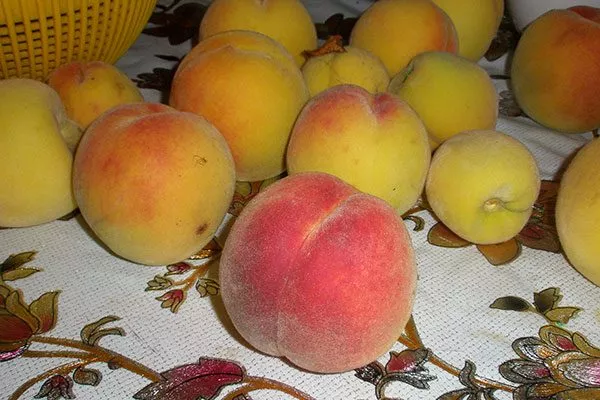
The fruits harvested from the trees can be eaten fresh, used to make compotes, added to baked goods, and the extra harvest is used to make jam, juices, preserves in pieces, and frozen.
Benefit:
- Strengthening the body's defenses. The Donetsk yellow peach is rich in vitamin C, which is an effective antioxidant and helps strengthen the immune system. Regularly including it in your diet can support the body's fight against various infections and colds.
- Improving digestion. The pulp contains dietary fiber, which promotes regular bowel movements and prevents constipation. It also has a mild laxative effect, helping to cleanse the body of waste and toxins.
- Ensuring healthy skin. Thanks to its abundance of vitamin E, Donetsk yellow peach helps maintain healthy and youthful skin. Vitamin E is a powerful antioxidant that protects the epidermis from loss of elasticity and reduces the signs of aging caused by free radical activity.
- Preventing heart problems. It contains potassium and magnesium, which play a key role in maintaining the cardiovascular system. Potassium helps lower blood pressure, while magnesium protects against heart disease.
In landscape gardening, the Donetsk peach is an excellent choice for creating pathways, beautiful compositions, and landscaping. Its graceful pink flowers create a harmonious contrast with the green foliage, lending a special coziness and charm to the garden.
Self-fertility and pollinators
The Donetsk Yellow peach is self-pollinating, resulting in a fertility rate of up to 60-65%. This means that pollination does not require planting trees with similar flowering times close together. However, to achieve 100% productivity, it is recommended to do so.
Ripening period
You can enjoy sweet fruit as early as the third year after planting, making this peach variety one of the fastest-growing. The tree produces a harvest every year, without becoming cyclical.
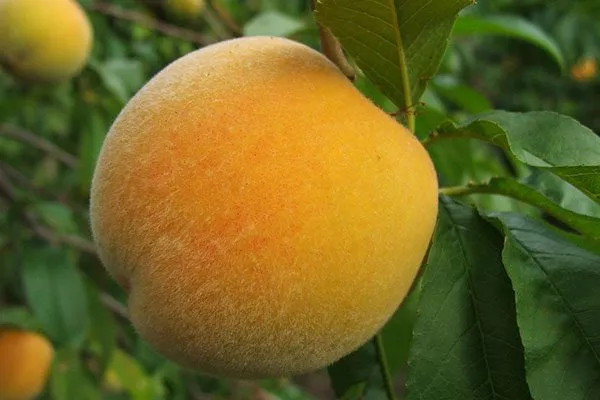
This variety is late-ripening, with the first ripe fruits appearing between August 15th and 17th. The fruit ripens in stages, extending the harvesting period.
Productivity
The production quality of this peach variety is impressive – a single tree can yield 50 to 60 kg of delicious fruit per season. Peaches are easy to transport, but it's important to remember that less-than-ripe fruits are more reliable for shipping.
The shelf life of ripe peaches is short, but unripe fruits can retain their quality in a cool place for up to 30-45 days.
Drought resistance, frost resistance
The species is not adapted to dry conditions and requires frequent watering. However, the Donetsk Yellow variety is distinguished by its excellent frost resistance, as confirmed by experimental and research data:
- During the cold winter of 1993-1994, its frost resistance was rated at 1.7 points, which is significantly higher than that of other varieties that froze much more severely.
- A study of trees during the particularly cold winter of 1986-1987 revealed that frost damage reached the snowpack level. However, thanks to their resilience, all damage was repaired by the following summer, and tree growth continued without interruption.
- Old trees, reaching 20-30 years of age, in nursery gardens are evidence of their frost resistance.
- The flower buds of this variety are less frost-resistant than those of the Kyiv Ranniy variety. However, compared to other large-fruited tree varieties, their frost resistance is higher. This is confirmed by the fact that during the cold spring and summer of 1992, the frost penetration of the tree's tops reached 2.1 points.
Landing
Planting the Donetsk Yellow peach variety requires special attention. Its needs must be carefully considered to achieve high yields.
Growing conditions
Important requirements for abundant fruiting include the following:
- Temperature conditions. This peach variety especially appreciates warm climates, with average daytime temperatures ranging from 20 to 30°C. In winter, when the plant is dormant, it requires cooler temperatures ranging from 5 to 10°C.
- Illuminance. Donetsk Yellow prefers bright sunlight. When choosing a planting site, consider its openness and sufficient sunlight throughout the day. Only in these conditions will the fruits be sweet and develop their characteristic color.
- Soil structure. This peach variety prefers soils with a high organic content and a pH of 6 to 6.8, which ensures good aeration. Regular soil monitoring and cultivation are essential to maintain soil fertility.
Landing time
When choosing the optimal time and location for planting the Donetsk Yellow peach, consider its moderate frost resistance down to -20°C. This makes it particularly suitable for areas with moderate winter conditions.
The landing dates are determined as follows:
- In areas with cool climates, it is preferable to plant peach trees in the spring.
- In warmer climates, planting can be done in the fall, when the temperature stabilizes at +10-12°C and sap flow in the plants stops.
Buying seedlings
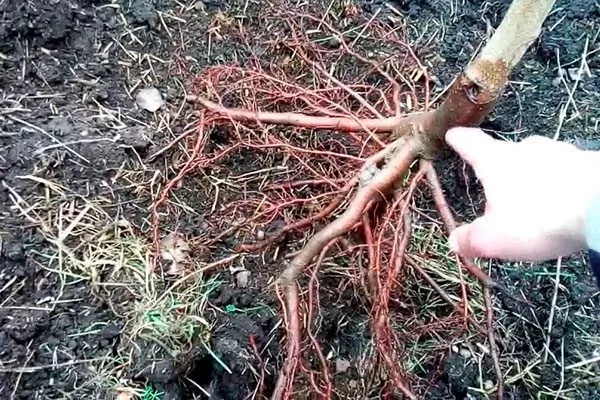
In order for the plant to take root in a new location, the seedlings must be healthy and strong:
- The presence of an overdried or rotten root system is not allowed.
- The bark should be green.
- The grafting site must be smooth and free from damage.
- The most favorable age for a seedling is one year.
Preparing the landing site
The planting method depends on the time of year. For spring planting, preparatory work begins in the fall:
- Dig a hole 50-60 cm deep and 70-75 cm wide.
- Place a support in the center of the hole.
- Mix the extracted soil with 8-10 kg of compost, humus or rotted manure, add 250-350 g of wood ash, 50-55 g of potassium chloride and Superphosphate.
- Pour the entire mixture into a mound in the hole.
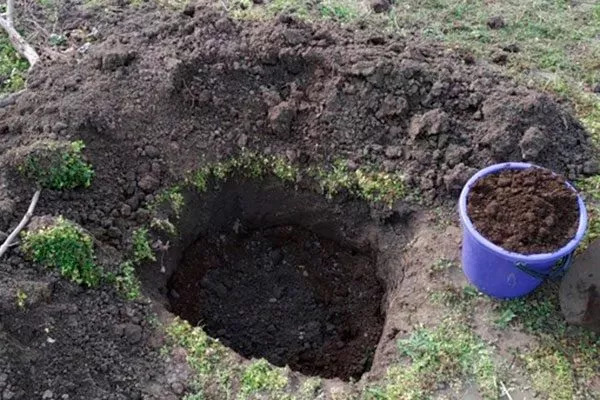
If the soil is sufficiently fertile, organic fertilizers can be omitted. The same applies to fall plantings: the hole should be dug 2-3 weeks before the intended date and fertilized.
Planting scheme and process
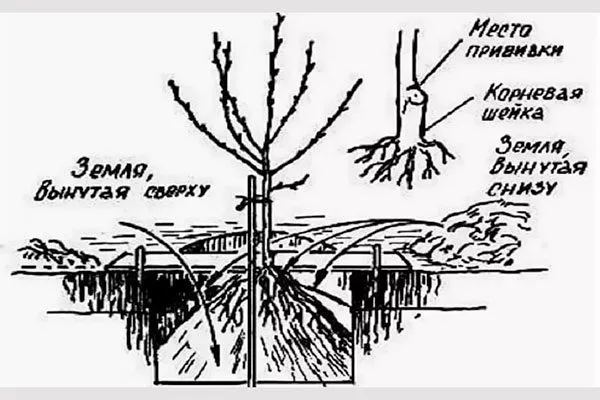
Planting peach seedlings isn't complicated. The procedure is as follows:
- Place the seedling on a small mound formed from soil and fertilizer, carefully spreading the roots around the circumference.
- Fill the hole with soil, making sure that the grafting site remains on the surface.
- Compact the soil, leaving a small trench around the hole.
- Pour in 30-35 liters of water.
- Once the liquid has been completely absorbed, secure the young tree to the stake.
- Cover the area around the tree with a 10-15 cm layer of manure, but the fertilizer should not come into contact with the plant itself.
Tips for caring for the crop
The Donetsk Yellow peach isn't a low-maintenance plant. It requires careful maintenance and proper winter preparation.
Watering mode
When choosing a scheme, the age of the plant and the degree of soil moisture are taken into account:
- During the first month after planting, young trees should be watered every three days with 10-11 liters of water. In dry weather, increase the frequency to once every two days, increasing the volume to 20 liters.
- Later, when the peaches reach maturity, they will require up to 50-60 liters of water, but if the winter and spring were quite wet, watering should not be done immediately. If moisture is insufficient, begin watering in May, no more than twice a month.
- The last watering should be done a month before harvesting.
- Before wintering, moisture is recharged, with the amount of water increasing to 100 liters.
Top dressing
Every two to three years, peach trees are watered with manure mixtures or compost. At the same time, various fertilizers are applied depending on the season:
- In the springBefore the trees begin to leaf out, young peach trees are recommended to be sprayed with 7% urea. Once they begin to blossom, urea and ammonium nitrate can be applied to the roots.
- In summer For Donetsk yellow, spraying with the following components is used:
- urea;
- aqueous extract of Superphosphate;
- potassium sulfate;
- ammonium sulfate;
- brown.
- In the pre-winter time Superphosphate and potassium chloride are added to the soil. Every two to three years, compost or humus is added in the fall, and green manure crops such as rapeseed, oilseed radish, and other plants are planted nearby.
Features of pruning
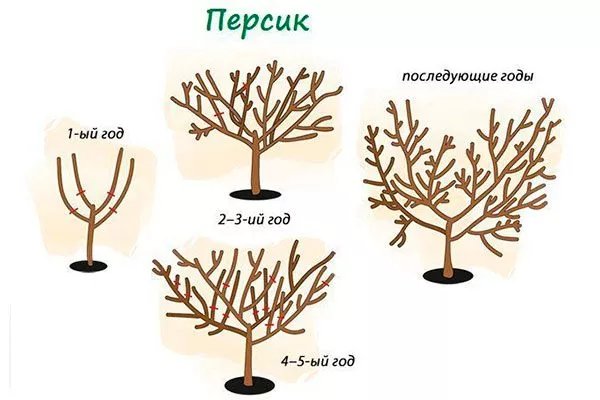
To maintain an optimal crown shape, periodic thinning is necessary. This is achieved through two main types of pruning:
- sanitary: which includes removing old, diseased and excess branches, as well as frostbitten shoots in the spring;
- formative: carried out during the first four years of a tree's life to give the crown a bowl-shaped form.
Specifics of wintering
After cultivating the soil, it should be evenly moistened, dug over, and fertilized. A layer of peat or compost should then be applied to the surface, with a thickness of 10 to 15 cm, depending on the expected frosts and the climate.
Peach trees are protected from frost by installing a frame made of cardboard or other materials (such as a sack or spruce branches) secured to special supports. In mild winters, simply covering the trunks with soil to a height of 30-50 cm is sufficient.
Resistance to diseases and pests
The most common problems are leaf curl and powdery mildew. If these diseases are detected, the affected parts of the plant should be removed. To prevent powdery mildew, treat young trees with Topsin or Topaz after flowering. Controlling leaf curl requires the use of Bordeaux mixture, which is applied in the fall. More information on peach diseases and pests can be found here. here.
Among peach pests, aphids are particularly dangerous. If the plants are heavily infested, spray them with Malathion no later than a couple of weeks before harvest. To control pests, including aphids, insecticides are used after bud formation. After flowering, repeat the treatment, this time in combination with antifungal agents.
Harvesting and storage
If you plan to consume Donetsk Yellow peaches fresh, they should be picked when they are fully ripe. For storage or transportation, it's best to pick them when they are only partially ripe.
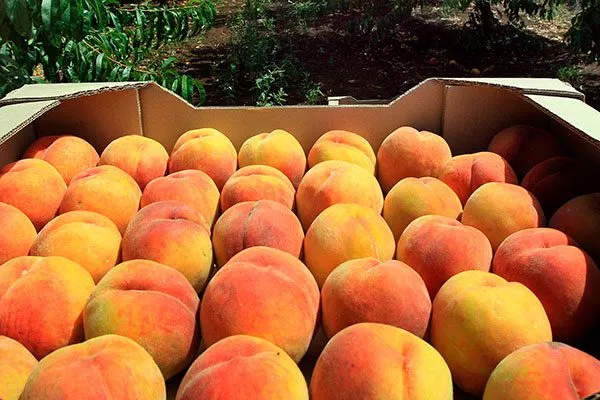
Very ripe fruits don't last long. To extend their shelf life to six weeks, choose healthy, undamaged peaches. Wrap each one carefully in newspaper, layer them in crates, and store in a room with high humidity and a temperature around 0°C.
How does it reproduce?
To get new peach trees, you can use two methods:
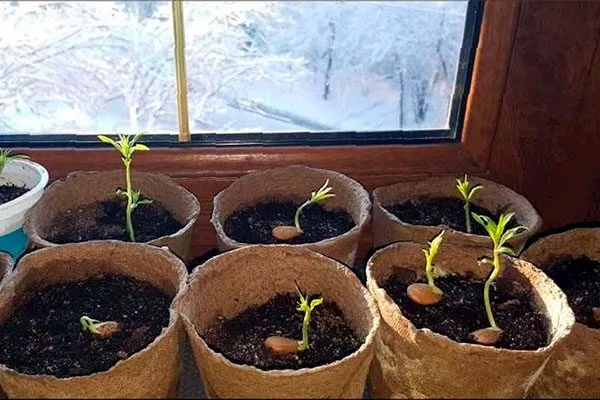
- Seed propagation. This is a simple and popular method that requires little skill or effort. However, there is one problem: a tree grown from seed may not inherit all the qualities of the parent variety. However, such a seedling is usually more resistant to various weather conditions and diseases.

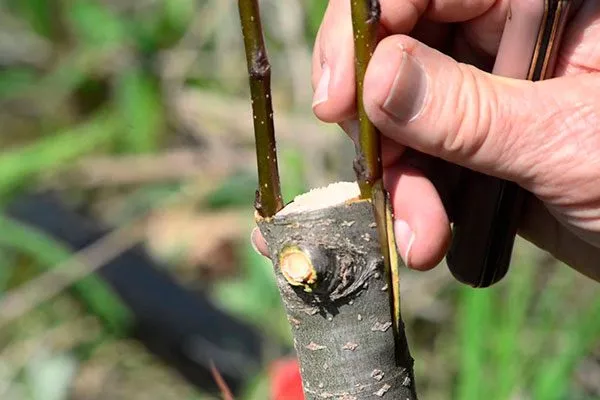
- Vegetative propagation. The method involves grafting a cutting. Healthy self-fertile apricot seedlings or winter-hardy plum varieties can be used as rootstock. Cuttings for grafting are collected in early June. This technique relies on the plants' ability to recover.
Positive and negative qualities
This peach variety has a number of attractive characteristics:
Furthermore, this variety has a unique characteristic: its fruits do not reach maturity simultaneously. Each peach contains both fully ripe and still-unripe flesh.
Reviews
The Donetsk Yellow Peach is a variety with good frost resistance and the ability to quickly recover from light frost damage. This peach is known for its large, tasty fruits, which are achieved through careful care. Furthermore, no special pollinator placement is required for a successful harvest, making it suitable for growing in small garden plots.