
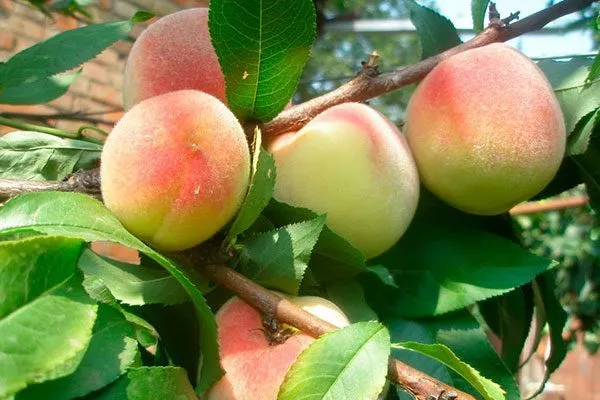
The Donetsk peach has been renowned for over 50 years and is characterized by its adaptability to almost all climate zones and excellent fruit production. It is divided into two subvarieties: yellow and white. A key feature is that it must not be allowed to reach full biological maturity on the tree, otherwise the skin will begin to deteriorate.
History of origin
The Donetsk variety was bred in 1960 by L. I. Taranenko, an employee of the Donetsk branch of the Institute of Horticulture. Seeds brought from the Krasnodar region were used in the process.
Donetsk Peach – Varieties
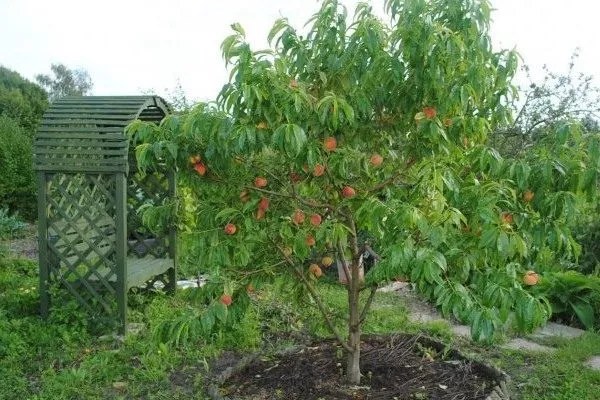
These two cultivars have similar characteristics. They boast good frost resistance and a medium ripening period, producing a bountiful harvest of fruit. The Donetskogo cultivar trees are characterized by rapid growth and vigorous development. They are large, leafy, and prolific.
Their crown is dense and rounded. The leaves are large, elongated, and a rich dark green. The trees bear majestic flowers with pink petals, which add additional decorative appeal to the plant.
Yellow
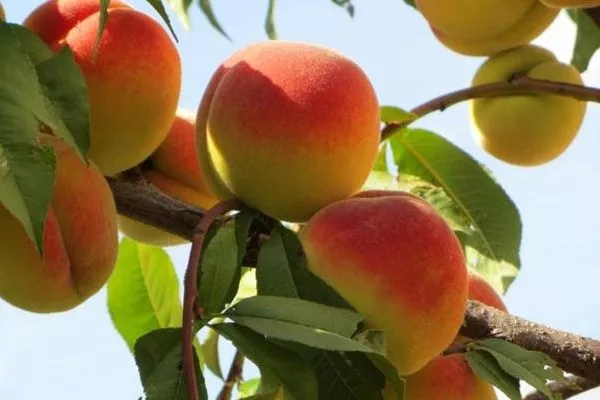
The yellow variety is characterized by large, round fruits. Each fruit weighs between 150 and 220 grams, sometimes more. Other characteristics:
- slight pubescence of the surface;
- dense, juicy and yellow-orange pulp;
- sweet taste with barely noticeable hints of sourness;
- tempting aroma;
- a large stone that is difficult to separate from the soft part of the fruit;
- Excellent transportability due to the density of the skin.
White
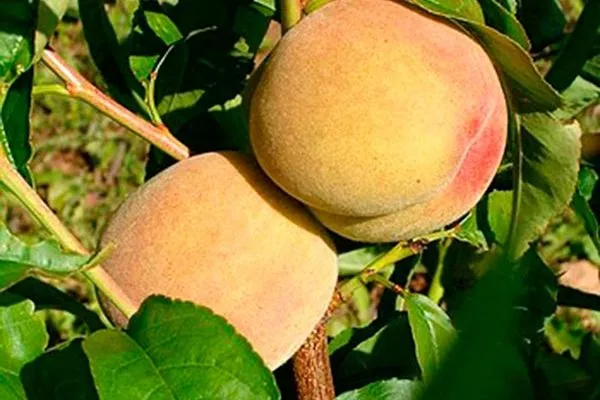
The white subvariety of Donetsk peach is characterized by average fruit parameters – their weight ranges from only 80 to 110 g, but under the most optimal growing conditions they can reach up to 130 g.
Peculiarities:
- slight pubescence of the skin;
- snow-white color of juicy and not very dense pulp;
- the shape is mostly round-oblong with a mandatory slight flattening;
- almost invisible abdominal suture;
- sweet and sour taste and powerful aroma;
- medium-sized seeds that do not separate;
- poor transportability.
General characteristics
Both varieties of Donetsk peach have the following characteristic qualities and properties:
- The first harvest from peach trees occurs in the third year after planting.
- This variety belongs to the mid-late category and regularly bears fruit at the end of August.
- Each tree can produce 50 to 60 kg of peaches.
- Geographical cultivation zone: This variety is recommended for cultivation in the Central and Black Earth zones. However, it is also successfully grown throughout the country.
- These are self-pollinating peach varieties, meaning they don't require other trees with similar bloom times nearby. However, to increase yield, cross-pollination is advisable.
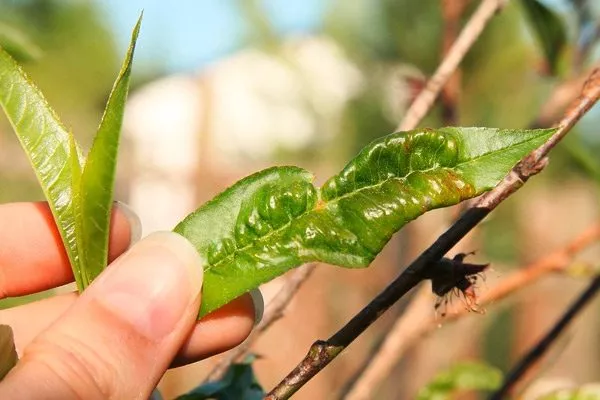
- Due to the long history of this peach variety, it is inferior to more recent breedings in terms of disease resistance. Trees are susceptible to diseases such as leaf curl and powdery mildew.
- The variety is distinguished by its cold and winter resistance, and the ability to quickly restore shoots after frost.
- During the growing season it is sensitive to high temperatures.
- The soil moisture requirement is average; black soil is preferred.
- The soil should be medium loamy, with good moisture and air exchange properties, and have a neutral or slightly alkaline reaction.
Growing and care
This variety is cultivated exclusively in areas with moderate winters, where temperatures do not drop below -20 degrees Celsius. The timing of planting depends on local climate conditions: in cooler regions, spring is preferable, while in the south, autumn planting is possible after the sap flow has completed, when average temperatures are around 10 degrees Celsius.
Please note the varietal rules:
- Place. Peach trees should not be planted on land previously used for alfalfa, or in areas previously occupied by melons or nightshades. It's best to choose a site that receives adequate sunlight and is not shaded.
- Selection of seedlings. The roots must be fresh, not dried out, the bark must be green in color, and the grafting site must be undamaged and smooth.
- Preparation. This is done in the fall, even if the seedling is planned for replanting in the spring. For this, a hole is dug approximately 70-75 cm in diameter and 50-55 cm deep. A support is placed in the center of the hole, to which the seedling will be tied during the first few years.
The soil removed from the hole is mixed with 8-12 kg of compost, and wood ash, potassium chloride and superphosphate are added to the mixture in a ratio of 250/40/40 g. The resulting substrate is formed into a pile and poured into the center of the hole. - Landing. After a couple of weeks, work can begin. A young tree is planted deep in the prepared area, with its roots spread out. Soil is filled in so that the grafting site extends above the edge of the dug hole.
The surface around the trunk is compacted, and a ditch for irrigation is dug around it. 20-25 liters of water are poured into it. After the water has completely absorbed, the trunk is secured to a support and the surrounding area is covered with mulch.
The Donetsk yellow and white peach isn't an easy-to-grow crop. It requires careful attention.
- Irrigation should be adjusted according to the tree's age and soil dryness. During the first month after planting, seedlings are watered every 3-4 days, with 9-12 liters of water. In dry weather, increase the frequency to every other day, increasing the volume to 20 liters.
Mature peaches require up to 45-50 liters of water, but if the spring and winter were rainy, watering should be postponed until May and done no more than 1-2 times per month. The last watering should be done one month before harvest. - Every 2-3 years, peach trees are enriched with compost or other organic matter. Seasonal fertilizers:
- The first feeding occurs in the spring. During this period, a urea solution or a combination of urea and ammonium nitrate is used after buds appear.
- In summer, when the fruits are developing and ripening, it is recommended to use a mixture including urea, water extraction of superphosphate, potassium sulfate, ammonium sulfate and borax.
- During the preparatory period before the winter months, 40-50 g of superphosphate and 50-60 g of potassium chloride are added per 1 square meter of soil.
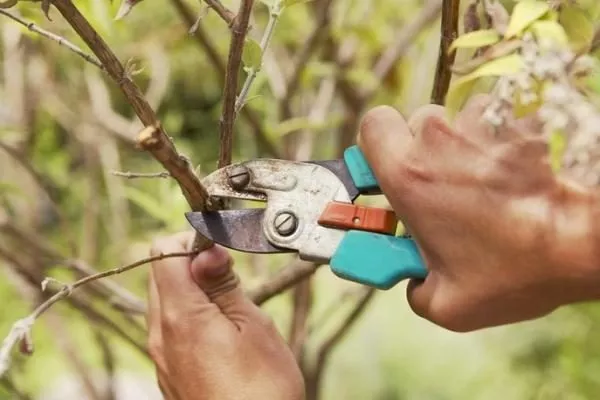
- Pruning of peach trees is carried out according to two main principles:
- Cleaning pruning – to remove old, diseased or cold-damaged branches.
- Formative pruning is performed after buds appear to create a cup-shaped crown. This process is necessary during the first four years of the tree's life.
Reproduction
Peaches can be propagated by sowing seeds, grafting, and growing cuttings. However, outside of a gardening facility, it's difficult for amateurs to create optimal conditions for rooting cuttings. Therefore, growing peaches from own-root cuttings at home is not recommended.
Features of the most optimal techniques:
- Sowing seeds presents certain challenges: a plant grown from a seed may not inherit all the qualities of the parent tree. Finding high-quality seed is also challenging: regular stores and supermarkets sell peaches whose seeds are difficult to grow into healthy plants.
Even at markets, fruits often don't meet seed quality standards. It's best to obtain seeds from owners of healthy peach trees suitable for your region. - Peach grafting is not without its drawbacks. Firstly, finding a suitable rootstock can be challenging, and if you want to grow it yourself, it will take at least a year. Secondly, it's important to ensure the scion and rootstock tissues are compatible, otherwise they won't bond.
Thirdly, you need to strictly follow the instructions, since any minor mistake can lead to failure in propagating peach using this method.
Specifics of wintering
After watering, digging, and fertilizing the soil, cover it with a layer of peat or humus, which should be 10 to 15 cm deep. Protect the peach seedlings from the cold with a frame made of cardboard or similar material, secured to special stakes. In mild winters, covering the trunk with soil to a depth of 45-55 cm is sufficient.
Peach diseases and pests
Peach bushes commonly encounter problems such as leaf curl and powdery mildew. In these cases, the affected parts of the bush must be removed. To prevent powdery mildew, it is recommended to treat the seedlings with products such as Topsin or Topaz after flowering. Control of leaf curl requires the use of Bordeaux mixture, which is applied in the fall.
Among peach pests, aphids are particularly dangerous. If significant damage occurs, spray the bush with specialized pesticides, such as Malathion, no later than a couple of weeks before harvest. To protect against aphids and other pests, insecticides are applied after the buds swell. After flowering, repeat the treatment, this time adding antifungal agents.
Harvesting and storage
When choosing peaches for long-term storage, choose unripe but undamaged peaches. They will retain their flavor for one and a half to two months. To preserve them, carefully wrap them in paper or newspaper, place them in boxes, and store them in a room with moderate humidity and a temperature of around 0 degrees Celsius.
Advantages and disadvantages
Donetsk peaches (white and yellow) are a favorite among gardeners and consumers; these varieties are used for large-scale cultivation. This is because they possess a number of positive qualities:
Despite the numerous advantages, there are also certain disadvantages that can affect the quality of the harvest:
Reviews
The Donetsk peach consists of two subvarieties—white and yellow—so gardeners can choose the most suitable and preferred option—with large or medium-sized fruits, more or less sweet, etc. This variety is considered universal in use and easily adapts to various growing conditions, but requires regular watering and harvesting at technical ripeness.