
Black Velvet is an exclusive variety of apricot that captivates with its unique fruit color. It is distinguished by its increased frost resistance, making it suitable for cultivation in a variety of climates. The tree quickly acclimates to new areas, produces abundant harvests, and requires little maintenance.
Origin of the variety
Black Velvet, although named after apricot, is actually a hybrid. It was created by crossing the American Black apricot tree with the cherry plum.
The slow growth in spring and late flowering, which it inherited from the cherry plum, ensure stable fruiting, as this protects the trunks from spring frosts.
This variety was discovered by G. V. Eremin and A. V. Isachkin. They worked at the N. I. Vavilov All-Russian Research Institute of Crops and Plant Breeding (VNIIR) in Crimea, located in Russia's Krasnodar Krai. They developed this apricot hybrid in 1994. In 2005, Black Velvet was registered in the State Register.
Description of the plant
The photographs and description of the Black Velvet apricot variety clearly demonstrate why it is often referred to as apricot-cherry plum by amateur gardeners.
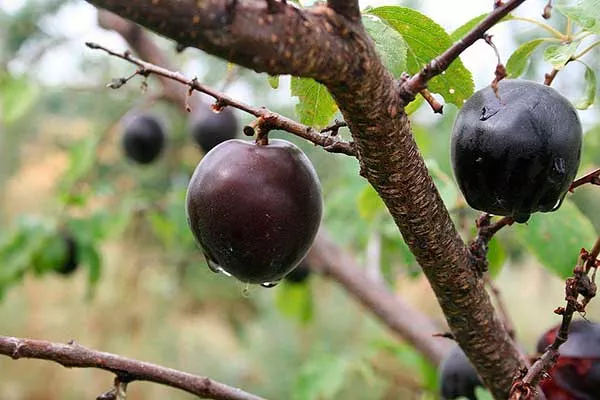
This variety is characterized by its moderate size (the height does not exceed 370-400 cm), has a roundish crown with a slight flattening and medium density.
The leaves of the Black Velvet apricot are rich green, medium-sized, and oblong with pointed tips. The flower heads are large and come in white or slightly pink hues.
Fruits, their taste and purpose
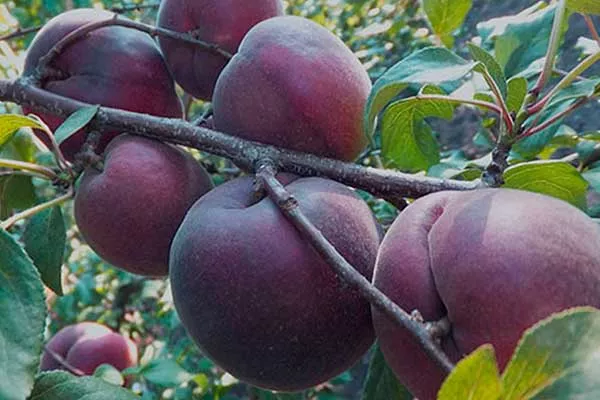
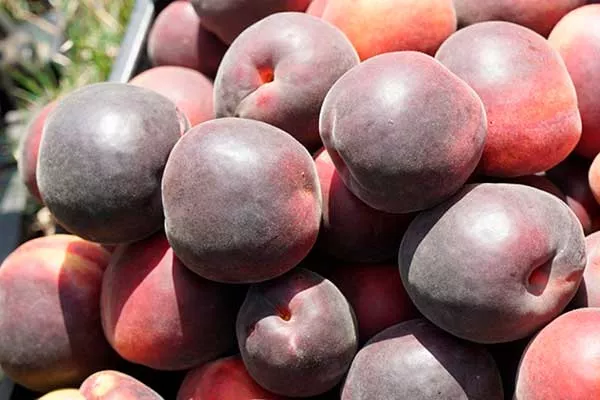
The fruit is smaller than regular apricots. The average weight of such a fruit ranges from 25 to 35 grams, its shape resembles an oval, and a characteristic sharp point is noticeable at the base, near the stalk.
Other varietal characteristics:
- The fruit's skin is medium-thick and somewhat pubescent. When young, it's green, but with age, it changes to a rich brown or dark purple.
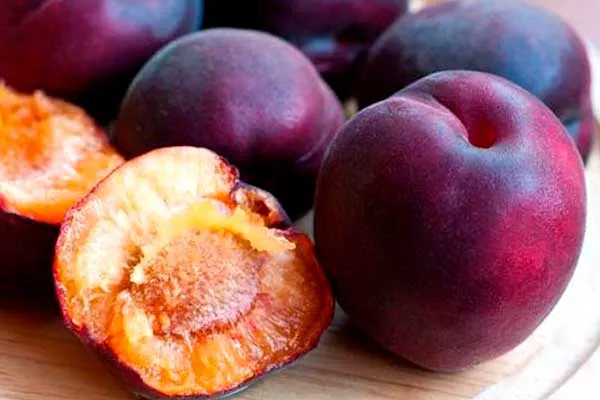
- One of the Black Velvet's distinctive features is its unique two-toned flesh. Near the pit, it's bright yellow, while closer to the skin, it takes on a pinkish tint.
- The taste of these apricots is distinguished by a pleasant sweetness with a slight sourness and a slightly tart aftertaste, as well as a characteristic apricot aroma.
- The stone is small and can be separated from the dense, juicy and slightly structurally fibrous pulp without much effort.
Varietal characteristics
This hybrid is ideal for cultivation in the North Caucasus, but it can also grow in the central regions of the country. Please note that in areas with cool and variable climates, it is more practical to grow this apricot variety without a standard or as a bush.
Cold and drought resistance indicators
Black Velvet has excellent drought and winter hardiness, rivaling cherry plum varieties renowned for their similar endurance. The flowers of this black apricot can even withstand severe spring frosts.
Black Velvet's tolerance to summer drought is somewhat lower than that of other apricots. To achieve a stable and consistent harvest from this variety, warm, sunny summers with minimal wind and frequent watering are optimal.
Pollination, flowering and ripening time
Black velvet lily is a self-pollinating species. To increase productivity, experts recommend creating a companion garden around this tree, including plants that will bloom at the same time. These include:
- regular apricot;
- Russian or Chinese plum;
- blackthorn;
- cherry plum.
Black velvet apricots bloom later than many other varieties. Fruit production occurs in late July in southern regions and early August in central Russia.
Productivity, fruiting
Black velvet is renowned for its moderate early maturity. The time between planting a grafted tree and its first harvest is approximately 3-4 years.
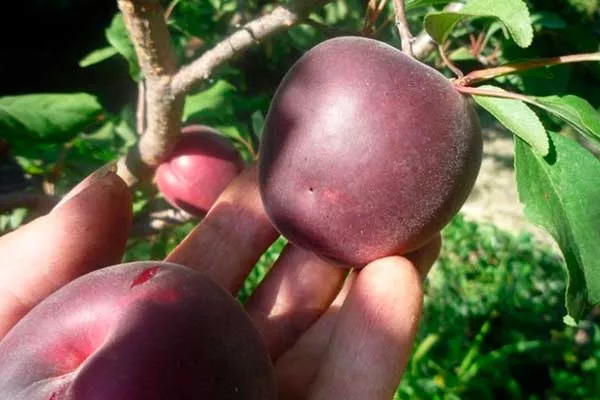
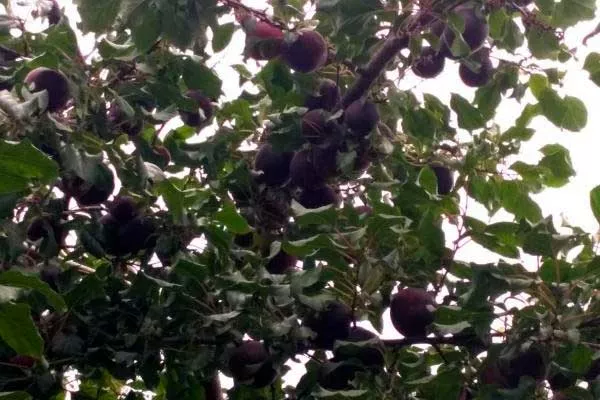
This variety is renowned for its productivity: a single tree can yield up to 50-60 kg of berries over the course of a season. Black Velvet bears fruit reliably, providing a harvest almost every year.
Black Velvet fruits are distinguished by their excellent transportability and long-term storage. Slightly unripe berries, properly stored in boxes in two or three layers in a well-ventilated area, can retain their quality for three to five months.
Scope of application of fruits
The fruit exudes a unique flavor and aroma that captivate lovers of the exotic. But its benefits go beyond taste: Black Velvet apricots offer a wide range of uses. This fruit is ideal for:
- canning in the form of compotes;
- production of jam, jellies, as well as for the preparation of marmalade or apricot urbech;
- adding to recipes with baked goods as a filling.
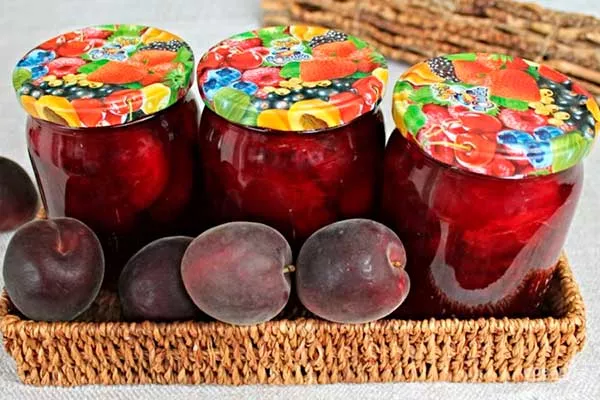
In addition, apricots are often consumed freshly picked, as they are rich in nutrients that help maintain a healthy nervous system and improve memory.
Disease/pest resistance
The Black Velvet apricot has good disease resistance, but without regular preventative measures it may be susceptible to the following diseases:
- clusterosporosis;
- moniliosis;
- Cytosporosis.
They are often associated with excessive soil moisture near the roots and a lack of adequate preventative measures. At the same time, insect pests of apricots include the shy leaf roller, the eye midge, and the fruit looper.
Landing features
This variety is becoming increasingly popular among those looking to decorate their property with unusual fruit trees. Each of these exotic crops has its own growing requirements, and the Black Velvet apricot is no exception.
Recommended timeframes
It's important to remember that apricots prefer a warm climate, although the Black Velvet variety can also grow in Russia's cooler climates.
Spring planting of apricots is recommended for areas where winter sets in early. If the trees are planted in the fall, they may not adapt to the new location. In the southern regions of the country, autumn is also a suitable time for planting young trees.
Choosing a suitable location
Black velvet requires a location that meets the following requirements:
- plenty of sunlight (best if it is on the south side of the site);
- wind protection that can be provided by the wall of a neighboring building;
- the depth of groundwater is not less than 150-250 cm from the surface;
- soil with a loose-light composition, preferably sandy loam or loamy, with neutral acidity.
- ✓ The soil acidity level should be strictly neutral (pH 6.5-7.0), which is not mentioned in the article.
- ✓ The depth of the fertile layer should be at least 60 cm to provide the root system with the necessary nutrients.
The Black Velvet variety does not tolerate:
- darkness and lack of sunlight;
- accumulation of water near the roots;
- heavy soils with high clay and sand content.
Good and bad neighbors
It's important to understand that the apricot is unique and demanding when it comes to choosing garden companions. It prefers the company of:
- apricots of different varieties;
- pollinators such as cherry plum, blackthorn, and some varieties of plums;
- dogwood.
Apricot has a negative attitude towards the neighborhood:
- cherry bushes;
- walnuts;
- cherries;
- red rowan;
- apple trees;
- pears.
It is not recommended to plant raspberry or currant bushes near the Black Velvet tree, as many pests that attack them can become a serious threat to the apricot.
How to choose planting material?
To avoid making a mistake when choosing a seedling, it is recommended to purchase it from professional gardening stores. It is best to purchase a young apricot tree in the fall, even if you plan to plant it the following spring.
The main reason is that spring sales often include seedlings that did not find a buyer in the fall.
Key criteria:
- When choosing, pay close attention to the root system. It should be free of damage and signs of disease, as well as the stem and leaves.
- The most successful in adapting to a new location may be seedlings that have spent one or two years in the soil.
As for the autumn preparation of young trees for spring planting, they must be properly stored:
- To do this, place the purchased seedlings in a cold basement or cellar, where the temperature will be maintained in the range of +1 to +5 degrees.
- Before planting, soak the apricot root system in a mixture of clay and mullein, then pack it in plastic or paper bags. In the latter case, you can also use fabric, such as burlap, to carefully wrap the root system.
Landing algorithm
To successfully plant the Black Velvet apricot variety you purchased in the fall for spring planting, it's important to begin preparing the site in winter. This includes pre-digging a hole and clearing the soil of weeds and fallen leaves. Add compost, peat, and sand to the hole. The dimensions for a young apricot tree should be approximately 50-55 cm wide and 60-65 cm deep.
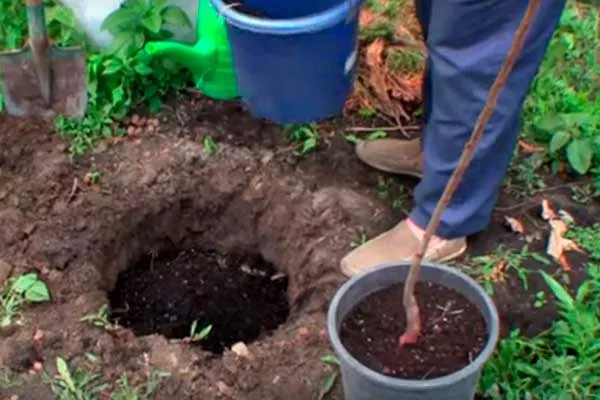
It is worth remembering that the ideal place for planting apricot is the south-east or south side, where the plants will not be exposed to gusts of wind and drafts.
To plant young apricot seedlings, the following steps are required:
- Place a drainage layer at the bottom of the hole, which can be made from broken brick, slate or gravel.
- Create a soil mixture of peat, sand and humus in equal proportions and distribute it over the drainage layer.
- Place the tree so that the root collar is 5-6 cm above ground level.
- After planting, moisten the soil in the trunk area.
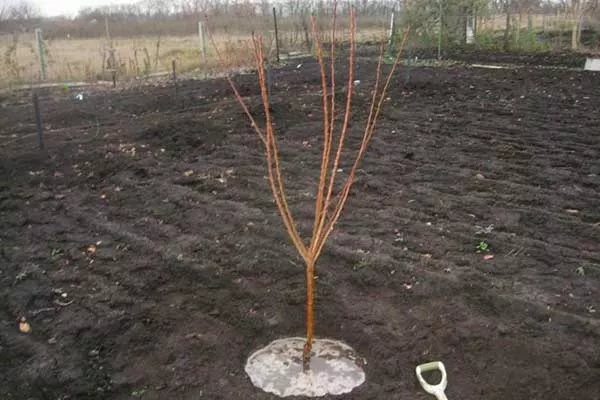
It's a good idea to lay a layer of mulch to protect the roots from drying out and prevent weed growth. Sawdust is a good material for this, and for the winter, the tree can be covered with shrub branches or pine needles.
Rules for cultivating the variety
The Black Velvet apricot, although easy to care for, still requires careful attention during its development. Regular watering and pest and disease control are key aspects that cannot be ignored.
Preventive measures for protection
Although apricots have good disease resistance and are rarely a target for insect pests, preventative measures should not be ignored. Here are some tips:
- It is important to clear fallen leaves from around the tree and dispose of them outside the area.
- It is necessary to treat the crown and trunk of the tree with copper sulfate or Bordeaux mixture even before the tree begins to blossom.
- Sanitary pruning involves removing old and damaged branches that may harbor both pests and their larvae, as well as areas where infectious and viral diseases may remain.
- It's best to dig or loosen the soil around the base of the seedling, which improves oxygen access to the root system and helps destroy fungal outbreaks, spores, and pest larvae that have taken refuge in the soil for the winter.
To protect the apricot tree trunk from damage by rodents such as hares and mice, it is recommended to wrap it with roofing felt during the cold season.
Watering
Watering the Black Velvet apricot tree depends on local climate conditions. In arid regions where rainfall is rare, watering should be done at least once every two weeks. Young trees typically require 10 to 20 liters of water per tree, while mature plants require 20 to 35 liters.
Black velvet is sensitive to drought, but excessive soil moisture near the roots can cause its death. Overwatering promotes root rot, which, in turn, can lead to fungal and infectious diseases.
Feeding scheme
To ensure apricots receive all the necessary nutrients, fertilizing should begin only two years after planting them in their permanent location. The following fertilization schedule is recommended:
- In early spring, before the first buds appear on the tree, add urea fertilizer to the root zone. This will require 30-35 grams per square meter.
- When the buds fade, feed the young tree with a wood ash solution. To do this, dilute 1 kg of ash in 8-10 liters of water.
- In early or mid-September, before the onset of autumn, it is recommended to treat with Superphosphate in the amount of 85 g per 1 sq. m.
It is important to remember that all fertilizers applied to the roots must be in liquid form; it is important to follow the recommended doses in the instructions.
Pruning and crown shaping
To ensure Black Velvet begins to bear fruit and develop properly, it should be pruned only five years after being planted in its permanent location. At this age, you can begin shaping the crown. Most often, a cup-shaped tree is created using the classic technique.
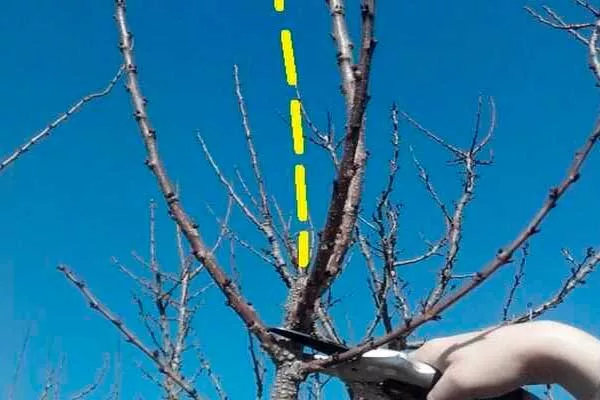
In subsequent years, pruning should be carried out, removing damaged and dried branches, as well as those that may subsequently thicken the crown structure.
Preparing for winter
To ensure mature apricot trees survive the winter without loss, all they need is a final watering to replenish moisture. Afterward, it's recommended to cultivate the soil around the tree's trunk, carefully digging it over and covering the root zone with moss or sawdust.
Since young trees are more vulnerable, they need to be protected more thoroughly. Burlap or agrofibre can be used to protect the branches and trunk.
Reproduction
There are various ways to expand the boundaries of your apricot garden, such as:
- Through seeds. The simplest method of propagating apricots is using seeds. First, remove the pit from the pulp and soak it in water for two days. Then, bury the seed in the soil to a depth of about 10 cm.
- Through cuttings. A more complex but effective method of propagating apricots is by cuttings. To do this, first prepare the planting material. Cut cuttings approximately 15-20 cm long with a stem diameter of 0.6-0.9 mm.
Then, soak the cuttings in a special rooting solution and plant them in a pot or in open ground. Covering the cuttings with transparent film is recommended.
Harvesting and storage
To preserve apricots for a long time, it is necessary to maintain a temperature of +5-7 degrees and humidity in the room at about 70-75%, as well as ensure continuous air exchange.
Positive and negative qualities
The Black Velvet apricot is deservedly beloved by gardeners thanks to its numerous virtues. Its popularity stems from the following characteristics:
Black velvet has its drawbacks, too. The main one is its weak drought resistance, requiring regular watering during dry periods. Furthermore, the pulp is difficult to separate from the pit.
Reviews
The Black Velvet apricot variety is an unusual black hybrid that inherits the cherry plum's high frost resistance and disease resistance. Its appearance and simple care requirements attract gardeners, but the small size of its fruits and their tart, sour taste are not to everyone's taste.