
Burgundy is the name of a late-ripening peach variety distinguished by its exceptional ornamental value. Domestic gardeners have come to appreciate it for its unusual crimson foliage, beautiful and delicious fruit, and excellent yield. With proper care, it will become a true highlight of your garden and a source of delicious treats for your table.
History of variety selection
Burgundy is a product of domestic breeding. This red-leaved fruit variety is suitable for cultivation not only in southern climates but also in temperate climates. It is successfully grown by gardeners in Moscow and the Moscow region.
The appearance of the tree
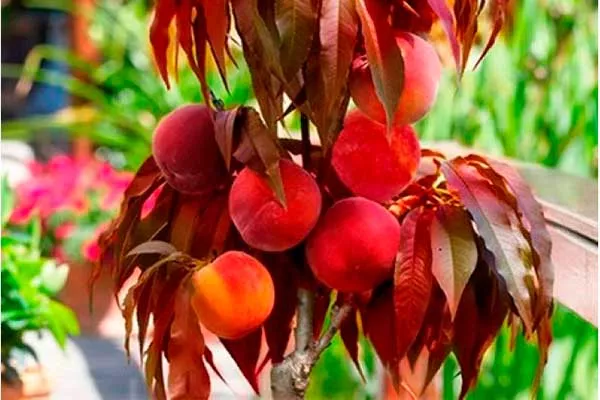
Enhanced ornamental value is the cultivar's hallmark. Trees of this cultivar are beautiful not only during flowering but throughout the entire growing season. They are distinguished by the following external features:
- medium height;
- height - 2.5-3 m;
- the slenderness of the trunk, thin and strong;
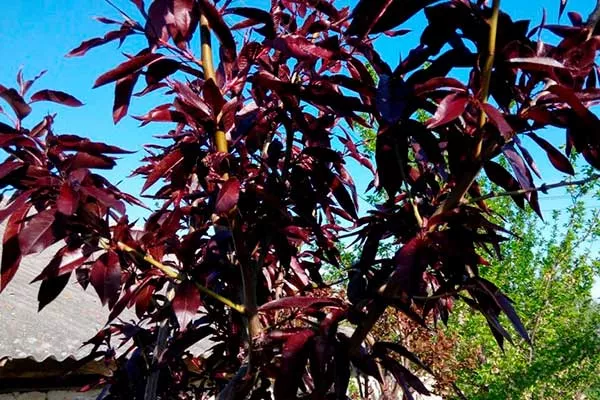
- dense pyramidal crown requiring thinning;
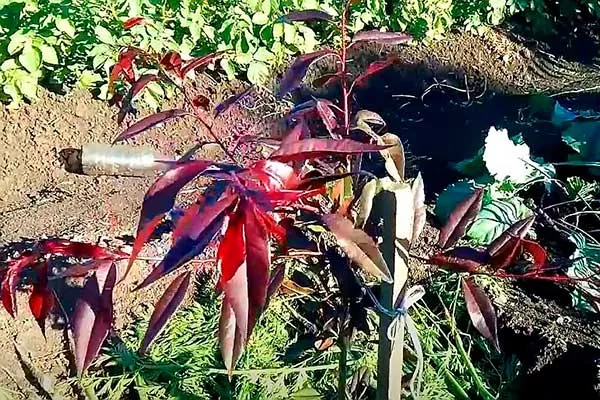
- Leaves: oblong, lanceolate, with edges curved towards the center, rich wine color (red or red-violet) with a glossy sheen.
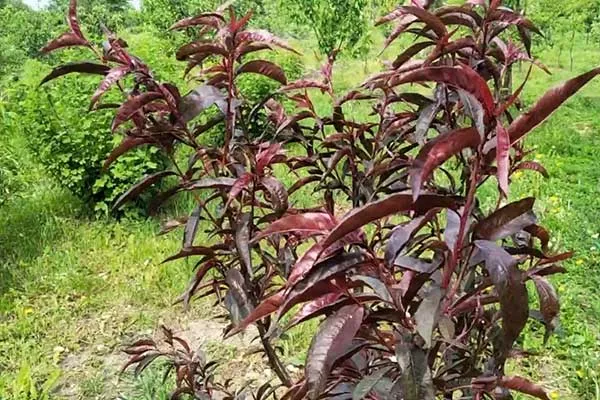
In autumn, the peach tree's foliage turns green with red veins, giving it an even more striking appearance. In May, it is especially beautiful, with fragrant, pale pink buds blooming.
Fruits and their taste characteristics
The fruits that ripen on the Burgundy tree also add to its decorative appeal. They have the following characteristics:
- average size;
- weight - 100-120 g (their maximum weight is 150 g);
- rounded shape;
- medium-thick skin of a pale yellow color, almost completely hidden under an extensive dark pink blush;
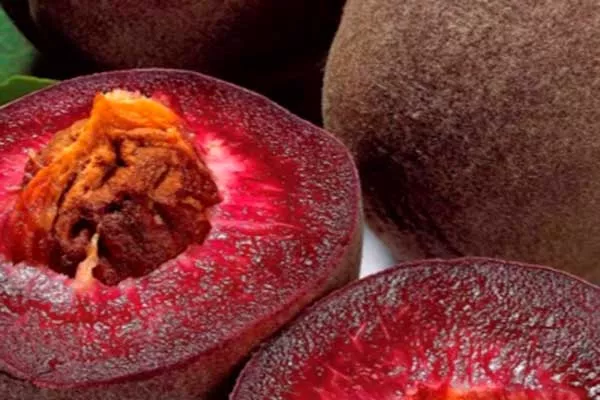
- very juicy pulp of a rich wine color, dense and crispy, fibrous;
- with a stone that can be easily separated from the pulp.
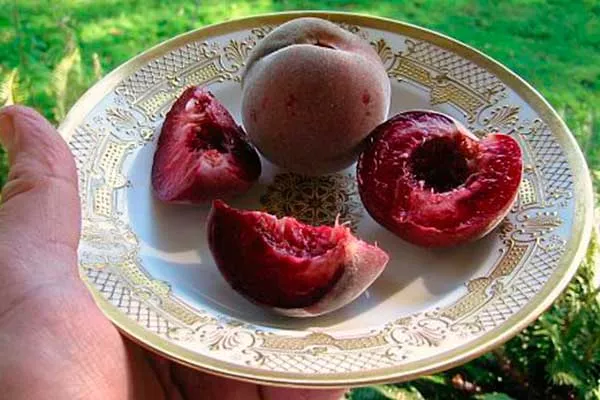
These fruits are intended for fresh consumption. They are also suitable for canning, processing into juice, or puree (baby food).
Housewives use them in home cooking:
- they cook compote, jelly, jelly, marmalade, jam and preserves;
- added to desserts, fruit salads;
- they decorate dishes with them;
- They are used as a filling for pies and other baked goods.
Ripening period and yield
Trees begin bearing fruit in their third year. They produce fruit for 50 years. Ripening is late (after August 15). The yield of the red-leaved variety ranges from 7 to 10 kg per mature tree.
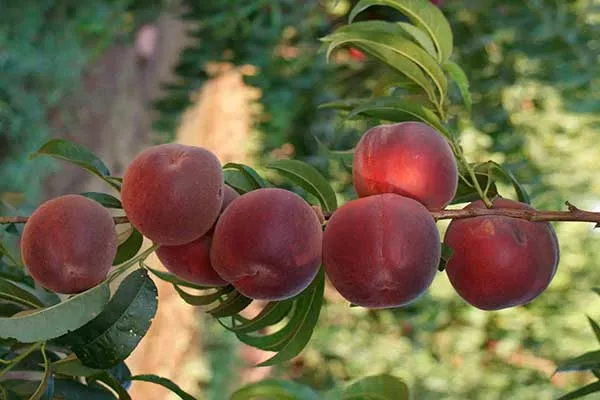
Burgundy fruits are quite shelf-stable and transportable. They don't bruise or leak during long-distance transport.
Which varieties are best for pollination?
This peach cultivar is self-fertile. The tree can pollinate itself to produce fruit. Cross-pollination can increase its yield by 30-40%.
To ensure that the red-leaved peach bears fruit to its full potential, plant other varieties of the same flowering period in the area nearby:
- Pink Lady;
- Royal Esthete;
- Harnas;
- Fleming Fury.
Frost resistance and the need for shelter
Burgundy is considered a cold-hardy variety. Its trees can withstand temperatures as low as -23°C. The variety's hardiness zones are 6-7. Growing this fruit tree in the south of the country means you won't have to worry about overwintering it. In moderate climates, the tree is also immune to frost damage during snowy winters.
If your area experiences snowless and very cold winters, the peach tree trunk will need to be whitewashed in the fall, lined with spruce branches, and covered with a covering material. Mulch the area around the trunk generously. Without reliable insulation, the plant may suffer frost damage.
Resistance to diseases and pests
This variety delights gardeners with its strong immunity. With proper care, its trees are disease-resistant and unaffected by insect pests. They especially require pruning. Without regular crown thinning, the risk of peach fungus increases.
| Disease | Burgundy's Resilience | Recommended preventive measures |
|---|---|---|
| Powdery mildew | Average | Treatment with sulfur-containing preparations before flowering |
| Leaf curl | Low | Treatment with copper-containing preparations in early spring |
Planting and caring for the Burgundy peach
Start planting your ornamental peach tree within the following timeframes:
- early spring, before the buds open;
- in late autumn, 1.5 months before sub-zero temperatures set in.
To grow Burgundy seedlings, select the right location in your garden:
- well lit;
- windless, without drafts;
- located away from tall trees and buildings that cast dense shadows.
Peach trees thrive in fertile, well-drained soil. They grow best in the following types of garden soil:
- black soil;
- medium loams with good air and moisture exchange.
- ✓ Soil pH should be between 6.5-7.5 for optimal growth of Burgundy peach.
- ✓ The groundwater depth must be at least 1.5 m to prevent root rot.
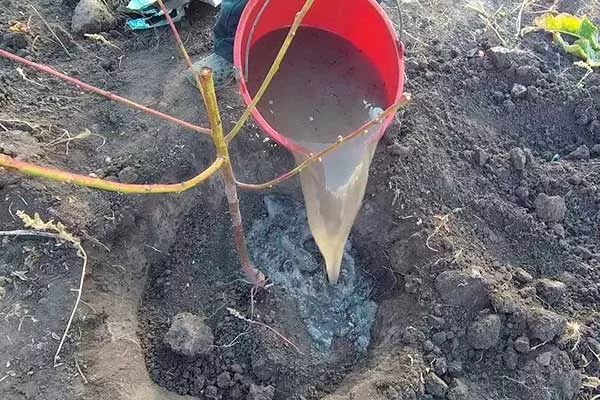
In the fall, dig a planting hole in the chosen area. It should be twice as large as the tree's root ball. Ideally, the hole should be 50 x 50 cm and 35 cm deep. Line the bottom with stones, gravel, or broken brick.
Partially fill the hole with store-bought nutrient-rich potting soil mixed with garden soil (1:1). Enrich the soil mixture with vermicompost, ash, and any potassium-rich fertilizer. Form a mound at the bottom of the hole.
Planting a Burgundy peach tree step by step:
- Pour water over the contents of the hole.
- Drive a wooden stake into the moist soil. This will serve as support for the seedling.
- Place the tree in the hole on the mound. Spread out its roots.
- Cover them with soil.
- Compact the soil around the trunk.
- Water the peach tree. Mulch the area around the tree's trunk with garden peat or compost.
A peach tree requires proper care. Follow these steps:
- Spray the peach tree in the spring on swelling buds to prevent aphids, codling moths and other parasites;
- treat the crown with Bordeaux mixture (3%) to kill the fungus;
- Carry out replacement pruning around the pink bud, combining the procedure with antifungal treatment with a preparation that replaces Bordeaux mixture (during the growing season, peach trees should not be sprayed with copper-containing agents);
- After flowering, carry out a combined spraying of the tree against diseases and insects;
- After the ovaries have fallen, begin distributing the load of fruits on the tree (leave no more than 1 ovary on each fruiting shoot);
- carry out sanitary and formative pruning;
- water the peach tree at least 4 times per season, using 30 liters of water per 1 adult tree and moistening the soil to a depth of 0.5 m;
- start watering the tree more generously from the moment the pit hardens to avoid cracking of the fruit and during periods of prolonged heat;
- loosen the soil in the tree trunk circle after watering and weed it;
- Regularly inspect trees and, if necessary, spray them against insects and infections;
- Fertilize the peach tree in early spring with urea (50–70 g per tree); in summer with a complex mineral composition; when the fruit ripens, spray the crown with potassium sulfate dissolved in water (30 g per 10 l); in autumn with potassium sulfate or superphosphate (40 g of the substance per 1 sq. m of the trunk circle);
- Before harvesting, carry out 2-3 foliar feedings using potassium fertilizers to increase the sugar content of the fruit;
- combine such feeding with treatment of plantings against powdery mildew and pests;
- Water your peach tree generously 4 weeks before harvesting to increase the fruit size by a third.
Harvesting and storage
Begin harvesting by observing the fruit's color—a sure indicator of ripeness. The fruit will be ready to pick when its skin turns from green to a deep yellow with a rich pink blush. It will feel soft to the touch, and its aroma will delight you with its richness.
To ensure the harvest lasts up to 2 weeks, keep it in suitable conditions:
- in the refrigerator, in the fruit and vegetable compartment;
- at 90% air humidity.
Positive and negative qualities
Burgundy is a variety that is popular among domestic gardeners for its many advantages:
This variety of fruit crop also has significant disadvantages:
Reviews
The Burgundy peach is beloved by Russian gardeners for its decorative qualities, high yields, cold resistance, beautiful fruit appearance, and excellent flavor. This variety is considered demanding and even finicky in terms of care, but strict adherence to proper cultivation practices will help you maintain the plant's health and reap a bountiful harvest.
The article contradicts itself - it says that the peach for the Moscow region is zone 4, but at the same time it claims that the peach is for growing in zones 6-7, it says that it is very productive and then immediately says that the yield is low - 7-10 kg ... In my opinion, the article deliberately misleads the user by providing deliberately false and contradictory information .. It is not clear whether this is a technical error or intentional misinformation?
Hello! There's no misinformation here—the article doesn't say anywhere that the variety is VERY productive, but it does say that the yield is excellent, good. For a small tree, 10 kg is quite good.
Yes, peach is recommended for frost resistance zones 6-7, but it can also grow and bear fruit in zone 4 – it is enough to insulate it before wintering, which is discussed in the relevant section.