
White Swan is a mid-season peach variety renowned for its attractive fruit, good yield, and resistance to powdery mildew and clasterosporium. It is not suitable for commercial cultivation due to its short shelf life and its unsuitability for long-distance transportation. However, it will be appreciated by lovers of juicy, sweet, and mouth-watering fruits.
Origin of the variety
This variety of fruit crop was developed in 2005. Its creator is the domestic breeder Yuri Kovalchuk (owner of the Agro Sad private farm, a collection nursery of seedlings in the Krasnodar region).
According to other sources, the variety is an achievement of Crimean breeding. Its creation is attributed to the staff of the Nikitsky Botanical Garden.
Description of the White Swan peach: tree and fruit
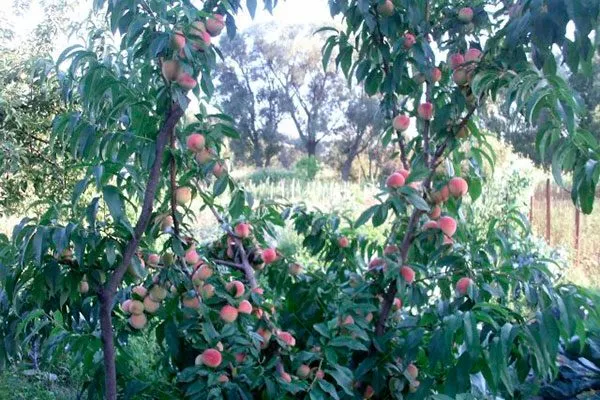
Plants of this varietal variety are characterized by distinctive features:
- medium height (their height is 3-4 m);
- spreading crown, having a spherical shape;
- light gray color of the bark covering the tree trunk;
- medium-sized branches;
- foliage: large, dark green, with a glossy surface;
- flowers of delicate white and pink color.
- ✓ The leaves of this variety have a characteristic glossy sheen and a darker shade compared to other varieties.
- ✓ The flowers are distinguished by a delicate white-pink color, which is rare among other peach varieties.
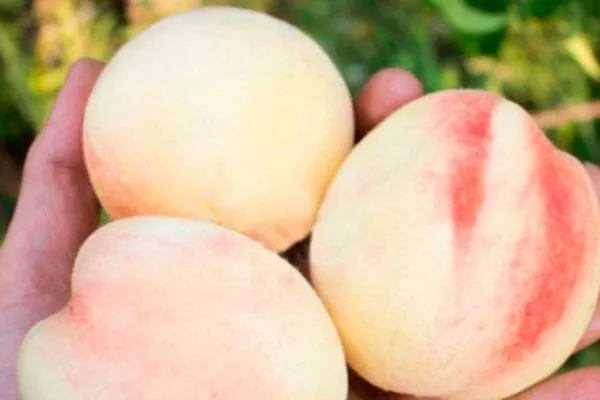
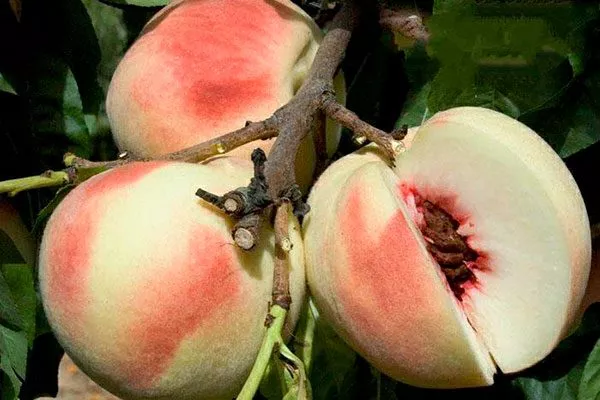
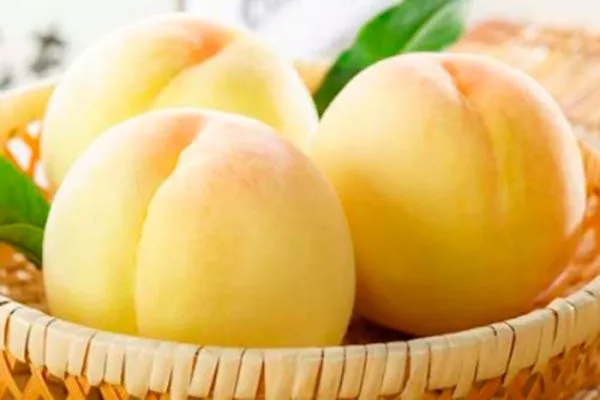
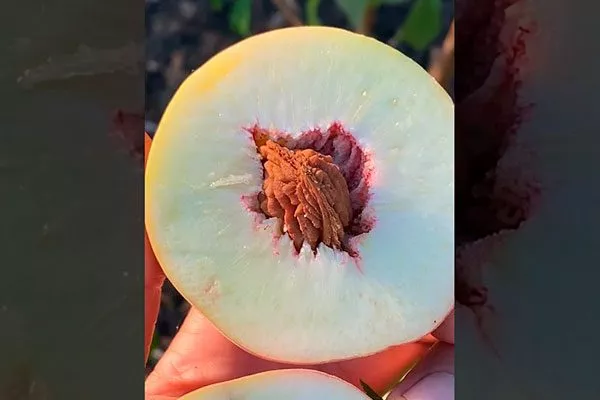
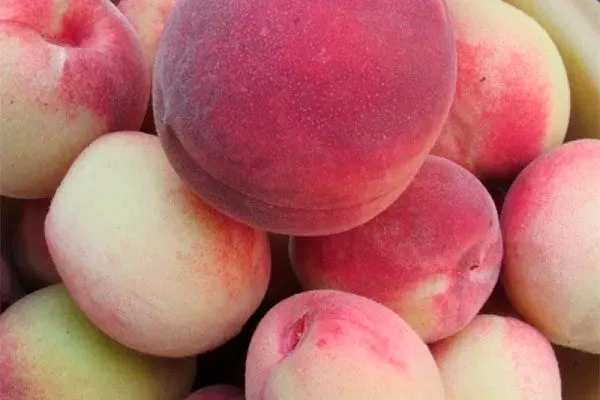
The fruit's appearance is the cultivar's signature feature. They are distinguished by their unusual creamy-white skin, occasionally tinged with a slight raspberry blush. The fruit possesses the following characteristics:
- larger than average size;
- weight - from 145 g to 200 g;
- round, broadly oval shape;
- light, thin skin with fluff;
- the flesh is cream-colored, soft, not dense, fibrous, very juicy and aromatic;
- a medium-sized stone that separates well from the pulp.
Taste qualities
White Swan fruits are not only large and beautiful, but also delight the eater with their pleasant, harmonious flavor. It is dominated by sweetness with honey notes. There is virtually no acidity, due to the high sugar content of the pulp and very low acidity.
Characteristics
The variety has earned the love of domestic gardeners thanks to its excellent technical characteristics.
Drought resistance, frost resistance
The garden culture is quite frost-resistant:
- its trees can withstand temperatures down to -24C° in the winter months;
- Flower buds and buds are not affected by spring frosts.
This variety is characterized by good drought tolerance. It is suitable for cultivation in areas with long, hot summers and dry climates.
Does the variety need pollinators?
White Swan is self-fertile. It produces a good harvest even without the presence of other pollinating varieties. However, the presence of pollinating varieties in the plot has a beneficial effect on its productivity.
When do White Swan peaches ripen?
This garden crop is a striking example of a mid-late variety. It blooms and bears fruit at the following times:
- In May, buds open on peach trees and fruit sets form;
- the first fruits ripen by the 10th-15th of August;
- The second half of August is the time of mass harvesting.
Productivity and fruiting
Peach trees begin bearing fruit at three to four years of age. They produce fruit annually, reaching peak productivity at six years of age. A single mature peach tree yields 50-60 kg of fruit.
When ripe, the fruits do not fall from the branches. They remain firmly attached to the stem until they are picked from the tree. Ripe fruits have a short shelf life—up to three days in the refrigerator. They are not transportable due to their thin skin and very soft, juicy flesh.
Application of fruits
The White Swan peach is best eaten fresh. Without any heat treatment, it's a truly healthy treat for those with a sweet tooth. Its flesh doesn't darken when exposed to air, making it perfect for adding to desserts and fruit salads.
Due to its juiciness and sweetness, the variety is ideal for processing:
- in juice;
- nectar;
- puree.
Requirements for soil and climatic conditions
The variety grows well in soils with the following characteristics:
- fertile;
- lungs;
- bulk;
- moderately moist;
- well warmed by the sun;
- neutral or slightly alkaline (with pH 6.7–7.0);
- loamy or sandy loam.
Remember that the peach tree is a heat-loving tree. It grows and produces best in the southern regions of Russia. It can also be grown in the central part of Russia (provided the tree is protected for the winter).
Advantages and disadvantages of the variety
The variety has taken root in domestic gardens thanks to its inherent undeniable advantages:
Rules for planting peaches
Start planting your peach tree within the following timeframes:
- in autumn, 1-1.5 months before the arrival of cold weather - in the southern regions;
- in the spring before the buds swell - in areas of risky farming.
When purchasing a seedling, inspect it. Choose a specimen with the following characteristics:
- two-year-old;
- with a strong root system (root length - 15 cm);
- with a developed trunk and shoot buds;
- without signs of disease or pest damage.
- ✓ Check that the root system is not only strong, but also has healthy white roots, which indicates its viability.
- ✓ Make sure that the seedling trunk has no mechanical damage or signs of disease, which can significantly reduce its survival rate.
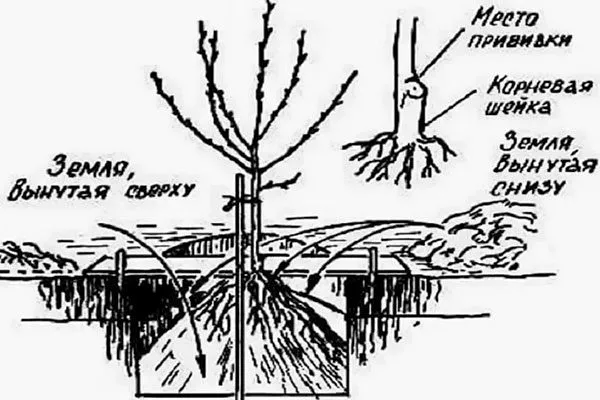
Soak the purchased White Swan seedling in water with Kornevin. Prepare the planting hole in advance. Dig it 2-3 weeks before the expected planting date. The optimal size is 0.7 x 0.7 x 0.7 m. If you purchased several seedlings, space the holes 3 m apart.
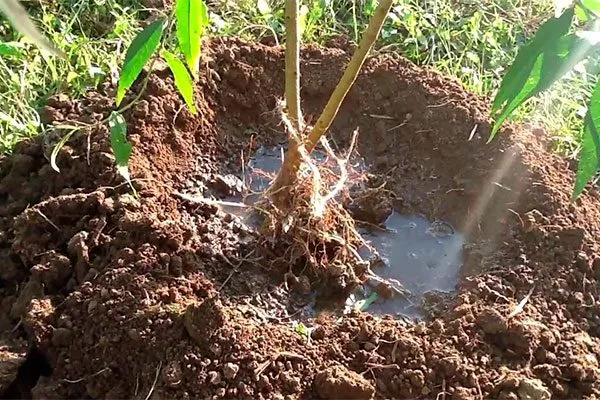
Plant the crop following the step-by-step instructions:
- Add fertilizer to the hole: humus (15 kg) mixed with potassium chloride (100 g) and superphosphate (200 g).
- Add wood ash (450 g) and soil taken from the hole.
- Drive in a stake for tying.
- Form a mound of soil mixed with fertilizer at the bottom of the hole.
- Place the seedling on the mound. Spread out its roots without breaking them.
- Fill the roots and hole with soil. Compact it.
- Water the seedling with settled water.
- Tie the tree to the support.
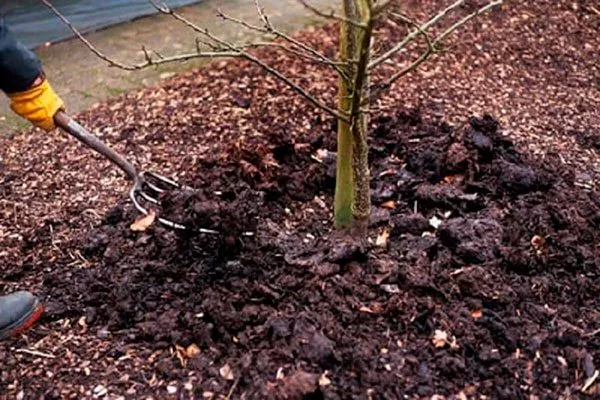
- Loosen the soil under the peach tree. Mulch it with straw or sawdust.
Aftercare for peach
Care for your White Swan tree properly to ensure it stays strong and healthy. Provide it with the following care:
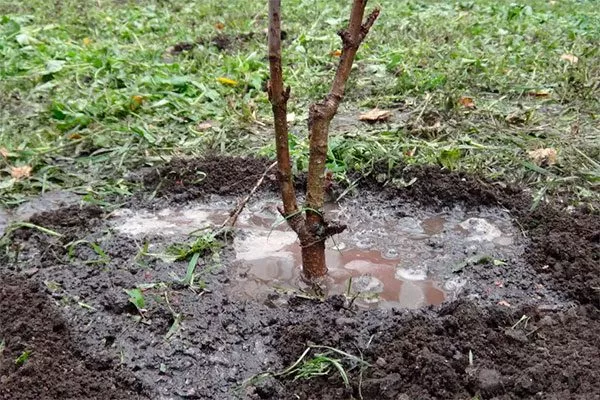
- WateringWater the seedling at least once a week. Don't let the soil dry out, but don't let it become overwatered either. Use 40-50 liters of water per plant. Water a mature tree less frequently—once every 14 days. Use mulch such as peat, sawdust, or grass clippings to retain soil moisture.

- Loosening the under-barrel circleThis measure will ensure free air access to the plant's roots. Combine it with weed removal.
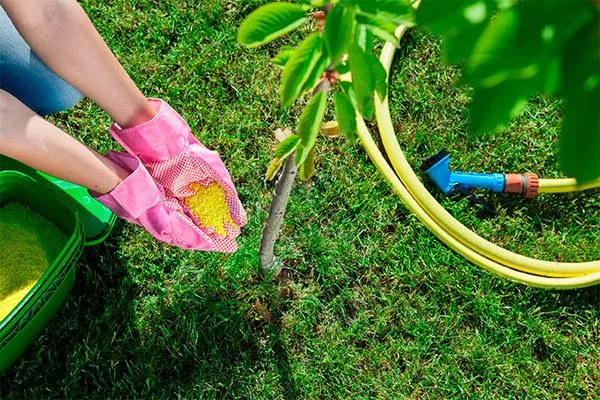
- Top dressingFertilize the fruit tree annually in spring, summer (2-3 times), and fall. Begin feeding the peach tree in the second year after planting. Use commercial potassium, phosphorus, and nitrogen fertilizers, as well as organic matter.
In spring, feed the tree with nitrogen-rich nutrient mixtures. In summer, water the peach tree with a solution of slurry (1:10) or chicken manure (1:20) dissolved in water. Before using these products, be sure to water the tree with clean water.
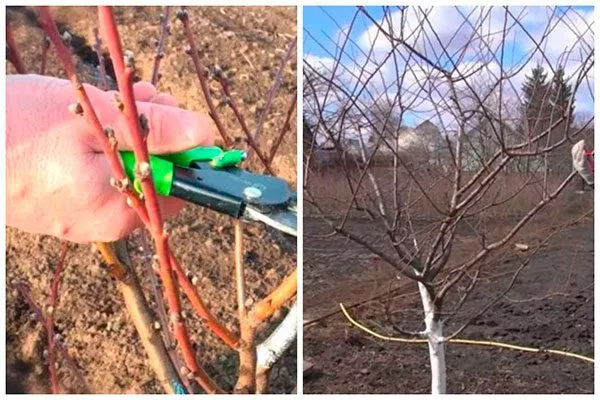
In the fall, use potassium and phosphorus fertilizers: superphosphate (200 g), potassium chloride (150 g). They can also be replaced with organic matter: humus (7–10 kg), wood ash (0.5–1 kg). - Pruning, sanitary and shapingThis measure will increase the crop's yield and prevent disease and pest infestation. Prune the peach tree in the spring before bud break, removing any branches that have died over the winter. Shorten healthy shoots by 1/4.
In the fall, before the onset of cold weather, cut off the current year’s growth directed inward towards the crown.
Diseases and pests, methods of control and prevention
The variety exhibits high resistance to the main diseases of stone fruit crops:
- cleasterosporiasis;
- powdery mildew.
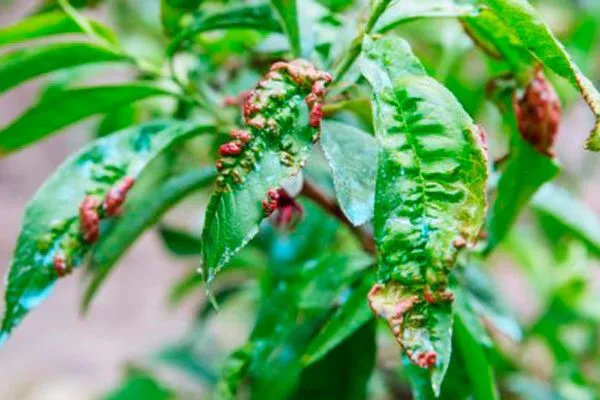
Under unsuitable growing conditions, the White Swan peach is susceptible to leaf curl. It is also susceptible to pest attacks:
- aphids;
- striped moth;
- scale insects.
To prevent problems, spray the tree before the buds open (mid-April) with the following:
- insecticides such as Iskra and Confidor Maxi - against pests;
- Bordeaux mixture (concentration - 3%) - for fungal infections.
Reproduction
Propagate the White Swan peach tree in the following ways:
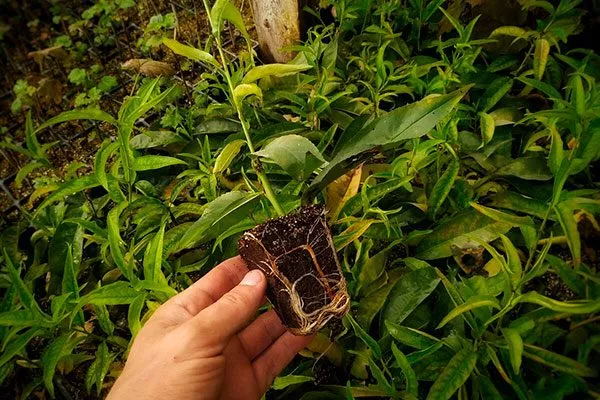
- Cuttings (green and woody). Harvest the twigs on a cloudy morning. Place the green cuttings in water with a rooting stimulant added. Transplant the branches with leaflets (3-4) upright into the substrate.
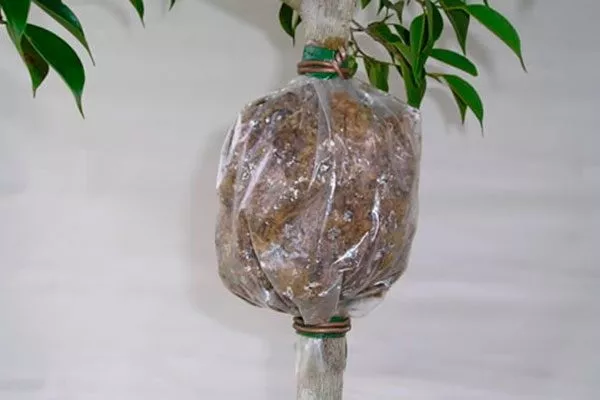
- Air layeringSelect a strong, semi-woody branch (about the thickness of a pencil) from a two-year-old tree. Cut a ring of bark from it. Remove any fruit buds located just above the cut.
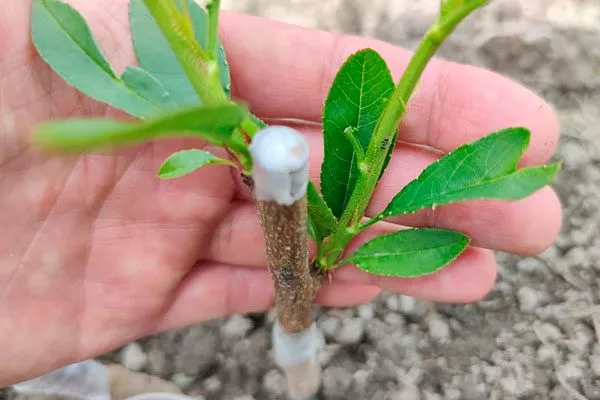
Apply Kornevin to the circular cut where the bark was removed. Wrap it in water-soaked sphagnum moss, then in plastic wrap. Moisten the moss regularly and prevent it from drying out. Once roots appear, remove the wrapping. Plant the resulting plant in its permanent location. - By vaccinationCarry out the procedure when the rootstock is still sap-flowing and the scion is dormant. For the former, use a two-year-old wild plum or felt cherry. For the latter, use a peach scion with 2-3 buds and an oblique cut, harvested in the fall. Its length should be 35-40 cm. It will need to be immersed in water or sand until spring.
Join the scion to the rootstock. Wrap the junction with plastic film. After 30 days, cut the branch above the graft line.
You can also try growing a peach from a pit. This method is time-consuming and labor-intensive, and gardeners rarely use it. Wash and dry the pit. Before planting, soak it, then prick it on one side.
Preparing for winter
Despite the variety's good frost resistance, when growing it in the central and northwestern regions, provide the tree with frost protection. Mulch the tree's trunk with:
- sawdust;
- humus;
- peat;
- foliage.
Apply a layer of mulch greater than 10 cm. It's a good idea to mound up the tree's roots and whitewash its underside. A young sapling requires more secure cover. Wrap its trunk with non-woven material.
Reviews
White Swan is a popular variety in the south of the country and central Russia. Its fruits have a unique coloring. They are distinguished by a harmonious sweet flavor, incredible juiciness, and a delicate flesh texture. This is the best choice for private cultivation if you love melt-in-your-mouth peaches.