
White peach varieties offer gardeners a variety of tastes and visual delights. When choosing white varieties for your garden, it's important to understand their pros and cons to avoid any problems during cultivation. With so many varieties available, you'll be able to find the perfect one.
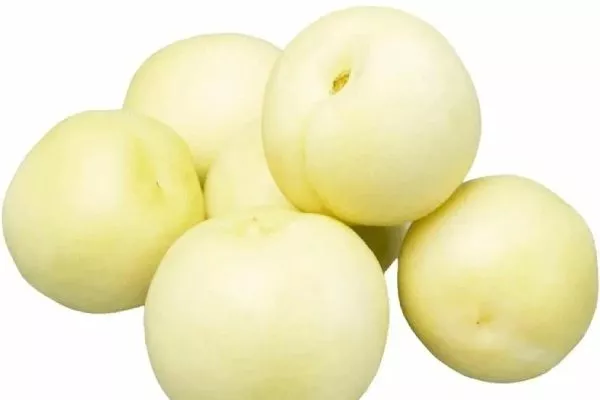
What makes white peaches different?
White peaches differ from regular peaches in several ways. Here are the main ones:
- Color of pulp. White peaches have light-colored flesh, ranging from almost white to light pink, unlike yellow peaches, which have flesh that ranges from yellow to orange.
- Taste. White peaches are generally sweeter and less tart than yellow fruits, which often have a richer, more tart flavor.
- Texture. The flesh of white peaches is more tender and soft, while yellow fruits can be firmer and juicier.
- Aroma. White peaches have a more subtle and delicate aroma, while yellow peaches have a more intense aroma.
White and yellow peaches can differ in ripening time and variety. There are both early and late varieties of both types.
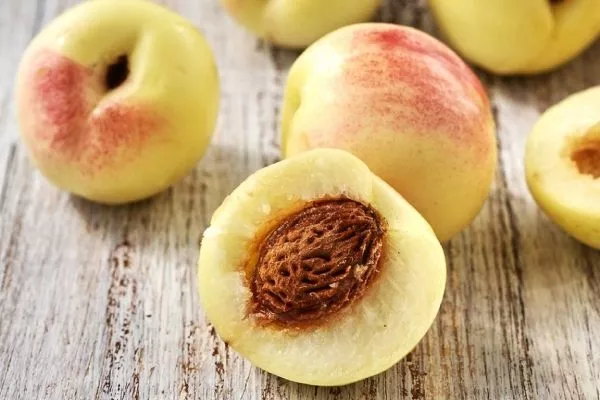
Characteristics and purpose of varieties
White peach varieties have a number of unique characteristics and have a variety of uses. Here are some key points:
- Because of their sweetness and tenderness, white peaches are most often eaten fresh.
- They are perfect for fruit salads due to their softness and excellent taste.
- They are used to prepare various desserts such as pies, cakes, sorbents and ice cream.
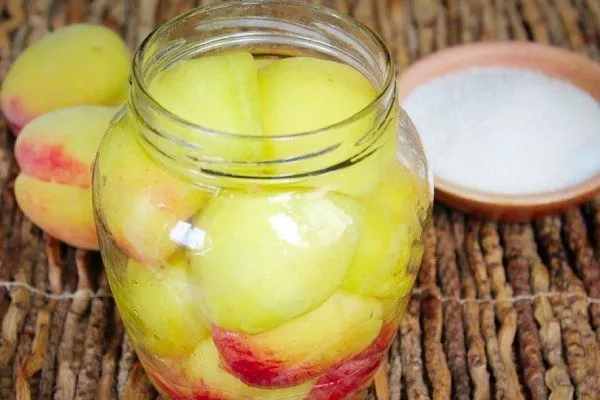
- They are often canned, although due to the delicate texture of the fruit, it requires a more careful approach.
- White peaches are used to make compotes, juices and smoothies.
- They are used in cooking to prepare various dishes, for example, peach chutney or meat sauce.
Varieties
There are many varieties of white grapes, each with its own characteristics and positive qualities. Below are the most popular varieties.
| Name | Tree height | Ripening period | Disease resistance |
|---|---|---|---|
| White swan | 2-3 m | Mid-late | High |
| Vladimir | Up to 5 m | Average | Strong immunity |
| Fruit me Icepeech | 80-150 cm | Mid-late | Good |
| Snow Beauty | Tall | The second ten days of August | Good |
| Autumn surprise | Up to 4 m | Late | Average |
| Donetsk White | 3-4 m | Mid-late | Average |
White swan
A low-growing tree (2-3 m) with a spherical, slightly spreading crown. Young shoots are light-colored, but over time, their thin skin becomes rougher and turns brown. Other characteristics of the variety:
- The branches are covered with dark green lanceolate foliage, slightly concave along the central vein, clearly visible along with the lateral branches.
- The leaf blade is smooth and pubescent, the lower part is lighter than the upper part, with an elongated and pointed end, and smooth edges without serrations.
- It blooms profusely, the snow-white flowers with a strong aroma have long stamens and slightly wavy petals.
- The medium-sized fruits, round or broadly oval, weigh 145-155 g, have a distinctive color. The skin is creamy white with a yellowish-pink tint and a bright pink blush that occupies a small portion of the surface.
- The delicate skin is heavily pubescent, and the medium-sized stone is easily separated from the pulp.
- The flesh is aromatic, juicy, and tender. The fruits easily withstand long-distance transportation without losing their marketability or flavor.
- The harmonious sweet taste is reminiscent of honey, with virtually no acidity. Tasting score: 4.5 points.
- This variety is mid-late in season – the harvest is in the third ten days of August. Regular fruiting begins in the fourth year after planting.
The White Swan produces excellent harvests – 50-60 kg of tasty, healthy and aromatic fruits are collected from one tree.
Vladimir
This is a medium-sized perennial tree, reaching a height of up to 5 m. The crown is quite compact. The flowers are pale pink. This variety is self-fertile. The leaf blades are lanceolate: the upper side is dark green, and the underside is grayish.
This fig variety is considered sun-loving and frost-resistant. It has a strong immune system. It prefers fertile soil and requires good light for a full harvest.
Characteristic features:
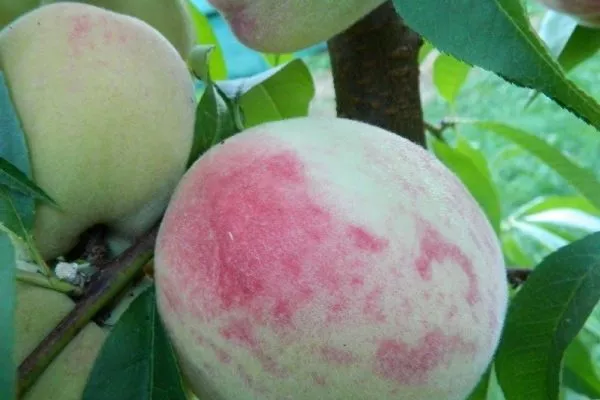
- Ripe peaches are large, reddish-white in color, and slightly flattened. Each fruit weighs up to 180 g. A ventral suture is visible on the surface.
- The skin is dense, slightly pubescent. During harvest, it may appear slightly pale, with a slight light red blush on the sides.
- The flesh is yellow-cream and fibrous. The pit is easily removed and weighs no more than 4 g.
- After harvesting, the fruits can be stored for a week.
- The fruits have a pleasant and rich aroma.
- The taste is sweet, without sourness.
Trees begin bearing fruit 2-3 years after planting. Ripening time is average, with the fruit reaching technical maturity in the first ten days of August. Fruiting is annual.
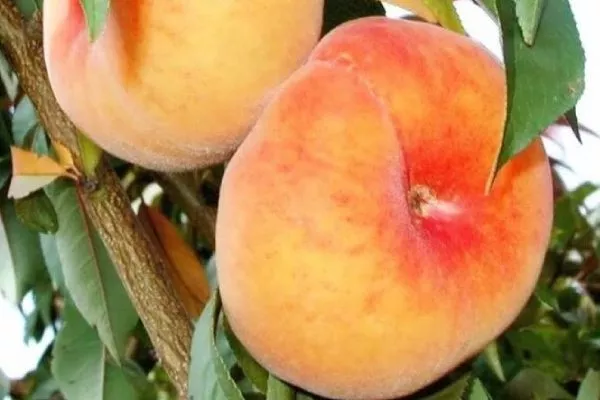
Fruit me Icepeech
This compact tree grows 80-100 cm tall, reaching a maximum of 150 cm, with a well-branched crown that adds 50-60 cm per year. The leaves are dark green and lanceolate. The flowers are single, large, and light pink, with a deeper pink center.
Characteristic features:
- The blooms are spectacular. The tree tolerates spring cold well and blooms late.
- The fruits are round, with a well-defined central suture, medium-sized, weighing from 150 to 300 g.
- The skin is creamy white and almost luminous.
- The flesh is slightly translucent, very beautiful, reminiscent of pieces of melon, with excellent consistency and excellent juiciness.
- The fruit's appearance is very impressive; the peaches look radiant. Their commercial quality is very high.
White-fruited fruits are distinguished by a more delicate, refined, and sweet flavor. The Icepech peach demonstrates this characteristic with its nearly acid-free flesh, sweeter than that of the fig variety, with notes of pear, vanilla, and cream. The sugar content ranges from 19-22%.
This variety is ideal for fresh consumption, decorations, and desserts. It is suitable for all types of processing, except those requiring high acidity. Unripe fruits are firm, and their full flavor only develops when ripe.
The fruits ripen mid- to mid-late, in the first or second ten days of August, sometimes as late as late July. A unique feature of this variety is that the fruits, once ready for picking, can remain on the tree for a long time without losing their flavor or appearance, allowing for variable harvesting times. A single tree yields 5-10 kg.
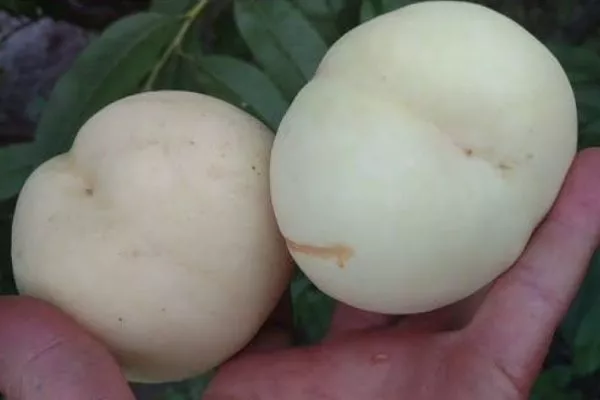
Snow Beauty
The tree is tall, with a wide-spreading crown. In the central zone, the fruits ripen in the second ten days of August. They are round, milky-cream-colored with a broad, bright blush, slightly oval, with a notch at the top, and weigh 110 g. The ventral suture is shallow, and the skin is heavily pubescent.
The flesh is creamy, juicy, fibrous, and aromatic, with a harmonious sweet and sour flavor. The stone is fused with the flesh. In the Moscow region, this variety demonstrates good winter hardiness when grown under cover and excellent flavor. Fruiting begins in the second or third year after planting.
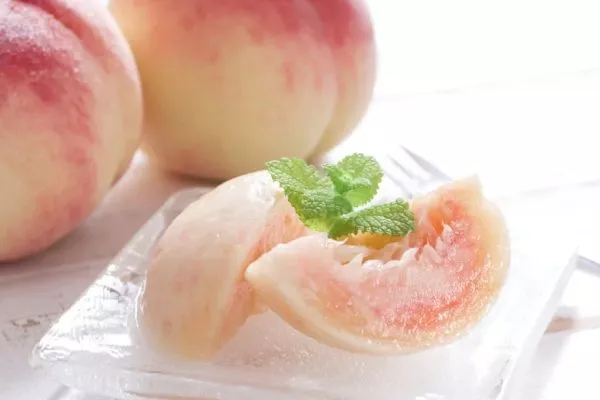
Autumn surprise
This is a medium-sized tree, reaching a height of up to 4 m, with a spreading crown that ensures uniform light distribution across all the fruits. The flowers are large, white or pink. The fruits are marbled: light cream with a crimson blush.
The fruit is round in shape and weighs between 150 and 180 grams. The ventral suture is medium deep. The flesh is very juicy, light yellow or pale yellow in color, with a sweet-tart taste and a mild aroma. The stone is large but easily separated from the flesh.
Autumn Surprise is a self-fertile variety, but requires pollinators to increase yield. This peach is a late-ripening variety: the fruits begin to ripen in late September. The yield is high – up to 50 kg of fruit per tree.
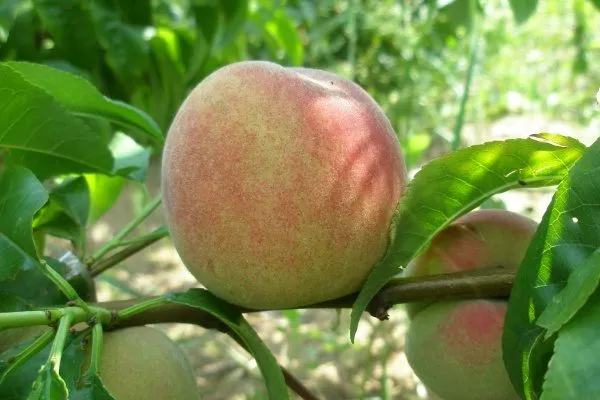
Donetsk White
This peach variety is considered vigorous. The tree grows quickly, with a dense, rounded crown, reaching a height of 3-4 meters. The shoots are light green and medium thick. The plants recover well from frost. The foliage is large, dark green, with finely serrated edges. Fruiting is moderately early.
Other cultural features:
- The flowers are large, pink, with slightly upturned petals. They open before the leaves emerge and have a pleasant aroma.
- The fruits are medium-sized, weighing 100-110 g, snow-white with a dark red rind on the sunny side. They are round or round-oval in shape, with a small seam. The surface is lightly pubescent.
- The flesh is white, translucent and juicy.
- The seeds are medium-sized and cannot be separated.
- Ripe fruits have a pleasant aroma.
- Peaches have a low transportability level – they are easily damaged, which leads to the formation of dark spots.
- Low shelf life.
- The taste is sweet with a slight sourness, with a tasting score of 4.2-4.4 points.
- Trees begin bearing fruit in the third year after planting. Ripening time is mid-late, with fruits ripening in the second to third ten days of August.
Peaches of this variety are often used to make preserves, jellies, homemade marmalade, and for drying. This variety is noted for its high yield—a healthy, mature tree can yield 50-60 kg of fresh fruit.
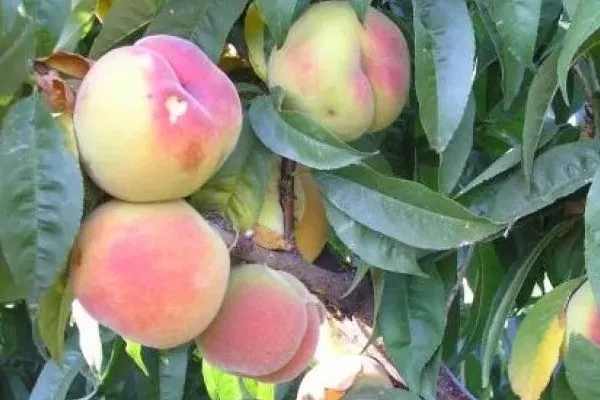
Features of growing white varieties
Growing white peach varieties requires special attention to conditions and care, as these varieties can be more sensitive to the environment and diseases.
- ✓ The soil pH level should be strictly within 6.0-7.0, deviations can lead to leaf chlorosis.
- ✓ The groundwater depth must be at least 1.5 m to prevent root rot.
Key features and recommendations for growing white peaches:
- They require a sunny location with good air circulation. This helps prevent diseases and improves quality.
- They prefer well-drained, fertile soils with a pH of 6 to 7. Clay or overly wet soils can cause root rot.
- The best time for planting is early spring or fall, when the plant is dormant.
- Maintain a distance of about 4-5 m between plants to ensure adequate space for growth.
- Regular watering is essential, especially in the first few years after planting and during drought periods. Avoid overwatering. Use drip irrigation to ensure even soil moisture and minimize the risk of fungal diseases.
- Regular pruning is important to create a proper crown, improve air circulation, and remove damaged or diseased branches. Perform this procedure in late winter or early spring when the plant is dormant.
- Use balanced fertilizers containing nitrogen, phosphorus, and potassium. In the spring, add nitrogen-rich fertilizers to stimulate growth. Compost and humus are useful for improving soil structure and adding essential micronutrients.
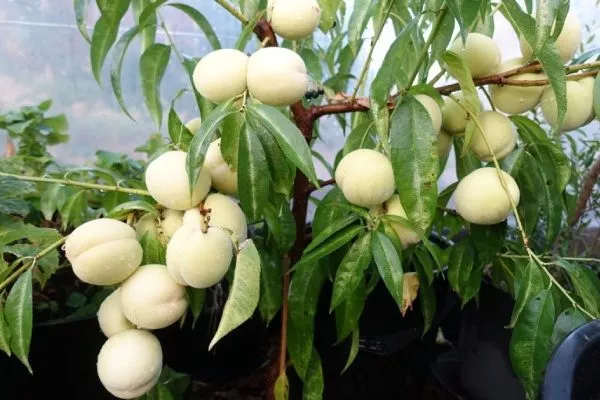
Do you need pollinators?
White peaches, like most other varieties, are primarily self-pollinating. This means they can produce fruit without the need for pollination from another tree. However, having multiple trees promotes better pollination and higher yields.
Reviews
White peach varieties are exquisite fruits that have gained popularity among gardeners worldwide. Their light, almost pearlescent color and sweet, juicy flavor make them appealing both for fresh consumption and for various culinary uses. Breeders have developed several varieties of white peaches, each with many distinct qualities.