
The Belmondo peach is an American selection and is rightly considered one of the best fig varieties. It requires some care, but gardeners are willing to go to great lengths to produce delicious and aromatic fig-type fruits.
Description of the plant
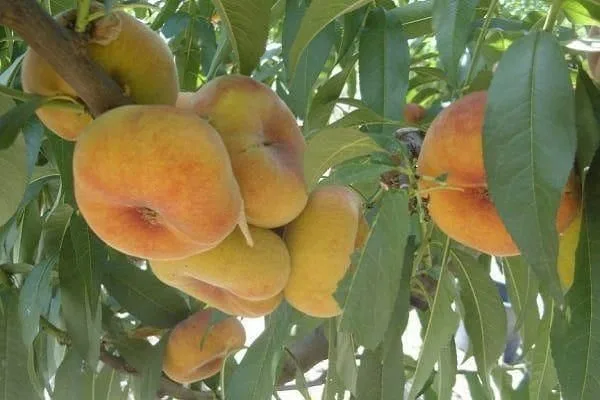
The tree is medium-sized, with a wide, spreading crown. The annual shoots are thick, reddish on the sunny side and yellowish-green on the shaded side. The internodes are short. The flowers are rose-shaped, large, with strongly concave, corrugated petals of a pale pink hue.
Description of the fruit
The fruits are large, greenish-cream, with a blush scattered across the entire surface. The greenish background is marked with numerous stripes and dots, either solitary or grouped, and the color ranges from various shades of red to crimson, carmine, and others.
The fruit has a dense, medium-thick, pubescent skin and a fairly easily separated pit. The fruit is disc-shaped, with a depressed apex. The ventral suture is deep—up to 5 mm. Each fruit weighs 90-120 g. The flesh is yellowish-green and aromatic.
Growing regions
The Belmondo variety was developed in the United States. American breeders, through successful crossbreeding, succeeded in creating a variety with high adaptability, allowing it to be grown in a variety of climatic conditions. In Russia, the Belmondo peach is successfully grown only in the southern regions.
Purpose and taste of fruits
Fig varieties have a more intense flavor than regular round peaches. This is due to their shape; in flat peaches, the skin is close to the pit, which improves the flavor.
Productivity and ripening time
This variety belongs to the mid-late ripening group. The fruits ripen in early to mid-August. The yield is high. The branches are literally covered with fruits, closely spaced. Winter hardiness is above average. The first harvest is 3-4 years after planting.
Pros and cons
The Belmondo fig variety has many advantages and virtually no disadvantages. In any case, there are none that aren't characteristic of the peach cultivar.
Advantages:
Flaws:
Site, soil and climate requirements
The Belmondo peach prefers well-lit locations free from drafts and cold, piercing winds, which can negatively impact the health of this heat-loving tree. It is recommended to plant it in level areas or slightly elevated areas, preferably on the south side of the plot.
- ✓ The soil pH level should be strictly within 6.5-7.5 for optimal nutrient absorption.
- ✓ The groundwater depth must be at least 1.5 m to prevent root rot.
Peach trees prefer light, loose, fertile, and breathable soils with a neutral pH. They do not grow in clayey or acidic soils. They thrive best in loamy soils and low-acid chernozems. They should avoid swampy areas and lowlands where water accumulates.
Landing features
To ensure that the peach tree takes root well and grows successfully, it is important to plant it correctly.
Features of planting Belmondo peach:
- Planting of seedlings is carried out in the spring (before the buds swell) or in the fall (after the dormant period).
- For planting, use seedlings aged 1-2 years, with a well-developed root system, even and smooth bark, without defects.
- The distance from the peach tree to the nearest trees or buildings should be at least 3-5 m.
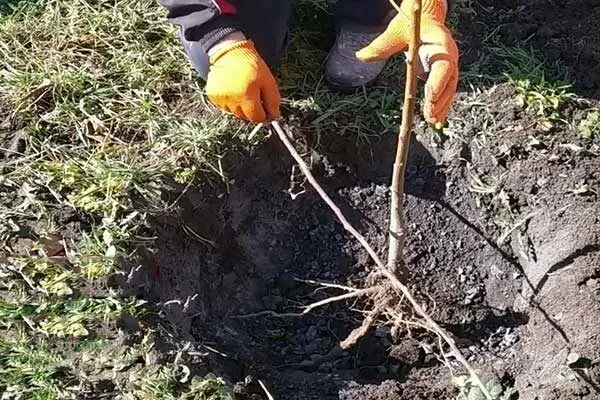
- The hole for spring is prepared in the fall, or three weeks before planting if planting in the fall. The hole should be 60-80 cm deep and about 1 m in diameter. It should be deep and spacious enough to accommodate the seedling's roots.
- A drainage layer of crushed stone or broken brick is poured into the bottom of the hole, and fertile soil mixed with organic matter and mineral fertilizers is poured on top.
- Before planting, soak the seedling's roots in water or a rooting stimulant for 12-24 hours. Plant the seedling so that its root collar is at ground level or slightly above; do not bury it too deeply.
- The roots are covered with soil, compacted, the seedling is watered and tied to a support, which is installed in the hole in advance, and the soil in the trunk circle is mulched.
Care instructions
The Belmondo peach will not grow or bear fruit if left to its own devices. Lack of watering and fertilizing will negatively impact its development and fruiting, and a lack of care may ultimately lead to the tree's death.
Features of peach care:
- The tree is watered once every two weeks. During drought and/or hot weather, the frequency is increased to 1-2 times per week. Watering is especially important during the period of ovary formation and fruit ripening. Watering is stopped a month before harvest.
- The tree begins to be fed from the moment of planting, with mineral and organic fertilizers added to the planting hole. This lasts for a while, but from the second year onward, it requires additional nutrients. In the spring, a mixture of mineral and organic fertilizers (predominantly nitrogen) is applied, while in the fall, potassium-phosphorus mixtures are preferred.
- Before the onset of frost, the tree's trunk is insulated with a thick layer of rotted manure, ensuring it doesn't touch the trunk. For hilling, use not only mulch but also regular garden soil. If there's a risk of severe cold snaps, cover the tree completely, for example, using ordinary cardboard boxes and plastic film.
- Pruning is done in the spring, when the buds open, but always before flowering. In the fall, the tree is pruned after the fruit has been harvested. In the spring, both formative and sanitary pruning are performed simultaneously, shaping the tree's crown and simultaneously removing all unnecessary branches, including dead, diseased, and frozen ones.
- Pruning not only helps a tree develop a crown that's optimal for fruiting and easy to maintain, but also increases its yield. Pruning also improves ventilation and light exposure.
Disease and pest control
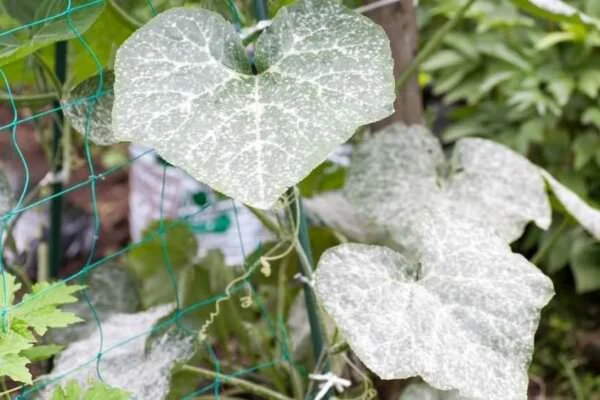
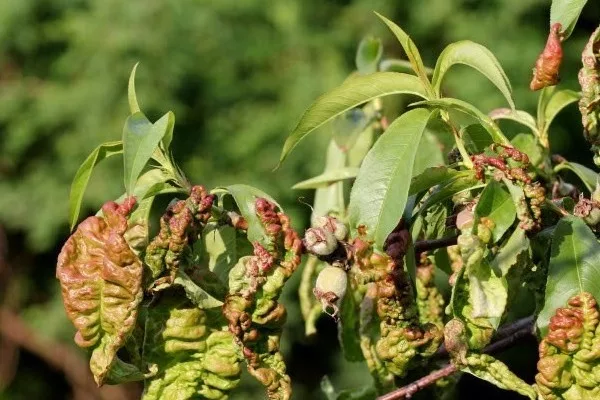
The Belmondo peach has good immunity to most diseases, but if not properly cared for, especially in combination with unfavorable weather, the tree can be affected by powdery mildew, moniliosis, and other diseases.
- In early spring, before the buds open, treat with 3% Bordeaux mixture.
- After flowering, repeat the treatment with 1% Bordeaux mixture.
- In autumn, after the leaves have fallen, carry out a final treatment with 3% Bordeaux mixture.
As a preventative measure, the tree is sprayed with Bordeaux mixture in the spring and fall. In the spring, a horsetail decoction is also recommended, with treatments repeated every two weeks until summer arrives.
Among the most dangerous pests for the Belmondo peach are the oriental fruit moth, aphids, scale insects, and codling moths. Popular insecticides and standard preventative measures are used to control the insects, such as bark stripping, cleaning the trunk area, whitewashing, etc.
Collection and storage
With the arrival of August, the harvest begins, preferably in the morning or evening, and always in dry weather. The harvest is carried out with extreme care to avoid damaging the skin. The fruits are stored in a single row in special fruit crates.
Fresh peaches are stored in the refrigerator at 0°C. Under these conditions, the fruit retains its freshness and flavor for several days. The fruit can also be frozen, after removing the pits and slicing.
Reviews
The Belmondo variety is undoubtedly of interest to lovers of fig peaches. It's a promising variety, boasting a host of qualities that no amateur gardener will overlook. Thanks to its unusual fruit shape and wonderful flavor, this variety is ideal for commercial cultivation.