
The pineapple apricot is an incredibly delicious fruit with hints of pineapple. This variety is considered a complete copy of the Armenian apricot called Shalah (and some even believe it is the same), but in reality, this is not the case, as it was bred by Russian scientists.
Breeding history
The Ananasny apricot's origin is Crimea, as the breeding work was carried out at the State Nikitsky Botanical Garden. It was created by crossing the Shalakh variety with another apricot species. The hybrid immediately gained well-deserved popularity, but despite this, it was never included in the Russian state register.
The hybrid's development took place in the first decades of the 20th century, during the Revolution. This very factor led to the lack of registration of the Pineapple Apricot.
Description of the variety
This variety adapts well to different climatic conditions, and is therefore grown by gardeners throughout Russia, even in some areas of the northern part of the country.
Tree
The pineapple apricot tree has an average height of 3 to 4 m, but the crown of the plant is also quite wide.
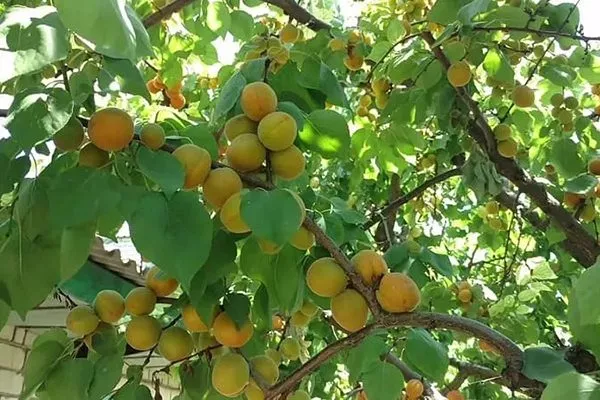
Other characteristic features:
- crown – spreading-rounded, quickly thickening;
- shoots are smooth, of a standard brownish hue;
- leaves - quite wide with a bright green color;
- Flowers are usually white, but can have a pinkish tint.
Fruit
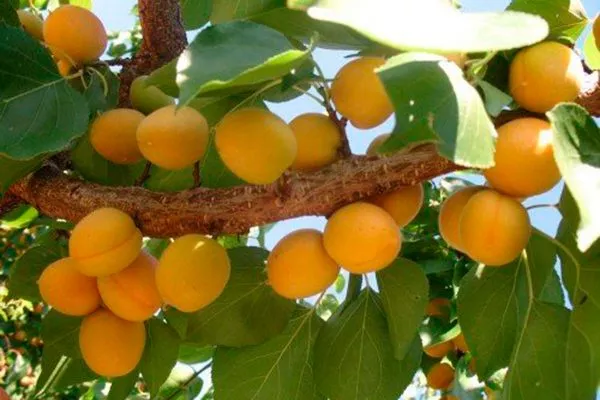
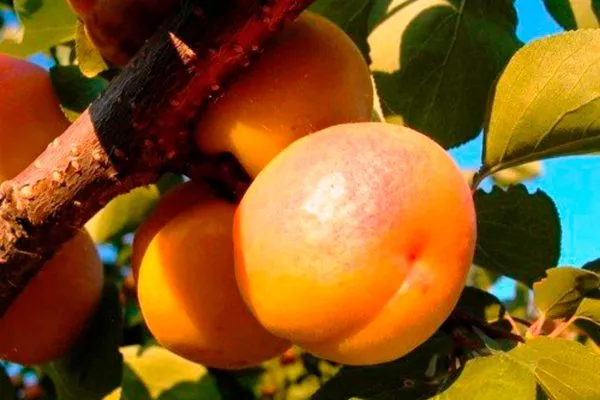
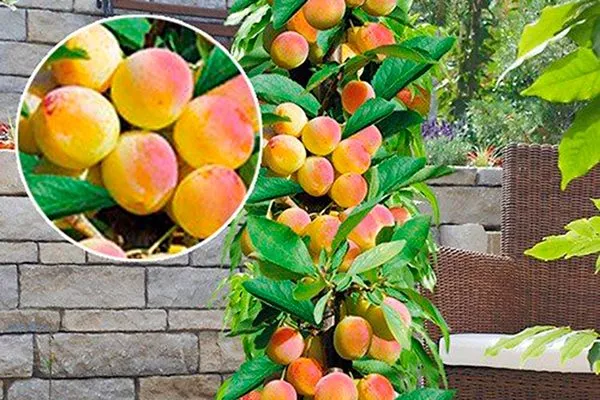
Pineapple apricots are easily recognized by their fruit color—they're not orange, as is typical for this crop, but light yellow. When grown in very sunny areas, the skin takes on a golden hue.
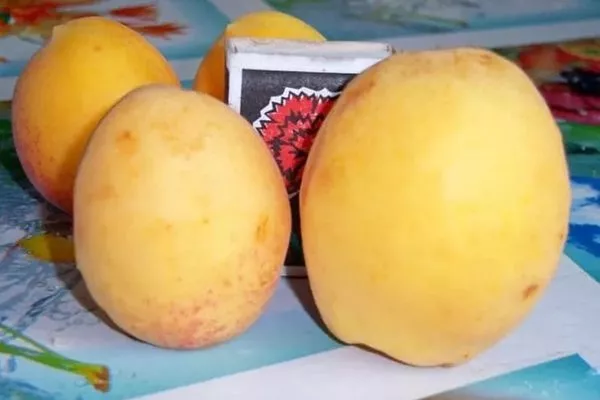
Other characteristics of the fruit:
- surface – characterized by roughness, bumpiness and matte finish;
- shape - slightly elongated;
- peel type – thin and very delicate, slightly pubescent;
- the weight of one fruit varies from 35 to 45 g;
- the pulp is also light yellow (resembles pineapple), tender, slightly compacted and with fibers that are not tough;
- taste – sweet with sourness and notes of pineapple;
- juiciness – increased;
- the stone is very small in size for such a large fruit and separates from the pulp quickly;
- The kernel in the pit is sweet, so it is used in cooking.
The seeds are recommended for oral consumption, as they are characterized not only by their pleasant taste but also by a wealth of beneficial substances. However, it is prohibited to consume more than 15-20 grains per day, as they also contain hydrocyanic acid.
Agrobiological characteristics
Agrobiology is a key factor when selecting an apricot variety. It allows for an early assessment of the crop's strengths and weaknesses.
Drought and frost tolerance
Pineapple apricots easily tolerate prolonged drought. Even in southern regions with hot summers, frequent watering is not necessary. High humidity is a much more difficult situation, as it promotes the development of rot and fungal diseases, so pay special attention to your watering schedule.
The variety can survive without winter cover in the south and central parts of Russia, but in other regions, the trunk must be covered for the winter. This is because the tree does not freeze at temperatures down to -27 degrees Celsius. It will also survive temperatures of -30 degrees Celsius, but only if the temperature is short-lived.
Resistance to diseases and pests
Pineapple apricots are resistant to many diseases and pests, but fungal diseases are most common due to overwatering or frequent rainfall. Pests are also rare, occurring only when infected plants are growing nearby.
Flowering period and ripening time
The hybrid is late-ripening, so the first flowers appear only after mid-May. However, the harvest can be completed by the end or even mid-July.
Self-fertility and the need for pollinators
The Ananasny variety is completely self-fertile, so the trees can be planted individually. Apricots also do not require insect pollination.
Productivity and fruiting
The first fruiting after planting occurs as early as the third year in southern regions and as early as the fourth year in cooler climates. This pineapple hybrid is characterized by a fairly long fruiting period—at least 25 years, up to 30 years.
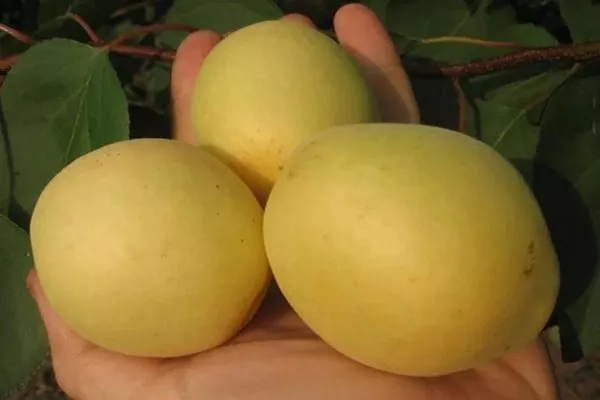
The yield is truly exceptional—the average yield from a mature tree is 50-60 kg. However, some growers harvest as much as 100-150 kg. However, keep in mind that in the first 2-4 years after planting, the yield will be half as much.
Application of fruits
Pineapple apricots have a unique flavor, making them ideal for making unique preserves, juices, jams, compotes, jellies, and other preserves. They are also suitable for drying and freezing.
Chemical composition of the fruits of the Pineapple apricot variety
This variety is rich in beneficial nutrients, particularly vitamins C, PP, B1, A, and P. The fruit contains large amounts of carotene and various micronutrients. It also contains tannins, which contribute to its slight astringency.
They contain pectin, organic acids, and fiber. But what's especially pleasing to children and adults alike is their sugar content—27%, a high figure compared to other varieties. This means the fruit is more sweet than sour, and little granulated sugar is required for preserves.
Beneficial properties
The benefits of the Pineapple apricot for the human body cannot be underestimated. The fruit contains enough carotene alone to meet the daily requirement. Rich in a variety of nutrients, the fruit has a beneficial effect on health, contributing to:
- stimulation of the hematopoiesis process;
- strengthening the immune system;
- acceleration of metabolism;
- relieving nervous and muscular excitability;
- restoration of the functionality of the gastrointestinal tract;
- removal of cholesterol and other harmful compounds;
- improving the condition of the cardiovascular system.
Advantages and disadvantages of the variety
Features of planting seedlings
In planting work, important factors include soil composition and structure, proximity to other crops, site and seedling preparation rules, and step-by-step procedures for introducing planting material into the soil.
Recommended timeframes
Planting time is determined by region. In the south and central parts of the country, trees can be planted in both spring and fall. However, in harsher climates, spring planting is preferred.
Please keep some points in mind:
- in autumn, you need to plant around September, so that there are at least a month and a half left before frost;
- in spring, work is carried out after the air temperature has stabilized within the range of +12…+15 degrees;
- It is prohibited to plant seedlings during the period when flowering has already begun.
Choosing a suitable location
Although the variety is designed for harsh climates, the tree remains heat-loving by nature. Therefore, it's important to select sites with maximum sun and light, but always at elevated elevations free from drafts and high humidity.
Please also note other requirements:
- location - preferably southern, but if it is northern or other, then you can install a fence that will protect the plant from cold wind;
- In cool regions, experts recommend planting the hybrid near buildings, as they give off their heat to the trees at night;
- distance from a building or fence – about 3 m;
- groundwater level – 2-4 m;
- soil - loamy or sandy loam, black soil is also suitable;
- soil structure – moderately loose, but well drained;
- The soil acidity should be neutral or slightly alkaline; acidic soil is absolutely not suitable.
Neighborhood with other cultures
Any apricot variety is a solitary plant, meaning it's not recommended to plant it near other fruit trees or shrubs. Even with other apricot varieties, it's not recommended. If this isn't possible, the minimum distance between them should be 6 meters. This is due to the tree's extensive, branched root system and crown.
Selection and preparation of planting material
It's best to purchase seedlings from specialized nurseries, as there's a risk of buying wild plants at the open market. However, learn how to select the right planting material. Key criteria:
- there should be a bump on the tree at the grafting site;
- the roots are elastic and “alive”, well developed;
- all parts of the seedling should not show signs of pests or diseases;
- bark - smooth, without damage;
- shoots are straight and not deformed;
- presence of leaves;
- the height of the tree is about 70 cm;
- age – from 1 year to 2 years.
- ✓ The presence of a graft tubercle is required to confirm the varietal identity.
- ✓ The root system should be elastic, without signs of rot or dryness.
- ✓ The bark of the seedling should be smooth, without damage or cracks.
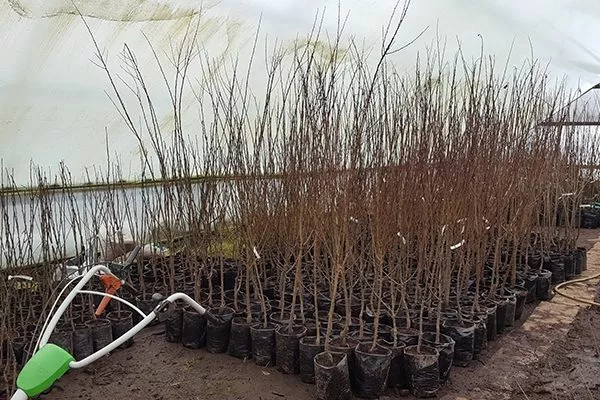 There is no need to prepare the seedlings in any special way; it is enough to slightly shorten any excessively long roots and soak the root system in a growth stimulator (Heteroauxin or similar) for several hours.
Site preparation
Preparing a garden for planting the Pineapple apricot involves simple steps aimed at improving the soil composition and structure. But first, remove all debris, broken branches, and old or fallen leaves from the area.
It's crucial to pay attention to the soil acidity for this variety. If you can't measure it, experienced gardeners recommend focusing on the soil type. High acidity is typical for sod-podzolic, red earth, and peat soils. To achieve an alkaline environment, follow these steps:
- Add about 100-120 g of quicklime to 50 liters of water.
- Mix until there are no lumps.
- Water the area with this solution. The mixture should saturate the soil to a depth of 20 cm.
Next you need to prepare the place:
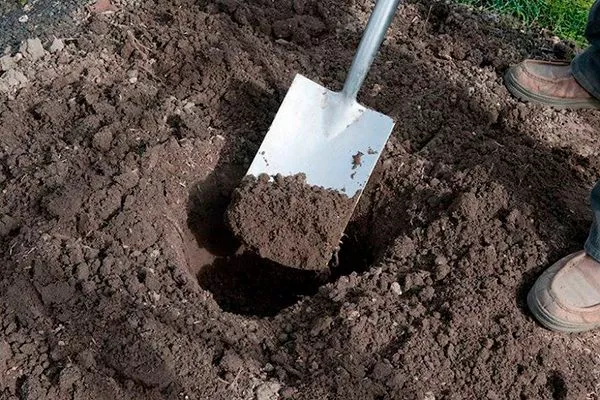
- Dig the soil to the depth of a shovel blade.
- Level the surface.
- Dig planting holes. The diameter should be about 60 cm and the depth 65 cm. First, remove the top 20 cm of soil and set it aside.
- Add 6-7 kg of rotted manure, humus or compost to the topsoil.
- Add 1 liter jar of wood ash and 500 g of bone meal.
- Add a complex mineral fertilizer. You can also make your own: nitrogen (200 g), saltpeter (100 g), and phosphate (500 g).
- Mix everything thoroughly and form one pile.
- Cover the slide with plastic wrap.
The process of planting young seedlings
Planting begins 3-4 weeks after the preparatory procedures. Follow these steps:
- On the day of planting, remove the covering from the pile of substrate.
- Loosen the mass.
- Place a 10 cm layer of drainage material (stones, pebbles, etc.) at the bottom of the planting hole.
- Fill the hole 1/3 full with prepared substrate.
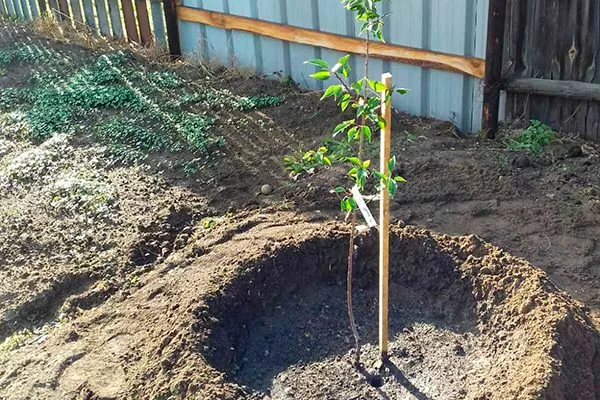
- Form a mound and immediately install a wooden stake. It should be 15-20 cm higher than the seedling after planting. Install the stake immediately, as it can damage the roots after planting.
- Dip the tree's root system in a thick clay slurry.
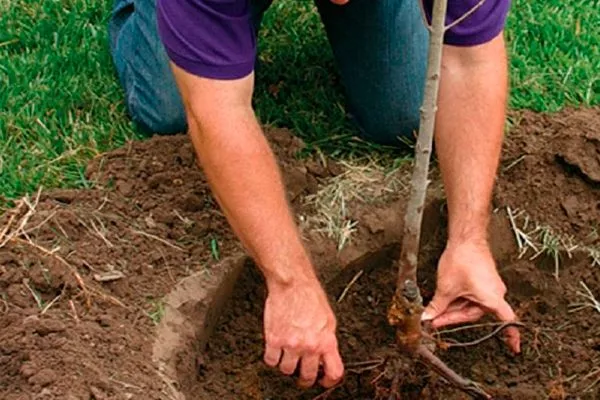
- Place the seedling in the hole and install it.
- Straighten the roots.
- Cover with the remaining soil mixture. Apply gradually, compacting each layer well and gently shaking the seedling. Ensure the root collar or grafting point is 5-6 cm above the bed level.
- Make a groove or earthen embankment around the tree trunk (water will not flow out during watering).
- Pour in about 20-25 liters of settled water.
- Place a mulch of humus or manure around the area.
- ✓ The soil should be pre-moistened, but not over-watered to avoid root rot.
- ✓ The planting site should be protected from direct sunlight during the first weeks after planting.
Apricot tree care instructions
Caring for the Pineapple apricot tree is quite simple: it requires occasional watering and feeding, careful preparation for winter, and preventative treatments to eliminate the risk of infection and pest infestations.
Prevention and protection from pests and diseases
Although the Pineapple Apricot is considered resistant to diseases and pests, these problems sometimes arise. What's common?
- Gray rot. It manifests itself as grayish or brown spots with black dots on the fruit. Teldor is used for treatment, and Switch is used for prevention.
- Valsa's mushroom. Branches and trunks are affected, developing yellow-orange ulcers. This can be treated with Switch, but Bordeaux mixture is a better preventative.
- Bacterial spotting. Bacteria colonize foliage and fruit, forming brownish spots that eventually cause them to dry out. Copper sulfate is used for treatment and prevention.
- Verticillium wilt. The disease destroys the lower part of the crown. Treatment and prevention are simple: Bordeaux mixture.
- Plum pox. The fruit is affected—it becomes wrinkled and has beige spots, and ripens prematurely. Treatment is with various fungicides.
- Plum codling moth. The caterpillar eats the fruit completely.
- Plum sawfly. It appears during budding, as it eats away the flowers.
- Leaf roller. It is localized in the leaves, causing them to curl.
- Aphid. Two types of insects appear on apricot trees: black and green aphids. They primarily live in the lower parts of the tree, sucking the sap.

Insecticides are used to control pests. For insect and disease prevention, the best option is an inexpensive, yet versatile and effective solution: Bordeaux mixture.
Watering
This variety absolutely does not tolerate overwatering, so it's important to pay close attention to the watering schedule. This should be done sparingly:
- in spring, when shoot growth is activated;
- during flowering;
- before fruiting.
When the fruits begin to ripen, avoid watering the plants, otherwise the fruit will become too watery. Approximately 40 liters of water should be applied per tree at a time.
Feeding scheme
Fertile soil for all crops guarantees high-quality fruits and decent yields. Avoid overdosing, as this will cause a negative reaction. The following fertilizer application schedule is typically used for the Pineapple variety:
- Every three years, it's necessary to add organic matter, such as humus, compost, and manure. About 6 kg is required per square meter.
- The first feeding of the season is done in the spring, before the buds swell. Nitroammophoska, urea, or ammonium nitrate are used. 25 g of any substance is needed per square meter.
- During budding, a mullein solution is used. To prepare it, mix 2 liters of concentrated organic matter with 10 liters of water and let it steep for about a week. Then dilute the mixture in water at a ratio of 1:10.
- When ovaries begin to form, apply potassium monophosphate or potassium sulfate. 15 g is required per 1 square meter.

If the soil is depleted, you can use complex fertilizers - nitrogen in the spring, phosphorus-potassium in the summer, and only potassium in the fall.
Pruning and crown shaping
Since the Pineapple apricot tree's crown quickly thickens, pruning is essential. This should be done in the spring:
- In the year of planting the seedling, the central conductor must be shortened to the area where the lateral branches begin to branch out.
- In the second and third years, the central conductor is shortened again, but by 1/3 of its height. The skeletal shoots are pruned, but four branches should be left, equally spaced. This will help form a cup-shaped crown.
- In subsequent years, you just need to maintain the already formed crown.
Sanitary pruning is carried out twice a year: in the spring, frozen and rotten branches are removed, and in the fall, those that were damaged during the growing season.
Preparing for winter
Regardless of frost resistance, all fruit trees need to be prepared for winter. The Pineapple variety is no exception, so pay attention to what needs to be done in the fall after harvesting:
- First, apply fertilizer - potassium-based;
- Next, carry out a moisture-charging irrigation, for which pour about 60 liters of water under the tree;
- After this, mulch the trunk area with organic matter - a layer of about 10-20 cm, which depends on the growing region and climatic conditions;
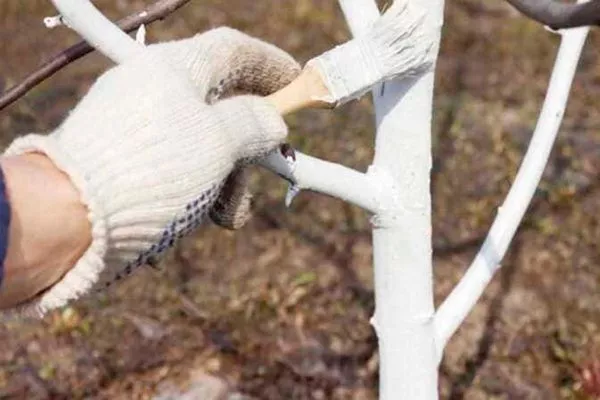
- whitewash the trunks and the beginning of the skeletal branches.
If there is a need for shelter, do it using agrofibre, burlap, spruce branches, straw, sunflower or corn stalks, or polypropylene.
Harvesting and storage
The fruit should be harvested as it ripens. It's undesirable to allow it to become overripe, as this will encourage the development of disease-causing bacteria. Furthermore, it will have a poor shelf life and significantly diminish its flavor.
If you need apricots for consumption, you can wait until they are technically ripe, but if you plan to store them, pick them 7-10 days before they ripen.
Fresh pineapple apricots don't have a long shelf life—a week at most—but during this time they can easily be transported over long distances. A refrigerator or cellar/basement where the temperature does not exceed 3 degrees Celsius is ideal for storage.
Methods of reproduction
The Pineapple apricot can be propagated by only two methods: seeds and cuttings. Each has its own characteristics. A brief description of the propagation methods:
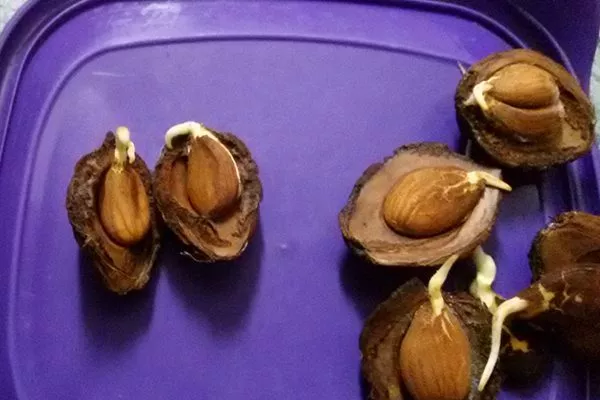
- Seminal. This is considered labor-intensive and difficult, taking a lot of time. To do this, the seeds are soaked in water in the fall, then buried in the garden soil and covered with a peat mixture and leaves. A sprout should appear in the spring, which will grow to the seedling stage for another two years.

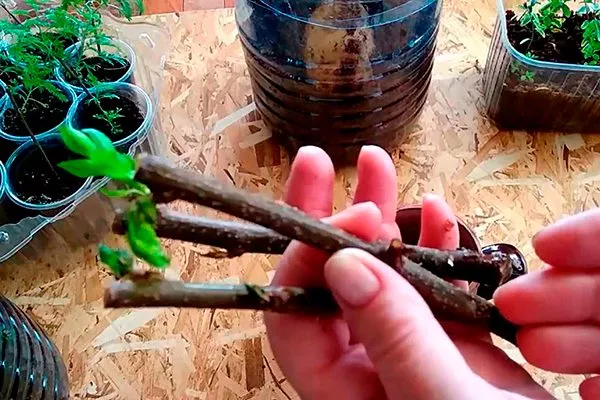
- Cuttings. The Pineapple apricot is the best option because the seedlings can be planted in their permanent location immediately after the shoots take root. For propagation, healthy cuttings are selected, cut, soaked in a rooting agent, and rooted in water. After this, they are transplanted into separate containers with a special substrate.
Popular types of Pineapple Apricot
| Name | Disease resistance | Ripening period | Fruit size |
|---|---|---|---|
| Pineapple apricot | High | Average | 35-45 g |
| Tsyurupinsky | Average | Early | 40-50 g |
| Shalah | High | Average | 30-40 g |
| Columnar | Average | Late | 25-35 g |
There are varieties associated with the Pineapple Apricot. Many even confuse them:
- Tsyurupinsky. It was bred in the Tsyurupynsky district of the Kherson region. It is reported that the Pineapple Apricot variety was used as the parent plant. It is characterized by an exceptionally high yield, reaching 120-150 kg.
- Shalah. This is a product of Armenian breeders. It was from this variety that the Pineapple apricot was developed. However, the Shalah variety lacks the sourness and its skin is more orange.
- Columnar. Its flavor is similar to that of the Pineapple variety. It's also yellow in color, but has crimson sides. Its distinctive feature is its maximum height of 2-2.5 m.
Reviews
Pineapple apricot is a mid-season variety. It boasts excellent flavor and yield. It's easy to grow in all regions of Russia and requires little effort to plant. Its versatile use allows it to be used in delicious preserves, so you can enjoy these sweet, pineapple-flavored fruits year-round.