
The Lel apricot is a successful hybrid suitable for cultivation not only in the southern regions but also in the central and central parts of Russia, the Urals, the Far East, and Siberia, which is especially important for residents of these regions. This variety has excellent characteristics, is easy to plant and care for, and is versatile.
History of selection
Breeders L. A. Kramarenko and A. K. Skvortsov spent 18 years developing the Lel variety. This took place on the grounds of the country's main botanical garden. Breeding began in 1986, but the apricot was only added to the state register in 2004.
Pollination experiments were conducted throughout these years, and experienced gardeners were given seedling samples for testing. As a result, the most optimal and frost-resistant hybrid was developed.
Description of the variety
Apricot Lel is a medium-sized crop that has the following differences in appearance:
- Tree. It grows to 3 or 4 meters tall and resembles a mushroom, making it compact and neat. Its crown is spreading, but moderately dense. The shoots are straight and bare, reddish in color when young, but become much darker as they mature.
The leaves are ovate, with a short, pointed tip and a shiny, smooth surface on the outer side and a matte inner surface. They are dark green in color and have serrated edges. The leaves are arranged alternately. - Flowers. During budding, medium-sized flowers (3 cm in diameter) of a light pink hue form. They are densely packed in the leaf axils and are distributed throughout the entire shoot, significantly increasing yield.
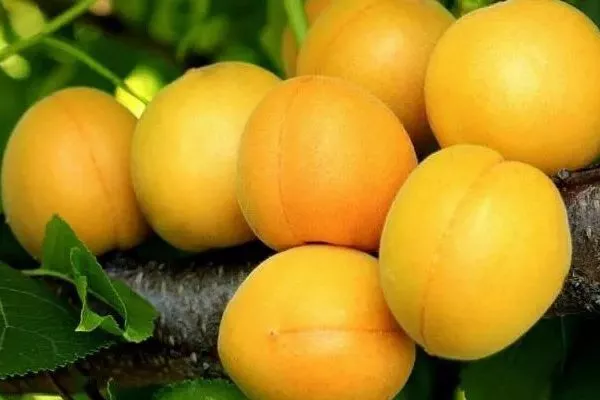
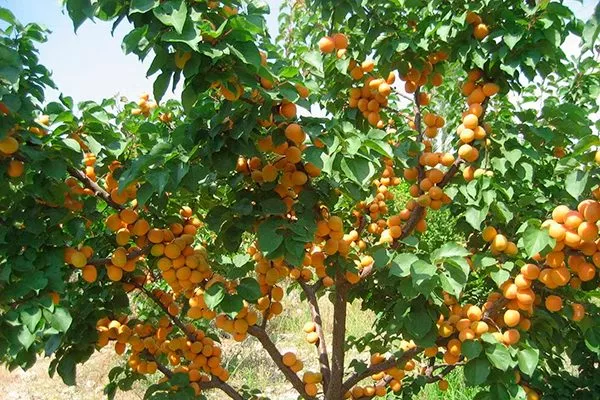
- Fruit. They have a perfect round-oval shape with slight flattening on the sides. They weigh about 20 grams, are a standard orange color, and have a large pit. The skin is very smooth and glossy, with almost no hair. It separates easily from the juicy flesh, as does the pit.
The pulp is dense, even at technical maturity, due to which the fruit does not spread or crush, which improves transportability and shelf life. - Taste. It combines sweetness and a slight tartness, containing 16.8% sugar and only 2.8% titratable acids. The official tasting score is 5 out of 5. The aroma is exclusively apricot, with no other notes.
Characteristics
Each crop, and even a single variety, has its own characteristics, especially in terms of resistance to various adverse factors, yield, etc. Therefore, before planting the Lel apricot variety, carefully familiarize yourself with all its characteristics.
Drought resistance, frost resistance
The average frost resistance of the Lel variety ranges from -25 to -30 degrees Celsius. Therefore, even in the Moscow region, the tree does not require winter shelter. However, keep in mind that proper preparation of the tree in the fall is essential for this. The apricot also easily tolerates spring frosts, but only to a maximum of -3 degrees Celsius.
This variety thrives in dry weather and doesn't require excessive watering. High humidity is much worse for Lel, as it can cause rotting in the root system. The plant can easily survive without water for 2-4 weeks.
Resistance to diseases and pests
The Lel apricot has average disease and pest resistance. Therefore, preventative treatments are crucial in early spring and throughout the growing season.
Pollination, flowering period and ripening time
Lel apricots are self-pollinating, so they don't require other pollinators or insects nearby to set fruit. However, planting nearby pollinators significantly increases yield. Ideal varieties for Lel include Vodolay, Iceberg, Grafinya, and Alyosha.
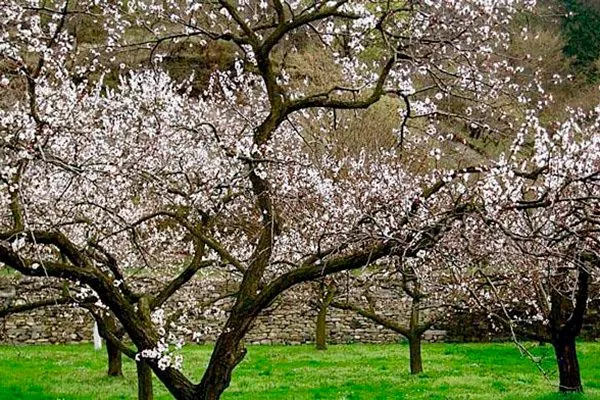
It is easy to determine whether a tree is self-fertile: if the flowers contain ovules and stamens with pollen, then the plant is capable of pollination.
Lel begins to bloom in late April or mid-May, depending on the growing region and current weather. The harvest is ready approximately two months later, in late June or mid-July.
Productivity, fruiting
The Lel apricot tree bears fruit early, so the first harvest can be collected as early as the third year after planting. However, during the first couple of years of fruiting, the yield will be modest, but once the tree reaches five years of age, a yield of 30-40 kg per tree can be expected.
Application of fruits
The Lel apricot variety is considered versatile, as the fruits are eaten both fresh and processed. They are used to make the following:
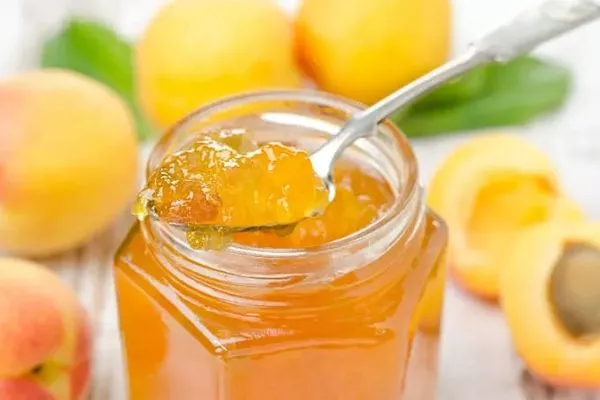
- jam, marmalade, jelly for the winter;
- compotes and juices;
- fillings for pies and pastries;
- various desserts;
- sauces;
- baby puree;
- dried fruits.
Chemical composition of apricot fruits Lel
The pulp and skin of the Lel apricot contain many nutrients – phosphorus, potassium, iodine, vitamins H, C, B, and A. The product is completely dietary, as 100 g contains only 44 kcal.
Advantages and disadvantages
The Lel variety has many positive aspects.
Features of planting seedlings
The Lel apricot variety follows standard planting practices. However, it's important to consider the unique characteristics of this variety.
Recommended timeframes
You can plant Lel apricot seedlings in either fall or spring. However, spring is best, as the young trees will have time to establish themselves and grow stronger during the season, making them easier to survive their first winter. Specific timing is difficult to determine, as it depends on climate and weather conditions. However, there are some general principles to follow:
- stabilization of soil temperature within the range of +10 to 012 degrees, and air temperature around 15 degrees;
- The work is carried out at the very beginning of sap flow, even before the buds begin to swell.
When planting in autumn, the main time indicator is at least a month before the expected frost.
Choosing a suitable location
Apricots are traditionally grown in the south, so regardless of the region, it's important to choose a sunny site. This will ensure a quick and very sweet harvest. However, there are other site considerations:
- groundwater level – 1-1.5 m;
- drafts - there shouldn't be any;
- the terrain is elevated;
- the soil is loose, neutral in acidity and fertile;
- distance from the wall – minimum 2 m;
- distance from other trees – 3-4 m.
Neighborhood with other cultures
Apricot Lel prefers to grow away from other crops, especially when it comes to cherries, sour cherries, pears, apples, nuts, plums, raspberries and any currants.
Selection and preparation of planting material
Saplings can be purchased at the market, but it's best to buy from official certified nurseries. Sometimes neighbors or relatives share planting material. Regardless of where you get your young tree, pay attention to its quality. Otherwise, it's unlikely to take root and bloom this year.
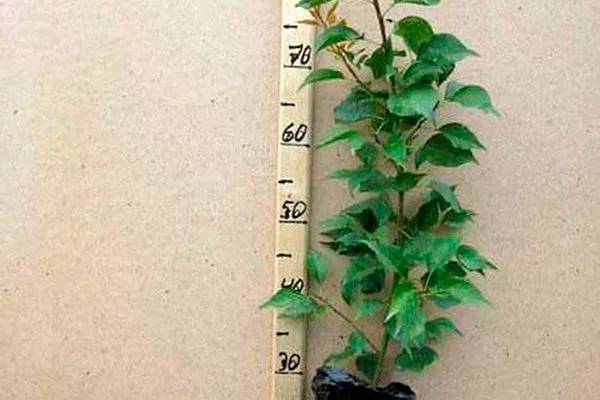
- ✓ The presence of a grafting rootstock indicates the varietal affiliation.
- ✓ The root system must be free from signs of rot and mechanical damage.
Selection criteria:
- the presence of a grafting burr (thorns indicate not the variety, but the wild plant);
- age – from one to two years;
- the root system is elastic, fully developed and without signs of disease or dryness;
- shoots - with a smooth surface, without damage to the bark, light green in color.
Seedling preparation begins on the day of planting. This involves inspecting the root system and aboveground portions, removing any unsuitable elements, and slightly shortening the shoots to encourage faster growth. Many gardeners soak the roots in a rooting agent (Epin, Heteroauxin, Kornevin).
Site preparation
To plant Lel seedlings successfully, it's important to prepare the site in advance. Experienced gardeners do this 3-4 months before planting, but 3-4 weeks is also possible.
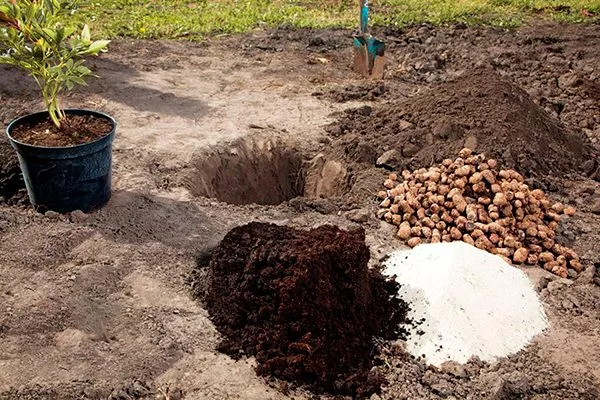
What needs to be done:
- Clear the area of debris, branches, leaves and weeds.
- Dig over the soil, removing the roots of grasses and other crops. This is especially true for the areas where the planting holes will be formed.
- When digging, add organic and mineral fertilizers to the soil. Per square meter, you need about 4-5 kg of rotted manure, humus, or compost and 200-300 g of superphosphate (another product with an identical composition can be used).
The process of planting young seedlings
Once the above-mentioned preparatory period has passed, you can begin planting the seedlings. Follow these simple instructions:
- Dig a planting hole 70-80 cm deep. If you have several seedlings, stick to the following pattern: 70x70 cm between trees.
- Place drainage material (expanded clay, pebbles, bricks, stones or similar) in a layer of up to 20 cm at the bottom of the hole.
- Mix the excavated soil from the top layer with a small amount of humus and add one liter jar of dry crushed wood ash for each hole.
- Place the nutrient substrate into the hole to about 1/3 of its capacity and form a mound.
- Place the prepared seedling on the mound and, using careful movements, position the roots on all sides.
- Drive a wooden stake nearby, which should be 25-30 cm higher than the seedling.
- Fill with the remaining soil mixture and compact.
- Make a shallow hilling of the trunk, and dig a ditch for irrigation in the area around the trunk.
- Fill the tree trunk circle with 20 liters of warm, settled water.
- Mulch with any natural material (sawdust, grass, straw, peat).
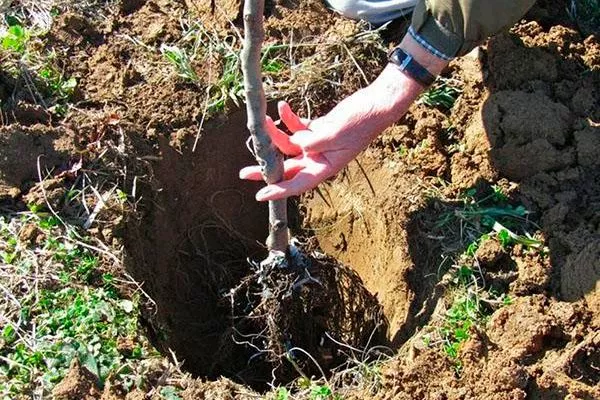
In southern regions, it is important to install a protective screen from the sun's rays for approximately 7-10 days.
Apricot tree care instructions
Growing the Lel apricot isn't as difficult as beginners might think. It requires fairly standard care. The only thing you should pay special attention to is preventative maintenance.
Prevention and protection from pests and diseases
Due to the average resistance of the Lel variety to diseases and pests, it is necessary to prevent infestation and insect attacks.

What you need to do:
- In early spring, spray the trees with insecticides and fungicides (you can use a universal product - Bordeaux mixture in a concentration of 3%), repeat the procedure 2 times with an interval of one month;
- perform sanitary pruning;
- Water properly throughout the growing season.
To protect apricots from harmful insects, you can plant lavender, marigolds, dill, or calendula under the trees.
Watering
You shouldn't overwater Lel apricot trees, but you should keep the following rules in mind:
- in the first year after planting, add water once a month in the amount of 20-30 liters;
- in subsequent years, it is enough to water the trees 4 times per season, but if you mulch the trunk circle, the frequency is reduced to 2 or 3 times;
- the amount of water for an adult tree is 30-50 liters, depending on the size of the plant;
- Increase the diameter of the watering hole annually;
- During rainy summers, avoid watering completely;
- Add only warm water that has been allowed to settle.
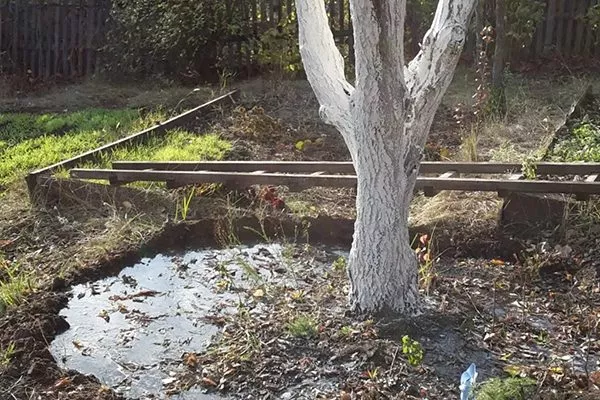
The final irrigation is performed immediately after harvest. This involves adding approximately 60 liters of water as a pre-winter moisture boost.
Feeding scheme
Fertilizing apricots is crucial, as fertility affects not only the tree's health but also the yield and flavor of the fruit. The basic recommended fertilization schedule for the Lel variety is:
- In early spring, use nitrogen-based fertilizers (you can add a urea solution). The following year, use other organic matter, such as chicken manure, manure, or compost. Apply 5 kg per square meter.
- In summer, foliar feeding with preparations based on boric acid, manganese sulfate and iron is recommended.
- In the fall, use fertilizers containing phosphorus and potassium, and add a little wood ash. This will restore strength and prepare the plants for winter.
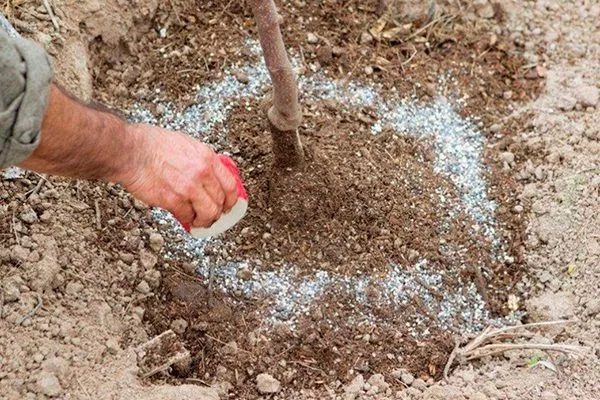
Sometimes, the seeds inside the fruit begin to crack, which impairs the quality and flavor of the pulp. In this case, slaked lime is applied at a rate of 300-400 g per square meter. The cause is increased soil acidity.
Pruning and crown shaping
The Lel apricot tree is pruned twice a year. This is a sanitary procedure that involves removing rotten, dried, and damaged branches. This is done in spring and fall. It's also important to shape the crown in the spring. Here's how:
- in the year of planting, only the central shoot is shortened - the top is cut to 4 buds;
- the next season, the lateral shoots are shortened by 1/3, and 3 horizontal branches are left;
- in the third year, it is important to slightly trim the central trunk and shorten all new and lateral shoots;
- in the fourth year, repeat last year’s procedure;
- From the fifth year onwards, shaping is not required, unless the gardener wishes to make the tree shorter, for which all shoots are shortened each spring.
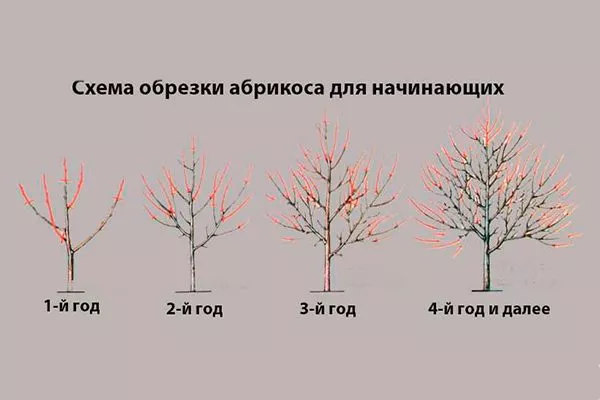
Any pruning should leave behind the longest shoots on the first tier, the middle ones on the second, and the shortest ones on the last.
Preparing for winter
In southern and central Russia, Lel apricots are most often left uncovered, but if temperatures below -35°C are expected, it's necessary to do so, otherwise young branches (from the current year) may freeze. However, in all cases, preparatory measures are required before wintering. These include the following:
- moisture-charging irrigation;
- sanitary pruning;
- clearing leaves, broken branches and fruit debris from the area;
- whitewashing the trunk and skeletal branches;
- digging and loosening the near-trunk area;
- application of fertilizers;
- hilling up a tree;
- mulching;
- installation of a mesh structure to protect against rodents.
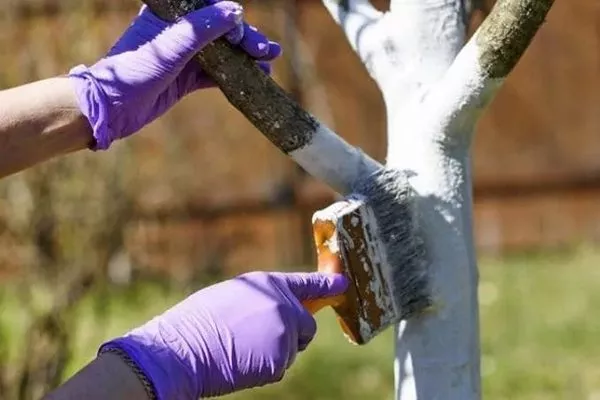
If cover is required, you can use agrofibre, snow or other suitable material other than polyethylene.
Harvesting and storage
Lel fruits are harvested gradually, as each fruit ripens. This typically takes 30-35 days. They are stored in a cool room with temperatures ranging from 0 to 1°C and humidity of 80-85%. Under these conditions, the fruits remain edible for approximately 15 days.
Gardeners' reviews
The Lel apricot is a versatile variety characterized by its ease of cultivation, simple planting, and surprising frost resistance for an apricot. The key is to master the basics of cultivation techniques and adhere to them.