
The Northern Triumph apricot is a shining example of domestic breeding and a testament to its boundless potential. Thanks to Triumph, this heat-loving crop has become available to gardeners in most regions of Russia.
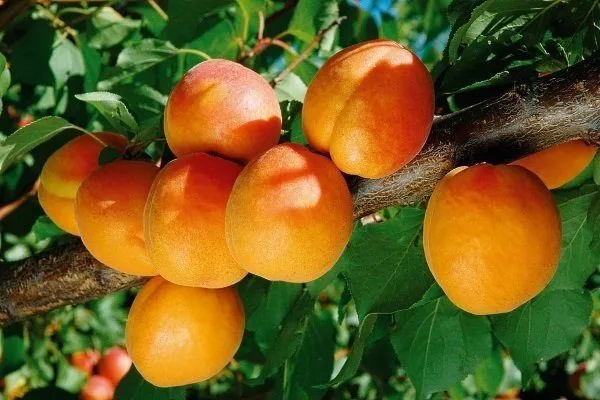
Apricot "Northern Triumph"
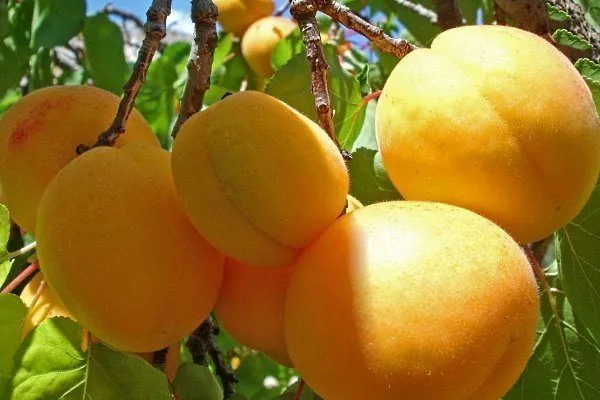
The apricot variety 'Northern Triumph' is able to withstand low temperatures
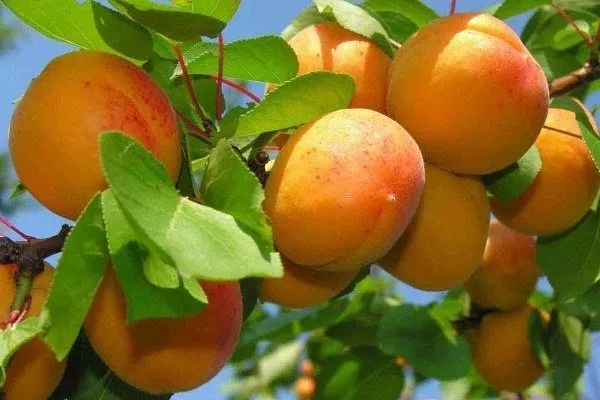
The ripening of the fruits of "Northern Triumph" occurs from the end of July to mid-August
Description of the variety and its characteristics
Description of the Northern Triumph variety:
- Tree. The mature tree reaches 4 m in height. It is vigorous, with thick branches and a spreading crown. The leaves are large, slightly pointed, and the edges are finely serrated. The flowers are large and white.
- Fruit. The color is yellow-pink to orange-yellow. It has a red blush of varying intensity. The shape is slightly elongated. Weight is 30-40 g. With proper care, the fruit can reach 50-60 g. The taste is pleasant and sweet, and the flesh is juicy. The skin is medium thick and slightly velvety, with a slightly tart taste. The seeds are large and easily separated from the flesh.
The fruits cling securely to the branches, and if unripe, they don't fall off even during strong winds. The pits taste similar to almonds.
Northern Triumph flowers have pistils that are much longer than the stamens. When spring arrives too early, the flowers may lose their pistils due to a shift in natural timing and a lack of warmth.
Main agrotechnical characteristics of the Northern Triumph variety:
| Characteristics | Parameters/Description |
| Productivity | 60 kg and more |
| Ripening time | last ten days of July - beginning of August |
| Precocity | fruiting - in the 4th-5th year after planting |
| Fruiting periodicity | Once every 3-5 years there is a lean season |
| Pollination | self-fertile |
| Frost resistance | high |
| Resistance to diseases and pests | high |
| Drought resistance | weak-average |
| Duration of fruiting | 20-40 years old |
The Origin of the Northern Triumph
The Severny Triumph variety was developed by Soviet breeder A.N. Venyaminov by crossing the Krasnoshchyok and Zabaikalsky Severny varieties. This selection resulted in an apricot that inherited the former's large, tasty fruits and the latter's frost and drought resistance.
At first, the variety was zoned in the south of the Central Black Earth region, then it began to be grown in the central zone, in the Urals, and in Siberia.
Advantages and disadvantages of the variety
Northern Triumph is capable of bearing fruit in areas with harsh winters and short summers—this is the variety's main characteristic and advantage. Its other advantages include:
- High fruiting rate. The tree begins bearing fruit quickly. Already in the fourth year after planting, the tree produces 4-5 kg of apricots.
- Excellent flavor characteristics. Apricots with tender, juicy flesh have a pleasant taste.
- High frost resistance. Tolerates temperatures down to -40°C, provided temperatures remain stable.
- There is no tendency to shed. The fruits are firmly attached to the branches.
- Disease resistance. The variety is particularly resistant to fungal diseases.
- Self-pollinating. It doesn't need pollinators—it produces fruit fully on its own.
- Ornamental. The tree looks very beautiful during flowering.
If pollinating varieties are grown nearby, the yield of Severny Triumph increases. Suitable apricot varieties include Luchshiy Michurinsky and Amur.
The gardener provides a video review of the "Northern Triumph" variety:
Flaws:
- Skeptics believe that the Triumph variety does not produce large enough fruits.
- There is also an opinion that the fruits of this variety do not produce tasty enough preserves.
- The most serious drawback is the risk of freezing of flower buds.
- Irregular fruiting. The tree has "empty" years.
- Does not tolerate sudden temperature changes well.
- It does not tolerate prolonged drought well, as the roots are located close to the surface.
How does landing take place?
When planting the Northern Triumph apricot, it's important to provide the sapling with a comfortable and nutritious environment. To ensure the tree thrives, it must be planted correctly. Besides the traditional method of planting saplings in holes, another option is to plant them on mounds.
- ✓ The optimal soil acidity for the Northern Triumph apricot should be within the pH range of 6.0-6.5.
- ✓ The distance between trees when planting on hills should be at least 4-5 meters to ensure sufficient space for the root system to grow.
Along Zheleznov, Baikalov and Chuguev
If the root collar of a seedling is in the ground, the plant will rot and die. Equally dangerous are situations where the base of the trunk is exposed to water—for example, during snowmelt. In a damp environment, the wood rots, nutrients are cut off from the roots, and the tree dies. Hobby gardeners who cover apricot trees with roofing felt, soil, or compost for the winter contribute to the tree's death.
Renowned gardeners Zheleznov, Baikalov, and Chuguev proposed an alternative method for planting apricots that prevents them from rotting:
- Instead of a planting hole, make a mound—a mound of soil mixture. It's made from equal parts of turf, compost, humus, and coarse sand. Manure and peat are not used.
- They compact the mound. Its height is 0.5 m, its diameter is 2 m.
- A hole is made at the top of the hill. Its depth is 1/3 the length of the seedling's roots. A couple of buckets of water are poured into the hole.
- Prepare another 2-3 buckets of soil mixture.
- Place the seedling in the hole, holding it so that the roots are spread out, and cover it with soil up to the root collar. No holes or furrows for watering are needed.
- The slopes are leveled so that there is a gentle descent from the trunk – no more than 45 degrees relative to the surface.
- To strengthen the walls of the hill, grass is sown - for example, creeping bentgrass is suitable.
- The distance between neighboring trees on the hills is 4-5 m.
It's important to orient the seedling correctly to the cardinal directions. Nurseries mark the "south" side of the trunk—it should face south. If you get it wrong, the tree will not thrive and may die.
Determining the timing
Apricots are planted primarily in the spring, before the sap begins to flow and the buds begin to break. It's important to consider the risk of recurrent frosts and delay planting. It's recommended to plant apricots no earlier than when the soil warms to +5…+10°C.
Suitable conditions for planting usually arise in late April or early May, which is when the seedling is planted. However, it shouldn't be taken out of storage early enough to prevent it from waking up prematurely.
Selecting and preparing a landing site
Optimal characteristics of a site for planting apricots:
- good lighting, lots of sun;
- absence of drafts and cold wind;
- the southern side of a building or fence;
- absence of standing water during rains and snowmelt;
- groundwater level – no closer than 2 m from the surface;
- neutral soil reaction, pH level 6-7;
- southern slopes with an inclination angle of 10 degrees.
If the area is level, it's necessary to create a mound or elevation. If necessary, deoxidize the soil by adding lime—0.35 to 0.6 kg per square meter, depending on the degree of acidity.
Planting material
Tips for choosing a seedling:
- The best age is 1-2 years. These seedlings take root better, grow stronger and more productive, and have good immunity.
- The ideal time to purchase is autumn. Even if planting is planned for spring, it's best to buy planting material in the fall—this way you can be sure the seedlings have been stored under appropriate conditions.
- The best place to buy is a specialized nursery or store.
- It's advisable to purchase seedlings with tightly packed root systems. Ideally, they should be in a container.
- The root system of a seedling should be twice the size of its crown.
- The bark should not have any damage, signs of fungus or rot.
How to save a seedling until spring:
- The roots of the seedling are immersed in a mixture prepared from mullein and clay.
- Wrap the roots in burlap and then in a plastic bag – do not close it tightly.
- The roots should not be dry; they are checked periodically. The seedlings are stored in a basement at a temperature of 0 to +5°C.
- Another option is to bury the seedling. It is insulated with straw, spunbond, etc.
Landing algorithm
The standard algorithm for planting an apricot seedling in a planting hole:
- Dig a hole 1-2 weeks before planting. The hole should be 70 cm deep and 60 cm in diameter.
- Drainage is placed at the bottom of the hole – made of gravel mixed with branches.
- The fertile soil removed while digging the hole is mixed with humus (2 buckets), lime (1 kg), superphosphate (500 g), ammonium nitrate (200 g), and potassium salt (100 g). The latter can be replaced with ash (200 g). The mixture is thoroughly mixed to prevent the plant roots from being burned by the fertilizer.
- The prepared mixture is poured into the hole and covered to prevent water from getting in.
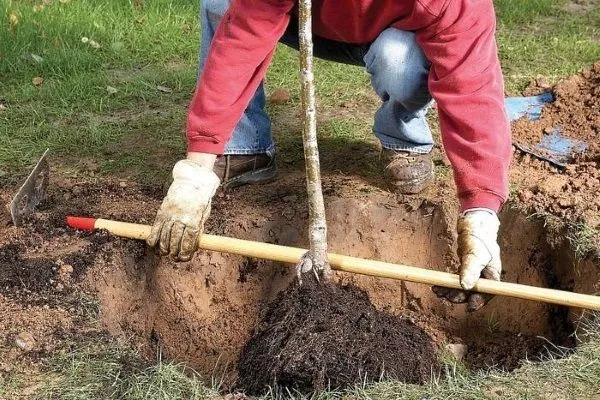
- When it's time to plant, the seedling, with its roots spread out, is placed on top of the hill. A stake is installed nearby.
- The seedling is positioned so that the upper roots rise above the soil horizon, creating a mound 10 cm high when filled in. If the groundwater level is close, the mound should be 40-50 cm. The distance from the root collar to the soil should be 5-7 cm.
- Dig a trench around the mound. Fill it with two buckets of water—it shouldn't run off the trunk and shouldn't wash away the roots. This planting will protect the root collar from water during rains and snowmelt.
- After watering the planting, the hole is sprinkled with mulch.
How to care for an apricot?
Northern Triumph inherited from "Red-cheeked"Low maintenance. This variety requires no special care. Care consists of standard procedures—watering, fertilizing, and pruning.
The gardener's main task is to create comfortable conditions for the tree at the initial stage of its life, and subsequently maintain its health, protecting it from frost in winter and from pests and diseases in summer.
Correct and systematic watering
Northern Triumph tolerates dry periods well and requires infrequent watering. If there are good rains, watering is skipped. The main thing is to keep the area around the tree trunk loosened to allow oxygen to reach the roots and ensure rainwater is well absorbed.
During drought, apricots should be watered infrequently but generously. Two to three waterings are sufficient. Approximate watering schedule:
- after flowering;
- during the period of fruit growth;
- after harvesting.
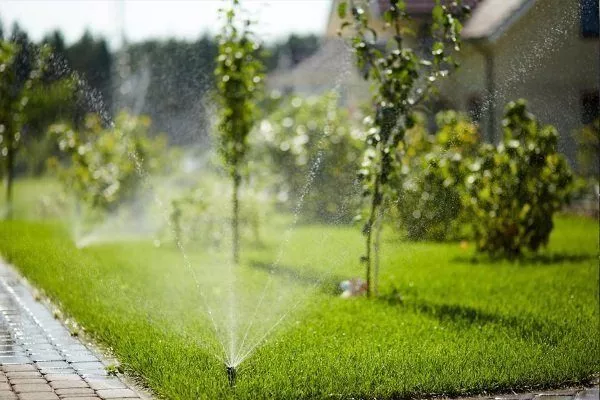
The amount and frequency of watering varies depending on the tree's age. The older the tree, the less frequently it needs to be watered and the greater the amount needed. Until the tree is 4-5 years old, water frequently, without waiting for the soil to dry out. The recommended watering rate for a young tree is 30 liters, while for a mature tree, it's 50 liters per square meter.
When, how and what to feed?
Northern Triumph is fertilized three times per season. Nitrogen fertilizers are needed in the spring to promote foliage growth, potassium and micronutrients during flowering and budding, and potassium and phosphorus in the fall to increase frost resistance.
Timing and rates of fertilization for the Northern Triumph apricot:
| Period | Fertilizer and dosage |
| Spring. Before or immediately after bud break. |
|
| Spring. Budding and flowering. |
|
| Autumn. |
|
If ash is added, it must be fresh. Ash that has been exposed to rain or stored in a damp environment has no nutritional value and does not alkalize the soil, but merely loosens it.
To apply fertilizer, dig a trench or make several 15 cm deep holes around the perimeter of the crown. After spreading the fertilizer evenly, water the holes or trench and then level it.
Methods and timing of pruning
Pruning is the most difficult part of care. Before you begin, you need to learn the proper pruning procedure and pattern. There are several types of pruning:
- Sanitary. This is done in spring or fall. Dry, diseased, and damaged branches are removed. Pruned branches are burned, as they may harbor pests and pathogens.
- Formative. Aimed at creating a beautiful and comfortable crown, this treatment is performed from the moment the seedling is planted.
- Supportive. This method promotes the active formation of young shoots and flower buds. It is performed simultaneously with sanitary pruning. All branches, except for skeletal ones, are shortened by 1/3.
| Type of pruning | Frequency | The main goal |
|---|---|---|
| Sanitary | Spring/Autumn | Removal of diseased and damaged branches |
| Formative | Since landing | Formation of a beautiful and comfortable crown |
| Supportive | At the same time as sanitary | Stimulation of growth of young shoots and flower buds |
We also recommend reading the article about How and when to prune apricot trees.
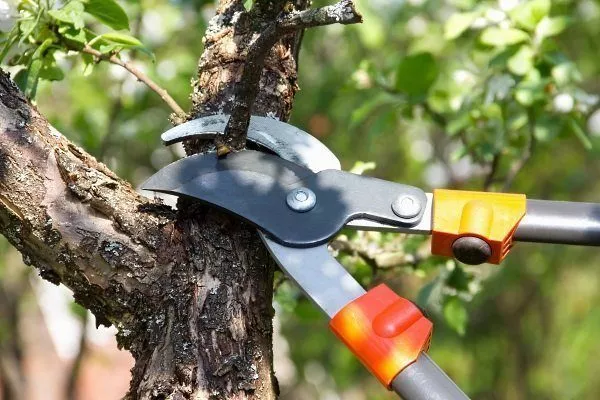
Apricots grow faster than other fruit trees and require more frequent pruning. Mature trees require especially frequent pruning. When annual growth declines, branches are cut back to wood that formed two to three years ago.
Features of apricot pruning:
- Apricots are pruned annually – in the spring, before the buds open, usually in mid-April.
- Branches are pruned to the ring to eliminate stumps. The apricot tree's crown requires annual thinning.
- Remove branches that are directed towards the ground, growing inwards into the crown, diseased, old, and those that interfere with each other.
- Young shoots, strong and straight, are left, and crooked and weak ones are cut off.
- You should not remove more than a quarter of the crown volume so that pruning does not become a shock to the tree.
- Shoots that do not bear fruit - suckers - are removed, as they take too much energy.
Preparing apricots for winter
Preparing apricot trees for winter isn't limited to applying potassium-phosphorus fertilizers and watering them to replenish moisture. It's also necessary to insulate the tree and protect it from rodents. Covering begins after daytime temperatures drop to 0°C.
Young seedlings are completely covered with agrofibre. Mature trees are insulated as follows:
- First, the trunks and skeletal branches are whitewashed with garden lime.
- The trunk is tied with spruce branches, with the needles hanging down.
- To protect the roots from freezing, the area around the trunk is covered with dry straw, hay, or even spruce branches. The base of the trunk is not covered, but rather left 15-20 cm away.
It is forbidden to wrap tree trunks with film or fabric - during a thaw they will retain moisture, causing the bark to rot.
Growing from seed
Gardeners can grow Northern Triumph from seeds, receiving free planting material. Here's how to grow it:
- Choose a beautiful, large, fully ripe fruit and remove the pit.
- Soak the seed in water for 3-4 days. Then transfer it to a container filled with damp sand or moss.
- The container is covered with polyethylene film with holes made in it.
- When the seed cracks and sprouts, it is transplanted into the soil to a depth of 7 cm.
Planting is done in the summer or spring. May is considered the optimal time. The soil is periodically moistened and then mulched with humus or peat. Over the summer, the seedling can grow up to 1 m, and after a year, it can be transplanted to a permanent location or used for grafting onto rootstock.
Diseases, pests and control and prevention measures
This variety is fairly resistant to diseases and pests, but preventative measures should not be neglected. Recommended preventative measures:
- Remove and dispose of fallen leaves. Don't compost them; it's better to burn them, as they may contain fungal spores and pest larvae.
- Sanitary pruning followed by destruction of the pruned branches. After burning, the ash, a valuable fertilizer, is obtained.
- Autumn digging of the soil - fungal spores, beetles, and larvae raised to the surface die from frost.
- Whitewashing tree trunks and installing trapping belts prevents pest penetration.
- Autumn wrapping of tree trunks with roofing felt – against rodents.
- In autumn and spring, remove damaged bark, then treat these areas with a 3% solution of copper or iron sulfate.
- In early spring – preventative spraying with fungicides and insecticides.
Common diseases of the Northern Triumph apricot:
| Diseases | Symptoms | How to treat? | Prevention |
| Clusterosporiasis | The leaves become covered with brown spots, which eventually develop into holes. The shoots develop cracks with gum oozing out. | Spray with 1% Bordeaux mixture or 1% copper sulfate. Spray the buds in the spring and the branches in the fall, after the leaves have fallen. During rainy summers, apply treatments every two weeks. During budding, spray with Horus (3 g per 10 liters of water). | Affected branches and fallen leaves are cut off and burned. |
| Moniliosis | The petals turn brown and dry out. Then the leaves and shoots dry up, the bark develops cracks, and the fruits rot. | Spray with 0.3% copper oxychloride, 0.1% Topsin solution or 0.02% Skor solution. | When pruning, seal the cuts with garden pitch. Whitewash the trunks with lime mixed with copper sulfate. |
| Cytosporosis | The tree is withering, starting from the top. There are dark spots on the bark. The branches are drying out. The tree is at risk of dying. | Spraying with Topaz, Skor or Cuprozan. | Cutting out dry branches. |
Common pests of the Northern Triumph apricot:
| Pests | Description | How to fight? | Prevention |
| Leaf roller | The caterpillar, having overwintered in the bark and fallen leaves, eats leaves and buds in the spring. | Spraying with Decis, Inta-vir, Entobacterin. | Digging up the tree trunks. Cleaning the bark with a wire brush. Whitewashing the trunk and skeletal branches. |
| Codling moth | Having hatched in the second half of summer, the caterpillars eat the pulp of the fruit. | Spraying with Entobacterin (60-100 g per 10 l) or 0.2% Chlorophos. | Destruction of fallen leaves and digging of the soil. |
| Aphid | It sucks the juices from shoots and leaves. The foliage curls and wilts. | During the dormant bud period – 3% Bordeaux mixture, during shoot blossoming – 2%, during shoot growth – 1%. Also spray with 0.3% Karbofos. | Fighting anthills. Planting calendula. |
Harvesting and processing of crops
Harvesting is carried out taking into account the purposes for which the fruits are intended:
- If apricots are harvested for food or drying, they must be at the stage of consumer ripeness.
- If the fruits are to be transported and sold, they are harvested at the technical stage and have a correspondingly beautiful color, but their flesh is quite dense, even hard.
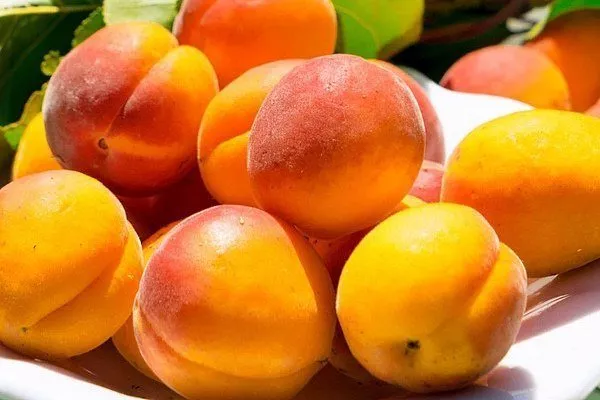
Harvesting is done only in dry weather. The ideal time is 10-11 a.m., after the dew has dried, or in the evening, after 5 p.m. Fruits picked in cool weather are inferior in flavor to those picked in favorable weather.
Harvesting is also not recommended in extreme heat, as fruits picked at high temperatures spoil quickly. There's no need to rush harvesting, as apricots cling securely to the branches.
Apricots are primarily used for fresh consumption. Refrigerated, they can be stored for 7-10 days. If apricots are plentiful, they are processed into dried fruits, jams, preserves, compotes, wine, liqueurs, and cordials.
Reviews of Northern Triumph
The creators of Severny Triumph weren't exaggerating in giving the variety such a pompous name. This productive and frost-resistant apricot has become a true find for the central and Siberian regions. Requiring little care, it supplies its owners with fruits of excellent taste and marketability almost without interruption.