
The apricot is a deciduous fruit tree of the plum genus, part of the rose family. It is quite common in our climate zone and is loved by both adults and children. With a little effort, you can plant and grow this fruit tree in your garden and enjoy delicious and aromatic apricots every year.
Description of fruit crops
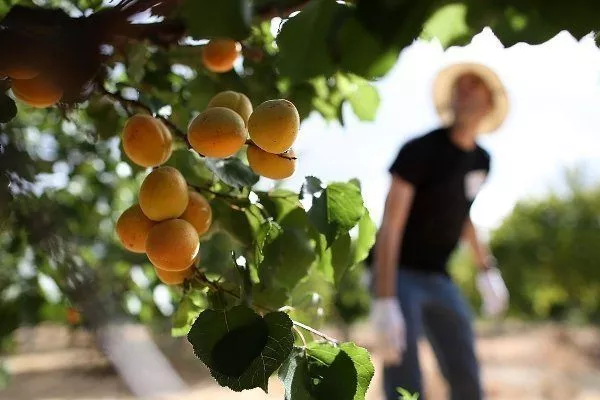
The apricot is a fruit tree that reaches a height of 8 m. The bark of older trees may crack and turn gray. Young trees have gray-brown bark. Apricot shoots are shiny and hairless.
The tree's leaves are ovoid, finely toothed along the edges, and no more than 8 cm long. The flowers are about 30 mm in diameter, white with pink veins. The flowers are the first to appear on the apricot tree, followed by the leaves.
The apricot fruit has juicy, bright orange flesh and a slightly rough pit. The fruit's shape can be round or obovate. The pit is generally thick-walled, although some varieties may have a thin-walled pit.
The tree bears fruit for about 30 years, and its lifespan can reach 100 years. Apricots are drought-resistant and can withstand temperatures down to -30°C. They are ideal for growing in our climate.
Apricots are undemanding when it comes to soil composition and growing conditions. They thrive in full sun and deep, well-ventilated, lime-rich soil. To ensure the best possible transplanting, plant them in a sunny location, ensuring they receive the maximum amount of light per day.
Which apricot variety should I choose for planting?
Most apricot varieties sold in stores across the country are suitable for central Russia. They are highly frost-resistant and tolerate drought and stagnant water.
We recommend reading the article about the best varieties of apricots.
Early apricot varieties
| Name | Ripening period | Frost resistance | Productivity |
|---|---|---|---|
| Lescore | Early | High | Average |
| Alyosha | Early | High | High |
| Melitopol early | Early | High | High |
Early varieties, such as Leskore, Alyosha, and Melitopolsky Ranniy, have a pyramidal or inversely pyramidal crown. The fruits are slightly tart, weighing 40 to 55 g. The pit separates well from the pulp, and the fruit is slightly flattened. They are suitable for early canning and are also the most frost-hardy varieties.
Mid-season varieties
| Name | Ripening period | Frost resistance | Productivity |
|---|---|---|---|
| Rattle | Average | Average | High |
| Pineapple | Average | Average | Average |
| Dessert | Average | Average | High |
Mid-season varieties include Pogremok, Ananasovy, Dessertny, and others. They have classic frost resistance, with wintering occurring early after transplanting the seedlings into the ground. The fruit's flesh is orange-yellow, approaching a rich amber. The harvest is good for jams, compotes, and preserves.
Late varieties
| Name | Ripening period | Frost resistance | Productivity |
|---|---|---|---|
| Spark | Late | High | High |
| Favorite | Late | High | Average |
| Success | Late | High | High |
Late varieties include Iskra, Favorit, Uspekh, and others. These are winter-hardy hybrids with early, abundant fruiting. These self-fertile varieties have spreading crowns and are suitable for winter harvesting due to their higher sugar content. They are also resistant to fungi and pests.
Preparing for landing
To ensure a tree blooms and bears fruit, the site and planting material must be carefully prepared. It's important to follow the specific planting preparation guidelines, taking into account specific weather conditions.
Selecting and preparing soil
Choose soil that's not too poor, but also not too rich in fertilizer or humus. Be sure to loosen the soil within a 0.5-meter radius of the planting hole. Avoid planting apricots in clay soil.
- ✓ Optimum soil pH for apricot: 6.0-7.5.
- ✓ The depth of the fertile layer should be at least 60 cm.
It's recommended to avoid both low-lying and high-lying areas. Low-lying areas can cause standing water, while high-lying areas can be prone to winds. If you have to choose between these two areas, consider the higher ground.
Planting hole
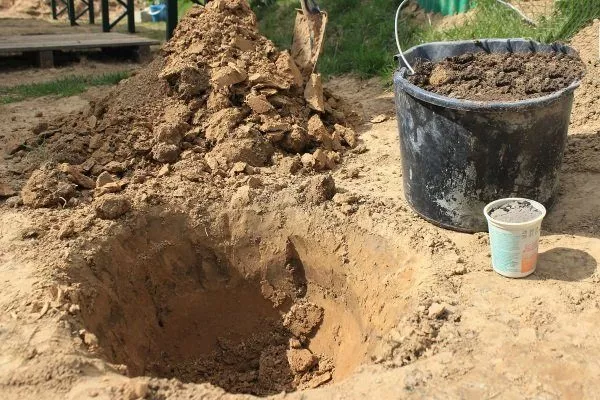
The planting hole is dug and shaped in the fall. The actual preparation for planting the seedling occurs 2-3 weeks before planting. A standard planting hole is prepared 45-55 cm deep and 65 to 85 cm wide, filled with a mixture of fertile soil and fertilizer.
It would be ideal to use the following composition:
- 1.5-2 buckets of manure;
- 550-650 g of granulated superphosphate;
- 450-550 g of potassium sulfate.
When to plant apricot?
Like other garden crops, apricot trees are best planted in the spring, before the buds swell, around April. If planted in the fall, there's a high risk of frost damage. This risk increases during winters with little snowfall, due to the root system's insufficient development to survive the winter.
Features of spring planting
When planting in spring, it's important to water and fertilize the seedling early and as quickly as possible. Avoid planting when the buds have already swollen—this is detrimental to the plant. Basic spring planting tips:
- Prepare a hole for planting a tree in the spring in the fall.
- To protect the apricot from excess moisture, make a drainage layer at the bottom of the hole.
- The dimensions of the hole for planting a tree in spring should be no less than 70x70 cm.
Features of autumn planting
Autumn planting of apricot seedlings This will harden the plant. If about a month passes between planting and the first frost, the root system will be able to firmly and successfully establish itself in its new location. Basic tips for planting apricots in the fall:
- Plant the apricot tree in a sunny location and at a slight elevation.
- Before planting the tree, dig up the soil to a depth of at least 20 cm.
- Fertilize the soil with mineral fertilizers before planting.
- The depth of the planting hole should be at least 70 cm.
Planting an apricot seedling
Planting an apricot seedling is very simple and won't pose any difficulties even for novice gardeners. Simply follow these steps:
- A day before planting, soak the seedling's root in water to nourish it and give it strength before it is planted in the soil.
- Trim off all broken and dried roots.
- Restore circulation and strength to the roots by dipping them in a mixture of clay and manure before placing them in the planting hole.
- When placing the plant, carefully straighten the roots so as not to break or damage them.
- Lightly compact the soil so that it fits between the roots, but do not apply too much force, otherwise there is a risk of breakage.
- Secure the seedling in a specific position with twine. This will prevent the plant from shifting in the planting hole and will prevent root breakage.
How to choose seedlings?
Select only high-quality seedlings. Their branches should be evenly spaced and at a slight angle to the main trunk. The apricot tree should be healthy in appearance, free of blemishes, damage, and wounds.
It's crucial to consider the angle of the branches. If they're too steep, they'll break off under the weight of the fruit during fruiting, potentially killing the plant.
Planting diagram
Since apricots develop a standard rounded crown, they should be planted at regular intervals. Gardeners use a 5x5 m pattern, but the distance between trees should be at least 3-4 m.
Gardeners often plant apricot trees in a single row at their summer cottages. Even if they're spaced 4 meters apart, after a few years their crowns will close together, providing excellent protection from strong winds.
Planting dates
Planting times depend on the climate in which the plant will grow. Often, producers list planting times for each variety in different countries on seedlings or seed packets.
It's important not to over-plant the seedlings and plant them as early as possible. Every day a seedling isn't planted in the ground, it weakens and loses its strength. The ideal time for planting apricots is considered to be late April or early May.
Seedling planting depth
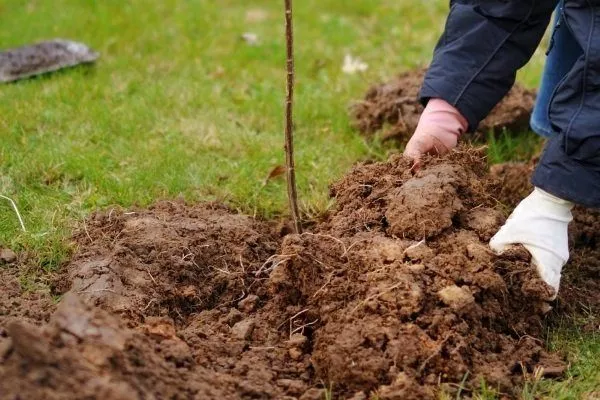
To plant, dig a hole about 0.5 m deep. Place the seedling in the prepared hole and cover it with the soil mixture so that the root collar is level with the soil surface. Next, create a watering hole and mound around it to ensure water flows toward the seedling and does not spill beyond the roots.
The amount of water for irrigation after planting is 1.5-2 buckets per one newly planted plant.
Caring for apricots after planting
Further care for the seedlings consists of several stages. For the first two years, the planting site is covered with a layer of mulch. This is a mixture of sawdust, peat, semi-rotted manure, and similar organic materials.
Keeping the seedling's roots under a layer of mulch is recommended for no more than two years; otherwise, the roots will gravitate toward loose soil and grow above the desired level. To further prevent this problem, carefully and regularly loosen the soil. It's important to promptly remove weeds from the hole and be careful when loosening the soil to avoid damaging the seedling's roots.
Watering and fertilizing are important during the first few years of growth. Initially, the seedling grows at a rate of 1 m per year. To prevent bare branches, prune 1/3 of the total growth.
This procedure should be stopped once the plant begins to bear fruit, as active growth ends. Afterward, you'll need to monitor for dried and broken branches, which should be removed regularly.
Apricots are drought-resistant, but watering is essential. Otherwise, they will wilt due to dry winds and excessive drought. Before the plant begins to bloom, water it for the first time. This watering will ensure moisture reserves, increase fruit production, and accelerate growth.
The next watering is carried out during the period of rapid growth and ripening of the crop. Watering ends in August, before the growing season. Late access to water in autumn will harm the trees, as their preparation for winter will be incomplete.
Fertilizer
It's important to monitor plant nutrition. An excess or deficiency of micronutrients will lead to slow growth, poor fruiting, and delayed flower bud formation. Fertilizers can vary:
- Apply the first fertilizer in the spring using urea (700 g per 10 liters of water). First, remove broken, diseased, and dried branches and treat with calcium oxide to control pests.
- Before fertilizing, make sure the tree hasn't started actively sap flowing and its buds haven't swollen. Otherwise, you could burn the plant, which will lead to its death.
- Once everything is checked, enrich the soil with nitrogen. This will protect the apricot tree from diseases and pests.
- If you didn't manage to enrich the soil before the sap began to flow, protect the tree in another way. Treat the tree with specialized active compounds in combination with a dry fertilizer. This consists of 70-75 g of nitrogen fertilizer and 50-55 g of ammonium nitrate per tree. Dig the mixture into the soil to a depth of 30 cm in a uniform circle around the trunk of the seedling.
- During the growing season, the plant requires three mineral fertilizers. This high fertilizer concentration is necessary due to rapid growth and sap movement:
- The first feeding should be done in June with nitrogen fertilizers - 35-45 g of mixture per 1 sq. m;
- perform the second feeding with nitrogen-phosphorus-potassium fertilizers;
- Apply the third fertilizer in early August, using only phosphorus-potassium mixtures. This will accelerate the development and growth of shoots and increase their resistance to low temperatures. Initially, use 1 liter of fertilizer per bucket of water, then double the dosage.
- Before the sap starts to flow, add 700 g of urea per 10 liters of water.
- After the sap starts to flow, apply 70-75 g of nitrogen fertilizer and 50-55 g of ammonium nitrate per tree.
- In June, fertilize with nitrogen fertilizers - 35-45 g per 1 sq. m.
If all conditions are met, the plant will begin bearing fruit 5-6 years after planting. If the plant is not repotted and fertilized on time, flowering will begin in 2.5-4 years.
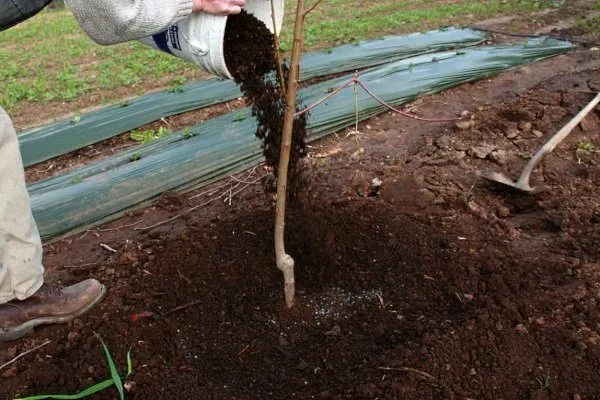
Organic fertilizers are applied after 10 years of the plant's life, otherwise the tree will begin to freeze.
Watering
Before the plant begins to bloom, it is watered for the first time. This watering will ensure moisture reserves, increase the number of ovaries, and accelerate growth. The next watering is done during the period of rapid growth and ripening of the crop. This way, gardeners improve the taste of the fruit and increase the accumulation of sugars in them.
Irrigation ends in August, before the growing season. Late autumn access to water damages trees and disrupts proper preparation for winter.
Trimming
Tree pruning is one of the most important and easy processes, requiring special attention. This annual procedure is essential for apricot trees if a gardener wants to increase the quantity or quality of their fruit production.
This variety of garden fruit does not drop its ovaries, which leads to overloading with fruit and can subsequently cause fruit-bearing branches to break off. If the apricot tree is not pruned, its fruit production decreases.
Gardeners recommend shaping the crown by pruning it so that the tree resembles a sphere. This is the most proportional and balanced pruning. A sparsely layered crown is also popular.
You can find out how and when to prune apricot trees from this article.
Protection from diseases and pests
Autumn and summer are prime times for treating plants against various diseases and pests. This is done with specialized, highly effective, concentrated products, eliminating the need to rely on the season or time of day or guess whether the soil or plant is at risk of infection.
The first treatment is with carbonic acid diamide before the plant awakens. If this is missed and buds begin to enlarge, use other treatments:
- diluted essence of Zircon concentrate;
- diluted essence of the drug Ecoberin;
- Bordeaux mixture;
- copper sulfate (copper sulfate).
An important step is treating the tree after winter, before it begins to bloom. When the air temperature reaches at least 18°C, disinfect the apricot tree. This can be done with colloidal sulfur or Neoron, if treating for mites.
To get rid of leaf rollers and weevils, it's best to use Kinmix or Decis. You can prevent moniliosis with Ridomil or Oxychom. After leaf fall, the plant can also be treated with urea.
Caring for apricots in spring, summer, and autumn
As the tree grows in summer, the canopy density and area increase. This leads to dense foliage and a reduced likelihood of fruit ripening. Fruit ripening is difficult and slow in a dense canopy. Prune some new fruiting branches to create a proper canopy that is fully exposed to the sun and freely exposed to the wind.
The period before the plant's wintering is important, especially in the first year after repotting. The tree should also be given a sanitary treatment, with diseased and dead branches pruned. After the crown becomes bare and the leaves fall, it's essential to remove any plant debris. The soil around the plant should be dug over and loosened.
In early August or mid-October, a thorough preventative treatment with garden crop preparations is carried out. This will result in higher yields.
Summer temperatures are high, so water your plant frequently. This is especially important in July and August; this will ensure the fruit is not only tasty but also juicy.
In June, new branches begin to grow. While they're still green, prune some of them. This will reduce the crown's density and increase the tree's yield. It will also improve the plant's appearance. If necessary, additionally treat the apricot tree for pests.
Caring for apricots in winter
To protect the tree from low temperatures, cover it with garden or vegetable garden film and earth up the trunk. Do not treat the tree for pests in winter.
It's best not to disturb the tree during winter. It's especially good if the winter is snowy, as then the tree will need much less watering in the spring. It will have time to absorb the moisture anyway.
Diseases and pests
Pests attack apricot fruits, leaf crowns, bark, roots, and other parts. Gardeners recommend inspecting plants for foreign insects and signs of their presence, such as webbing, discolored spots, and localized damage to the tree bark.
If there is a suspicion of pests around or within the apricot tree, additional treatment with specialized products is recommended. Such unscheduled cases are specifically described in the instructions for use of concentrated pesticide mixtures.
Moniliosis
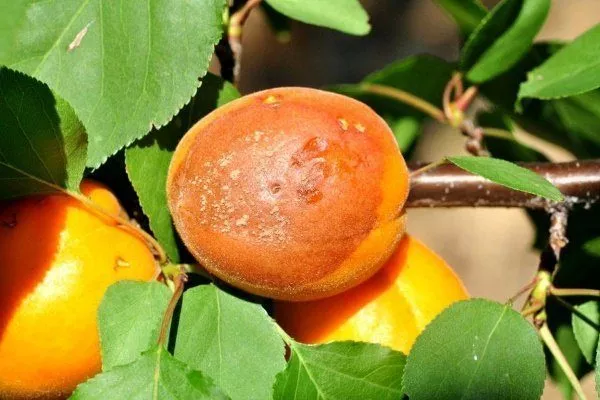
Moniliosis, also known as fruit rot, is a fungal disease. It appears at the beginning or end of flowering, causing some leaves and inflorescences to dry out. It causes brown spots on the fruit, followed by the appearance of small yellow pads. It is treated with medications such as Rovral, Abiga-Peak, and Gamair, as well as Bordeaux mixture.
Gum flow
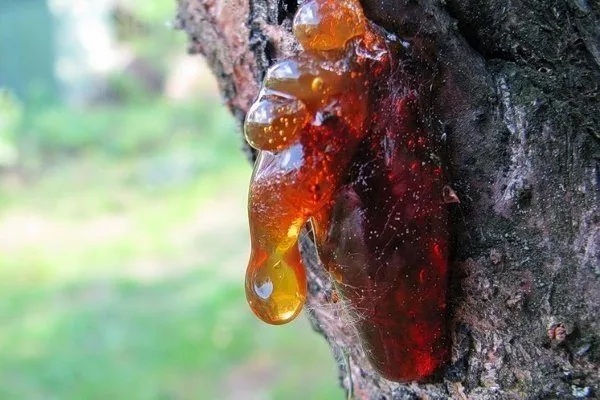
This non-infectious disease manifests itself through the secretion of a thick, amber-colored, resin-like fluid. It is bitter and viscous in taste and appears on the above-ground parts of the apricot tree. The disease can be prevented by avoiding injury to the tree. Effective prevention is choosing the right variety, especially one that is zoned for cultivation.
Balsa mushroom
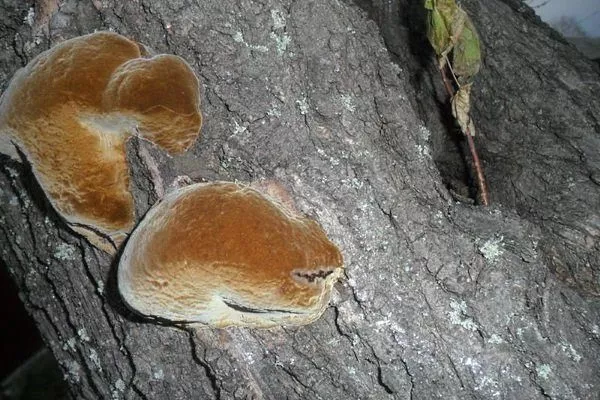
An infectious disease called Balsa fungus manifests itself as ulcers on the bark of apricot trees. It is treated with a concentrated solution of Switch, as directed. Treatment must be carried out at least 1-2 weeks before harvest.
Bacterial spot
This disease manifests itself as extensive brown spots that dry out. The foliage around the affected area changes color and turns yellow. Treatment is provided by systematically spraying the plant with a copper sulfate solution.
For more information on bacterial spot, watch the video:
Cytosporosis
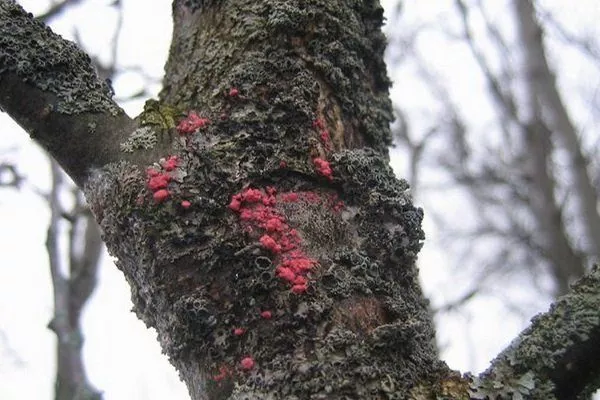
Cytosporosis is a dangerous fungal disease. When infected, raised growths appear on the trunk, turning the surrounding area burgundy. It also negatively impacts the tree's interior—the affected area softens, and thin branches wither.
Prevention involves whitewashing the trunk with concentrated lime and regularly applying phosphorus-potassium fertilizers. If infection occurs, remove the affected areas by removing bark and branches.
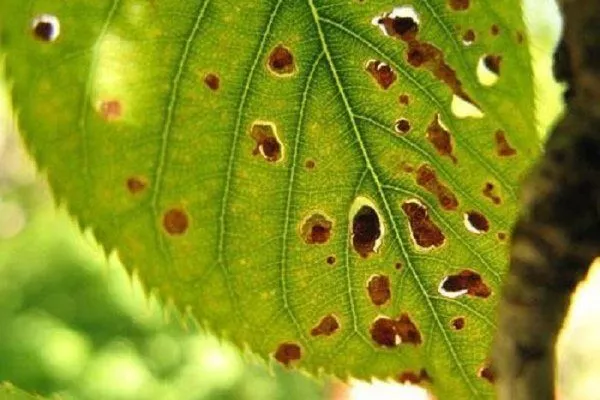
Hollow spot
This fungal disease, also known as clasterosporium, manifests itself as small spots appearing all over the affected foliage. These spots then develop a brown border around themselves, and holes form inside.
Affected branches are cut off and burned. Chemical treatments are also recommended; Bordeaux mixture and copper sulfate are good options. Horus can also be used.
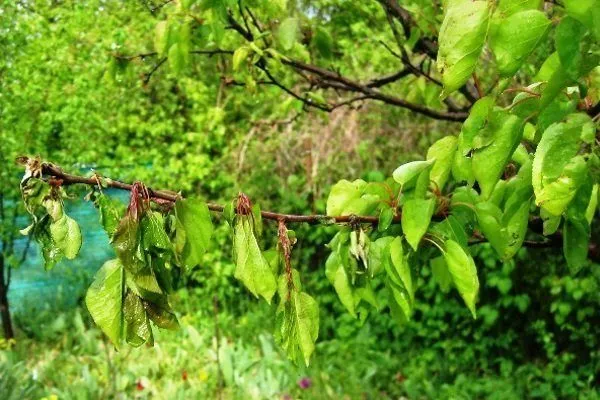
Verticillium wilt
This disease is caused by fungi. Leaves dry out and curl vertically, red spots appear inside the shoots, and the fruits become stunted or mummified.
The disease can be prevented by avoiding overwatering the soil, and infected branches are pruned and burned. To treat a fully infected tree, chemical treatments such as Topsin-M, Previkur, Fundazol, and Vitaros are used.
You can get additional information about other apricot diseases and pests.Here.
Possible errors
The most common mistakes made when planting and caring for apricots are improper fertilization and pruning during the plant's dormant period. If gardeners choose to use compost, manure, or chicken manure as fertilizer, they should be applied with caution. Compost is added to the soil at a rate of 5.5-6 kg per square meter, mixed with mineral fertilizers.
Manure, like other organic fertilizers, is applied no more than 2-3 times a year at a rate of 3.5-4.5 kg per square meter. It also should not be concentrated.
Chicken manure is added to compost at a total weight of approximately 300 g per square meter. Applying concentrated manure or simply diluting it with water can cause chemical burns to the tree. Among the most common mistakes are:
- Insufficient agricultural practices. The tree needs timely watering and fertilizing.
- An improperly organized nutritional plan. For example, a lack of micronutrients or an imbalance in NPK levels.
- Lack of preparation for winter.
- Incorrect pruning.
Following all planting and care guidelines for apricots allows you to grow a strong and healthy tree. And in just a few years, you'll be enjoying delicious, juicy, and aromatic fruits from your own garden.