
The "Peach" apricot variety is in high demand among gardeners. Below, we'll explore its characteristics, planting, and care and cultivation features.
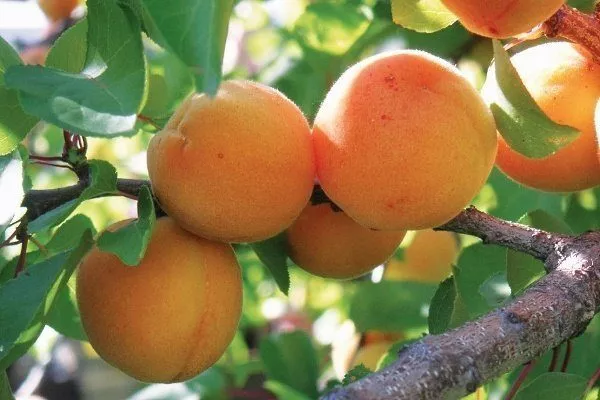
apricot variety "Peach"
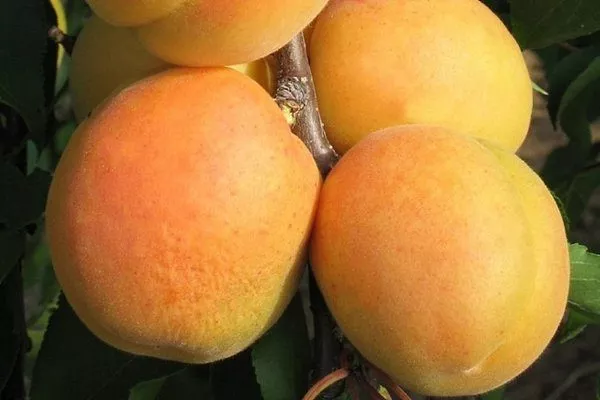
The fruits of the Peach apricot ripen in August, but the first ones can be picked at the end of July
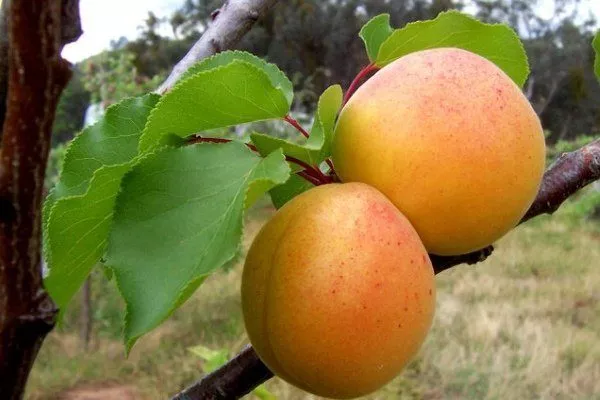
The Peach variety produces a large harvest
Origin of the variety
The peach apricot is a hybrid cultivar. This means it was created by crossing two fruit trees: the peach and the apricot. This variety combines the best of both fruits, making it quite popular.
There are the following main types of apricot-peach hybrids:
- Sharafuga – combines not only peaches and apricots, but also plums. This crop has become incredibly popular in Russia due to its high yield.
- Plumcote and aprium – new hybrid varieties that combine the seeds of plum and apricot trees. Plumcot is almost 75% plum, while Aprium is apricot-based.
- Tent – a combination of plum and cherry plum. This variety is particularly popular in southern Russia, the Caucasus, and Central Asia.
- Pichorin – a combination of peach and nectarine. Its weight is more similar to that of a peach, but its skin is smooth, like that of a nectarine.
As for the peach apricot, the names "Pineapple" or "Muscat" are also commonly used. This is due to the similar description. However, it's important to know that the pineapple variety is larger and has a richer flavor.
General description of peach apricots (tree, fruits)
Apricot trees of the Peach variety typically grow no taller than 3 meters and are considered medium-sized. The tree's crown is fairly spreading, moderately dense. The shoots are thin and require pruning. The leaves are a rich green color and widen from the tip to the base.
The fruits have:
- matte, slightly rough skin of a bright orange color;
- round-oval or simply round shape;
- slightly compressed sides;
- a clearly defined wide abdominal stripe;
- average weight from 40 to 55 g;
- tender, sweet pulp.
The bright blush that's often characteristic of apricots as they ripen is absent. The flavor is sweet and sour, with a slight hint of tropical pineapple. The pit separates easily from the flesh.
Specifications and Features
This apricot variety begins to bloom in the second ten days of May, which offers hope for a good harvest. Unexpected frosts and sudden temperature fluctuations are now unlikely.
A single crop can yield an average of 140 kg of apricots per season. However, this is only if the tree is growing in a comfortable location and receives the necessary moisture. If the site is dry, the fruit may spoil and fall prematurely.
Watch the video to see what peach apricot trees look like:
Fruiting and pollination
The Peach apricot variety begins bearing fruit in its fourth year of life. If the tree is properly cared for, you can enjoy the first fruits as early as late July. The harvest can begin by mid-August. Ripening occurs unevenly, allowing for several stages of harvesting.
Apricots are self-pollinating crops, meaning they don't require additional pollinator varieties. However, it's important to understand that in unfavorable weather, insects may be unavailable, in which case pollinating the crop yourself is acceptable.
| Pollination method | Efficiency (%) | Processing time (min) |
|---|---|---|
| Cotton wool/rabbit fur | 70-75 | 30-40 |
| Toothbrush | 80-85 | 10-15 |
| Fan/hair dryer | 60-65 | 20-30 |
This can be done in the following ways:
- Apply a piece of cotton wool or rabbit fur to each flower;
- Hold a toothbrush (preferably an electric one) close to the inflorescences for 10 seconds;
- Turn on a fan or hair dryer to medium speed and then point it at the tree's flowers.
Choose one pollination method and perform it three times: at the very beginning, in the middle, and after the flowering period. Do this in the morning (before 11 a.m.) or in the evening.
Advantages and disadvantages of peach apricot
Analyzing all the characteristics of the peach apricot, we can highlight the following advantages of the variety:
- resistance to frost and low temperatures;
- tree resistance to diseases;
- good drought tolerance;
- self-fertility, which eliminates the need to plant pollinator trees;
- late flowering, which allows the crop to grow even in cool climates;
- good yield;
- long shelf life;
- transportability of fruits;
- the possibility of using the fruits as marketable products;
- interesting taste;
- wide range of fruit uses.
Planting recommendations
To get a good apricot harvest, you need to follow the basic rules and recommendations for planting the peach variety. The choice of planting location, timing, and soil preparation are of great importance.
- ✓ Soil pH should be between 6.0-6.5 for optimal growth.
- ✓ The groundwater depth must be at least 3 meters to prevent root rot.
Choosing a location
The location for planting an apricot peach tree should be:
- protected from strong winds and drafts;
- maximally illuminated by the sun;
- with a groundwater level of 3-4 m from the ground surface;
- with fertile, moisture-rich soil (sandy loam or loamy soils are suitable).
This variety doesn't thrive in clay soils or arid chernozems, and its yield will be far from good. The soil should be neutral, or slightly acidic. Acidic soil should be limed with ash.
The ideal location for planting a peach apricot tree is a small hill on the southern side of the plot. You can protect the tree from drafts with a fence or light structures, but be careful not to cast shadows on the tree.
Planting dates
Plant Peach apricots in the spring. In the south of the country, gardeners can do this as early as late March, and in the central part of the country, as early as May. Planting trees in the spring will help them adapt to weather conditions more quickly and strengthen before the cold weather sets in.
Preparing the soil and seedlings
Once you've purchased your apricot seedlings and decided on a planting location, you can begin preparing the soil:
- Dig holes for the trees in advance (they should be approximately 80 cm long and 80 cm wide). Leave the top soil and remove the bottom soil.
- Mix the topsoil with compost or rotted manure, add 0.5 kg of superphosphate and a little wood ash. Mix everything again.
The distance between planted crops should be 4-4.5 meters. This is necessary to prevent tree roots from interfering with each other, which has a detrimental effect on the yield and health of the seedlings.
The landing process
Once the holes are ready and the soil is properly fertilized, you can begin the process of planting the seedlings:
- place the seedling in the middle of the hole;
- carefully straighten its roots;
- check the location of the root collar - it should be 5-10 cm in the ground, taking into account the soil type (5-6 cm for black soil and 10-12 cm for sandstone);
- When filling the hole, compact it slightly so that there are no “air pockets”;
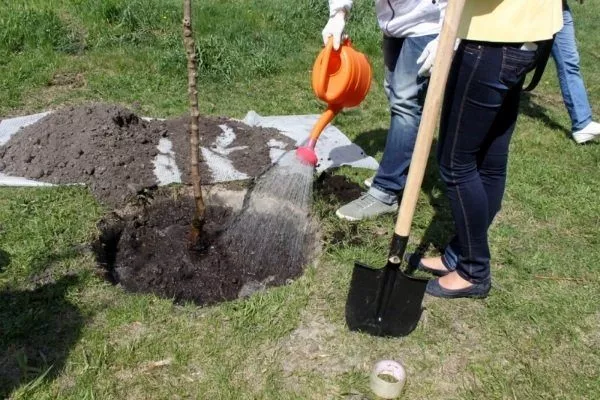
- At the end of planting, compact the soil and water the planted crop so that the soil is saturated with moisture.
To maintain soil moisture and protect the tree from sudden temperature changes, mulch the area around the trunk with sawdust, straw, pine branches, or small leaves. In winter, use snow as mulch.
How to care for a peach apricot tree?
After planting a peach apricot tree, it needs proper care to ensure it grows healthy and produces a bountiful harvest. Let's look at the key aspects of caring for this fruit tree.
Top dressing
During its first year, apricot trees don't require any additional feeding. This is because, if you've done everything correctly, the planting hole already contains sufficient organic and mineral fertilizers for the plant's growth.
But in the following years, additional feeding is already necessary:
- in the spring of the 2nd year of life, fertilize the tree with a mixture of 15 kg of humus, 45 g of ammonium nitrate, 135 g of superphosphate and 45 g of potassium chloride;
- In the spring of the 5th year of the apricot tree's life, feed it with 25 kg of humus or organic matter, add 190 g of superphosphate, 90 g of saltpeter and 55 g of potassium chloride.
For convenience, you can use a ready-made fertilizer. However, be sure to maintain the dosage of each component. After each application, be sure to water the plant thoroughly and loosen the soil or mulch the area around the trunk.
Watering
To determine whether it's time to water, insert a 1.5-meter stick into the ground and check for dryness below 10 cm. If there's moisture near the roots, the tree doesn't need watering; otherwise, the root system will become overwatered and begin to rot.
Water the apricot tree early in the morning or after sunset. If these conditions are unavoidable, cover the watered area around the tree's trunk with loose material to retain moisture.
Pruning and crown shaping
The Peach apricot tree requires shaping and pruning. This is necessary to encourage new shoots to develop faster and to prevent the foliage from becoming overloaded with too many branches.
Read the article about How and when to prune apricot trees.
Pruning nuances:
- Do not disturb the tree for the first few years so as not to hinder its growth;
- inspect the crop in the spring and promptly remove dried, broken or diseased branches;
- Remove or shorten the branches that grow inside the crown itself - this is necessary so that all shoots receive the required amount of light.
Watch the video to learn how to prune an apricot tree:
Diseases and pests
The peach apricot tree is considered highly resistant to diseases and pests. However, it's essential to be aware of the potential diseases the tree can suffer from.
Main diseases, their symptoms and treatment methods:
| Name of the disease | Symptoms | Treatment |
| Valsa's mushroom | An orange ulcer appears on the trunk, near which tree resin is released. | Treat the tree with Switch 2-3 weeks before harvesting. |
| Ribbon mosaic | Yellow stripes on leaves leading to foliage dieback. | Apply a solution of lime and copper sulfate to the trunk. |
| Moniliosis | Flowers wither, the skin of the tree cracks, leaves fall. | Treat the tree with 3% Bordeaux mixture when the buds are green, then with Teldor during flowering or Horus after flowering according to the instructions. |
| Ringpox | Dark red spots and “freckles”, which are painful swellings, appear on the fruits, and the branches dry out. | Treatment is complex, so it is sometimes easier to destroy the affected tree. |
As for pests, they can and should be controlled as well. Let's look at the main insects that can harm fruit crops.
Pests and control options:
| Pest | Methods of struggle |
| Aphid | If there are only a few aphids, dilute liquid soap; if the tree is completely covered with parasites, use Fufanon or Fitoverm. |
| Leaf roller or "night moth" | Peel and burn the cracked bark, and after harvesting the fruit, treat the crop with a concentrated solution of Chlorophos. |
| Codling moth | Use a 0.5% mixture of "Entobacterin" or a 0.2% mixture of "Chlorophos". |
Be sure to monitor for diseased shoots and prune them promptly, burning blackened foliage and fruit, and treating any "wounds" on the tree with antiseptics. Also, as a preventative measure, spray fruit crops with a copper sulfate solution or Bordeaux mixture.
Gardeners' reviews
The Peach apricot variety is quite popular among gardeners. This is due to its unique flavor, low maintenance, and resistance to frost and various diseases.