
Gardeners love the Manchurian apricot variety. These undemanding plants require little care and are frost and drought resistant. This article provides step-by-step instructions for planting a seedling in the ground, as well as care instructions to ensure its healthy growth and development.
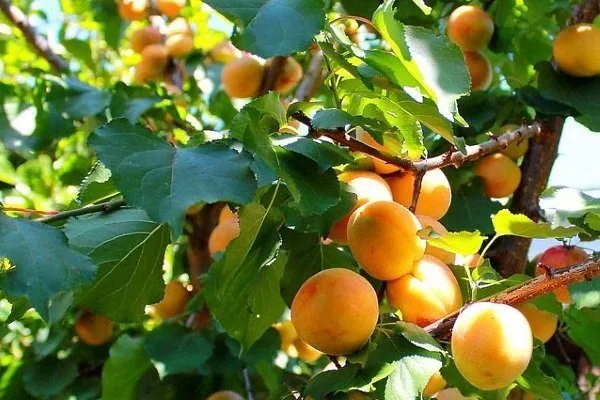
Manchurian apricot variety
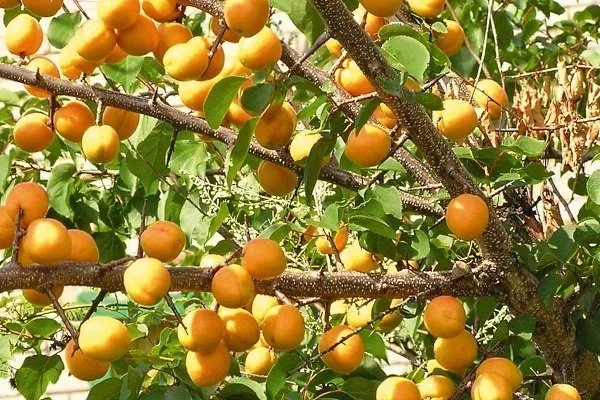
By caring for the Manchurian variety, you can get a bountiful harvest
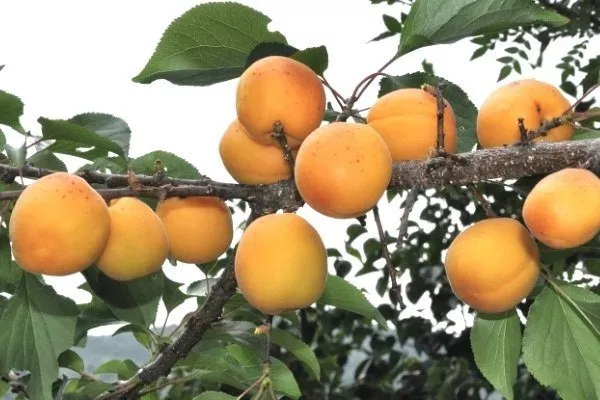
The Manchurian apricot variety tolerates drought and low temperatures well
Description of Manchurian apricot
The Manchurian apricot belongs to the Prunus genus. It is a tall tree, capable of growing up to 15 meters in height. The plant has delicate foliage and a lush crown, producing numerous shoots. The bark is dark gray and deeply furrowed. During flowering, pink flowers appear, over 2 cm in size, growing singly or in clusters on branches with short peduncles. Profuse flowering occurs every spring from April to May.
The leaves are broadly oval, doubly serrated, have pointed tips, and reach up to 12 cm in size. The fruits are small, about 2.5 cm in diameter, with a yellowish-orange peel.
A tree that can live for over a hundred years easily grows from a fruit seed.
History of selection
At the Chinese branch of the Russian Federation's research center, scientists worked for a long time to improve the Manchzhursky variety. The breeders' primary goal was to create an ornamental apricot with characteristics of the Japanese sakura for central Russia. They achieved this goal, as evidenced by the plant's inclusion in the State Register in 2005. Fruiting was the last thing on the scientists' minds.
Characteristics of the variety
The Manchurian variety, which I.V. Michurin used as a rootstock for his experiments, has striking differences compared to similar species. Detailed characteristics of the variety are discussed below.
Drought resistance and winter hardiness
This variety can easily withstand severe frosts down to -30 degrees Celsius thanks to its strong bark. A mature plant has greater drought tolerance than a young tree. Each year, the plant's roots penetrate deeper into the soil, independently extracting the moisture needed by a large tree.
Young trees should be watered regularly during dry weather.
Pollination, flowering period and ripening time
Flowering lasts for 12 days. In some regions, it begins in early April. In northern regions, flowering occurs during the thaw. The flowers are characterized by a floral scent, making them particularly attractive to wasps and bees, the pollinators of this variety.
Productivity and fruiting
In early June, the Manchurian variety delights gardeners with ripe, yet small, fruits. Despite the small size of the apricots, the yield is quite high. A single mature tree can yield approximately 250 kg of apricots. Fruiting begins five years after planting.
Application of fruits
Apricots of this variety have a distinctive flavor, due to their decorative nature. The fruits are characterized by a distinctive acidity and minimal bitterness, but this does not affect their universal use. Apricots can be eaten fresh or used to make compotes, jams, and preserves.
Experienced cooks have even mastered the art of using apricot kernels: roasting them yields an almond-like flavor. The kernels can also be used to make delicious apricot oil, which is very rich and is widely used in cosmetics.
Resistance to diseases and pests
This variety is winter-hardy, with increased resistance to fungal and viral diseases. Insects are considered the Manchurian apricot's main enemies, but they are easily controlled by spraying.

Advantages and disadvantages
The Manchurian apricot has many advantages and virtually no disadvantages. Among the positive qualities of this variety are the following:
- High yield. As the tree matures, the number of fruits harvested from a single tree does not decrease.
- The bush's decorative qualities. When in bloom, this plant becomes a true garden highlight.
- Good transportability. The fruits are resistant to mechanical damage and easily withstand long-distance travel without losing their appearance or flavor.
- High immunity. The main characteristic of this variety is its resistance to diseases and pests.
- Excellent shelf life. Apricots can be stored for a long time without affecting their appearance.
- Resistance to climate change. The plant can withstand not only drought but also severe frosts.
Distribution and climate characteristics
The Manchurian apricot is a rare, endangered plant. It grows in China's northeastern provinces, northern Korea, and a vast area of Russia's Primorsky Krai. This tree tolerates both drought and low temperatures well. It prefers ample light but is undemanding regarding soil conditions, even growing on dry mountain slopes.
The Manchurian apricot has a large and extensive root system, making it ideal for planting along bodies of water to strengthen the shoreline, as well as on slopes to protect them from landslides.
Planting Features of Manchurian Apricot
Growing a plant begins with planting a seedling. If all requirements are met correctly, the plant will quickly establish itself, ensuring its continued development and growth. Gardeners need to be aware of planting times and the importance of choosing a healthy seedling.
What time should I plant?
The best time to plant an apricot seedling is late April. At this time, the soil is well warmed by the sun's rays. It's best not to delay planting; do so before the fruit buds swell. Planting in the fall is also acceptable, but care should be taken to prevent winter frosts from damaging the fragile plant.
Selecting and preparing a site
To plant a Manchurian apricot seedling, choose a well-drained site with aerated, lime-rich soil. Ensure the site is not waterlogged or highly saline. The best location for the Manchurian variety is one protected from northerly winds. To prevent cold air runoff, avoid low-lying areas.
- ✓ Soil pH should be between 6.0-6.5 for optimal growth.
- ✓ The groundwater depth must be at least 2 meters to prevent root rot.
To ensure proper tree development in the future, digging a hole before planting the apricot tree will help. Make a large hole for planting, as the root system requires space. The minimum hole dimensions are 65 x 80 cm.
What can and cannot be planted nearby?
The best option for this variety is to plant it near other apricot varieties. The Manchurian variety does not like to grow close to red rowan, walnut, cherry, plum, apple, or pear trees.
How to choose and prepare a seedling correctly?
When purchasing apricot planting stock in the spring, it should be strong and healthy. Inspect the root system for any deformities. Seedlings that are one year old are considered suitable for planting.
Preparing the seedling involves cutting off damaged roots and existing breaks. Use a sharp garden knife. It is not recommended to trim existing cuts, as this may negatively impact the root system's survival.
Avoid allowing the roots to dry out during transport and storage before planting in the permanent location. If the seedling does dry out, watering it will help restore it—soak it in water for 48 hours. A mixture of black soil and mullein can help prevent the roots from drying out; dip the seedling's root system in it.
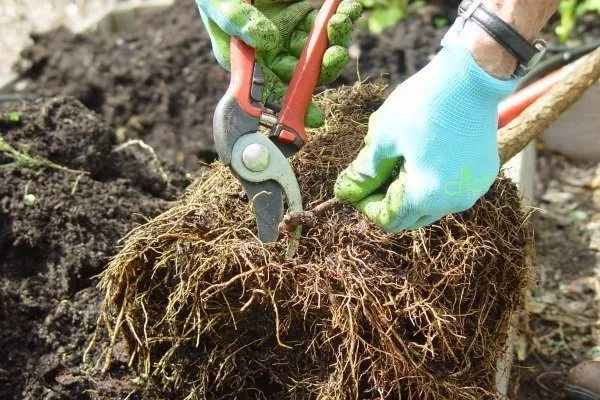
Step-by-step instructions for planting Manchurian apricot
To plant a seedling correctly, follow the instructions below:
- The day before planting, place the root in clean water.
- Make a mixture by mixing mullein with clay until it reaches a creamy consistency. Soak the roots in the mixture briefly.
- Dry the roots.
- Make a planting hole, deepening the soil to the size of the root system, and water it.
- Place the seedling in the center of the hole and carefully spread out the root system.
- The root collar should be 5 cm above the soil surface.
- Cover the roots with soil and compact the soil thoroughly.
- Pour a ridge of earth around the diameter of the hole and secure the seedling to a peg.
- Water the plant with two buckets of water and level the ridge.
- Mulch the tree trunk circle with a layer of peat or humus.
Apricot care
Caring for apricots isn't particularly difficult. Adhering to these important rules will ensure the plant's healthy development:
- Watering. Carry out this task promptly, especially in the first year after planting. Water the plant once a week. Once the plant is established, you can water it only if the soil is dry. Excessive moisture can prevent many shoots from fully developing before frost sets in, which can lead to death.
- Sanitary pruning. Be sure to perform this procedure every year. Remove dry, damaged, and diseased branches and excess growth promptly. Prune your apricot tree in early spring and fall. For more information on when and how to prune, read here.
- Top dressing. Fertilize the plant twice a year. Apply mineral fertilizers in the spring and organic matter in the fall. During the summer, feeding should only be done if signs of deficiency of certain nutrients appear.
Equally important procedures include loosening the soil around the trunk and mulching, as well as liming the trunks using garden whitewash with copper sulfate, which protects against pests. For winter insulation, the trunk is covered with a thick layer of mulch.
- Prune dry and diseased branches at the end of October.
- Insulate the trunk with a layer of mulch at least 10 cm thick.
- Whitewash the trunk to protect it from frost cracks and pests.
Tree propagation
There are several ways to propagate Manchurian apricots in your garden. These can be done using seeds or tree cuttings.
From the bone
There are some peculiarities to propagating this way. When planting seeds in the fall, the exact germination rate is unknown—it may be nonexistent, or you may achieve a high rate of up to 90%. This planting material can be stored in the soil, maintaining its germination potential for years, or it can suddenly awaken at any time.
To achieve positive results, it is recommended to plant immediately before winter; otherwise, during the autumn thaw, seeds planted before this period may sprout earlier and die at the first frost.
How to perform the procedure:
- Fill the selected seeds with water and discard any that float to the surface – this ensures that low-quality material is discarded.
- Then plant high-quality seeds to a depth of about 1 cm, preventing the root collar of the seedling from being buried underground and rotting.
- Before planting, stratify the seeds for three months: keep them in a cool room at a temperature of around 0°C, placing them uncovered in a container filled with sand. This will further ensure good germination.
After planting and germination, care for the seedlings well: water, loosen the surrounding soil, remove weeds, and mulch. After two years, young seedlings can be transplanted to their permanent location.
By cuttings
To propagate the tree from cuttings, prepare them in late June or early July and plant them in late September. Follow this procedure:
- To prepare planting material, cut a cutting with 2-3 internodes, on which there are several leaves, from the most powerful and strong branches of the tree.
- At the top, cut the cutting perpendicular to the growth of the trunk, approximately 1 cm above the bud, and at the bottom, make a beveled cut.
- Place the prepared cuttings in a container with a liquid growth stimulator and leave for 15 hours in a warm room at a temperature of at least 24 degrees Celsius.
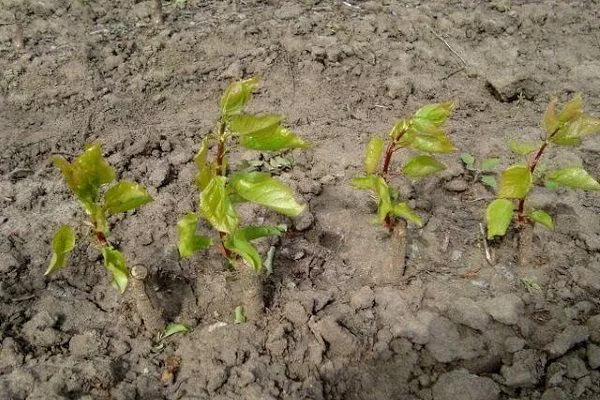
Prepare the landing site in advance:
- Make a small track of the required length, its depth should be 50x90 cm.
- Place broken bricks at the bottom of the track and make a layer of river sand up to 5 cm high on top.
- Next, lay a layer of soil mixture made from sand, soil, manure and wood ash in the ratio (1:3:1:1.5).
- Spread the mixture evenly over the bottom of the track, compact it and moisten it with a weak solution of potassium permanganate.
The seedlings should be planted in such a way that the base slightly touches the layer of soil mixture at the bottom of the track.
Diseases and pests
Manchurian apricot is characterized by increased resistance to various diseases and pests. However, occasionally, plants may be susceptible to diseases and insect attacks. Gardeners need to know what control measures to take:
| Disease/Pest | Signs | Treatment/Prevention |
| Hollow spot | A disease that affects leaves and fruits—reddish-brown spots appear on them, which eventually develop into holes. The leaves then begin to fall off, and the fruits become deformed. | To treat, cut off the infected areas and burn them. Disinfect wounds and cracks with garden sealants containing copper or iron sulfate. For prevention, spray the plant with a 5% Bordeaux mixture in early spring and fall, and a 1% solution after flowering. |
| Verticillium wilt | A harmful and insidious fungal disease that can be fatal. It manifests itself as leaf rot from below. | Control is based on early treatment. The best products for treating the plant include Vitaros, Fundazol, Previkur, and others. |
| Spider mite | A pest that infests the undersides of leaves. It reproduces rapidly. The mites quickly suck the sap from the leaves, causing them to turn brown, dry out, and then fall off. This weakens the entire plant. | To combat mites, spray the plant with special anti-mite preparations – acaricides. |
| Cherry elephant | This is a small purple beetle that feeds on apricot buds, buds, flowers, and ovaries. It can also damage the fruit. | Treatment involves shaking the tree and destroying fallen pests. If there are numerous beetles, spraying the plant with a malathion solution or Inta-Vir is recommended. |
| Aphid | This pest bites through tissue and sucks the sap from young leaves. This causes the leaves and shoots to become deformed, eventually causing them to dry out. | Insecticides are used to control aphids. The best options are considered to be Fitoverm and Fufanon. |
Harvest time and storage conditions
The ripening period for apricots depends on the growing region. The Manchurian variety begins to ripen in late July. With proper storage conditions, the apricot harvest can be preserved for a long time. At a temperature of 20-23 degrees Celsius, fully ripe fruits will keep for several days. If the harvested fruits are not fully ripe, they will fully ripen and be ready for consumption within 2-3 days.
Storing large quantities of the harvest is best done in a cool room with a temperature of 10-15°C and humidity of 50-70%. It is recommended to wrap the fruits in parchment paper and carefully stack them in wooden boxes. They can be stored this way for 7-20 days.
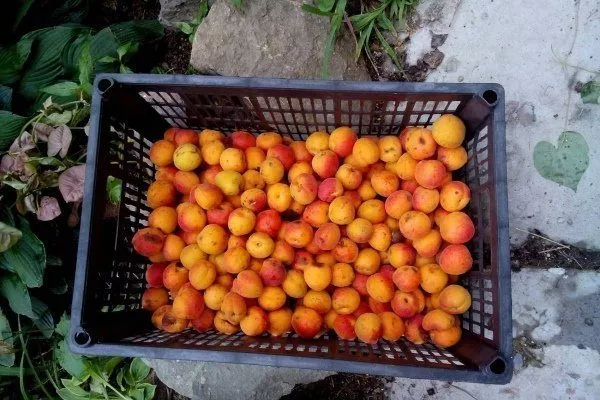
Apricots can be stored in the refrigerator at a temperature of around 0 degrees Celsius. This way, they will retain their appearance and flavor for 2-4 weeks.
Application in landscape design
When planting these ornamental fruit trees in their garden, gardeners must decide on their purpose: whether they will serve as a hedge, a single planting, or an entire garden. Manchurian apricot trees decorate the yard and delight the eye with their beautiful, vibrant colors.
With flowers that are a delicate pink and over 2 cm in size, these are the first honey plants to spread their fragrance far beyond gardens. During the fruiting season, the plants delight with vibrant foliage, among which small, golden, lantern-shaped fruits are visible. In autumn, the leaves turn a blood-red color – an eye-catching addition that can adorn the façade of a building, gazebo, or fence.
In green building, apricot trees can be planted alongside other trees. They pair well with Manchurian birch, Mongolian oak, spruce, and juniper.
Reviews of Manchurian apricot
This variety has received many positive reviews from gardeners, as evidenced by the visual appeal of the trees and the pleasant, exotic taste of the fruits.
Ultimately, the Manchurian apricot is easy to plant, grow, and propagate. Its high yields and decorative qualities attract many beginning gardeners. One caveat: its distinctive flavor.