
The Black Prince apricot grows in southern and northern Russia. It produces annual, consistent harvests, with a pleasantly tart flavor. It is disease-resistant and doesn't require any special growing conditions.
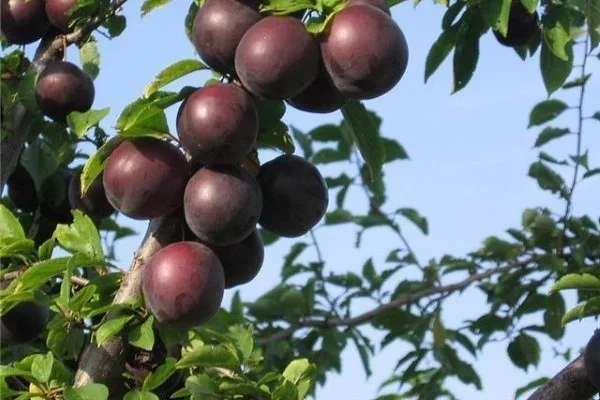
apricot "Black Prince"
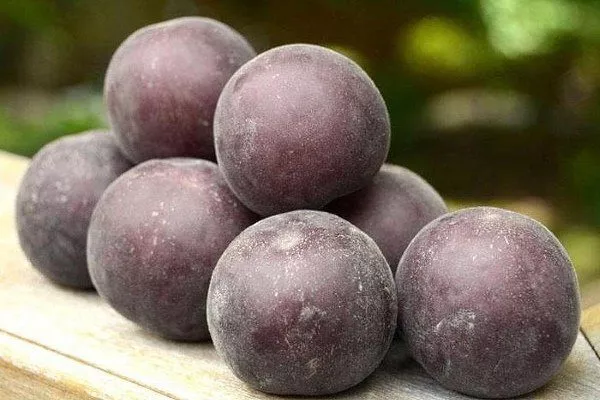
The Black Prince apricot differs from other black varieties by its largest fruits.
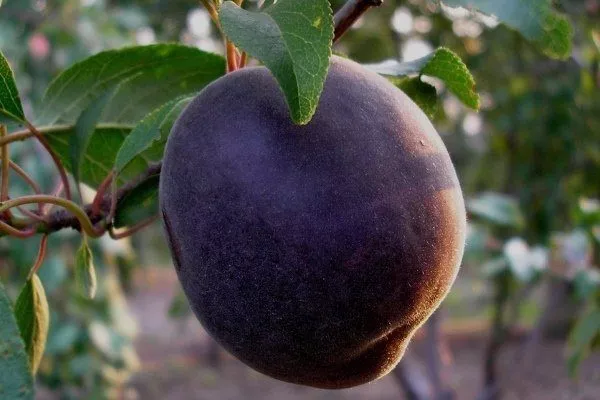
The Black Prince variety is a hybrid of apricot, cherry plum, and plum
The history of growing the Black Prince apricot
Initially, apricots grew only in warm climates, free of spring frosts that could ruin the early harvest. Breeders attempted to develop a variety that would be frost-resistant without sacrificing the fruit's flavor. The distinguished biologist and breeder I.V. Michurin also attempted to develop an improved apricot variety at the beginning of the last century.
In Ukraine's Donetsk region, breeders successfully crossed apricot with cherry plum through cross-pollination. The result was the Black Prince Apricot variety, which produces a consistent harvest. It is suitable for cultivation throughout almost the entire country, including northern regions with cold climates.
Description and characteristics of the variety
The Black Prince apricot is a tall bush or small tree, growing up to 4 meters. Its crown is spreading, compact, and not prone to crowding. After several years of growth, sharp thorns develop, which make fruit picking difficult.
- ✓ The leaves have a characteristic elongated edge with small teeth.
- ✓ Flowers are light with a pink tint, capable of self-pollination.
Plant structure:
- Branches grow from the trunk of a tree.
- The bark is dark and has a green tint.
- The leaf stalk is small and narrow.
- The leaf shape is slightly elongated, the edge is uneven with small teeth.
- The flowers are light with a pinkish tint. They contain a stamen and pistil and are self-pollinating.
To increase apricot yield, plant any variety of cherry plum or plum in the same area to ensure better pollination and subsequent fruit set.
The fruits are large, weighing between 40 and 85 g. The further south the growing area, the larger the fruit. The color is dark plum, darkening as it ripens. The skin is thin and peels off easily. The flesh is a rich, dark yellow with burgundy flecks, juicy and aromatic with a slight tartness, and the pit is difficult to remove.
The Black Prince apricot produces a consistent harvest every year, starting in the second year after planting. It blooms in late spring and is therefore resistant to repeated frosts. The harvest period runs from late July to August, depending on the growing region. A single tree can yield up to 30 kg of fruit.
Once ripe, the fruits fall off naturally. It's best to pick them shortly before they ripen. This ensures better storage and transportation.
Black Prince fruits are excellent for preserving and making pastila, jam, and other preserves. Their characteristic tart flavor adds a pleasant nuance and subtle aroma to dishes.
The plant is resistant to common fungal diseases of its species, such as:
- moniliosis;
- Clusterosporiosis;
- Cytosporosis.
An overview of the Black Prince apricot variety is presented in the video below:
Conditions for planting and growing
The growing location, soil quality, and planting start for the Black Prince Apricot are no different from other related varieties. It also doesn't require any special skills or complexities, making it easy for any amateur gardener to grow.
Selecting a seedling
Before planting, it's important to choose the right seedling. This is done in the fall to ensure proper preparation. In the spring, when planted in the soil, the seedling will immediately take root and grow well.
- ✓ Check the presence of a graft on the seedling, which guarantees the purity of the variety.
- ✓ Make sure that the root system of the seedling does not show signs of fungal diseases (white coating, soft areas).
When choosing a seedling, it is worth paying attention to important indicators:
- the plant must be no older than 2 years;
- about a meter high or a little more;
- the trunk of the seedling should be smooth and undamaged;
- the roots are well developed, fibrous, without growths and fused tangles;
- On the trunk of the tree, 0.5 m above the root, there should be several small branches or shoots with buds.
The seedling needs proper storage during the winter. The best location is a cellar or cool pantry, where the apricot will thrive until planting.
Storage requirements:
- the room temperature should be a maximum of +5 ºС;
- choose a wooden storage box;
- Dip the roots of the seedling into clay, let it dry and wrap it in a cloth bag;
- Place the plant lying down in a box and sprinkle the roots with moistened sand.
The young plant is taken out of the box just before planting.
Planting dates
There are different planting times for regions in different climate zones:
- in areas located in northern cold conditions, spring is considered a favorable time;
- in the temperate and southern zones - late autumn and spring.
A more favorable time is considered to be early spring, before the plant awakens and begins active growth. The weather should be cool, preferably with mostly cloudy skies. If planted in the fall, the seedling may not have time to take root and may die during the winter.
In the Krasnodar Krai and Stavropol, where winters are warmer, late autumn planting is common. Choosing the right time will allow the plant to quickly establish roots, gain strength, and survive its first winter.
Choosing a location for planting apricot
To choose the right location in your garden for planting young Black Prince apricot saplings, consider the following:
- plant only on the south side of the plot;
- the area must be fenced with buildings or green space;
- drafts should not be allowed, but air must circulate;
- apricot does not tolerate and does not develop well in the shade, it loves light;
- there should be no groundwater deposits to prevent the soil from becoming waterlogged;
- the plant takes root very poorly and does not grow in heavy clay soil;
- There should not be a landing site in a lowland.

To add more light to a dimly lit garden, you can paint the fence white. The reflected sunlight will compensate for the lack of natural light.
Soil preparation
The Black Prince apricot grows well in loose soil with a pH of 6.5 to 7. However, before planting the seedling, prepare the hole in the fall. Fill the bottom layer with expanded clay to ensure drainage, and then sprinkle a specially prepared soil mixture on top.
Dig a hole more than half a meter deep and the same distance wide. A mature tree needs about 5 square meters of space to grow comfortably.
Composition of the prepared soil:
- take the excavated soil or replace it with black soil;
- add peat - 2 times less than the volume of soil;
- add 1.5 kg of wood ash;
- Fertilize with 350-450 g of superphosphate.
Pour the prepared mixture into the hole. Over the winter, it will settle and level the soil surface. To prevent the nutrients from being washed out of the prepared soil, it's best to cover it with plastic.
Planting scheme and technology
In the spring, loosen the soil in the hole prepared for planting and make a hole for the seedling. It should be slightly deeper than the root ball.
Procedure for landing:
- remove the seedling from winter storage and make sure it has overwintered well;
- lower it into the hole intended for it in the well;
- the root collar should be 2-3 cm below the surface level;
- fill in layers of soil, compacting each layer;
- at a distance of 15-20 cm, drive in a wooden stake to further support the growing tree;
- Make an artificial border of soil around the hole to prevent water from spilling when watering;
- water generously so that all the soil around the roots is well saturated;
- add mulch: hay, compost, etc.
Using barrels for planting
If groundwater levels are close to the surface in your garden, you should plant Black Prince apricot seedlings using a barrel. This is a very simple method that won't pose any difficulties, even for a novice gardener.
To do this you will need:
- in an ordinary barrel, remove the bottom and bury it halfway in the soil;
- Add a drainage layer, then pre-prepared soil mixed with sand.
This method has the following advantages:
- will protect the roots from excess moisture in the soil;
- In winter it will prevent snow from accumulating and protect against freezing.
Rules for caring for the Black Prince
Plant care includes proper soil irrigation, the right amount of nutrients, and timely pruning. In cold climates, it's important to cover the plant for the winter to reliably protect it from frost.
Watering the plant
The plant does not tolerate excess moisture, but can withstand short-term drought. However, with proper care, neither should occur. To better regulate the amount of watering, avoid planting vegetables that require more moisture near the tree.
Watering should be carried out in accordance with the following recommendations:
- As soon as you plant a young seedling, give it the first generous watering, which includes a couple of buckets of water;
- when the plant is covered with blossoming flowers, water more often - at least once a week;
- after the flowering period, water once every 7 days;
- At the beginning of summer, the fruits begin to grow and the apricot needs additional moisture; use 7 to 9 buckets of water at a time;
- Once the harvest has been collected, water the plant generously for quick recovery;
- In the fall, water the plants before wintering, but before the onset of frost, so that the root system is not subject to frostbite.
It's important to adjust the amount of watering based on the plant's age—the younger the apricot, the more moisture it needs. Also, during dry periods, avoid allowing the root system to dry out. Watering is best done in the evening, when there's no direct sunlight.
Applying mulch to the root area immediately after watering helps retain moisture during dry summer periods. Read more about soil mulching. Here.
Organic and mineral fertilizers
The Black Prince apricot requires mineral and organic fertilizers. The amount of nitrogen should not exceed the calculated rate to avoid damaging the plant. Fertilizers containing phosphorus and potassium should be added during the period of active growth and fruit ripening.
Fertilizer application recommendations:
- During the first two years, the plant does not particularly need additional fertilizers, as there is a sufficient amount of them in the planting soil.
- At the end of the second year, when the tree has produced its first crop, fertilize it for the next two years: mix a bucket of organic fertilizer with 2 square meters of soil.
- Every spring, apply mineral fertilizers containing nitrogen, scattering them over the dug soil at the rate of 35 g per 1 sq. m.
- During the fruiting period, prepare potassium fertilizers in the following proportion: dissolve 15 g in 10 liters of water and water the soil around the trunk.
- You can purchase ready-made fertilizers with microelements and add them in small portions as needed.
Trimming
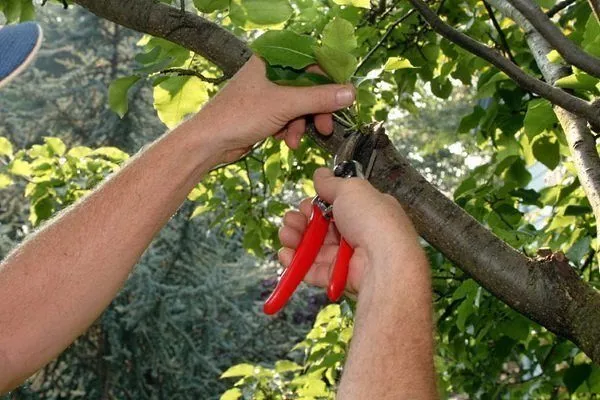
The apricot tree's crown isn't prone to becoming dense, so pruning is both preventative and formative. In the fall, before preparing for winter, and in the spring, inspect the tree and prune any branches or plant parts that have been damaged, such as those frozen over the winter, broken off in places, or infected with fungus.
- Perform crown-shaping pruning during the first 3-4 years of the plant's life. The goal of pruning is to create a cup-shaped framework of branches. This shape allows sunlight to reach the branches and distributes fruit formation across all branches, preventing the tree from becoming too tall and straining from fruit set.
- In the first year, prune the main trunk to a height of about 80 cm. Below it, there should be several shoots with buds growing at a distance of about 15 cm from each other. The lowest shoot should grow at a height of about 0.5 m from the ground.
- Periodically, perform preventative pruning on the tree, cutting off branches that grow inward.
- In summer, trim young shoots by 15 cm to force the plant to produce additional branches and set fruit on them in the future.
- To rejuvenate a mature tree, prune a few branches a year at a short distance from the trunk. These branches will begin to actively grow new branches, which will eventually stretch and form fruit.
When pruning, use only a sharp tool, and it's best to treat the cut edge of the branch with hydrogen peroxide. Learn how and when to prune apricot trees. this article.
Preparing for winter
Apricot trees have low tolerance to cold and frost. They must be protected during the winter.
To do this, you should take the following steps:
- clear the area under the plant of debris, fallen leaves and branches;
- Whitewash the trunk from the ground to a height of more than 0.5 m using a mixture of slaked lime, copper sulfate and PVA glue - this is reliable protection against insects and small rodents;
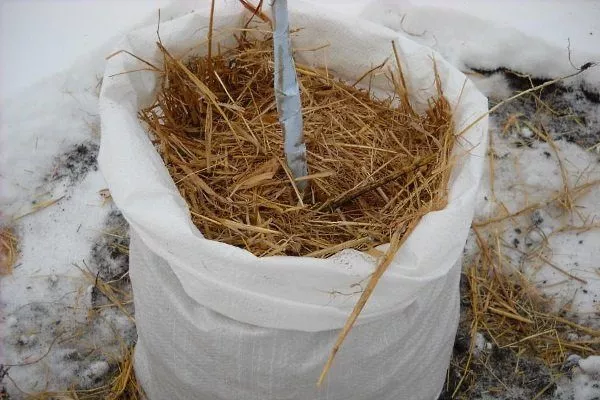
- take humus and pour it onto the soil near the root, forming a mound with a base in the area of the tree trunk up to 30 cm high;
- Wrap the above-ground portion of the plant in cardboard boxes or burlap. The key is to allow the material to breathe to prevent rotting.
In cold regions, mulch should be applied in a thick layer and wrapped around the tree in several layers.
Prevention of pests and diseases
All apricot varieties have strong immunity to pests and rot fungi. Preventative and seasonal pruning should be done regularly. This is sufficient to prevent disease.
Additional preventive measures:
- Be sure to burn all fallen, collected or cut leaves and branches in the autumn, and use the ash as a supplement to fertilizer;
- Remove fallen fruits promptly to prevent harmful microorganisms from developing in them;
- remove weeds periodically;
- When digging, turn over the excavated layer of soil so that sunlight kills pathogenic microorganisms;
- If you find cracks in the bark when inspecting it, treat the damaged area with a solution of hydrogen peroxide;
- In early spring, after flowering and before the fruits begin to ripen, spray with special fungicidal solutions as a preventative measure.
If your tree is affected by disease, you can always buy special insect repellents at the store. You can find an overview of apricot diseases and pests. here.
Advantages and disadvantages of the variety
The Black Prince apricot variety is very popular among gardeners and is quickly spreading throughout Russia.
This variety of apricot is valued for:
- stable annual high yields;
- quite large and juicy fruit;
- good immunity to major diseases;
- ease of care;
- good winter hardiness, especially of the root system, due to a long dormant period;
- late flowering period and resistance to ovary damage from sudden cold night temperatures;
- ability to self-pollinate;
- convenient crown shape, which makes tree maintenance easier;
- undemanding to soil types;
- transfer of dry periods;
- A beautiful sight during flowering, it serves as an excellent decoration for any garden.
However, the plant has some disadvantages:
- the stone is difficult to separate from the pulp;
- a slight sourness of taste, but this characteristic property of this variety is excellent for making preserves, jams, and as the main ingredient for liqueurs;
- the fruits are slightly smaller in size than a classic apricot;
- Slow growth in spring is an advantage for northern regions, but a disadvantage for areas in the south of the country.
Gardeners' reviews
Something's not quite right with this black apricot tree... It's been growing for five or six years, and it's only "two inches above the pot." It's about a meter tall, more in fact, with sparse growth, but it doesn't seem to be in any trouble. The leaves are beautiful in summer, and the bark is fine. It barely grows and hasn't bloomed once. Next to it, there's a Triumph Severny apricot tree—it's already over three meters tall. I'm shaping it into a cup, and I trimmed the crown this year. It bears fruit every year (when there are no recurring frosts). Meanwhile, the Black Prince sits in the same spot. What's missing?
I like the Black Prince; I have a good harvest, and the fruit is very tasty. It just gets sick from time to time. But now I understand what's wrong—I'm not fertilizing the tree correctly. I'll follow your recommendations from now on.
The text above says to deepen the root collar. Apparently, the article was written by a copywriter. This is fundamentally wrong! All stone fruit crops, including Black Prince, are planted without deepening the root collar! If planted incorrectly, the tree will die—not immediately, but it will die.