
The Alyosha apricot is a versatile hybrid with good frost resistance and is completely easy to grow. Commonly known as "Alyoshenka" or "Alyoshenkin," it is suitable for planting in a variety of climates, except for Siberia, the Urals, and the Far East, and boasts excellent flavor.
The history of the Alyosha hybrid
The Alyosha variety was developed over 16 long years, crossing various varieties. The breeding process began in 1988, but the hybrid was only added to the state register in 2004. The cultivar's creators were renowned breeders L. A. Kramarenko and A. K. Skvortsov.
The result is a hybrid that can be easily grown (without cover) in the central part of Russia, the Moscow region, and the middle zone.
How does the Alyosha apricot differ from other varieties?
The Alyosha hybrid is easily recognized by its external characteristics. First and foremost, it is a tree with a rounded, spreading crown and a height of approximately 4 meters. Moreover, the shoots are so branched that the crown can reach 4 meters in diameter.
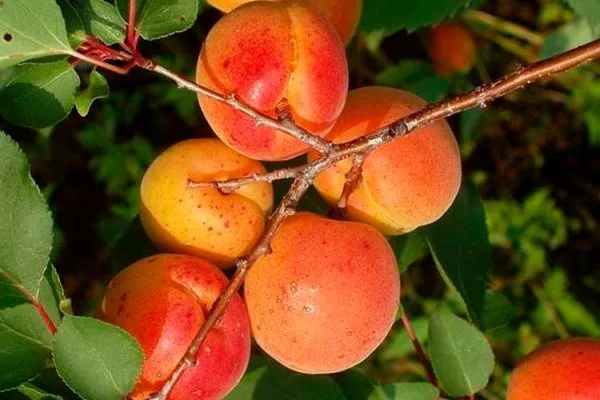
Other characteristic features:
- Leaves. Their shape is standard oval, but the tip is noticeably pointed. They are medium in size, and the central vein is clearly visible. The foliage color deserves special attention: at the very beginning of development, it is simply green, then turns a rich green, but as the growing season progresses, the leaves acquire yellow, red, and crimson hues.
- Escapes. They are distinguished by their medium-thick, smooth bark when young. Lateral branches are well developed, with moderate foliage.
- Flowers. They are medium-sized (about 3.5 cm in diameter) and whitish-pink in color. They appear much earlier than the new leaves, forming singly on all shoots.
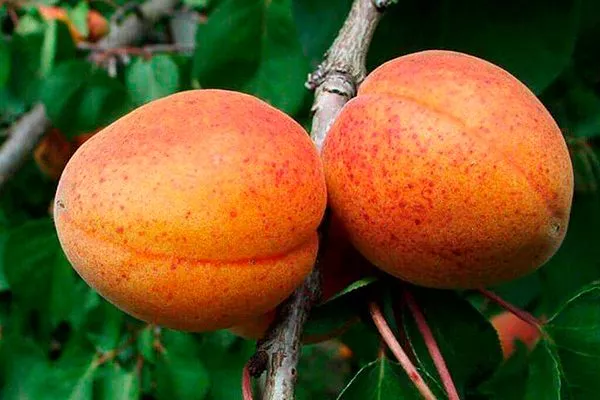
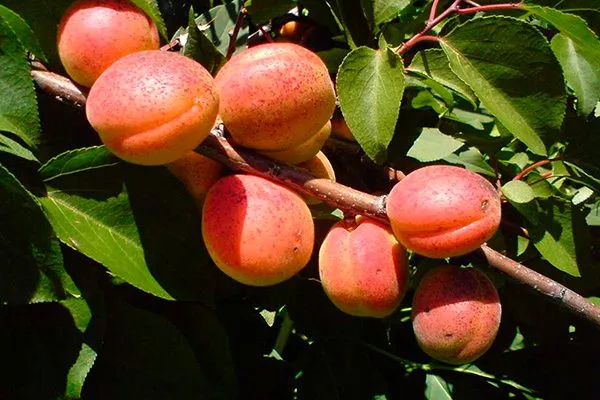
- Fruit. They are round in shape, slightly flattened on the sides. The surface is pubescent, and the skin is deep yellow, with a reddish blush on the sides. The flesh is bright orange, juicy, and moderately firm.
The weight of one fruit varies from 15 to 20 g. The stone is considered large, but is easily separated from the pulp.
- ✓ Leaves change color from green to yellow, red and purple during the growing season.
- ✓ Flowers appear before the leaves, are whitish-pink in color and about 3.5 cm in diameter.
Characteristics of the variety
Alyosha has its own characteristics regarding yield, fruiting, taste, application, resistance to adverse factors, etc. These should be studied in advance to understand what problems may be encountered in the future when growing the variety.
Taste qualities
Fully ripe apricots have a sweet, slightly tart flavor—they contain about 8% sugar and only 2% acid. The tasting score is 4 out of 5. The aroma is typical apricot, as is the aftertaste. No other notes are detectable.
Ripening and fruiting
The Alyosha hybrid apricot is considered early-ripening, as flowering begins as early as April, and the fruit can be harvested from mid-July. Ripening is uneven, so you can enjoy the delicious fruit over a period of 30-40 days. The tree begins bearing fruit as early as the third year after planting outdoors.
Productivity
The variety is characterized by high yields—from 37 to 43 centners of fruit can be harvested per hectare. Many gardeners note that achieving such results requires little effort.
Keep in mind, however, that until the tree reaches five years of age, yields will be much lower, as the tree is still considered young and not fully developed. However, in subsequent years, the harvest will be consistently high and annual.
Application of fruits
The Alyosha apricot is a versatile variety. Its fruits make delicious compotes and juices, are used to make jams and preserves, and the pulp is used for baking fillings and even baby food.
Chemical composition of the Alyosha apricot fruit
This amazing variety is extremely rich in nutrients. It contains many vitamins, micro- and macroelements, including beta-carotene, potassium, iron, silicon, calcium, and vitamins A, C, and E. With a dry matter content of approximately 13-13.2%, Alyosha apricots are ideal for dried fruit.
Self-fertility and the need for pollinators
The Alyosha variety is completely self-fertile, so it doesn't require nearby pollinator trees, a distinct advantage. Furthermore, it acts as a pollinator for many other apricot varieties.
Climate, drought and frost resistance
The hybrid thrives in dry weather and doesn't require excessive moisture. Watering the tree a few times throughout the growing season is sufficient. Alyosha is considered frost-hardy, as it doesn't freeze at temperatures of -25 to -35 degrees Celsius. If these temperatures are exceeded, half the buds will die.
Resistance to infection and pests
When developing the Alyosha variety, breeders had another goal: to achieve very strong immunity to eliminate the risk of infection and pest infestation. They succeeded, and therefore, trees of this hybrid rarely suffer from diseases or pests. However, this is entirely possible, especially if agricultural practices are not followed and there is frequent rainfall during the growing season.
What are the pros and cons of the Alyosha apricot?
Like other apricot varieties, Alyosha has its pros and cons, which are worth knowing. Among its advantages, the following stand out:
There are critically few disadvantages - gardeners note only intolerance to high soil moisture and the large size of the seed for such a small amount of pulp.
Planting specifics with step-by-step instructions
Alyosha is one of those hybrids that quickly adapts to new conditions and takes root just as quickly. Despite this, it's important to consider certain varietal requirements, which will be discussed below.
Landing time
Spring is considered the best time to plant seedlings in all regions of the country, as the young trees will have time to take root and thrive before winter. However, in southern latitudes, planting in the fall is also acceptable. The main thing is to allow at least six weeks before the first frost.
In spring, it's important to stick to a time when the air temperature stabilizes at 12-14 degrees Celsius. This varies by region, depending on the months and dates. Furthermore, much depends on current weather conditions.
Apricot seedlings are most often sold in the fall, but pre-winter planting is not recommended in all regions, so preserving the planting material is crucial. This is easy if you follow a few guidelines:
- the optimal temperature range is from 0 to +5 degrees;
- the best place is a cellar, basement, glazed loggia;
- A mandatory requirement is the location of the root system in the substrate.
- ✓ Storage temperature must be strictly maintained within the range from 0 to +5 degrees.
- ✓ The root system should be constantly moistened, but not flooded with water to avoid rotting.
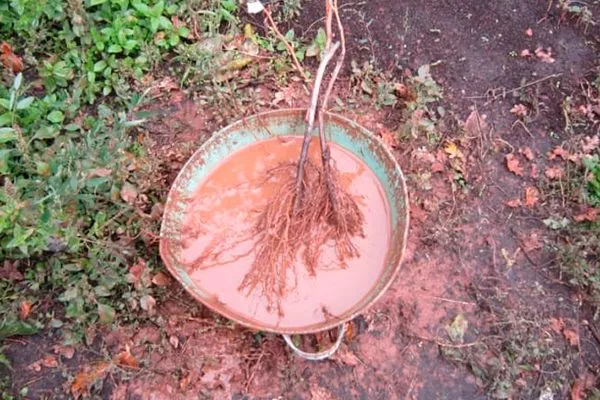
To prepare a seedling purchased in the fall for storage, first soak the root system in a clay slurry and plant it in a container with a mixture of sand, humus, and soil at a 40-degree angle. Be sure to sprinkle the root collar or grafting site with soil mixture.
Selecting a site
Since apricots are southern plants, they prefer plenty of light and warmth. Therefore, the optimal location for an apricot orchard is on a south-facing slope. This location receives only warm air currents, while cold air flows through the lowlands.
Please also consider other requirements for the location:
- the depth of groundwater is at least 2-4 m, otherwise moisture will stagnate in the root area and the roots will begin to rot;
- the area should be such that the distance between seedlings is about 3 m, and between rows – 5 m;
- soil type – loamy or sandy loam, clay soil is absolutely not suitable (the roots will not be able to grow);
- The soil structure is loose and moderately light, and must be well-drained so that oxygen and air can enter and water can quickly flow into the deep layers of the earth.
It's also important to pay attention to crop rotation. Keep in mind that apricots don't like other crops nearby. They should definitely not be planted near:
- cherries;
- cherries;
- plums;
- pears;
- apples;
- peaches;
- walnuts;
- raspberries;
- black, white and red currants;
- coniferous trees;
- birch.
Preparing seedlings
Regardless of where you purchased your seedling, you need to prepare it. To do this, consider the following:
- First, inspect the above-ground part and roots - they should be intact and have no signs of rot, pests, or dryness;
- If there are any deviations, be sure to cut off these areas and treat the cut areas with ash powder;
- If there is damage in the middle of the shoot, clean it down to healthy tissue;
- you can slightly shorten the root shoots that are much longer than the others;
- If the roots are a little dry, cover them with wet moss or place the seedling in moist sand for several hours (the time depends on the degree of dryness).
Many gardeners treat root growth with growth stimulants, which significantly accelerates their development. You can use Heteroauxin, Kornevin, Epin, etc., but strictly follow the instructions.
Soil preparation
Preparatory work is traditionally carried out 3-5 months before planting. This significantly improves soil fertility. However, this isn't always possible, so soil preparation can be done 3-4 weeks in advance.
What you need to do:
- Remove all debris and remnants of leaves, branches, and grass from the area.
- Pay special attention to the areas where the planting holes will be made. Carefully dig and manually remove any remaining roots, weeds, etc.
- When digging the beds, add organic matter to the soil, such as rotted manure (if the work is being done several months in advance, fresh manure can be used), compost, humus, and similar materials. About 8-10 kg is needed per square meter. If the soil is depleted, add 300 g of wood ash and 200-250 g of superphosphate (per square meter).
Planting technique
Planting should be done on a warm, sunny day. Follow these steps:
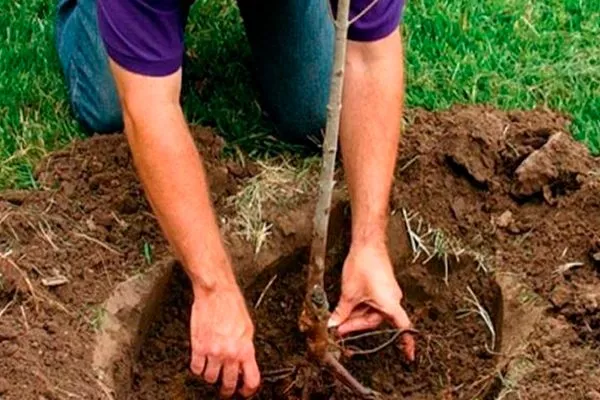
- Dig holes. They should be about 70-80 cm deep and in diameter.
- Mix the topsoil, which is considered fertile, with equal parts compost. If the soil is very clayey, add an equal amount of coarse river sand.
- Place a drainage layer of up to 15 cm at the bottom of the hole. You can use purchased materials or improvised ones (broken brick, stones, crushed stone, pebbles).
- Place some of the substrate and form a mound.
- Install a stake in the central area, which should be 20 cm higher than the seedling after deepening.
- Now place the young tree near the peg and straighten the roots.
- Fill with potting soil, tamping it down periodically to prevent any empty spaces. The grafting point or root collar should be 1-2 cm above ground level.
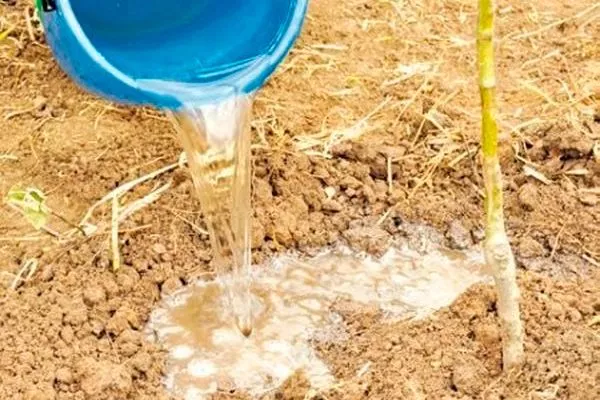
- Form a groove around the trunk and water the seedlings with approximately 20 liters of warm water.
- Mulch the trunk area using sawdust or peat.
- Tie the seedling to a support post to prevent it from falling in case of wind or other adverse factors.
Care instructions for the Alyosha apricot tree
Care procedures are based on standard steps—watering, fertilizing, pruning, etc. It's crucial to properly care for the crop—in accordance with the varietal needs—otherwise, it's impossible to achieve abundant flowering and a decent harvest.
Watering mode
Alyosha apricots shouldn't be watered too frequently. This should only be done during certain periods:
- during budding;
- at the end of flowering - when fruits begin to form;
- during fruiting;
- after harvesting.
Soil care
The soil in which the Alyosha tree is located also requires care. Here's what to do:
- After watering, deep loosening is necessary, and during the growing season it is advisable to do light loosening;
- it is necessary to clear the tree trunk circle of fallen fruits, leaves and branches;
- try to loosen the space between rows as well – this will make it easier for the roots to grow and receive oxygen;
- Remove weeds more often, pulling them out with your hands along with the roots;
- Fertilize periodically.
How to fertilize the soil for apricot trees?
Fertile soil strengthens the immune system and promotes high yields. Neither a deficiency nor an excess of nutrients should be tolerated, so certain rules must be followed. The Alyosha apricot requires both organic and mineral fertilizers.
Please note the fertilizer application scheme:
- In early spring, the tree needs nitrogen to build foliage and promote shoot growth. The recommended nitrogen rate per square meter is 35-45 g.
- In summer, potassium and phosphorus are needed. The recommended dose is 20-25 g per square meter.
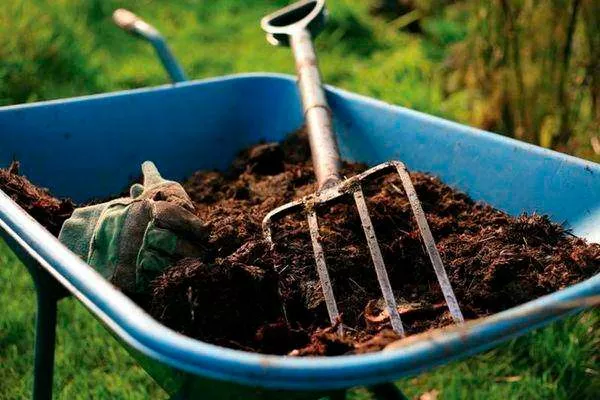
- In the fall, when the fruiting period is over and the entire harvest has been gathered, only organic matter will be needed. To achieve this, apply 5 kg of manure, compost, or humus per square meter.
Trimming
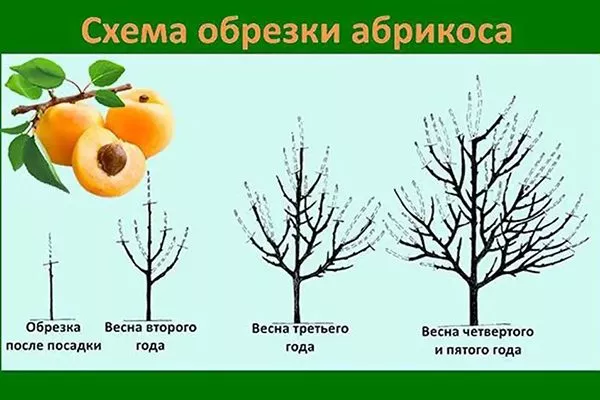
The Alyosha apricot has a very spreading and branched crown, so it requires shaping pruning. This will encourage more fruit buds, initiate fruiting earlier, and allow air to circulate more quickly between the branches.
Rules to follow:
- shaping is carried out only in early spring, before the sap begins to flow;
- branches located near the main shoots are trimmed and shortened;
- crooked branches are removed;
- shortening is carried out by 13-15 cm;
- the dense crown is thinned out.
To learn how to properly shape the Alyosha apricot, see the photo:
In addition to crown shaping, sanitary pruning is necessary in the spring and fall. This involves removing branches damaged over the winter and summer, shoots that have dried out, rotted, or frozen.
Preparing an apricot tree for winter
Regardless of whether the apricot tree trunk will be covered for the winter or not, it's important to prepare the trees for winter. This involves a few simple steps.
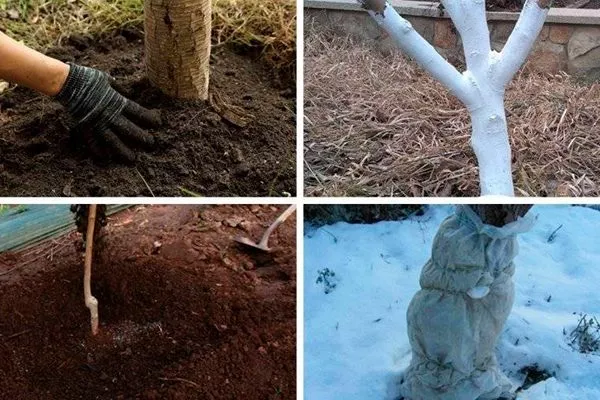
Mulching and moisture charging
After all autumn work—pruning and fertilizing—it's necessary to perform a moisture-replenishing irrigation, which involves pouring a large amount of water around the trunk with about 60-70 liters. After this, the area around the trunk is thoroughly mulched with plant waste.
Forest litter or peat is considered an excellent option, but leaves from fruit trees are prohibited. The optimal layer is 12-20 cm, and the cooler the climate, the greater the thickness.
Snow retention
An abundance of snow around the tree trunks helps maintain the necessary moisture levels during the winter. Snow also protects against the negative effects of frost. To retain snow, simply install snow shields and scatter brushwood throughout the area. Next, pile the snow into mounds about 50 cm high.
Additional activities
Most often in winter, branches become covered with wet snow or ice, which puts additional stress on the shoots. This can cause them to break. Therefore, you can tie the branches with twine in the fall and shake off the snow from the tree in the winter.
What else can happen:
- Frost can sometimes cause cracks in the bark, which can lead to disease. To prevent this, treat all shoots with copper sulfate in the fall.
- Another problem is bark-eating rodents. To prevent this, install a fine-mesh protective net.
- Various diseases and pests in the soil can easily climb up the trunk to the branches. To prevent this, simply whitewash the trunks with lime.
If trunk cover is required, use burlap, agrofibre, spunbond, or similar material. If there is a conifer nearby, surround the tree with pine branches.
What diseases and pests are dangerous for the Alyosha apricot variety?
Under normal growing conditions, the Alyosha tree is not susceptible to infection or insect infestation. However, sometimes, even through no fault of the gardener, problems arise. Common problems include:
- Brown spot. The fungus appears as spots on the green parts of the tree and affects the texture of the fruit. Horus is considered the best treatment.
- Powdery mildew. Most often, the current year's shoots are affected. A whitish coating forms on the leaves. Various fungicides are used (the list is extensive).
- Macrosporiosis. Another fungus that becomes active in late summer or fall. It can be recognized by red and purple spots on the leaves. Fruit is later affected. Treatment can be with Bordeaux mixture.
- Eyed gall midge. This is a yellowish-gray pest that eats buds in the spring. Fufanon is effective in controlling it.
- White-spotted leaf roller. It can be recognized by its orange wings. The caterpillars, which eat leaves, are especially dangerous. Fufanon and Karbofos are suitable for control.
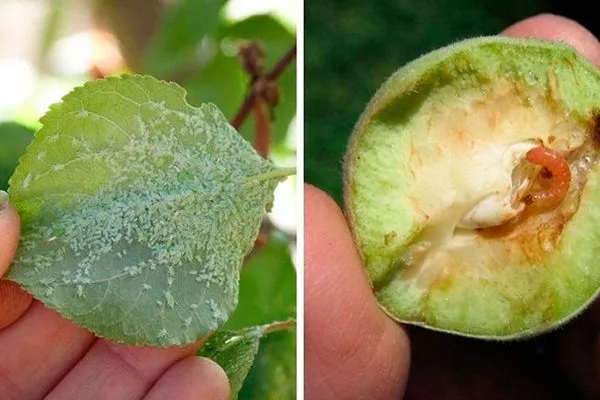
Oddly enough, codling moths and aphids are almost never found on trees of the Alyosha variety.
Harvesting and storage rules
Apricots must be harvested correctly. The harvesting period depends on their intended use. If the primary purpose is to consume them within a few days, the fruit should be technically ripe. If the fruit is needed for transportation or long-term storage, they are harvested unripe—7-10 days before ripeness, when the flesh is still firm.
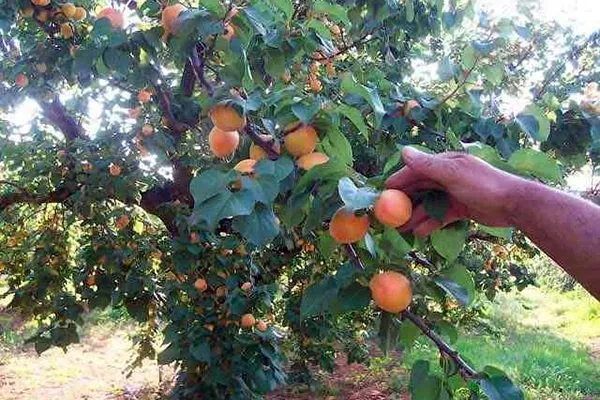
The fruits can be stored for several months under the following conditions:
- temperature regime – 10-15 degrees, but the lower it is, the longer the fruits will remain fresh;
- air humidity – 60-65%;
- a ventilated room is required.
Try to store apricots in perforated wooden boxes. Place two or three layers of apricots, with paper between them.
Reviews of the Alyosha variety
The hybrid apricot Alyosha is considered easy to grow, boasting numerous advantages and few drawbacks. It has a pleasant apricot aroma and sweet flavor. It is self-pollinating and can pollinate other apricot varieties, and is resistant to diseases and pests.