
The Academician hybrid apricot is a versatile variety that can be grown not only in the south but also in harsher climates, as it easily adapts to a variety of growing conditions. These apricots are productive, early fruiting, and resistant to various adverse factors, including diseases.
History of the Academician apricot breeding
The variety was developed over many years at the Far Eastern Research Institute by breeders V. A. Marusich and G. T. Kazmin. The breeding process began in 1979, but the hybrid was not added to the state register until 1996. Two apricot varieties—Sputnik and Khabarovsky—were used to develop the variety, as the primary goal was to produce the most frost-resistant hybrid.
Description of the plant
The trees are distinguished by their early ripening and rapid growth, allowing you to enjoy juicy fruit as early as July. The variety is easily identified by the external characteristics of both the tree and its fruit.
Tree
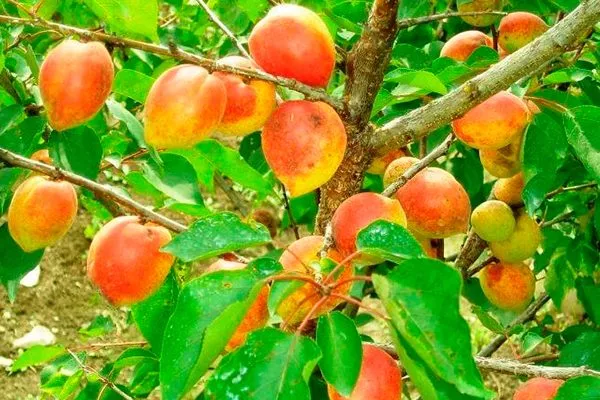
The Academician apricot is a vigorous plant that reaches a height of 4.5-5 m. But there are trees with other characteristic features;
- trunk - medium in thickness;
- crown – round-elongated;
- shoots are of a light, geniculate type, with dots located under the bark;
- bark - when young it has a rich brownish-green color, but as the tree matures it becomes light gray and bumpy;
- fruiting buds are quite large, located in groups of 3;
- leaves are large, oval and pointed, thin and dark green on the outer surface, with a whitish tint on the inner surface;
- Flowers are large with oval-shaped petals of a delicate pink hue.
Root system
The roots of the Academician apricot tree are strong and robust, allowing the plant to quickly establish and take root.
Fruit
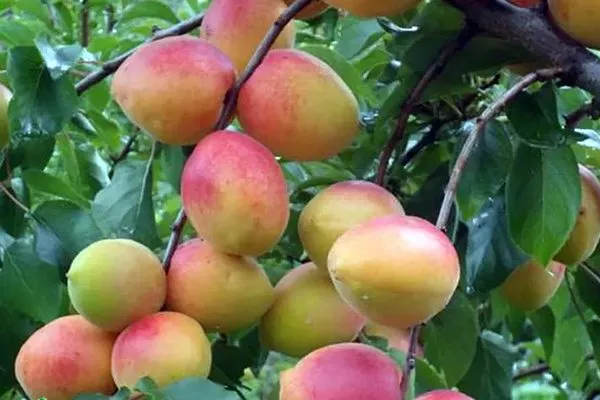
The Academician variety is distinguished by its large fruit, weighing between 35 and 55 grams, depending on growing conditions and care. Specimens reaching 90-100 grams have been recorded. Other varietal characteristics include:
- the peel color is orange, closer to a light tone, but has a washed-out carmine blush;
- pulp color – light yellow;
- the shape of the fruit is elongated-oval, with a pointed tip like a thorn or beak;
- the skin is thickened, has a pubescent surface and a clearly visible abdominal suture;
- the stone is medium in size and separates from the pulp on its own;
- the consistency of the pulp is distinguished by its increased tenderness and juiciness, but at the same time slightly crunchy;
- taste – sweet, with a slight sourness (sugar content is about 12%, acid 2.3%);
- The taste of the kernel from the pit is sweet.
The tasting score is 4 points. The fruits are resistant to cracking due to the thickness of the skin, which is especially valuable for making jam, compotes, etc.
Agrobiological characteristics
Studying agrobiological characteristics is important, as it allows one to evaluate the variety's characteristics and the feasibility of purchasing a seedling in advance. Specifically, one can determine whether the tree can thrive in certain climate conditions, what the yield will be, how resilient the variety is to various adverse factors, and so on.
Growing regions
The Academician variety was developed specifically for cultivation in the Far East and regions with similar climates, so these apricots can be planted anywhere in Russia.
Drought resistance, frost resistance
The Academician can easily withstand temperatures down to -40 degrees Celsius, but if the thermometer reads below that, the tree will need to be insulated before wintering. To ensure the plant can easily withstand such cold, it is planted at higher elevations rather than in lowlands.
As for drought tolerance, this variety can easily grow for several weeks without watering. Apricots are much less tolerant of high humidity—overwatering can cause root rot.
Resistance to diseases and pests
The Academician apricot is resistant to diseases and pests due to its strong immune system. However, this is only possible if all agricultural practices are followed. However, all stone fruit crops are susceptible to fungal infections, so preventative treatments with fungicides and insecticides (against pests) are crucial.
- ✓ Resistance to codling moth, which is rare among apricot varieties.
- ✓ The ability to bear fruit in the third year after planting, which is an indicator of early fruiting.
Features of pollination, flowering time and technical maturity
The Academician is partially self-fertile, so to increase yields, it's recommended to plant other apricot varieties nearby. The best pollinators for the Academician include Khabarovsky Apricot, Amur, Komarov, and Karlik.
The trees begin to bloom as early as mid- to late May (depending on weather conditions and climate), and harvesting can begin in July or August. The ripening period is extended, so you can enjoy fresh fruit for at least a month.
Yield level, beginning of fruiting
The Academician apricot variety is considered a high-yielding variety. Once mature, a single tree can yield 35 to 40 kg of fruit. In commercial cultivation, 124 centners per hectare can be harvested. However, keep in mind that in the first few years of fruiting, a single tree produces a small amount of fruit, as it is still young – about 10-20 kg.
Academician apricots begin bearing fruit as early as the third year after planting, but peak productivity is reached by the fifth year. This is especially true for apricots grown in the south and central parts of the country; in harsher climates, the fruiting period can be delayed by one to two years. However, in all cases, fruiting occurs annually.
Application of fruits
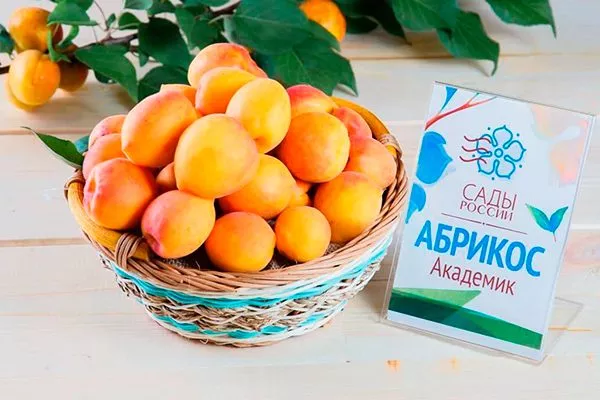
Academician apricots are considered versatile, so they can be used in a wide variety of ways—fresh, for preserving jam, preserves, compotes, and more. The fruits are used to make pie and pastry fillings, baby food, sauces, and juices. They are also dried to make dried fruit.
Advantages and disadvantages of the variety
Over the years, the Academician apricot has become very popular among both consumers and gardeners. This variety boasts numerous positive attributes.
Methods of reproduction
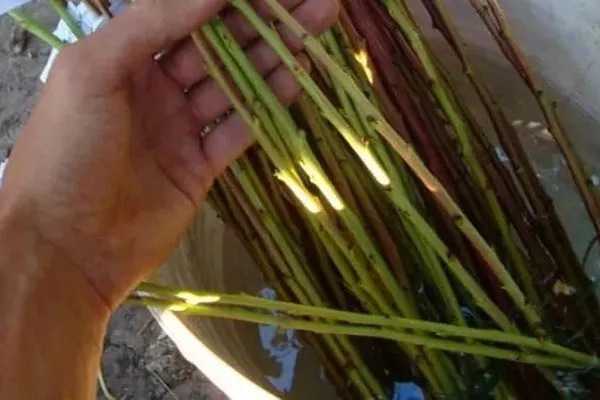
The Academician variety is versatile in every way, including the ability to reproduce in almost any available way:
- with a bone;
- green cuttings;
- lignified cuttings;
- shoots and offspring.
Features of planting seedlings
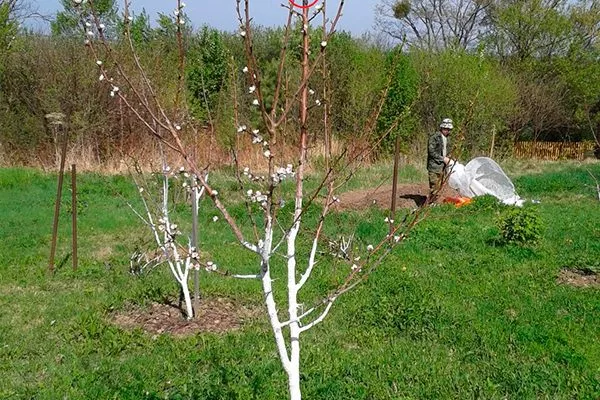
Academician apricots aren't particularly demanding when it comes to planting, but it's still important to consider certain varietal nuances and subtleties. Proper planting and preparation will ensure earlier fruiting and a bountiful harvest in the tree's first few years.
Recommended timeframes
You can plant seedlings in two periods of the year:
- In the spring. This is the best time, especially for regions with harsh climates, because the young tree will have time to take root and adapt to its new location by winter, making it easier to survive. The key is to wait until the air temperature stabilizes at 12-14 degrees Celsius. Therefore, the specific date is determined based on the current year's climate and weather conditions.
- In autumn. This time is considered optimal only for regions with warm and temperate climates. The exact time is also selected individually, but it is important that at least 30-40 days remain before the first frost.
Which area is suitable?
Regardless of how frost-hardy the crop is, apricots are still heat-loving, so the site must be sunny. However, there are other requirements to consider when choosing a site for the Academician apricot:
- You should not plant seedlings near buildings that create shade or even partial shade;
- the best area in the garden is southwest or south;
- the terrain is extremely elevated, as the lowlands are prone to drafts and dampness;
- the distance from buildings or massive fences should be at least 4 m, since the root system of the variety is very developed and powerful;
- the groundwater level is 2-2.5 m from the surface of the earth, and if it is less, the roots will be susceptible to putrefactive diseases;
- soil – should be fertile, moderately loose and drained, with a neutral acidity level (6.0-7.0 pH);
- distance from pollinator trees – maximum 30-40 m;
- The best soil is loamy, sandy loam, black soil.
Neighborhood Features
Apricots are considered solitary crops because they do not tolerate proximity to any other plants. Furthermore, the Academician variety should not be grown alongside other apricot varieties. The reason for this is simple: each variety is susceptible to the same diseases and pests, making them difficult to control.
How to select and prepare planting material?
Academician apricot seedlings are typically purchased from specialized nurseries or gardening stores. Many gardeners and summer residents also purchase them secondhand at markets or from friends. But in any case, it's important to make the right choice to ensure the tree grows successfully.
There are several points worth emphasizing:
- The condition of the root shoots should be free of rot, dryness, fractures, and signs of disease. The roots should be well-developed and branched.
- The bark of the seedlings is always smooth and uniform, without cracks, chips, scratches or traces of pests.
- The shoots must show signs of grafting.
Seedlings are sold with both open and closed root systems. In the former case, it's easier to examine the root system, while in the latter case, this is impossible. However, the roots are always in a favorable environment (substrate) before purchase.
Before starting work, it's important to prepare the planting material. This is easy to do:
- Inspect the roots and aboveground part.
- Trim off all unsuitable elements with sharp and disinfected pruning shears.
- Treat the cut areas with ash dust.
- Soak the roots for 12 hours in any growth stimulant, such as Kornevin.
- Just before planting, dip the roots into a clay mixture.
Site preparation
For spring planting, prepare the soil in the fall; for fall planting, prepare it in late spring. However, if this isn't possible, begin the preparatory work at least 3-4 weeks in advance.
What and how to do:
- Treat the area – remove debris, branches, leaves and weeds.
- Dig over the soil, removing any remaining weed roots and adding organic fertilizer. You can use rotted manure, compost, humus, and similar materials at a rate of 8-10 kg per square meter.
- If the soil is highly acidic, add dolomite flour, chalk or slaked lime.
The process of planting young seedlings
When planting the Academician apricot, it's important to adhere to a specific pattern—the distance between trees should be at least 5 meters. The procedure is as follows:
- Dig planting holes according to the diagram.
- Set aside the top layer of soil and mix in an equal amount of humus and river sand. Add 400-500 g of wood ash and about 400 g of double superphosphate per hole. Mix thoroughly.
- Place pebbles, crushed stone or other drainage material on the bottom in a layer of about 15 cm.
- Fill 1/3 of the prepared substrate.
- Pour in about 20 liters of water and let it soak in thoroughly.
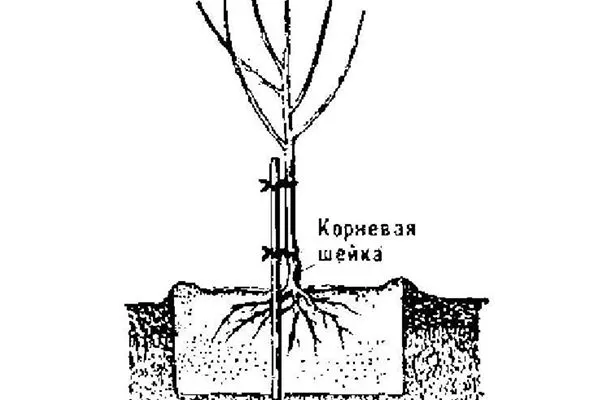
- Form a mound if the seedling has an open root system. If it has a root ball, make a hole the same diameter as the roots.
- Drive a wooden stake almost through the center to create support.
- Place the seedling. If it doesn't have a root ball, carefully spread the roots out on all sides of the mound. Keep in mind that the grafting point or root collar (which is present on a seedling grown from a seed, cutting, etc.) should be approximately 6 cm above the surface.
- Fill with the remaining soil mixture and compact.
- Water the soil – 30 liters of settled and warm water per tree.
- ✓ The seedling planting depth should be such that the root collar is 5-7 cm above ground level.
- ✓ The distance between seedlings should be at least 5 meters to ensure sufficient space for the growth of the root system and crown.
Apricot tree care instructions
The Academician apricot will thrive without much care, as it is unpretentious, but proper care ensures higher yields, which is especially important for any gardener.
Prevention and protection from pests and diseases
Despite the Academician's high resistance to diseases and pests, problems do occasionally arise. There are many causes—failure to follow proper agricultural practices, excessively rainy summers, the presence of infected plants nearby, etc.—so sometimes the gardener isn't to blame for the problems.
To prevent this, preventative spraying of trees can be done in early spring and fall after harvest. Bordeaux mixture, Horus, Skor, Mikosan-V, and copper-based products are most commonly used.
Watering
The Academician apricot is characterized by increased drought tolerance, but nevertheless, for normal development and a decent harvest, the trees require watering. Follow these recommendations:
- in the first year of planting, water 1-2 times a month with 20-30 liters of water;
- further moistening is necessary before budding;
- 10 days after the end of the flowering period;
- during fruiting;
- before wintering.
Mulching
The tree trunk area is mulched to make gardening easier and create more favorable conditions for the tree. Mulch inhibits weed growth, maintains moisture levels for a long time, and repels pests. Peat, freshly cut grass (without seeds), sawdust, compost, manure, or straw are best.
Feeding scheme
Since the Academician apricot variety thrives on fertility, it requires fertilizing throughout the growing season. Keep the following in mind:
- In spring, nitrogen is required, for which you can use special preparations or add a solution of 10 liters of water and 50 g of urea.
- Before budding, a combination of nutrients is necessary. Gardeners recommend the following mixture: approximately 30 g of urea and 15 g of potassium salt per 10 liters of water.
- During flowering, you can water with an ash solution - 200 g of wood ash per 10 liters.
- 2-3 weeks before harvesting you will need superphosphate (30 g), urea (20 g) and water (10 l).
Three years after planting, when the time for fruiting begins, additionally fertilize the trees with the following composition:
- water – 10 l;
- Superphosphate – 2 tbsp. l.;
- potassium sulfate – 2 tbsp. l.;
- ammonium nitrate – 3 tbsp.
In the first year after planting, there is no need to fertilize the trees, provided, of course, that all the necessary components have been added.
Pruning and crown shaping
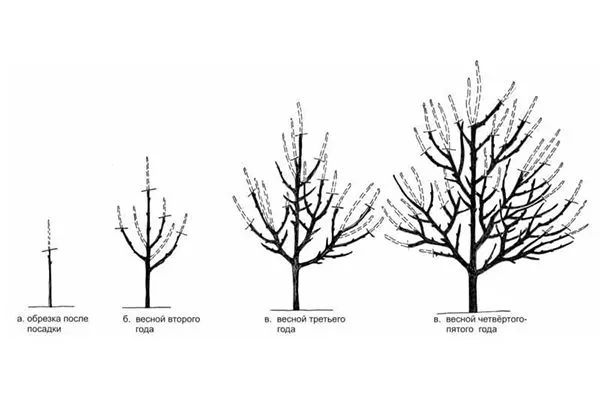
The Academician is a tall tree, which creates its own challenges when harvesting. Therefore, it is recommended to prune the variety annually, which slightly slows down the growth of shoots.
How to do it correctly:
- in the first year, shorten the central conductor to a height of 80 cm, and remove the lateral shoots completely, leaving only 2-3 of the most powerful ones;
- for the next one, form the second tier on the skeletal base, for which leave a maximum of 3 shoots on the first row (cut out the rest);
- on the third and fourth, form the third tier in the same way.
Remove old shoots annually to rejuvenate the tree; carry out sanitary pruning in spring and autumn – cut off all damaged, dried out and rotten branches.
Preparing for winter
Regardless of the growing region, all trees need to be prepared for winter. To do this, follow these standard steps:
- sanitary pruning;
- clearing the tree trunk circle of leaves, branches, and debris;
- moisture charging – about 60 liters of water are poured under each tree;
- top dressing;
- whitewash;
- hilling;
- mulching.

Next, if weather conditions require it, wrap the trunk with spruce branches, burlap, or agrofibre. Many gardeners recommend installing protective wire mesh to keep out small and large rodents.
Harvesting and storage
Academician apricots ripen unevenly, so harvesting takes place over a period of one to one and a half months. Consider the following harvesting considerations regarding ripeness:
- For canning and fresh consumption, choose fruits that have reached technical ripeness;
- For shelf life and transportation, harvest fruits when they are unripe.
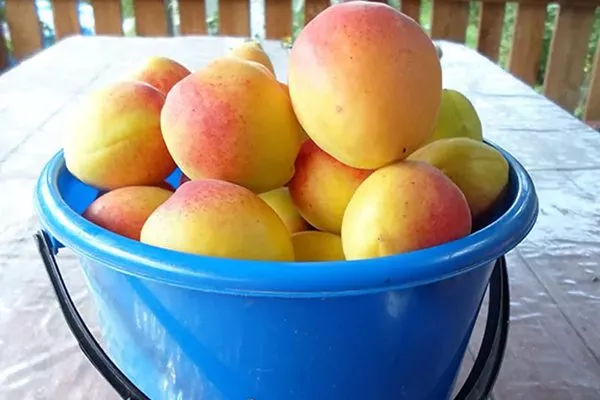
Fresh apricots can be stored for about a week in a cool place. If picked unripe (approximately 1-2 weeks before technical maturity), their shelf life is extended.
Reviews
The Academician apricot is considered the best choice for growing in the Far East, Siberia, the Urals, and Central Russia. This variety is beloved by gardeners for its ease of growing and care. The key is to avoid overwatering and to fertilize, prune, and mulch regularly.