
Hazel (or hazelnut) is a shrub that produces valuable nuts, called filberts. It grows wild, but there are also cultivated varieties. Even if you've never seen a hazel, nothing can stop you from planting one in your garden to harvest its large, tasty, and nutritious nuts every fall.
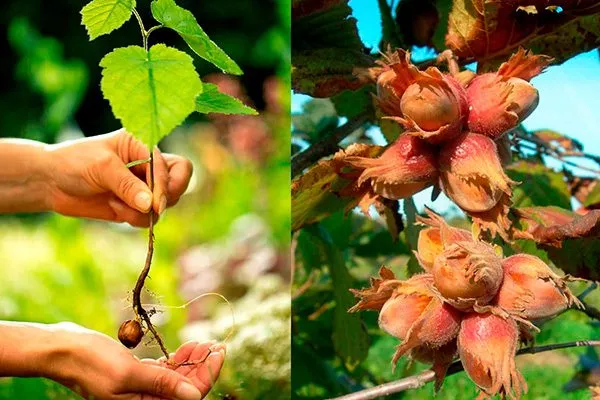
Features of planting hazelnuts
Hazelnut Hazelnuts aren't often found in home gardens, despite being one of the oldest cultivated plants. Why not correct this oversight and plant a few hazelnut bushes in your garden? If done correctly, in a few years you'll be reaping a kilogram or two of valuable hazelnuts every autumn.
- ✓ Ensure the soil pH is in the range of 6.0-7.5 for optimal hazel growth.
- ✓ Make sure the area is protected from strong winds that could damage young seedlings.
Helpful tips:
- Hazelnuts require cross-pollination. Therefore, when planting, it's important to stock up on several varieties that bloom at the same time and pollinate each other. Experts recommend planting at least three bushes.
- Hazelnuts require ample space to thrive—16-25 square meters of open space. Choosing the right site for planting is crucial. If favorable conditions aren't provided, the bush won't bear fruit.
- Stock up on soil from a wild hazel tree. Add it to the planting hole when planting the seedling. This soil contains special fungi.
- It's not recommended to plant hazelnuts near apple, peach, pear, or plum trees. These trees suppress the hazelnuts, which begin to die off after a couple of years. Hazelnuts tolerate being planted 5-6 meters away from pine, spruce, and sea buckthorn.
The practice of gardening farms shows that nut crops cannot be grow near other fruit plants. The best option is to plant several varieties.
Popular varieties
| Name | Bush height (m) | Leaf color | Yield (kg per bush) | Tasting score (points) |
|---|---|---|---|---|
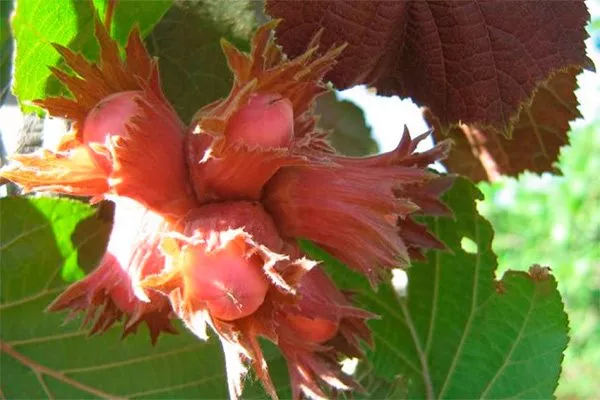
| Early Moscow | 3 | Reds | 3 | 4.5 |
| Ivanteevsky red | 4.5 | Red, green by autumn | 1-2.2 | 4 |
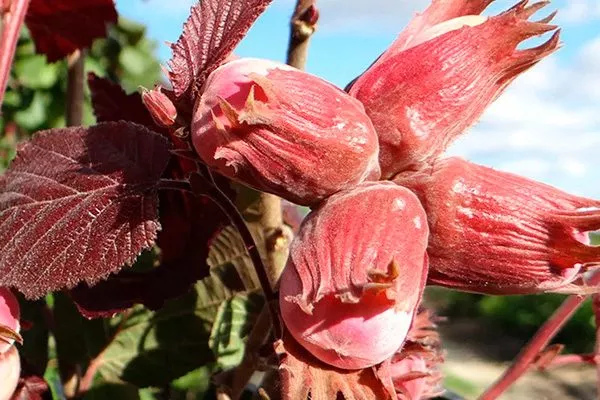
| Sugar | 3-3.5 | Dark cherry | 3-4 | 4.5 |
| Kudraif | 4.5 | Pinkish-red | Not specified | 4.5 |
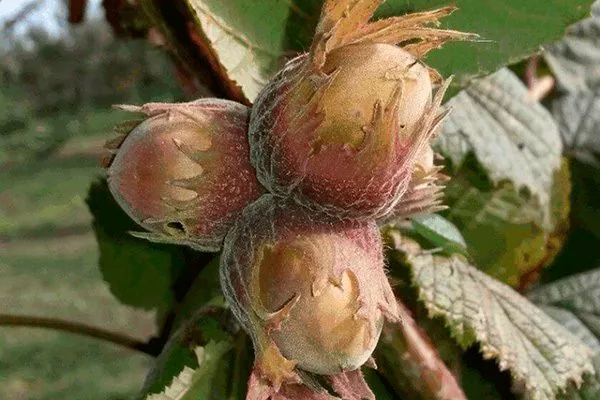
The genus Hazel contains 17 species—the common hazel, the large hazel, the Pontic hazel, the Georgian hazel, and others. Currently, 19 hazel varieties are included in the State Register. Of these, 10 are zoned for central Russia.
The best varieties of hazelnut for planting:
- Early Moscow. The bushes grow up to 3 m tall and have red leaves. They have a tasting score of 4.5 points. A single bush yields up to 3 kg of nuts.

- Ivanteevsky red. The bushes grow to a height of 4.5 m. The leaves are initially red, turning green in autumn. Yields range from 1 to 2.2 kg. Tasting score: 4 points.
- Sugar. The leaves are dark cherry. The bushes grow to a height of 3-3.5 m. Each bush yields 3-4 kg of nuts. The flavor rating is 4.5 points. This variety surpasses all others in sugar and oil content.
- Kudraif. These bushes have pinkish-red leaves and grow to a height of 4.5 points.
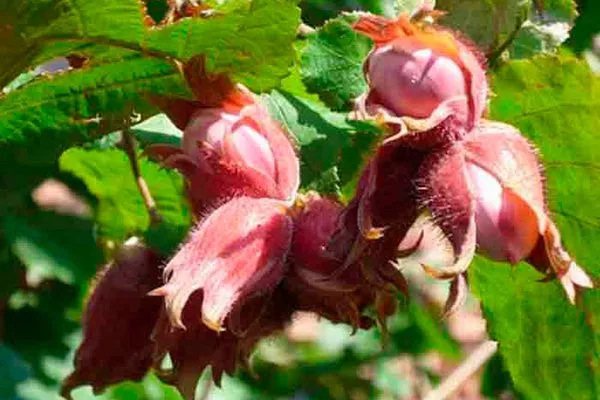
Planting hazel
The entire future life of the bush, its viability and fruiting, depend on how correctly the planting is carried out. There's no room for error—you need to carefully time the planting and prepare the planting site.
Landing dates
Hazelnuts, like most garden crops, can be planted twice during the season—in spring and fall. In the first case, planting occurs before the sap begins to flow, and the fall planting time is chosen so that at least 2-3 weeks remain before the onset of severe cold weather.
Landing dates in the middle zone
- In autumn. Hazelnuts are planted in early October, while the soil is still warm and sufficiently moist.
- In the spring. Planting is done in April, before active sap flow begins.
In more southern and northern regions, an adjustment of 2-3 weeks is made accordingly: in the south, planting can take place in March and November, in the north, in May and September. Current weather conditions must be taken into account.
Landing site
Hazelnuts are hardy and undemanding, but they do require certain conditions. If you decide to plant hazelnuts in your garden, choose a site that best meets the requirements listed below.
Optimal growing conditions for hazel:
- moderate lighting;
- no drafts;
- groundwater not closer than 1.5 m to the earth's surface;
- near the southern or western wall of the building;
- minimum distance to trees is 4-5 m;
- soils are fertile, rich in humus, with a slightly acidic or neutral reaction.
And most importantly, never plant hazel in lowlands, where melt and rainwater accumulates.
Selecting a seedling
To ensure that planted hazelnuts get off to a good start—take root quickly and grow successfully—it's important to choose the right planting material.
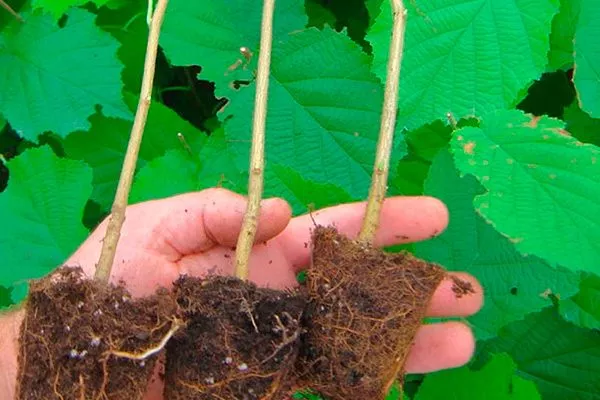
Please note: hazelnut seedlings must be grafted; this largely guarantees their varietal identity. Ungrafted seedlings may be wild trees.
What seedlings are needed for planting:
- height - 100-120 cm;
- 3 or 4 strong shoots;
- shoot diameter - 1-1.5 cm;
- roots - well developed, without dry areas or damage;
- age - 1-2 years.
Purchase seedlings from specialized nurseries to ensure they begin bearing fruit quickly. Two-year-olds begin bearing fruit the following year after planting.
Avoid purchasing seedlings from untrustworthy sellers—their products may be of generative origin, which does not guarantee the preservation of parental traits.
Soil preparation
It's recommended to deeply dig the area where you'll be planting hazelnuts in the fall. If necessary, adjust the soil composition. Hazelnuts grow best in black soil, but can also thrive in less fertile soils.
- Test your soil for essential nutrients 6 months before planting.
- Three months before planting, add organic fertilizers such as compost or rotted manure at a rate of 10 kg per 1 sq.m.
- One month before planting, deeply dig the area to improve soil aeration.
Hazelnuts can grow in any type of soil, but they cannot tolerate waterlogging, salinity, or dry sand.
How to improve soil composition:
- in acidic soils add slaked lime, chalk or ash - 0.5 kg per 1 sq. m;
- Add humus and sand to the black soil – 10 kg per 1 sq. m., this will improve its air permeability.
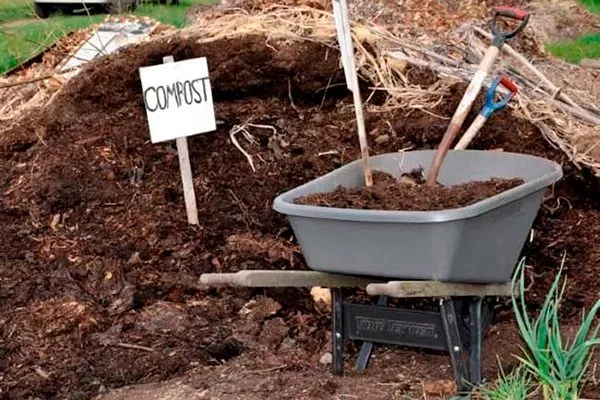
Preparation of planting holes begins:
- When planting in autumn — a month before planting the seedlings. This time is necessary for the soil to settle and compact, and for the fertilizer placed in the hole to dissolve.
- When planting in spring Planting pits should be prepared in the fall. Over the winter, the soil will compact well and become saturated with moisture.
Planting scheme and hole preparation
If you're planting multiple hazelnut bushes, plant them in rows. The recommended spacing between adjacent plants is 4-5 m, and between rows, 6-7 m. This arrangement is suitable for bush varieties; standard varieties can be planted more densely, at intervals of 2 m.
To dig and prepare the planting holes, you'll need a sharp shovel and some fertilizer. Dig the holes according to the plan and take into account the soil characteristics.
Procedure for preparing the pit:
- Dig a hole 60 cm deep and 60-80 cm wide. The size of the hole depends on the soil characteristics. If the soil is fertile, a hole 50 x 50 cm is sufficient; in poor soil, the width and depth are increased proportionally—80 x 80 cm.
- Mix the top layer of soil (approximately 30 cm) with 500 ml of wood ash, 200 g of superphosphate, and 15 kg of rotted manure. Don't forget to add a couple of handfuls of wild hazel soil to the soil mixture.
- Mix the prepared substrate thoroughly and fill the hole about a third full. Add 10 liters of water if the soil is dry and rainfall in your region is insufficient. Cover the hole with roofing felt or a piece of slate and leave it for a month to "infuse" and settle.
Also watch a video on how to prepare a planting hole for hazelnuts:
Preparing seedlings
In the fall and spring, you can buy bare-root seedlings. They must be prepared for planting by soaking the roots in a Kornevin solution for several hours and then dipping them in a clay slurry immediately before planting.
Hazelnut seedlings are available in containers throughout the growing season, including summer. They require no special preparation. Like fruit trees, they can be planted at any time—transplanting allows for relocation without damaging the plant.
Trim the seedling roots to 25 cm. Use sharp, disinfected pruning shears. It is also recommended to soak the seedling roots in a light pink solution of potassium permanganate.
Step-by-step planting of hazelnuts
Once the hole has settled and the seedling is fully prepared for transplanting, you can begin the planting process. It is recommended to perform this process on a cloudy, windless day, preferably in the morning or evening.
The order of planting hazel:
- Form a small mound of soil from the mixture. Step back 10 cm from the center and drive in a support. The height should be 1-1.5 m.
- Place the seedling on the mound of earth and carefully spread its roots so that the fibrous shoots are distributed around the entire perimeter of the hole. No root should be bent or pointing upward.
- When planting a seedling, pay attention to the position of the root collar - it should be 4-5 cm above ground level.
- Cover the roots with the remaining soil mixture and compact it thoroughly.
- Pour 30-50 liters of warm, settled water under the seedling.
- Once the water has been absorbed, fill the area around the tree trunk with peat, sawdust, or humus. This will delay moisture evaporation and prevent the formation of a crust that prevents air from reaching the roots.
- Tie the seedling to the support with soft cloth or twine. Don't use wire, as it will damage the delicate bark of the seedlings.
Additionally, watch a video on how to plant hazelnuts:
When to expect the first harvest?
Common hazel begins to bear fruit fully in the 7th to 8th year after planting. The early fruiting of the bushes largely depends on the propagation/planting method. If seedlings are used, fruiting begins in the 5th to 10th year; if shoots and root suckers are used, fruiting begins in the 3rd to 5th year.
The hazelnut yield ranges from 2 to 5 kg, depending on the variety, growing conditions, and care.
How to speed up fruiting:
- Provide drainage. Place a layer of broken brick, tiles, or pebbles at the bottom of the hole. This will retain moisture, and the bushes will begin bearing fruit 2-4 years earlier.
- Improve pollination. During flowering, shake the branches periodically to help the pollen spread.
- Get vaccinated. If you graft a cutting into the crown of a fruiting bush or perform budding (take a bud from a nearby flowering tree), the hazel will bear fruit faster.
- Plant pollinators. If you grow red-leaved varieties, plant at least one green-leaved variety nearby. Red varieties produce predominantly female flowers.
- Add ash. Scatter it around tree trunks in the fall. It enriches the soil with nutrients that promote healthy growth and development of the crop.
- Take care of the plantings. Lack of loosening, pruning, fertilizing and watering slows down fruiting.
Methods of reproduction
Hazelnuts can be propagated by any vegetative method. Seed propagation is used only by breeders when developing new varieties, as it is a very time-consuming process and, most importantly, unproductive—seedlings rarely inherit varietal traits.
How to propagate hazel:
- Offspring. Within 1-2 years after planting, hazelnuts produce numerous shoots, spreading up to 1 meter from the trunk. Two- to three-year-old shoots are separated from the rhizome with an axe and then transplanted to a special nursery for further growth. Alternatively, they can be planted directly in a permanent location, but in this case, two or three shoots are planted per hole.
- By dividing the bush. The dug-up bushes are divided into sections, each with roots up to 15-20 cm long. All cut sections are sprinkled with crushed charcoal for disinfection. The sections are planted in holes dug, as for seedlings, approximately a month before planting.
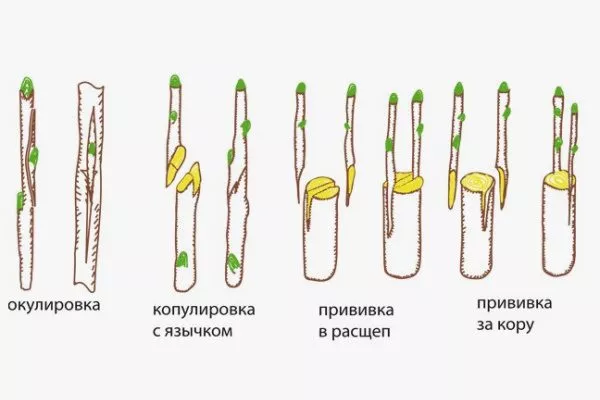
- By vaccination. Wild hazel is used as rootstock, but bearnut is preferred, as it does not produce root suckers. The methods used include budding or grafting with a cutting into a butt, cleft, or behind the bark.
Cuttings from the middle or apical portion of the stem are used as scions. They are harvested in winter and stored in a snowdrift or refrigerator until spring. - By layering. In spring or late fall, one-year-old, low-growing branches are placed in pre-dug furrows (10-15 cm deep), secured, and the tops are trimmed slightly. The furrows are not filled with soil. Soon, vertical shoots will emerge from the buds.
Leaves growing on the lower portions of new shoots are removed. During the growing season, hilling is performed several times—the soil is raked up to the midpoint of the shoots. Once the new shoots have formed roots, they are transplanted to a new location.
Caring for hazel after planting
The health of hazelnuts and their ability to bear fruit depend on the quality and timeliness of care. To harvest several kilograms of large nuts from each bush, they must be provided with water, nutrition, and everything else necessary for normal growth and development.
- Trimming. This is done in winter, before the sap begins to flow or at the end of flowering, to ensure better cross-pollination of the shaking bushes. The hazel is pruned for the first time after planting, to a height of 25-30 cm. The following spring, shaping begins, leaving no more than a dozen strong shoots.
In spring and fall, sanitary pruning is performed, removing all damaged, dry, or frost-damaged shoots. The bush is thinned regularly to prevent overcrowding. Rejuvenation pruning is performed around the 20th year of the hazel's life. - Watering. The recommended watering rate for a young bush is 20-40 liters, and for a mature bush, 60-80 liters. During hot and dry periods, watering should be increased. During the season, bushes are watered 5-7 times. It is recommended to loosen the soil around the trunks the day after watering.
- Top dressing. In the fall, the bushes are fed with phosphorus and potassium, applying 20-30 g of potassium salt, 50 g of superphosphate, and 3-4 kg of manure every 2-3 years. Nitrogen is applied in the spring, in the form of ammonium nitrate or urea, at 20-30 g. Nitrogen fertilizers are also applied in the summer to promote uniform fruit ripening.
Young hazelnuts are fed with organic matter—10 kg per bush. In the spring, the bushes are fed with rotted manure or compost. - Care during flowering. If the hazel bushes are growing and developing normally, they will inevitably bloom. This occurs in April, when the temperature rises to 12°C. The catkins grow by 3 cm each day. When they reach 10 cm, pollen begins to be released. Pollination lasts from 4 to 12 days.
To increase yields, artificial pollination is used. To do this, take several flowering catkins and bring them to the blossoming fruit buds, then gently shake them over the pistils.
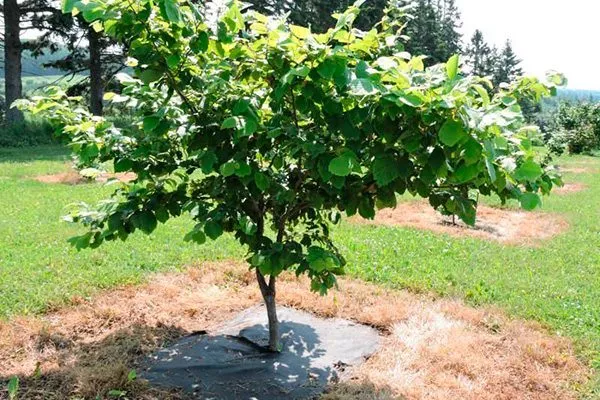
Growing hazelnuts in your garden is within the reach of any gardener—the crop doesn't require any special preparation. Plant just a few hazel bushes, and each year you'll have several kilograms of valuable nuts, the nutritional value and flavor of which are simply invaluable.