
Before planting fruit and berry crops, carefully familiarize yourself with all the rules and techniques. Learn how to choose the right site, prepare the hole, purchase high-quality seedlings, and plant them. Keep in mind that specific plant species and varieties may have unique requirements.
Optimal time for planting
Young plants (seedlings) are typically repotted in the spring, as this gives them more time to adapt and grow before the onset of winter cold. However, this can be done at any time during the plant's dormant period, specifically after leaf fall and before bud break.
- ✓ The optimal planting depth for each plant species should take into account the soil type and climatic conditions of the region.
- ✓ The need for preliminary soaking of the root system in growth stimulants to improve survival.
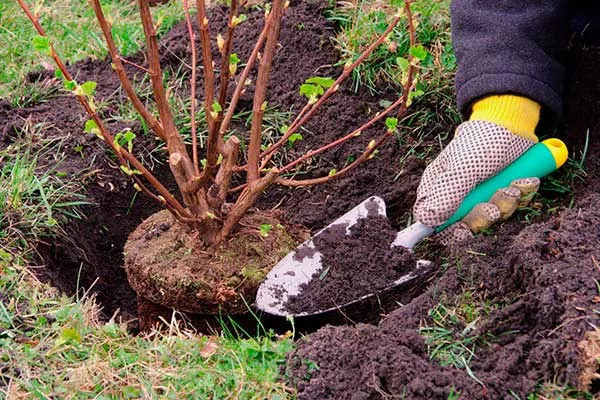
The timing of planting is crucial for successful establishment, and depends on the climate region:
- In the south, from mid-September to late November and in March-April. Late spring planting can lead to seedlings drying out due to elevated temperatures, which will hinder their rooting. Stone fruits in the south are best planted in the fall. Apple and pear trees are recommended to be planted a month before the onset of stable frost.
- In the northern regions and central part of the country, planting is most favorable in April-May and is possible even in the second half of spring. In the fall, it is advisable to plant only frost-resistant varieties, while heat-loving varieties and stone fruits are best left until spring.
- In the Far East, Eastern and Western Siberia, spring is the preferred time to plant apple, pear, apricot, and plum trees. Autumn, however, is the perfect time for winter-hardy varieties such as crab apples.
- In regions with heavy snowfall, such as Western Siberia and Altai, autumn planting is suitable for creeping apple trees.
- In the Urals, autumn and spring planting of creeping species is possible.
From a biological perspective, the best time for planting is autumn after shoot growth has completed and spring during bud swelling, when roots are most active and well established. Seedlings grown in containers with a closed root system can be transplanted from April to October.
To increase the chances of successful rooting, it's preferable to plant shrubs in the fall, as they adapt better before winter sets in, while trees may not have this time. Therefore, it's recommended to prepare a temporary shelter in the ground (a trench) for trees and then plant them in the spring.
Selecting seats
When planning the planting of fruit trees in a garden, careful consideration must be given to selecting the site and determining the future neighbors for each tree. It is recommended to create a detailed diagram showing the location of each type of fruit plant, as well as the planned stages of the work.
Start by selecting tree varieties and species. Then develop a planting plan, considering the following characteristics of each plant:
- potential height of the tree, which is important to prevent shading of neighboring crops;
- crown shape to avoid excessive planting density;
- the time of onset of fruiting (early, mid or late) to ensure adequate care.
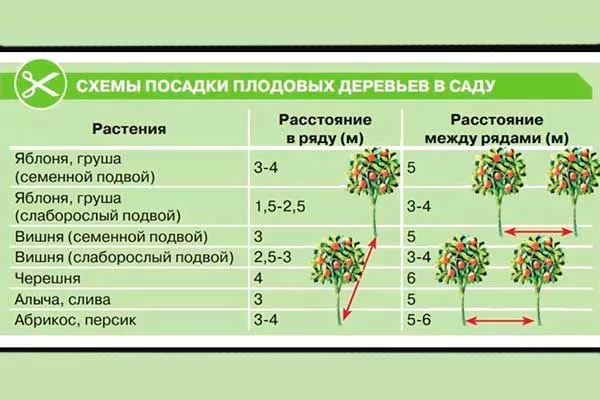
The diagram should also include information on tree spacing to prevent tall, wide-spreading trees from being too close to small shrubs, which could otherwise suffer. Recommended spacing is as follows:
- medium and tall trees with spreading crowns should be planted in areas no less than 10-12 m in size;
- for dwarf trees a plot of 5-6 m is suitable;
- Columnar crops require a space of 2x-3 m.
Choosing the right neighbors also plays a significant role, as not all trees are compatible with each other. For example:
- pear, plum, quince and cherry will grow well next to an apple tree, but you shouldn’t plant viburnum and cherry;
- pear trees thrive next to rowan and apple trees, but plum, cherry and viburnum may not be the best choice;
- Cherry and plum trees get along well with apple trees, but may not be suitable for planting together with pear trees.
Preparing the planting hole
Planting holes are the foundation for seedlings, so their preparation must be approached with the utmost responsibility.
Why dig a hole for seedlings in advance?
Planting holes should be prepared in advance: for fall planting, dig holes in the spring, and for spring planting, in the fall. The hole should stand for approximately 3-6 months to allow the soil to settle. Planting in a freshly dug hole can cause the plants to sink below the site level after the soil settles, which impairs their growth.
It's important not to plant the plant too deeply—the root collar should be lightly covered with soil (1-3 cm). If an error occurs during planting and the plant ends up buried too deep, it must be carefully lifted, which is a complex and labor-intensive procedure. Therefore, strive to follow the correct technique from the very beginning.
How to dig holes for planting seedlings?
Planting holes for seedlings of various plant species must have a certain depth and diameter, which depend on the specific crop:
- Apple and pear trees require a hole 60-80 cm deep and 80-95 cm in diameter.
- For plums and cherries, a hole 40 cm deep and 70-80 cm in diameter is suitable.
- Currants, honeysuckle and gooseberries prefer planting holes 35-45 cm deep and 55 cm in diameter.
- Sea buckthorn and serviceberry take root well in a hole 45 cm deep and 85 cm in diameter.
- Raspberries require smaller holes: 35-40 cm deep and 40-50 cm in diameter.
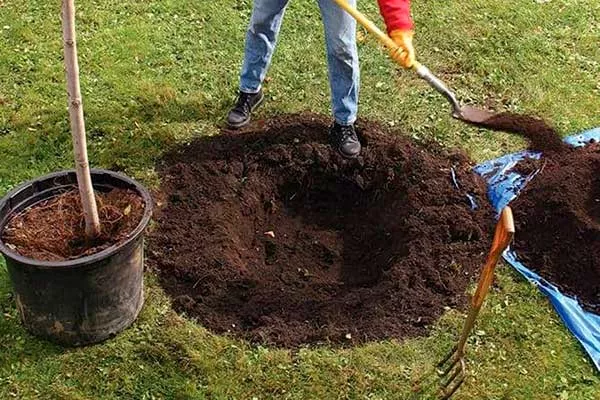
When digging a hole, the soil should be divided into two fractions:
- The fertile top layer (about 15-20 cm), which is recommended for use when filling the hole.
- The subsoil layer, which is located below the top 15-20 cm. This poorer soil can be partially scattered over the area or formed into a tree trunk circle. This material can be removed from the area.
Preparing a pit on an abandoned site
If the site is abandoned and covered with turf, the turf is first removed and set aside. Beneath the turf is usually a layer of fertile soil, which is also removed separately. Then, the required amount of soil is excavated to the desired depth.
The leveled walls of the hole strengthen the stability of the structure, and the turf is placed on the bottom of the hole, turned grass-side down, to promote faster decomposition and the formation of additional nutrition for the plant.
Filling the pit
Leaving the hole empty until spring is unacceptable to avoid meltwater accumulation, which will make it unsuitable for planting. The hole should be filled in the fall using the following materials:
- 15-20 kg of well-rotted manure;
- the same amount of leaf humus or peat;
- approximately 150-250 g of wood ash per 1 sq. m;
- the removed fertile soil layer.
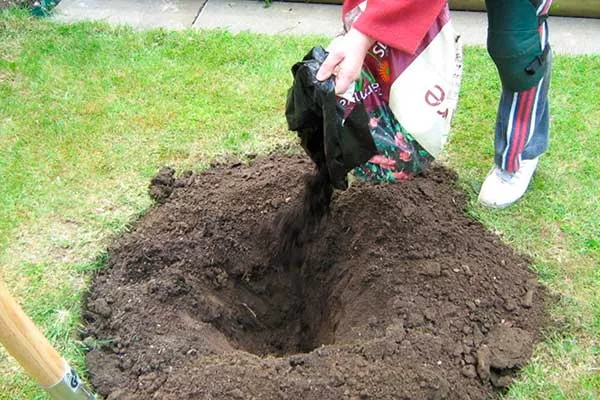
All components are placed in the hole in layers, mixed thoroughly after each addition, and then compacted thoroughly. The final result should be a small mound above the hole, about 25 cm high.
Preparing seedlings
This is another important step in planting—it determines the adaptation rate and rooting speed of the planting material. Everything must be considered, from purchasing the seedling to preparing it before planting.
Purchase and selection of planting material
First of all, decide where exactly you will purchase planting material. It is not advisable to do this at spontaneous markets, as this increases the risk of purchasing low-quality seedlings that do not correspond to the variety.
Where and when to purchase?
The time when seedlings are dug up significantly impacts their ability to establish themselves in their new environment. The best time to purchase bare-root seedlings is after their vegetative growth has ended and before they begin preparing for winter.
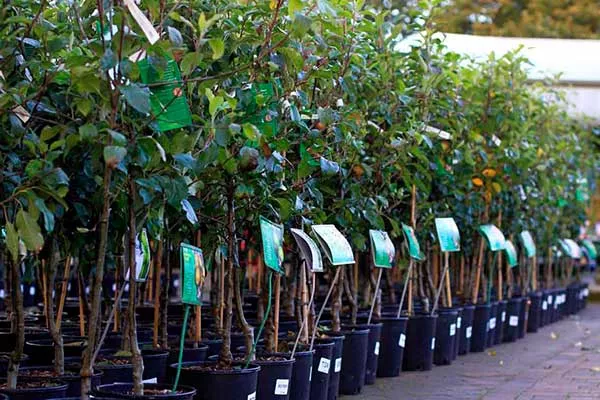
This usually occurs in September, when the seedling's growth slows, it accumulates nutrients, and the apical buds are fully formed. However, the process can vary depending on the species; for example, for cherries, the optimal time for digging is early October.
Therefore, preference should be given to nurseries and stores that carefully monitor the timing of seedling digging and ship them to customers immediately at the time of planting.
Selection criteria
When choosing seedlings, pay attention to several key factors:
- Quality of planting material. Avoid buying from unofficial vendors along the roads, as their goods are often of poor quality.
- Varieties. Choose seedlings that are adapted to your region's climate to increase their chances of survival and full development.
- Condition of the trunk. Check the trunk for damage. Damaged bark can significantly reduce the overall health and viability of the plant.
- Root system. The roots should be healthy, with no signs of rot, blackening, or drying out. In addition to large roots, it's important to have a well-developed network of fine rootlets, which facilitate better adaptation to the new soil.
- ✓ The presence of live, white roots on the cut of the main root indicates the health of the seedling.
- ✓ Absence of mechanical damage and signs of disease on the bark and leaves.
Transportation rules
Selecting a high-quality, varietal-quality seedling is only the first step to gardening success. Proper transportation to the planting site is also crucial. Every young tree or shrub, whether apple, pear, cherry, currant, or gooseberry, is a living organism that requires careful handling. From the moment the seedling is dug out of the ground, its roots stop supplying moisture, while the foliage continues to evaporate.
Unfortunately, it is not uncommon to see seedlings transported with inadequate protection: at best, their roots are wrapped in newspaper, and at worst, they are left completely unprotected and the branches are not tied.
After purchasing seedlings, it is important to ensure their proper transportation:
- Use a closed car trunk and protect the seedlings from dry winds.
- First, pay attention to the roots: protect them with damp burlap, a damp cloth, or even damp grass, wrapped both inside and outside the root ball. Then, pack the roots in a suitable material.
- If there are any leaves left on the seedlings, carefully remove them, being careful not to damage the buds.
- Tie the branched parts of the seedlings with soft twine to prevent damage.
- If transporting the plant will take a long time, be sure to moisten the roots and branches periodically to prevent them from drying out.
By carefully following these recommendations, you can increase the likelihood of successful survival and development of your seedlings.
How to preserve seedlings before planting?
The optimal place to store seedlings is in the refrigerator. At low temperatures and out of light, seedlings should remain dormant until spring. However, they can sometimes sprout prematurely, which is undesirable, as they need to remain dormant. This occurs because the planting material was activated before sale.
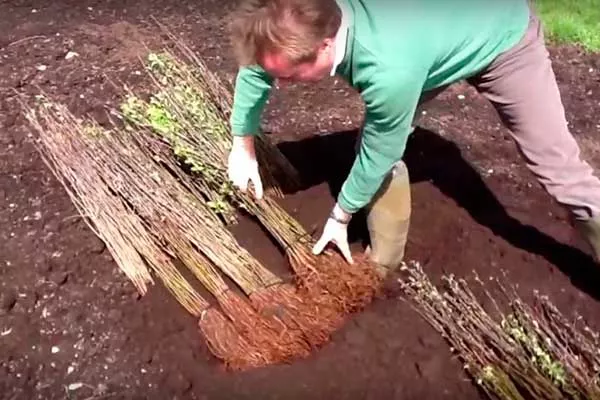
To preserve the seedlings in the box until planting, they need to be put into dormancy again. This can be done as follows:
- Remove leaves from plants (if any).
- Place them horizontally in a box and cover with soil.
- Next, place the box in the refrigerator or on a glazed balcony.
Many people prefer to store seedlings horizontally in the basement. However, this method has its own challenges, as it's difficult to create optimal conditions in such a room. To reduce humidity, powerful ventilation is recommended, but this can be costly and may not be affordable for everyone.
Moreover, the damp and dark basement space favors the development of fungal diseases and mold, requiring regular inspection of the seedlings. It is necessary to remove the plants from the box, remove any soil that has accumulated, and apply preventative treatments with fungicides.
Soaking and what is it for?
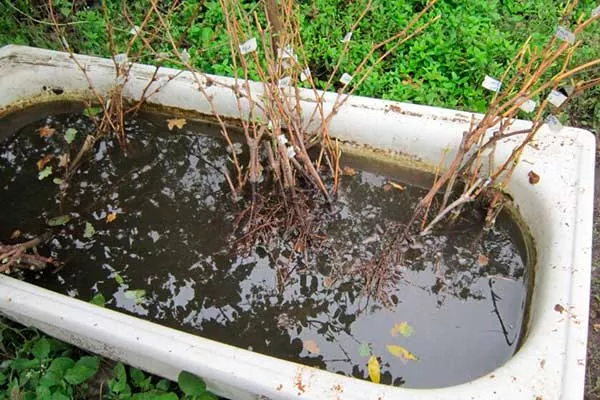
Seedlings of plants that are difficult to establish in a new location, such as apricots, pears, cherries, and plums, should be soaked in water for 12-20 hours. Rooting stimulants, such as Epin or Kornevin, can be added to the soaking water, according to the instructions. Apple trees are less fussy, but even for them, this pre-planting procedure should be followed to avoid risks.
Trimming roots and aboveground parts
Before planting seedlings, gardeners often trim the roots to match the size of the crown. It's important not to overdo it, as the plant will expend a lot of energy restoring its root system. Only damaged and decayed roots should be removed, and the main root should not be shortened—it's better to prepare a larger planting hole.
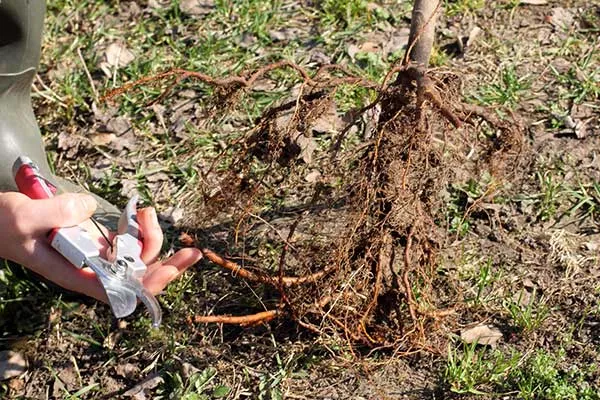
It is recommended that skeletal roots be at least 25-35 cm long when planting. Plants with significantly shortened roots do not take root well and lag in growth, since the root system develops in the upper soil layer with unstable moisture exchange.
Therefore, it's preferable to select seedlings with a well-developed root system, even if their above-ground portion is less developed, rather than looking for specimens with pruned roots and a well-formed crown. The above-ground portion is pruned after planting—this will accelerate shoot growth.
The landing process
Be sure to strictly follow all recommendations for planting depth. Consider the type of root system—whether it's open or closed.
Fertilizing when planting seedlings
Adding mineral fertilizers to the planting hole when planting seedlings is a subject of debate among experts. During transplantation, the seedlings' root system is subject to trauma, making it particularly vulnerable to direct contact with fertilizers.
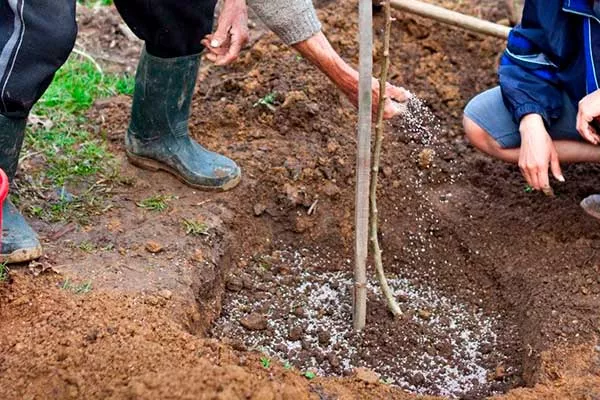
Young roots that have not yet recovered from injury can be severely damaged by fertilizers, leading to their death and, as a consequence, to delayed plant development or even death.
Peculiarities:
- The use of nitrogen and potassium fertilizers is particularly dangerous for the root system due to their aggressiveness. To avoid root burn, it is recommended to apply these fertilizers at a distance from the root ball. However, this approach may be ineffective, as the mineral fertilizers may dissolve and penetrate deep into the soil before the seedling's roots can reach them.
- Phosphorus fertilizers, including simple and double superphosphate, although less aggressive, also contain substances that can harm young and damaged roots upon direct contact.
- Traditional agronomy methods suggested adding organic nitrogen fertilizers, such as rotted manure or compost, mixed with the topsoil to fill the planting hole, and phosphorus and potassium fertilizers directly to the bottom of the hole with a small amount of soil.
With this approach, plant roots would avoid direct contact with fertilizers, but by the time the root system has sufficiently recovered and spread, the nutrients may already have been washed out of the soil.
In modern agronomy, it's generally accepted that it's best not to apply mineral fertilizers when planting seedlings in a hole to avoid the risk of damaging young plants, which could lead to their death. To ensure optimal plant nutrition, fertilizers should be applied after the seedling has taken root and is actively growing.
Features of planting with an open root system
Planting bare-root plants requires careful pre-planting. First, add a pre-prepared soil mixture to the dug hole, filling it one-third full. Next, proceed as follows:
- On one side, use the top, fertile layer of soil with turf, previously chopped up with a shovel, to fill the bottom of the hole.
- On the other hand, leave the less fertile layer of the deeper soil layers. To improve its quality, if it has a heavy clay composition, add an equal amount of sand. If the sandy layer is sandy, add loam, which can be turf, bottom silt, or any soil with a heavy mechanical composition.
- After this, add two or three parts organic humus to the mixture—peat, leaf mold, grass compost, or lowland peat. Good humus is usually dark brown or almost black in color.
- Mix all these ingredients, adding the required amount of dolomite flour or slaked lime and a complex mineral fertilizer, such as Kemira or Aquarin.
- Fill the hole with the resulting mixture to about one-third of its depth, leaving the rest of the soil mixture on top until planting time.
- Before planting, ensure access to sufficient water. Place the seedlings removed from the temporary planting in the center of the hole so that their roots spread freely without bending or touching the sides of the hole.
- If the roots are too long, trim them with pruning shears. Make sure the root collar is above the soil surface; adjust the amount of potting mix in the hole if necessary to achieve this.
- Create a small mound in the hole to ensure even distribution of roots.
- After planting the seedling, fill the hole two-thirds full with potting soil and water generously. Continue watering until the water level reaches two-thirds of the hole's depth, then top up with dry potting soil.
Throughout the process, support the seedling vertically, gently lifting it upward. To prevent the root collar from sinking below soil level after planting, fill the hole 15-20 cm above the soil level.
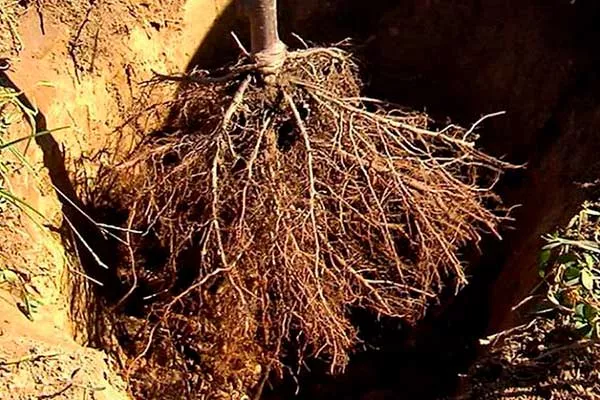
The described planting method is highly likely to ensure rooting of plants, since the moist soil that forms around the roots envelops their tips, which facilitates contact of the root hairs with soil particles.
Features of planting with a closed root system
The process of planting seedlings from containers is relatively simple and is largely similar to the previously described technique for bare-root plants. However, it's worth considering a few nuances associated with container planting:
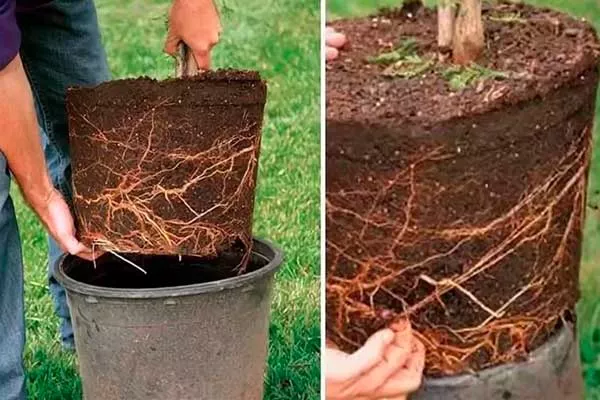
- Before planting, carefully remove the seedling from its container. If the roots have grown overgrown and grown around the sides of the container, trim them by making longitudinal cuts along the surface of the root ball.
- The planting process then continues as for bare-root plants. Soil is added to the planting hole so that the top of the root ball is 5-8 cm above the soil surface.
Securing seedlings
In natural conditions, trees grow steadily thanks to their roots, which are firmly woven into a vast volume of soil. When seedlings are transplanted, they lack this natural support and therefore require additional anchorage.
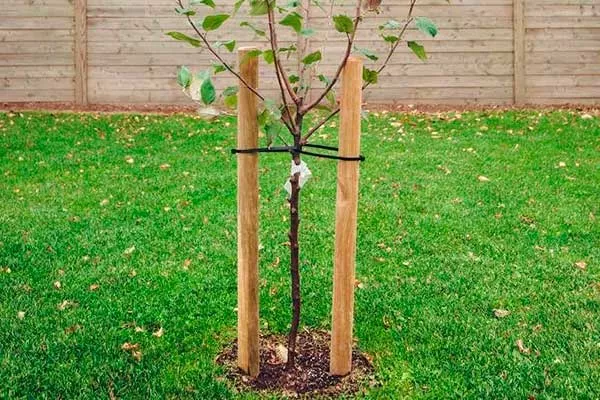
Shrubs are well-stable in the soil due to the low center of gravity of their branching structure. Trees, on the other hand, have a significantly higher center of gravity, making young specimens particularly vulnerable to toppling and requiring careful support after planting.
Stabilization of planted plants is achieved using supporting structures:
- For seedlings with exposed roots, one support is sufficient. It should be placed directly into the planting hole, approximately 10–20 cm from the center, just before planting.
- It is preferable to secure seedlings planted with a lump of earth using a pyramid shape made up of three supports.
- For large seedlings, the optimal method is to use the Cobra safety system, which does not interfere with the normal growth of the tree.
Basic care after planting
During the first two years of life, seedlings require special care. Key aspects include:
- balanced watering and fertilizing of plants;
- crown formation by pruning damaged and dried branches;
- removing weeds around a young tree;
- loosening the soil to improve its structure and air permeability.
Answers to the most important questions
There are some questions that newbies most often ask:
Mineral fertilizers become necessary later, when plants enter the fruiting period.
Over time, as the tree grows, the mound should be widened so that by the time the tree begins to bear fruit, its diameter reaches at least 2-3 m. It is recommended to use meadow turf to strengthen the sides of the mound.
Planting garden crops isn't particularly difficult for experienced gardeners, but it's important for beginners to understand all the rules and requirements. Even if you make mistakes, they can be corrected, as long as you do so promptly, within the first few weeks.