
Serviceberry is resistant to frost, disease, and pests, but adverse conditions and improper care can cause damage. To prevent problems, it's important to ensure timely and proper agricultural practices, perform preventative maintenance, and care for the plant to improve productivity and extend its lifespan.
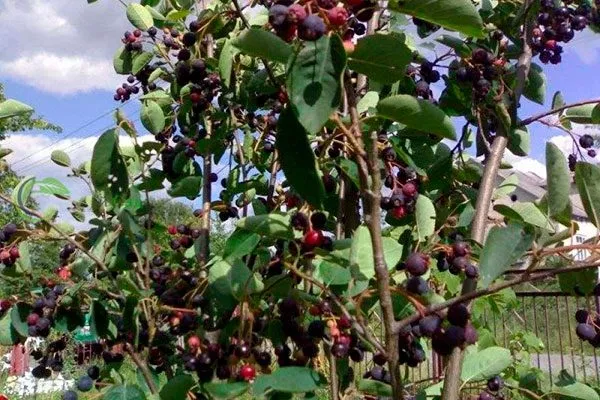
Common diseases and treatments
Serviceberry is highly resistant to disease, but in rare cases it is susceptible to various injuries. It's important to begin treatment promptly to save the plant from irreversible damage.
Leaf spot or gray mold
The leaf blades are affected by a fungal infection, which is accompanied by gray mold. The disease develops due to high humidity and rising temperatures.
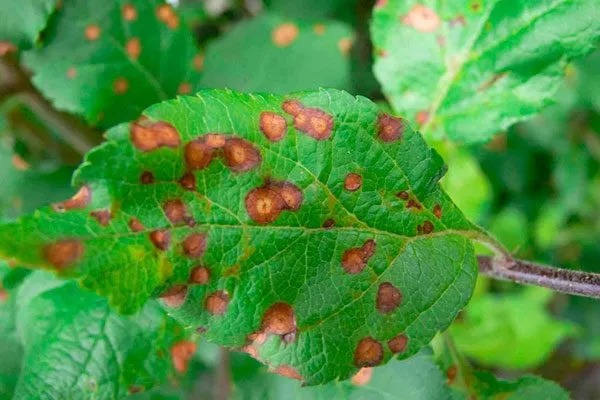
To combat leaf spot, use fungicides. The following products have proven effective: Skor, Rayok, Topaz, and Horus. Remove and destroy affected branches promptly to prevent further spread of the infection.
Nectrian cortical necrosis or tuberculosis
Young shoots and leaves of the crop are affected. The disease is caused by the ascomycete fungus Nectria cinnabarina, which attacks various deciduous trees. It damages the bark, wood, and vascular system.
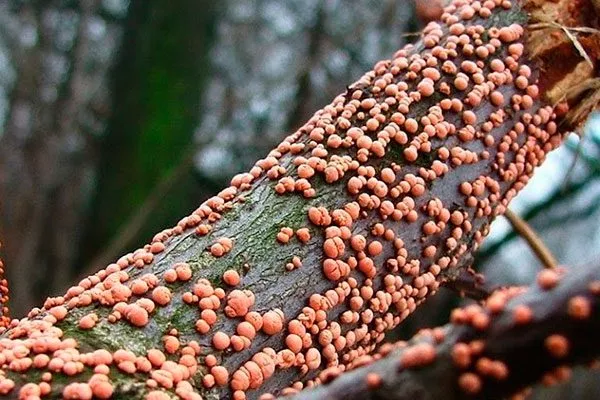
Symptoms of the disease include wilting of foliage and subsequent death of entire branches. A distinctive feature is the appearance of fungal stromata on branches and trunks: rounded growths resembling warts, as well as areas of necrosis.
The fight against tuberculosis requires a comprehensive approach:
- remove and burn affected branches;
- Treat the plant with Bordeaux mixture to prevent further spread of infection.
Pestalotia
When this fungal disease occurs, brown spots appear along the leaf edges. Over time, these spots spread across almost the entire leaf blade. A noticeable yellow stripe appears between the affected and healthy tissue. This causes the leaves to quickly dry out and fall off.
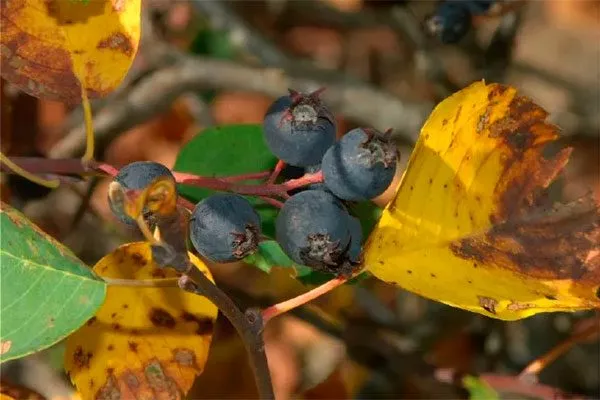
In advanced stages, the disease spreads to branches and wood, which can lead to stem death. Since the pathogen persists in affected parts even after they fall, it is essential to collect and destroy diseased leaves and branches, and perform sanitary pruning.
To prevent re-infection the following season, it is recommended to treat the plant with one of the following fungicides before bud break:
- Abiga Peak;
- HOM;
- Bordeaux mixture.
Monilial rot
Moniliosis (monilial rot) affects serviceberry fruits, causing characteristic brown, rotten spots on the berries. The disease spreads quickly, especially in warm and humid weather, reducing the quality and quantity of the harvest.
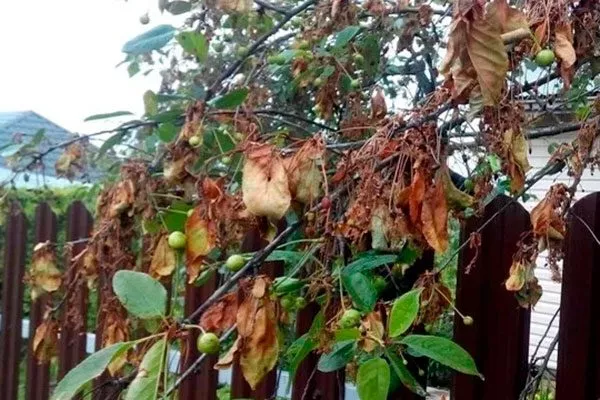
To treat the plant, use Bordeaux mixture or spray with fungicides according to the instructions. Suitable products:
- Horus;
- Fast;
- Mikosan-V
Phyllosticta leaf spot
Phyllosticta leaf spot appears on serviceberry as brownish-red spots on leaves. These are the first signs of the disease, which leads to leaf wilting and premature leaf fall.
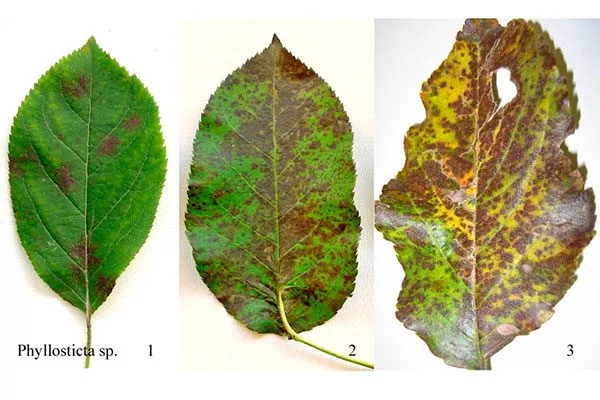
When symptoms appear, immediately collect and burn affected leaves to stop the spread of the disease. For prevention and treatment, apply fungicides.
Recommended medications:
- Strobe;
- Vectra;
- Abiga-Peak or other products with similar effects.
Fire blight
A dangerous disease of the shadberry can not only ruin the harvest but also destroy the plant itself. It is caused by Erwinia amylovora, a common fungus in Europe and the Americas.
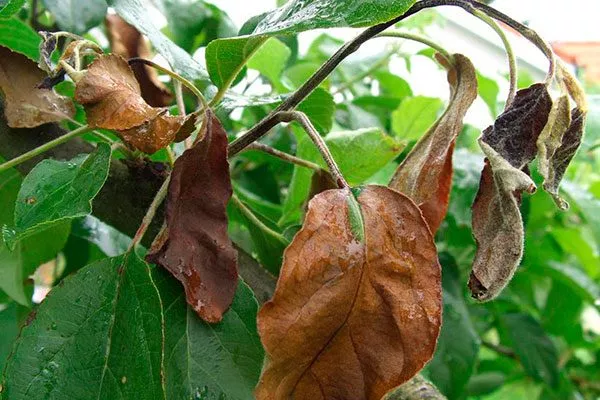
The main symptom of the disease is darkening of flowers, buds, and ovaries, resembling burn marks. Branches begin to darken at the tips, gradually turning brown and dying. The infection quickly spreads to larger branches and can reach the trunk.
Control measures include:
- preventive spraying with antifungal preparations before and after flowering;
- removal and burning of all affected parts of the plant;
- treating cut sites with fungicide;
- destruction of fallen leaves.
If the disease has spread to the entire tree, uproot it completely and burn it to prevent infection of other plants.
Powdery mildew
A fungal disease caused by the Erysiphales fungus. The ectoparasite attacks leaves, shoots, and fruits, covering them with a characteristic powdery white coating. The disease is especially dangerous for young shoots, as it slows their growth and development.
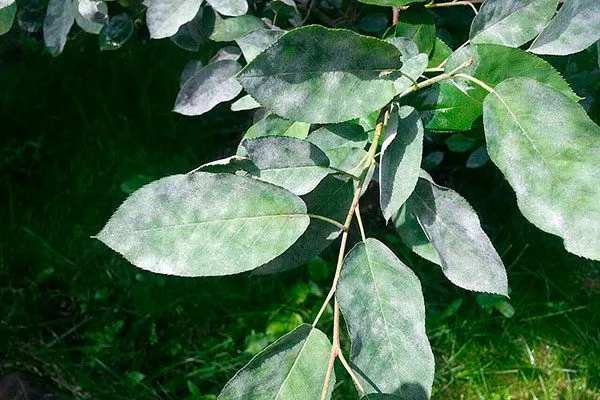
To combat powdery mildew, use antifungal treatments. Also, prune the bush to reduce overgrowth. Disinfect all tools, especially pruning shears, with isopropyl alcohol, for example, to prevent spreading the infection to healthy plants.
Effective means for treating irgi:
- Fast;
- Thiovit Jet;
- Rayok.
Rust
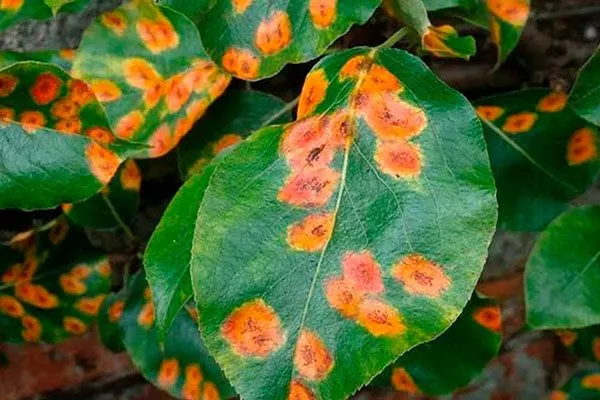
The appearance of rusty-orange spots on serviceberry leaves is most often associated with infection by the fungus Gymnosporangium libocedri, which parasitizes this plant. The disease weakens the bush and reduces its ornamental and fruiting qualities.
Brown spot
This disease affects the leaves of the serviceberry, appearing in early summer as small brown or light yellow spots. Over time, the spots merge and cover almost the entire leaf surface. By autumn, black dots—clusters of fungal spores—form in the centers of the spots.
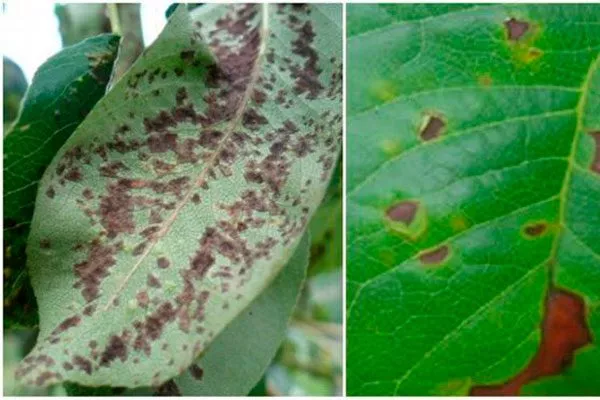
When severely affected, leaves dry up and fall off. The disease spreads especially quickly in damp weather, and the pathogen overwinters on fallen leaves.
To protect plants, it is recommended:
- Collect and burn fallen leaves in autumn and early spring.
- In spring, before the buds open, spray the bushes with Bordeaux mixture (300 g of copper sulfate and 400 g of lime per 10 liters of water).
- Immediately after flowering, treat with Bordeaux mixture of lower concentration (100 g of copper sulfate and 100 g of lime per 10 liters of water).
- After 15 days, spray the affected bushes again with a solution of copper oxychloride (40 g per 10 l of water).
Fruit rot
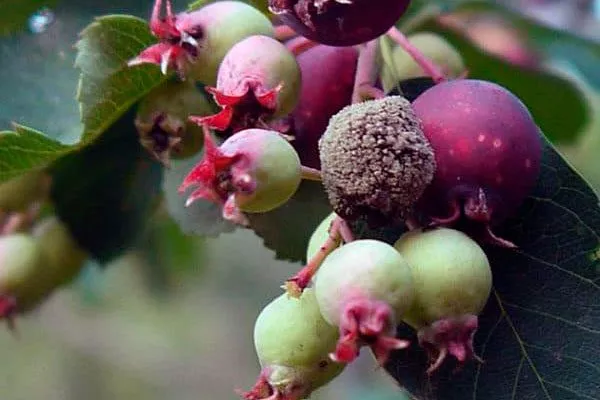
Ripe serviceberries can be affected by fruit rot, which causes them to spoil and fall prematurely. Regular preventative maintenance and treatment with specialized products are essential to prevent this problem.
Please observe the following measures:
- avoid thickening the bush;
- water moderately, avoiding excess moisture;
- harvest on time;
- remove and destroy plant debris around the bush.
Tuberculosis (drying of branches)
Symptoms of the disease include browning and drying of leaves in the summer. Branches begin to wilt and may dry out completely. Towards the end of summer, red bumps appear on the branches.
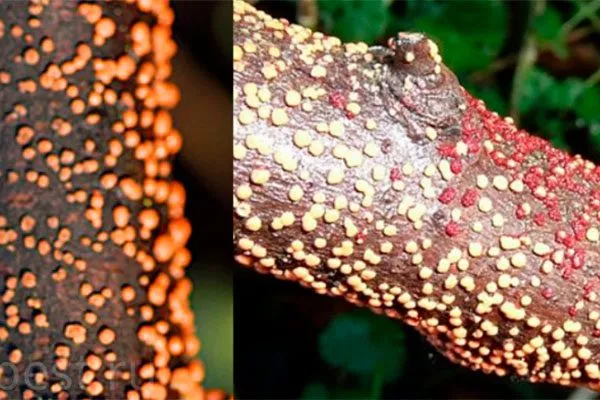
To combat the disease, remove and burn affected parts. Early spring treatment with copper sulfate is also effective.
Ascochyta leaf spot
Symptoms include the appearance of reddish spots with blurred edges on the leaves. This causes the plant to lose its decorative appearance and become less frost-resistant.
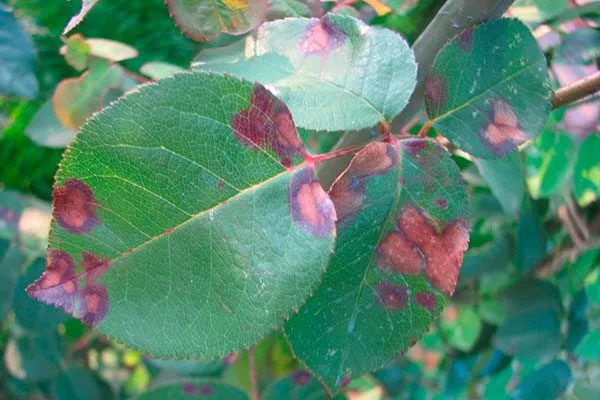
For treatment, use copper oxychloride or Bordeaux mixture, spraying before and after flowering.
Main pests and control methods
Although the serviceberry is highly resistant to pests, it can still be attacked by insects. Gardeners often rely on natural enemies such as birds, wasps, and ladybugs to help combat these insects.
Irrigation moth
The caterpillars of the irish moth cause significant damage to leaves, causing them to dry out and fall off. Young seedlings with severe infestations may experience stunted growth.
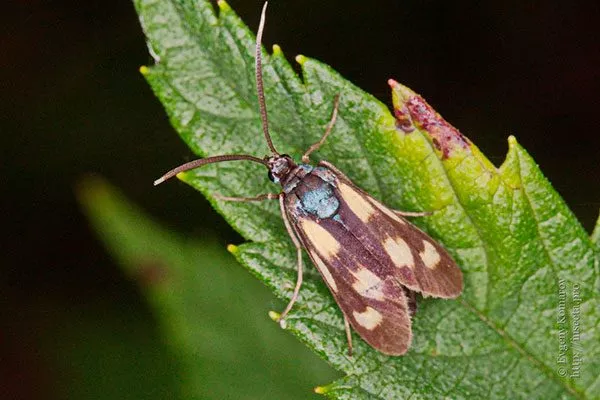
To combat the pest after harvesting, it is recommended to treat the bushes with special preparations:
- Fufanon;
- Actellic.
Follow the instructions for use strictly.
Wrinkled bark beetle
The insect damages the trunks and branches of the serviceberry, chewing passages to lay eggs. Such damage can lead to the death of shoots, and if severely damaged, it can cause serious damage to the plant.
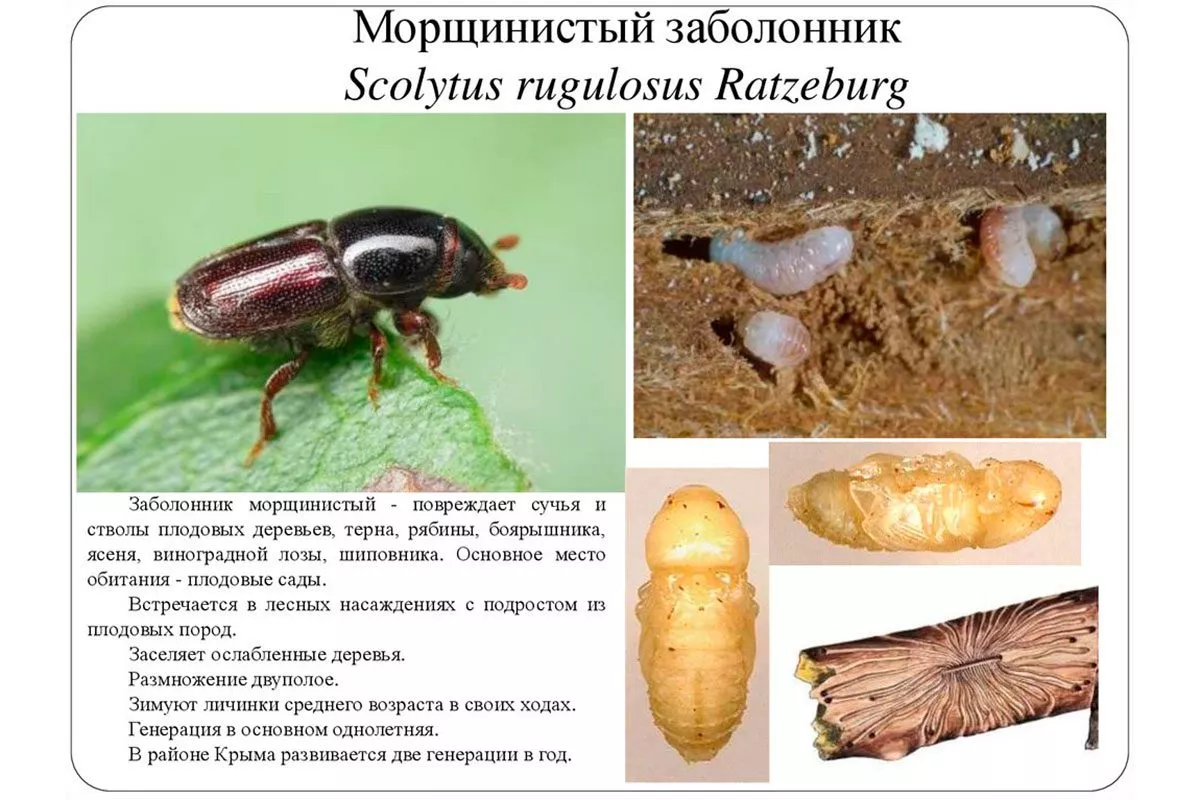
The sooner you detect the pest, the easier it is to deal with the problem. Follow these recommendations:
- Cut off and destroy affected branches and shoots promptly, without leaving them on the site.
- For additional protection, use insecticides, such as Actellic.
Leaf roller
These are small butterflies with a wingspan of about 2.5 cm. Their caterpillars cause damage by feeding on leaves, rolling them into tubes or tying them into balls with webbing. The pest's eggs overwinter on the bark of main branches in the form of flat, rounded shields, each of which can contain up to 150 eggs.
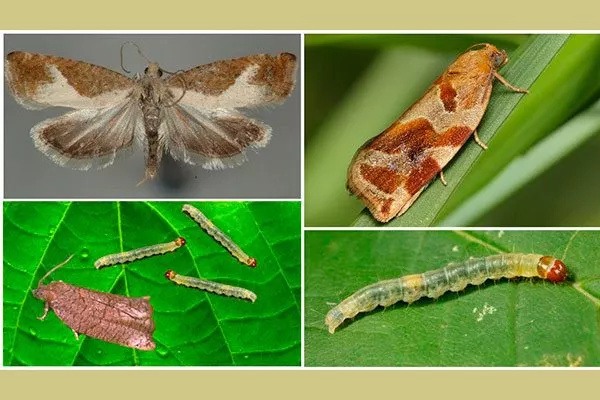
In the spring, hatched caterpillars damage emerging buds, then eat leaves, flowers, and fruit. Adult caterpillars, with a green body and brown head, reach about 2 cm in length. After 30-40 days, they pupate, and 10-12 days later, the moths emerge. In June, they lay eggs on the bark, where they remain for the winter.
To combat the pest, follow these rules:
- Treat the bushes with an infusion of tobacco or shag when buds appear and immediately after flowering.
- In May and June, attract butterflies with jars of fermented molasses or compote. To do this, dissolve 1.5 kg of molasses in 10 liters of water, pour into jars, and place them in the crown of the bush.
- In summer, regularly collect and destroy curled leaves with caterpillars inside.
- If there is a high pest population, use chemicals: Zeta-cypermethrin (1 tablet per 10 l of water), Sumi-alpha (5 g per 10 l of water), Inta-Vir (1 tablet per 10 l of water).
Green apple aphid
The shoot tips and leaves of serviceberry are often attacked by aphids, causing them to wilt, curl, and dry out. This pest can be controlled by spraying the leaves in the spring before flowering with a solution of laundry soap: 300 g of soap shavings per 10 liters of water.
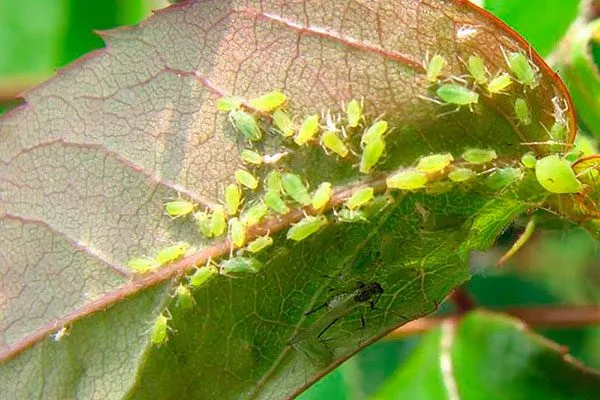
A hot pepper infusion is also effective – apply it locally to aphid infestations. To prepare it, follow these steps:
- Pour 1 liter of water into a heat-resistant container.
- Add 50 g of black pepper.
- Simmer, covered, over low heat for 60 minutes.
- Remove from heat and cool to room temperature.
- Let it steep for 24 hours.
Apply the infusion manually to the affected areas.
Apple leaf miner
A common pest of the serviceberry is a small butterfly with silvery-gray wings, whose caterpillars are light green and reach about 5 mm in length. In the fall, the butterflies lay their eggs at the base of the buds, and in the spring, on the leaves.
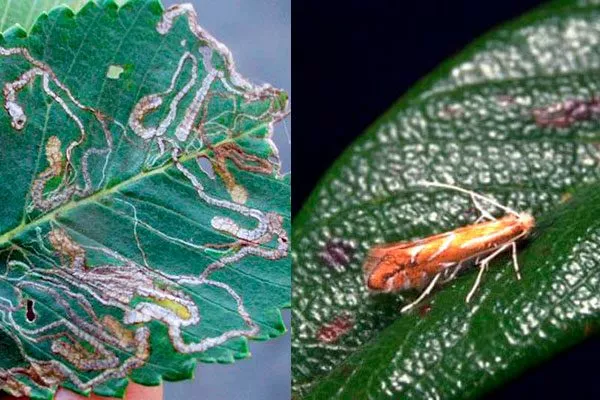
Other characteristics of the parasite:
- The hatched caterpillars burrow into the leaf tissue and gnaw out narrow tunnels (mines), which are often filled with their excrement. The caterpillars feed for 20-25 days, after which they chew holes on the underside of the leaf and emerge. On the bark of branches, they spin a web cocoon for pupation.
- After 12-14 days, new butterflies emerge and lay eggs on the leaves. In the second half of the season—September-October—a second generation of butterflies emerges, laying eggs at the base of the buds.
- Damaged leaves fall prematurely, and if the pest infestation is severe, plants lose a significant portion of their foliage by late July or early August. This reduces shoot growth, decreases yield, and degrades the quality of the berries.
To combat the pest, it is recommended:
- During the period of budding, spray the bushes with ANTIO (20 g per 10 l of water) against larvae.
- In case of severe damage to leaves, use chemical preparations at a rate of 10 liters of water: Fufanon (10 ml), Inta-Vir (1 tablet) or Zeta-cypermethrin (1 tablet).
- During the summer, regularly collect and destroy fallen damaged leaves.
Amelanchier seed beetle
The female pest lays eggs in unripe serviceberry fruits. The larvae develop inside the seeds and overwinter there. Berries damaged by this insect often dry out on the branches and fall off. If the fruits remain on the tree, they are visibly damaged.
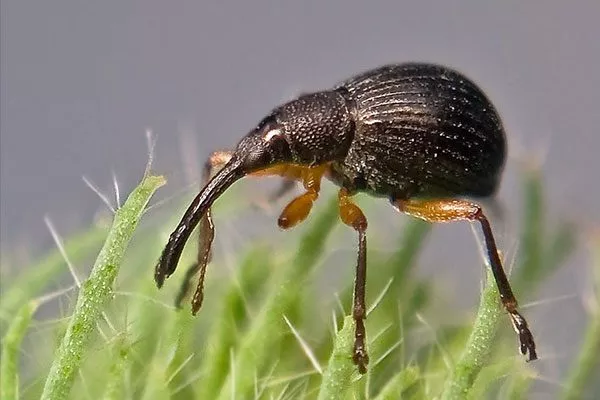
To prevent the spread of the berry beetle, it's important to collect and destroy all fallen berries. After flowering, treat the crop with insecticides:
- Decis;
- Karate;
- Actellic.
Hawthorn
A large butterfly with white wings adorned with prominent black veins, the hawthorn moth caterpillar is a serious pest of many fruit plants.
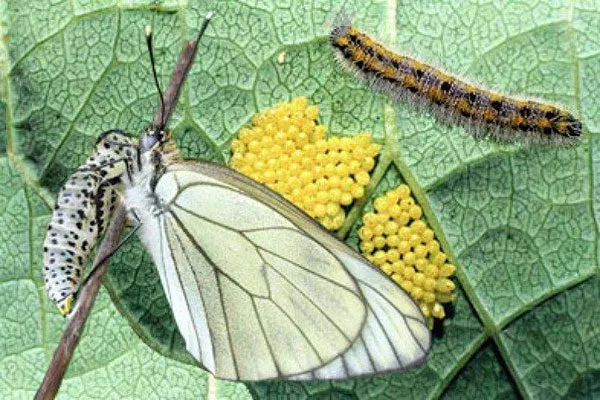
Distinctive features of the pest:
- They overwinter in nests made of rolled-up leaves held together by webs and hanging on thin branches. After the leaves fall, these nests are easily visible on bare branches. Each nest can contain up to 70 caterpillars, covered in thick white cocoons.
- In the spring, when the buds open, the caterpillars emerge from their nests and begin gnawing at the buds, then feeding on the leaves and flowers. At first, they stay in groups, but over time they disperse and feed individually.
- Adult caterpillars reach a length of 4-5 cm, are covered with thick gray hairs, with two brown and three black stripes along the back.
- After flowering, they pupate, and two weeks later, the butterflies emerge. After 20-30 days, the females lay eggs on the upper side of the leaves. The young caterpillars feed on the leaves for 20-25 days, then form nests in which they overwinter.
To combat hawthorn it is recommended:
- Collect and destroy wintering nests in the fall or winter.
- Spray the bushes with an infusion of tobacco or makhorka when buds appear and again after flowering. If the infusion is ineffective, apply biological preparations at a rate of 10 liters of water: Entobacterin (100 g), Dendrobacillin (30-50 g), or Lepidocide (20-30 g).
If the pest population is very high, use chemicals: Inta-Vir (1 tablet), Kinmiks (2.5 ml), Fas (5 g).
Winter moth
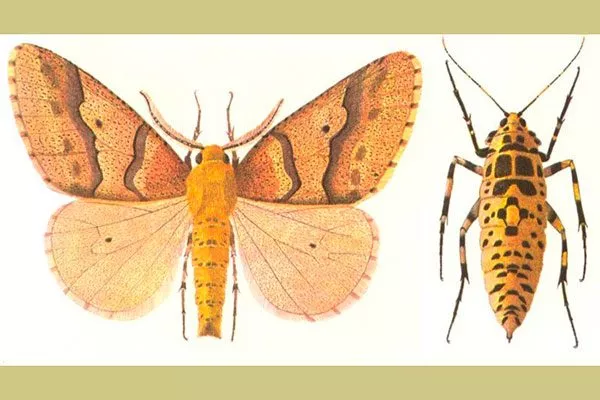
The butterfly got its name from its late appearance in the garden—usually in October or November. Only males fly, while females lay reddish-brown eggs in cracks in the bark of branches near buds, where they overwinter. In the spring, before flowering, the eggs hatch into yellow-green caterpillars, about 3 cm long.
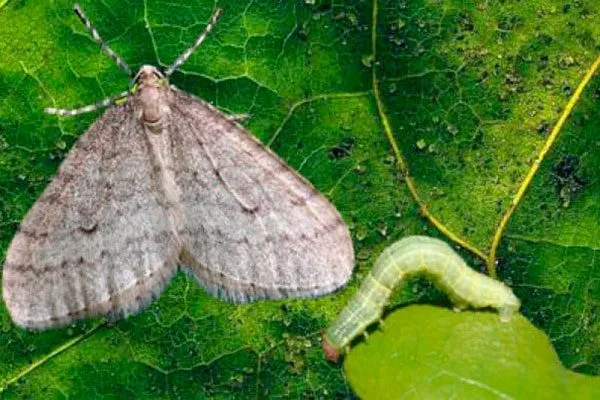
When moving, they pull the end of their body toward their head. The caterpillars feed on leaves, buds, and flowers, hiding in web-like nests between the leaves. In June, they descend into the soil near a bush, where they pupate. In late autumn, the butterflies emerge from the pupae, and the females ascend into the canopy to lay eggs.
To combat pests it is recommended:
- In late autumn, dig up the soil around the bush.
- After the buds open, use the same protective measures as against leaf roller caterpillars.
Problems with taking into account the time of year
The challenges associated with cultivating serviceberry can vary significantly depending on the season. The appearance of certain symptoms depends on the plant's developmental stage, care, and other factors.
What is important to consider:
- In spring and summer, when active growth, flowering, and fruit formation occur, the plant is particularly weakened. Apply preventative treatments before bud break and immediately after flowering to reduce the risk of disease and insect attacks.

- In dry weather, due to insufficient rainfall or irregular watering, serviceberry plants drop their fruit, and productivity declines. However, overwatering also negatively impacts development; the soil should be loose and moderately moist.
- With the onset of warm weather, pest larvae begin to actively develop in the soil. If protective measures are not taken in advance, widespread damage to the bushes is possible.
- Fungal infections affect serviceberry relatively rarely, but in conditions of high humidity and in proximity to diseased plants, the likelihood of infection increases.
- In the fall, sanitary and formative pruning is recommended. This helps eliminate excess density, improves air circulation within the bush, and reduces the risk of water stagnation. Without regular pruning, berries become smaller over time, and overall yield declines.
- The irga winters well – the plant is highly frost-resistant and tolerates even severe cold without serious damage.
Preventive measures
To prevent diseases and pests affecting serviceberries, it's recommended to take certain measures. The following steps will help prevent problems:
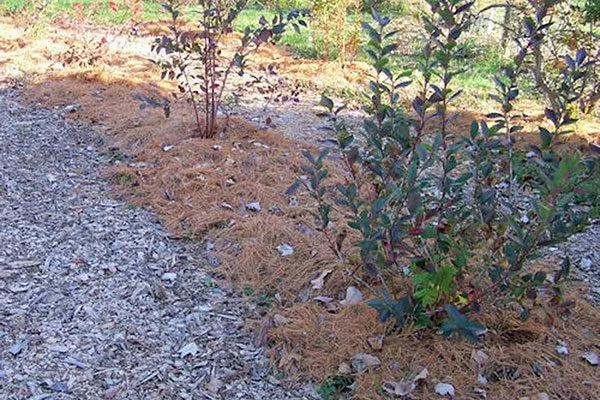
- soil mulching;
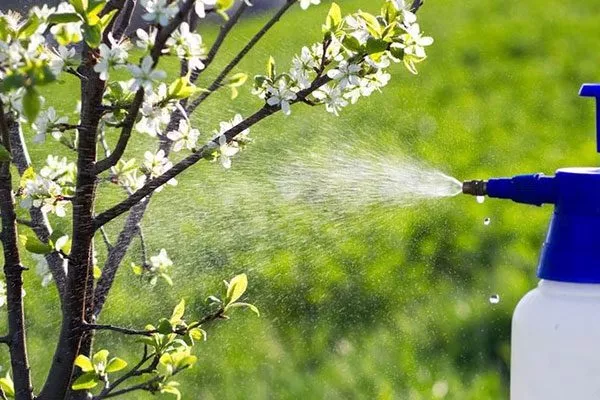
- preventive spraying of plants;
- regular weeding of the beds;
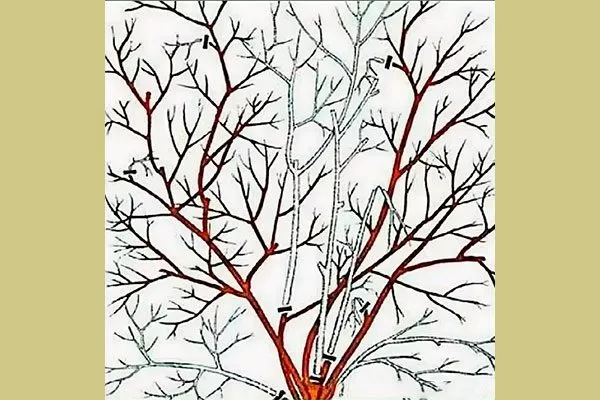
- timely pruning to prevent bush thickening;
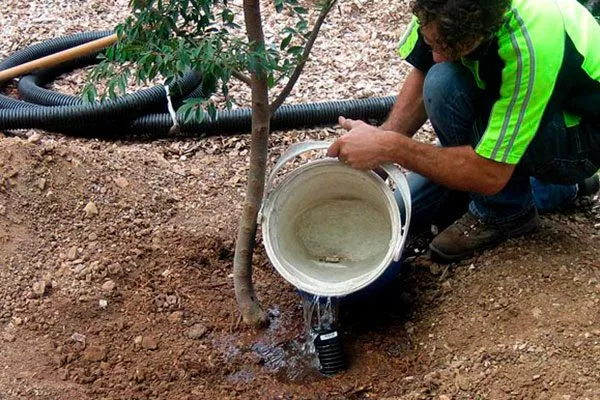
- watering at the roots, without wetting the foliage;
- collection and destruction of damaged plant debris.
Serviceberries often suffer from various infections and attacks by harmful insects. There are several possible causes, including unfavorable conditions and poor agricultural practices. Early detection of the problem allows for immediate treatment and prevents the development of infections or pest infestations. This helps strengthen the plant's immune system and ensures long-term fruiting.