
The Thyssen amelanchier is a relatively new variety, but its qualities and characteristics have already been studied by our gardeners and breeders. Its main distinguishing feature is the incredibly large berries with excellent flavor. The bushes are used not only for harvesting but also for landscaping in gardens.
History of breeding of the alder-leaved Tysson
The origin of Thiessen is unknown, but it is reported that this Kamchatka variety was developed thanks to the work of Russian scientists. This hybrid is not yet listed in the State Register of Breeding Achievements.
Description of the variety
This alder-leaved variety from the Rosaceae family is both a garden and ornamental plant, making it versatile. The tree's active fruiting period is expected to last about half a century, but the plant's lifespan is significantly longer.
Bush
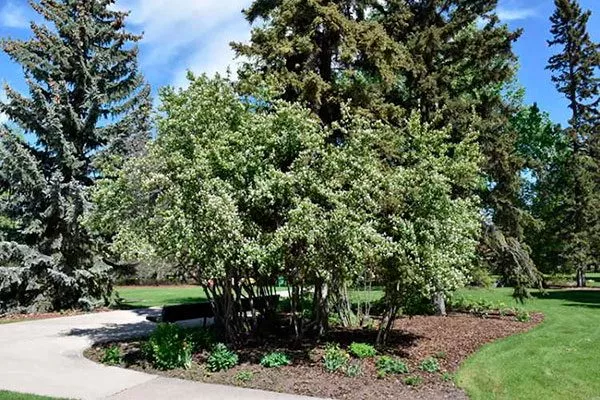
Thiessen is classified as a multi-stemmed tree-like shrub, the height of which reaches up to 450-500 cm. External characteristics of the plant:
- crown – quite spreading, the diameter varies from 250 to 400 cm, which directly depends on the method of forming the bush;
- growth type – fast growing;
- shoots – slightly drooping type with smooth bark;
- color of branches – originally red, later standard brown;
- crown shape – spreading-rounded;
- basal shoots – in small quantities, so they do not cause much trouble to the gardener and allow the variety to be propagated by layering;
- root system – superficial, since it goes deep to a maximum of 45-50 cm.
Leaves
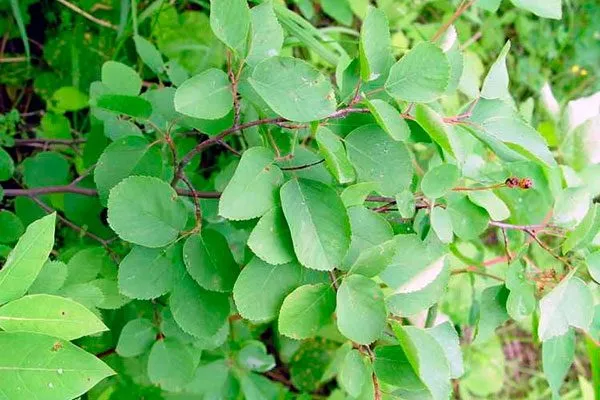
The shrub is considered deciduous, so it renews its leaves annually. Other foliage characteristics of the variety include:
- edges – slightly serrated;
- form - rounded, like alder leaves;
- shade – green;
- surface – matte smooth;
- pubescence – insignificant;
- length of leaf blade – 8-10 cm.
Flowers
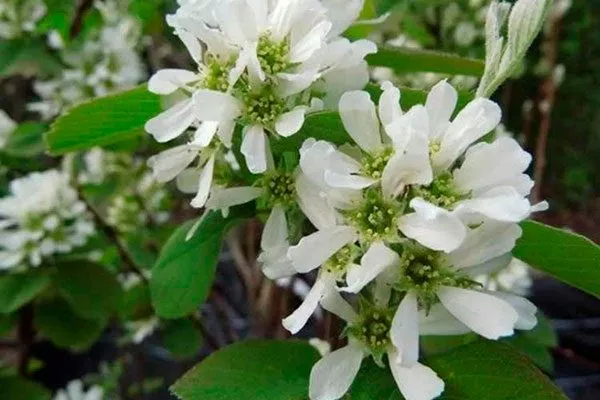
Flowering occurs uniformly and begins in the last days of April or slightly later, depending on the growing region. Their characteristic features:
- inflorescences – consist of 17-20 buds;
- color - snow-white;
- inflorescence shape – racemose;
- the scent of flowers – fragrant and very intense, due to which many pollinating insects flock to the bush;
- type - five-petal.
The decorative value of this variety is determined by the opportunity to enjoy the beauty of the tree throughout the entire growing season – first, the bush is covered with flowers, then they are replaced by bright berries, and subsequently the plant is adorned with yellow and purple leaves.
Fruit
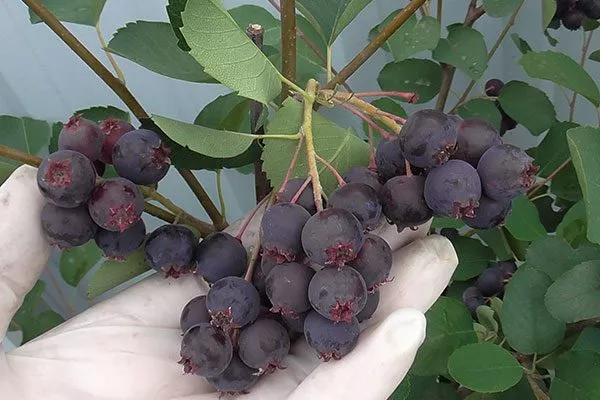
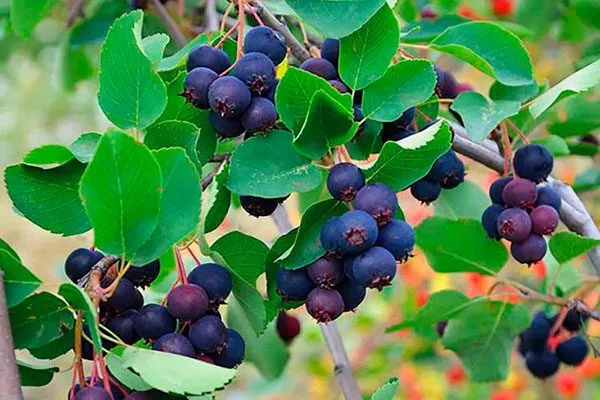
The berries are what make Thyssen worth cultivating, because they have the best qualities:
- type of ovary formation – grape;
- the number of berries in one bunch – from 6-7 to 10-12 pcs.;
- size - the fruits reach up to 1.6-1.8 cm in length;
- weight - varies from 0.6 to 1.0 g;
- form - apple-shaped;
- peel – dark bluish-violet;
- surface – smooth with a light waxy coating;
- pulp – fine-fibered and very juicy, many note a certain starchiness;
- peel type – durable, does not burst;
- aroma – saturated;
- taste - mostly sweet, but there is also a slight sourness;
- aftertaste – characterized by a refreshing effect.
The fruits contain a complex of useful elements, the main part of which is aimed at two main actions:
- lowering blood pressure;
- sedation.
The total calorie content per 100 grams is only 45-47 kcal. It contains no protein or fat, and only about 11 grams of carbohydrates.
Bones
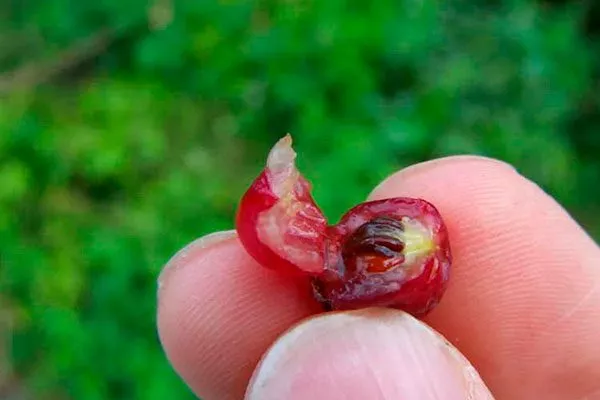
Amelanchier easily propagates by seed because the seeds have seed-like properties. They are quite small, located in sacs, and easy to chew. But their main characteristic is their high content of vegetable oils.
- ✓ Ability to withstand short-term temperatures down to -50°C, which is not typical for most varieties of irgi.
- ✓ No need for pollinator varieties due to self-pollination.
Characteristics
A particular advantage of this variety is its winter hardiness without the need for additional shelter, making it suitable for growing in northern regions, including the Transbaikal Territory. However, Thyssen also boasts many other qualities.
Frost resistance
Breeders rate frost hardiness at USDA Zone 4, meaning it can withstand temperatures from -30 to -34 degrees Celsius. Based on experiments conducted, the bushes can briefly survive extreme conditions, such as temperatures as low as -50 degrees Celsius.
Pollination
Thiessen is a self-pollinating crop, although the presence of insects attracted by the scent of flowering buds facilitates cross-pollination. Separate pollinator varieties are not required to increase yield.
Ripening period
The Thyssen variety is characterized by an early ripening period and a long fruiting period, starting from July and ending in August, allowing the harvest to be collected in two stages.
Productivity and fruiting characteristics
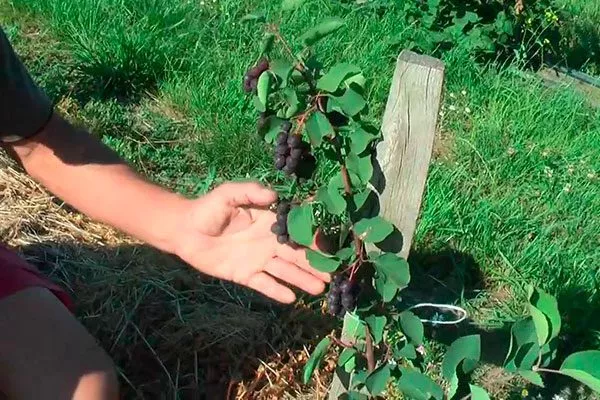
The bushes bear their first fruit as early as the third year of growth and reach full productivity at 9 to 10 years of age, maintaining high yields for 20 to 30 years. Yield potential is high – up to 9-12 kg of berries per mature tree.
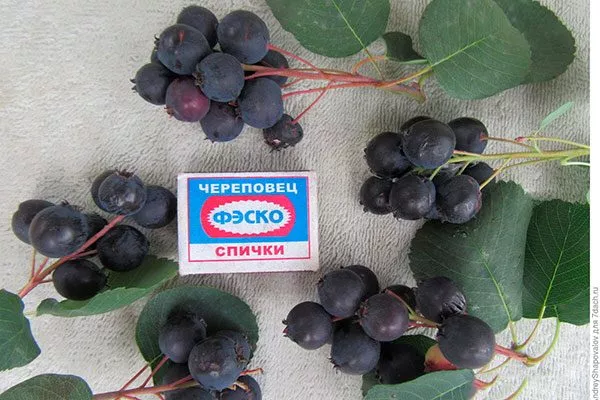
The fruits of the Thyssen amelanchier form on shoots of varying ages and are gathered in dense inflorescences at the ends of branches. The berries, like those of cherries, are attached to the branches by stalks and remain there until harvest, without falling off. Even young seedlings, starting in their first year, are capable of forming fruiting clusters, but it is advisable to remove the ovaries and flowers at this time.
Where can it be grown?
With excellent frost resistance, Thyssen can be grown in both the south and north of our country. However, the central part of Russia is considered the most successful location.
Storage and use of the harvest
To preserve the berries for a long time, carefully remove them from their stems. After harvesting, arrange the berries in a thin layer in a wide, shallow container and store in a cool place—a cellar, basement, or refrigerator. Without these conditions, the berries will stay fresh for 2-3 days, and with proper storage, 30-40 days.
The harvest is versatile: the berries are eaten fresh, frozen, dried, and canned. They are also used to make low-alcohol drinks.
Landing rules
When carrying out preparatory and planting work, consider the following aspects:
- The soil should preferably be sandy-clayey with a peat-podzolic composition; the presence of clay is possible.
- The soil acidity should be neutral or slightly acidic (pH 6.5-7.2).
- The soil structure is light, breathable and loose.
- Plant plants in spring or autumn at a distance of 100-150 cm from each other.
- The groundwater level should not be higher than 150 cm.
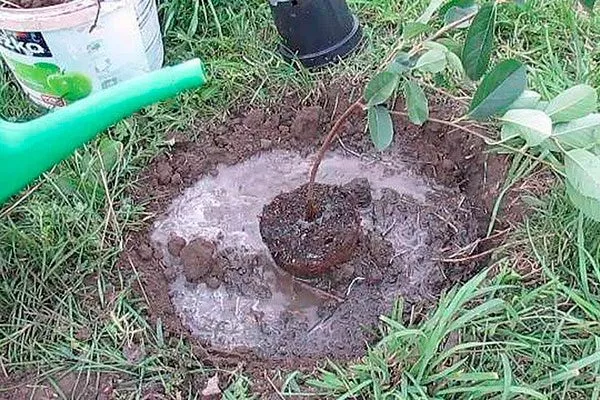
- Prepare a planting hole 45-55 cm deep in advance, fill the bottom with drainage material made of suitable material, then add a soil mixture with fertilizer.
- Place the seedling so that the root collar is 4.5-5 cm above ground level.
- ✓ The soil pH level should be strictly within 6.5-7.2 for optimal nutrient absorption.
- ✓ Groundwater should not rise above 150 cm from the surface to avoid rotting of the root system.
Care Features
Caring for the Thyssen variety of irga is no different from caring for other varieties and includes the following agricultural practices:
- Watering. Watering should be done based on climate conditions and soil moisture; 6-9 liters of water per plant is usually sufficient. When growing as a hedge, watering with a hose is acceptable.
- Formation. Helps to form the crown of the desired configuration and height, remove excess shoots and old branches to ensure better ventilation and access to light.
- Trimming. This should be done either in the spring or fall. This process involves removing diseased, damaged, and weak shoots. Depending on the severity of the damage, either a "trunk" or "stump" pruning method is used.
- Top dressing. No additional fertilizer is needed during the first 2-3 years. Starting in the fourth year, superphosphate, potassium-containing compounds, and organic matter should be applied to the trunk circle in the spring. Place the fertilizer 25-28 cm from the root collar, and avoid contact with the trunk bark.
Diseases and pests
This variety was developed to achieve maximum resistance to diseases and pests. However, in infested areas and under unfavorable conditions, the following may occur:
- Leaf roller larvae. They can destroy the foliage of the crown. In such cases, it is necessary to treat the bushes with insecticides.
- Cankerworm moth or cankerworm seed eater. Insects eat leaves and fruit seeds. Insecticides are also used to control them.
- Gray rot. Occurs in cases of excess moisture; affected areas are removed, and the plant is treated with Bordeaux mixture. It is also necessary to reduce the frequency of watering.
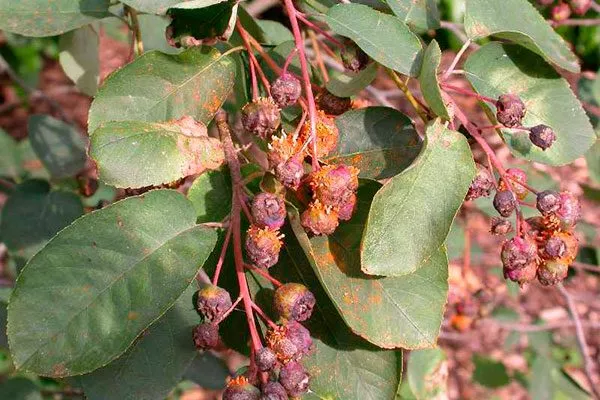
If branches and leaves dry out, they should be cut off and burned. To prevent this problem, you can treat the bush with copper sulfate in the spring.
Pros and cons
Thyssen is an innovative variety with improved characteristics, so it has many positive qualities:
But the hybrid also has its drawbacks:
Reviews
The Thyssen ambrosia is an excellent choice for beginning gardeners, as it allows them to learn the basics of gardening and, without much experience, reap a bountiful harvest from this easy-to-care-for plant. Many consider the ambrosia to be merely a wild forest berry, but the Thyssen cultivar defies this stereotype, offering not only tasty and healthy fruits but also a decorative addition to any garden plot or homestead.