
Over two dozen species of serviceberry, a winter-hardy shrub with tasty and healthy berries, grow wild. Thanks to breeders, today there are numerous cultivated serviceberry varieties that are free of the shortcomings of their wild ancestors—almost all popular varieties have large fruits and do not form abundant root shoots.
Types of serviceberry
Unlike other cultivated plants, serviceberries are more often classified by species rather than cultivars. Nurseries most often sell serviceberry species, of which, according to various estimates, there are approximately 25 known varieties. Each species may have one or more cultivars. Two serviceberry species are particularly suitable for cultivation: the alder-leaved serviceberry and the Canadian serviceberry. Before we move on to the varieties, let's look at the most popular serviceberry species.
Serviceberry berries can trigger allergies and lower blood pressure. Overeating the berries can cause a sedative effect and impair reaction time.
| Name | Bush height (m) | Berry diameter (mm) | Ripening period |
|---|---|---|---|
| Amelanchier alder-leaved | 4 | 15 | May |
| Canadian | 3-3.5 | 14-16 | end of July |
| Amelanchier lamarckii | 5 | 16-18 | July |
| Oval-leaved (round-leaved) | 2.5-3 | 8 | July |
| Spikelet | 4-5 | 9-10 | beginning of August |
| Smooth | 5-10 | 10 | July |
| Low | 1.2 | 10 | July |
| Amelanchier sanguinis | 3 | 10 | end of July |
| Abundantly flowering | 2.5 | 10-13 | July |
| Asian | 12 | 10 | end of August |
| Amelanchier arborescens | 5-12 | 10 | July |
| Nice | 2-2.5 | 10 | the second ten days of August |
Amelanchier alder-leaved
This variety of serviceberry is ideal for both fruit production and garden decoration. Alder-leaved serviceberry is a large, spreading shrub that requires regular watering—the key to its successful growth and fruiting. The bushes reach 4 meters in height. The leaves are rich green and oval.
The shrub blooms in May. The snow-white flowers are scentless, and as they fade, they fall like snowflakes. As they ripen, the berries turn a deep purple, almost black. The berry juice, rich in pectin, has gelling properties. The berries are sweet with a slight tartness. The seeds are small, barely noticeable when eaten.
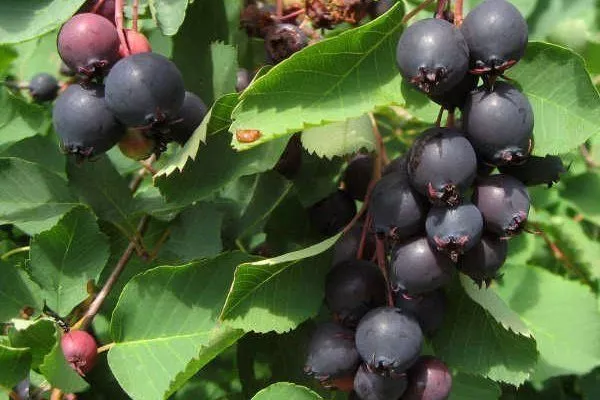
Amelanchier seeds contain amygdalin, a substance beneficial for heart health. It is recommended to chew them thoroughly.
Benefits of alder-leaved serviceberry:
- This tall shrub is very decorative at any time – it blooms beautifully, is good during the fruiting period, and even after shedding its leaves, it looks magnificent.
- Large berries. Fruit diameter is 15 mm.
- High winter hardiness, drought resistance, immunity to diseases and pests.
Peculiarities:
- planting the plant – in spring or late autumn;
- the optimal method of planting is shoots or cuttings;
- demanding of soil quality and moisture;
- grows well in urban conditions;
- peak harvest – 5 years after planting;
- Winter hardiness is high, but branch tips may freeze during severe frosts.
The alder-leaved serviceberry is a long-lived plant. The shrub lives for over 60 years, becoming increasingly tree-like with age.
Canadian
This species of serviceberry is the "ancestor" of most honeycombs and hybrids. The Canadian serviceberry is so beautiful that it is often used purely for its ornamental value. Native to North America, the shrub grows to a height of 3-3.5 meters. However, this is not the limit; in the wild, the Canadian serviceberry grows to 15-18 meters. The shoots are arching, and the leaves are light green, oblong, and serrated. The blooms are not as spectacular as those of the alder-leaved serviceberry, but the flowers are larger. The crown is large and rounded.
The flowers are yellowish-white. Blooming lasts about a week and a half. The fruits of the Canadian serviceberry, which ripen in late July, are better tasting than those of other varieties—they have a higher acidity and a more harmonious flavor. The berries are spherical and dark purple with a scarlet tint. Ripening time is early August. The yield is 5-6 kg per bush.
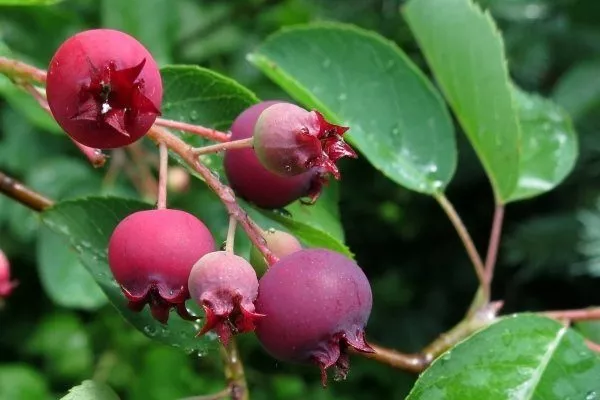
Advantages of Canadian serviceberry:
- high frost resistance and wind resistance;
- does not require regular watering;
Peculiarities:
- the fruits are liked by birds - it is necessary to organize protection from their invasion;
- prefers sunny areas;
- The yield is increased by pruning the side shoots in spring;
- it is necessary to remove or transplant excess shoots of the root system;
- the plant reproduces well by cuttings and poorly by seeds;
- undemanding to soils – grows on saline and alkaline soils;
- The seedlings are planted in holes with a drainage system, through which watering is subsequently carried out.
If the Canadian serviceberry is planted solely for decorative purposes, there is no need to remove shoots growing from the roots – new bushes will soon grow from them.
Amelanchier lamarckii
This is the most ornamental species. Previously, Amelanchier lamarckii was thought to be a mutation of a Canadian species. Today, botanists have classified it as a distinct species. It differs from other varieties by its particularly large fruits and leaves, as well as its abundant flowering. Amelanchier lamarckii is native to North America. Its primary use is as a landscaping and ornamental plant. This species is rarely seen in our country.
The shrub grows up to 5 m tall. The crown is spreading. The leaves are narrow and serrated. The flowers are pure white or slightly yellowish, odorless. The berries are juicy and sweet, blue-violet in color. The yield per bush is 6-7 kg.
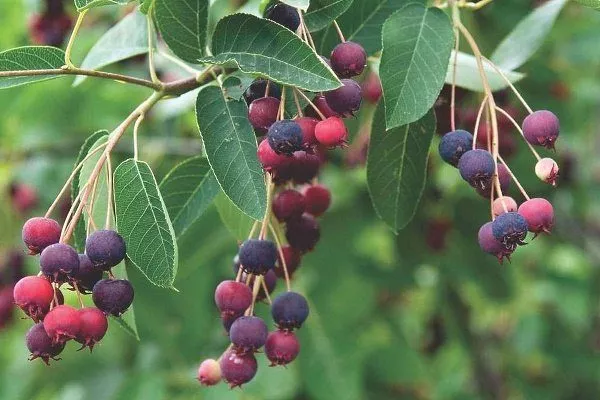
Advantages of Irgi Lamarck:
- frost resistance – up to minus 35°C;
- fruiting on any soil except marshy soil;
- high drought resistance;
- It is extremely rarely affected by diseases and pests;
- An excellent honey plant, the Lamarck serviceberry is often grown near apiaries.
Peculiarities:
- annually the length of shoots increases by 25 cm;
- over time, the lower parts of the branches become exposed;
- the color of the leaves during budding and in autumn is copper-red;
- ripe fruits hang for a long time without falling off until the frost;
- Birds love to peck at the fruits – they need to be scared away;
- propagated by cuttings, grafting or seeds;
- Stepchildren are removed once every 4-5 months to increase yield.
Oval-leaved (round-leaved)
The oval-leaved or round-leaved amelanchier is widespread throughout the Russian Federation. It originates in the south—Crimea and the Caucasus. Thanks to the seed dispersal of birds, this shrub has even colonized Western Siberia. The plant grows to a height of 2.5-3 meters. The crown is spreading, foxtail-shaped, ovoid, and serrated. In autumn, the dark green foliage turns scarlet and crimson, making the bushes incredibly beautiful.
The flowers are snow-white, gathered in large inflorescences. Their recurved petals give the shrub a "fluffy" appearance. The spherical or pear-shaped fruits are small—about the size of a pea, 8 mm in diameter. The skin is purple-black, and the flesh is raspberry. The sweet berries have a honey-cinnamon flavor.
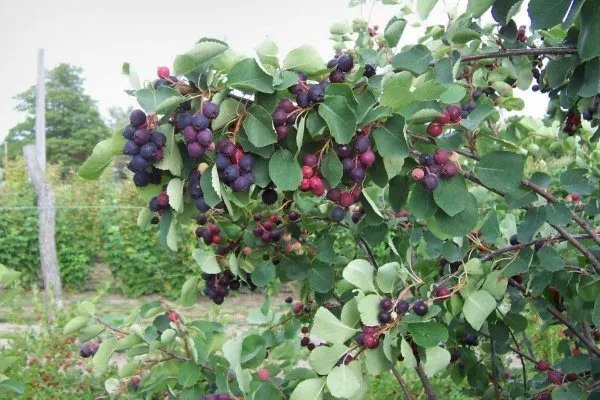
Advantages of oval-leaved (round-leaved) irgi:
- Although the berries are not particularly tasty, they are healthy and keep well in any form;
- high cold resistance – no special preparation for winter is required;
- recurrent spring frosts are not a problem;
- grows on any soil;
Peculiarities:
- prefers sunny areas;
- actively forms root shoots;
- Despite good immunity, high humidity provokes gray mold.
Spikelet
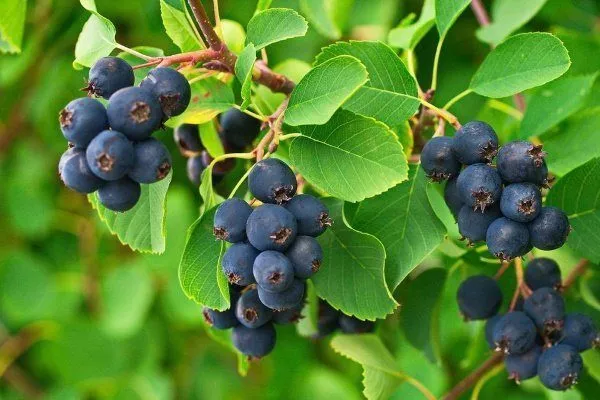
This is a relatively low-growing ornamental shrub with a dense, wide crown. It reaches 4-5 m in height, but is usually pruned to 2-2.5 m to shape the crown.
The foliage is covered with a felty down, whitish or silvery. The shrub is magnificent in the fall – with its yellow, red, and orange foliage, it resembles a blazing bonfire. The flowers are white or soft pink. The berries are 9-10 mm in diameter. Ripening occurs in the first ten days of August. The fruits are almost black, with a red tint. They are sweet, but the flavor is average.
Benefits of the Spiked Serviceberry:
- drought resistance;
- undemanding to soil;
- does not require fertilizers;
- no need to trim side shoots;
- When planted in a row it serves as an excellent hedge.
Peculiarities:
- the fruits have a bland taste, but they are actively pecked by birds;
- often affected by leaf roller caterpillars;
- Thanks to pruning, the bush can be given any shape.
The spicate serviceberry is often used as a rootstock and to strengthen soils prone to erosion.
Smooth
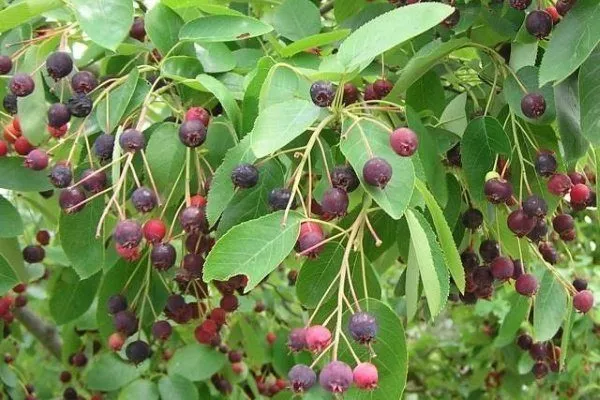
A popular shrub among gardeners. Its main distinguishing feature is its purple leaves. The plant can look like a bush or a tree, depending on how it's pruned. It grows 5-10 meters tall. The shoots are slender, almost bare. The leaves are oval-shaped and serrated.
The flowers are white and pleasantly fragrant. The berries are spherical, 10 mm in diameter, and dark blue with a bluish bloom.
Advantages:
- excellent taste of berries;
- does not require regular watering;
- It tolerates strong winds and cold well and does not require winter shelter.
Peculiarities:
- When planting, drainage must be provided;
- It is difficult to propagate by cuttings; grafting onto rowan or another variety of irga is preferable.
Low
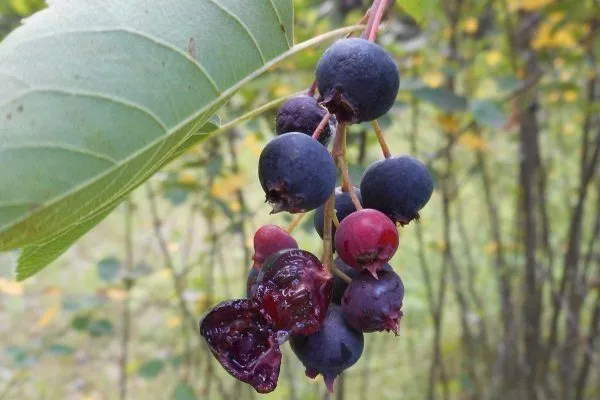
The species is common in North America, growing in deciduous forests. It is a low-growing shrub, reaching up to 1.2 m in height, with a dense crown and numerous shoots.
The flowers are snow-white, up to 1 cm in diameter. The berries are black and edible. The leaves are pointed and serrated.
Advantages:
- winter hardiness;
- very beautiful in autumn.
Peculiarities:
- There are difficulties when propagating by cuttings;
- looks like a spiky serviceberry;
- prefers sunny areas.
Amelanchier sanguinis
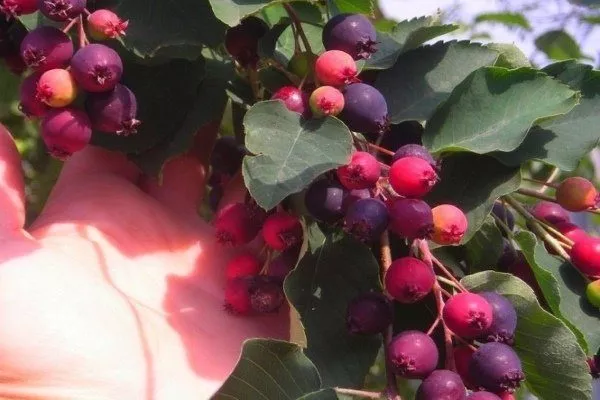
A medium-sized shrub with bright green leaves. Native to North America, it grows to a height of no more than 3 m and a width of 1 m. The trunk is short and branched. The leaves are rounded. Yields up to 5 kg per bush.
Ripening: Late. Flowers are large and white. Berries are bluish-black, round or slightly flattened. Fruit diameter: 10 mm.
Advantages: good material for breeding.
Peculiarities:
- in autumn the leaves turn bright orange;
- Birds don't like the fruits, so they don't eat them.
Abundantly flowering
This ornamental, low-growing shrub, growing up to 2.5 meters, is native to North America. Today, the plant has adapted to most of Russia. Its upright branches form an elongated-oval crown. The leaves are rounded and light green. Fruiting begins in the fourth year after planting.
The profusely blooming Amelanchier resembles the Alnifolia shadberry, but its flowers have wider petals, giving the flowering bush a very decorative, fluffy appearance. The flowers are white, gathered in small clusters. They bloom in May. Fruiting begins in July. The berries are dark purple, sometimes turning black. The flesh is juicy, with a sweet and sour taste. The berries are 10-13 mm in diameter. They are an excellent honey plant.
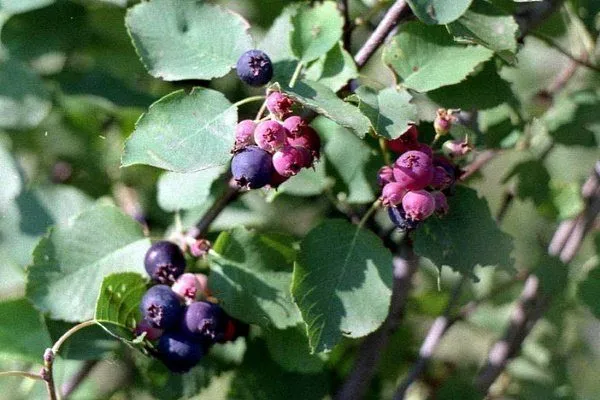
Advantages:
- drought resistance;
- high immunity;
- grows on any soil;
- tolerates soil salinity well;
- dust- and gas-resistant – the plant grows well in urban conditions.
Peculiarities:
- prefers sunny areas;
- lifespan – 20-30 years;
- propagated by seeds and cuttings;
- rooting of cuttings – 50%;
- used to create barriers that protect areas from dust.
Asian
The plant is common in Asian countries. It is a small shrub or tree, growing up to 12 m in height. The branches are sparse. The leaves are oval and serrated.
A late-ripening variety. The flowers are snow-white. The berries are sweet and black.
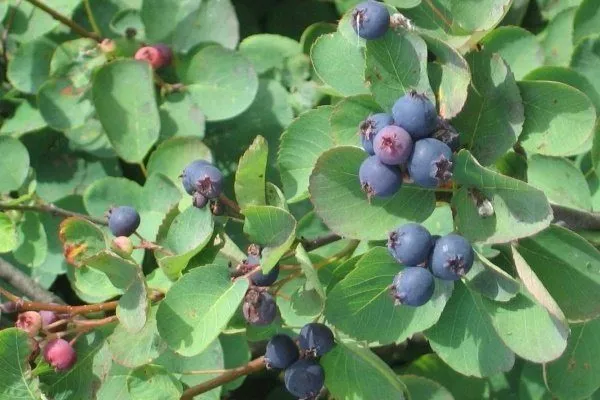
Advantages:
- decorativeness;
- winter hardiness.
Features: fruits ripen in late August, early September.
Amelanchier arborescens
A tree growing 5-12 m in height, reaching a maximum of 20 m. The trunk diameter is 15 cm, reaching a maximum of 40 cm. The crown is broadly ovate. The leaves are elliptical, elongated, and pubescent on the underside.
The flowers are medium-sized and white, with 4-10 flowers per cluster. The red-purple berries resemble small apples. The foliage turns red and yellow in autumn.
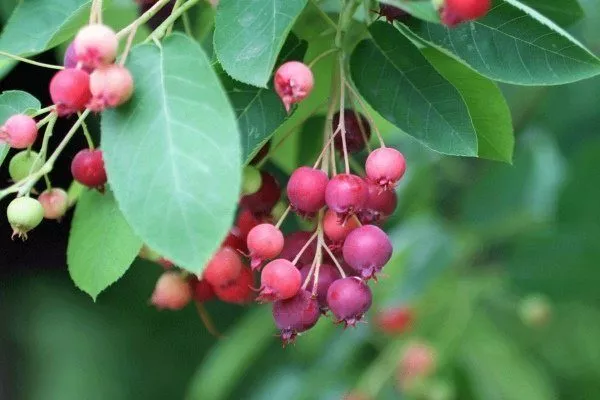
Advantages:
- decorativeness;
- endurance and unpretentiousness;
- undemanding to soil;
Peculiarities:
- photophilous;
- tolerates haircuts well;
- used to decorate gardens and courtyards.
Nice
A shrub 2-2.5 m high, with a rounded crown – its diameter reaches 1.5 m.
Flowering is late, occurring in early summer. The dark blue berries ripen in the second ten days of August.
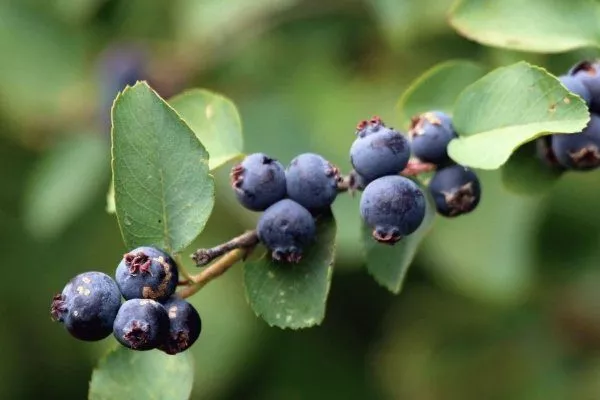
Advantages: Grows well in shaded conditions.
Features: rapid growth of young seedlings.
Varieties of serviceberry
Only one variety of serviceberry is currently listed in the Russian State Register. There are over 30 varieties worldwide. Each belongs to a specific type of serviceberry, has its own site and cultivation requirements, and differs in yield and flavor.
| Name | Bush height (m) | Berry diameter (mm) | Ripening period |
|---|---|---|---|
| Starry Night | 3 | 15 | beginning of July |
| Mandan | 2 | 14 | July |
| Slate | 1.5-2 | 15 | June |
| Smokey | 4.5 | 14-16 | end of July |
| Honeywood | 5 | 16-18 | beginning of August |
| Forestburg | 4 | 13-16 | end of July |
| Krasnoyarsk | 3.5 | 10-15 | July |
| Martin | 3 | 18 | June |
| Pearson | 3.5 | 16-18 | end of July |
| Nelson | 1.5-4.5 | 13 | July |
| Northline | 4 | 16 | June |
| Pembina | 3.5 | 14-18 | mid-July |
| Altaglou | 6-8 | 14 | July |
| Thyssen | 5 | 18 | end of July |
| JB30 | 5-6 | 15-17 | July |
| Vir-17 | 3 | 15-16 | end of July |
| Prince William | 3 | 12-13 | July |
Starry Night
A new variety from Russian breeders, obtained by pollinating the alder-leaved serviceberry. It was added to the State Register in 2016. These are bushes or small trees up to 3 meters tall. The yield from a 5-year-old plant is 4-5 kg. The variety is mid-season, with the berries ripening in early July.
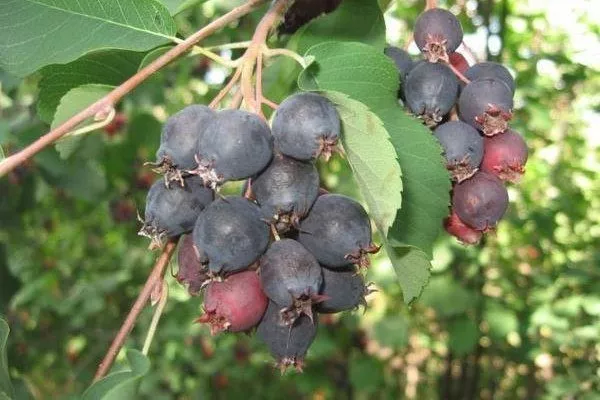
The berries are dark blue, almost black. When ripe, small whitish specks appear on the skin. The berries are large, weighing about 2 g. Each bunch contains 10-15 berries. Sugar content is 13%. The taste rating on a 5-point scale is 4.8. Harvesting can be done en masse or in two stages.
Peculiarities:
- the taste of the fruits is better than that of the alder-leaved shadberry, as they contain more organic acids;
- restrained growth and a small amount of basal shoots;
- the fruits are suitable for fresh consumption and processing;
- In autumn the foliage turns yellow-orange – the plant looks extremely decorative;
- the shrub prefers light, but tolerates shade well;
- responsive to moderate moisture;
- frost and drought resistance;
- high immunity to diseases.
Mandan
Amelanchier Mandan is a compact shrub growing up to 2 m tall. Its crown is candle-shaped. This variety was bred from a Canadian species of Amelanchier. Fruiting begins 3-4 years after planting.
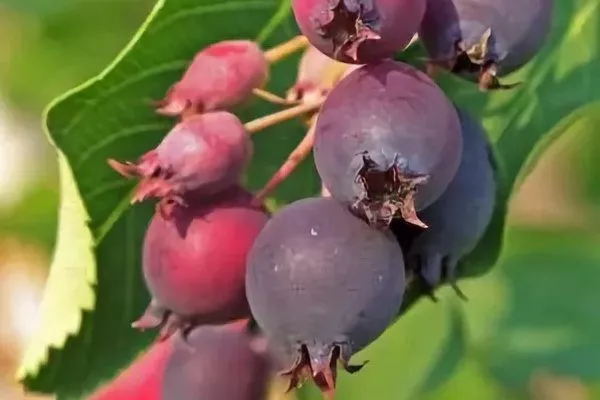
The berries are large and sweet, with 10-12 berries in clusters. Each berry weighs up to 0.9 g. The flesh is exceptionally juicy. Ripening is not massive; the fruits ripen gradually. This variety is considered a mid-season variety.
Peculiarities:
- large-fruited;
- resistance to moisture deficiency;
- winter hardiness – up to minus 40°C;
- moderate growth;
- self-fertility;
- can bear fruit for 30 years or more;
- immunity to diseases.
Slate
Slate is the most popular variety of Canadian serviceberry. It is used more for landscaping than for its berries. The bushes grow to a height of 1.5-2 m with a dense crown.
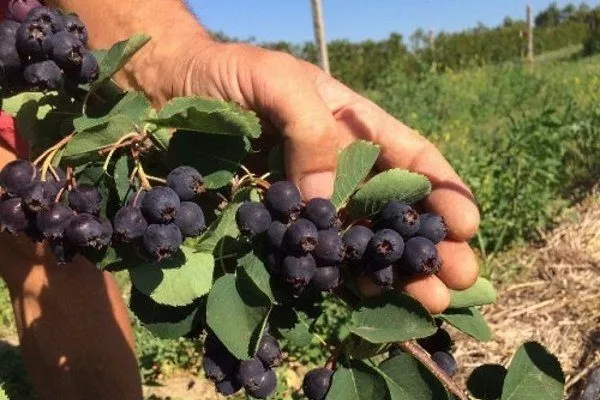
An early-ripening variety with black, juicy berries. Fruiting begins in June. The fruits are large, with a high sugar content, excellent flavor, and aroma. Fruit diameter is 15 mm.
Peculiarities:
- green dense leaves turn bright orange in autumn;
- withstands frosts down to minus 35°C;
- planting is preferable on the southern side of the site;
- seedlings are planted in the spring before the buds open;
- the plant is not affected by American powdery mildew;
- The fruits are collected as soon as they ripen, before they are eaten by birds.
Smokey
A Canadian-bred variety derived from the shadberry species of the same name. Smoky is not particularly well-known or widespread in Russia. The bush is vigorous, initially upright, then spreading. It bears fruit 3-4 years after planting. Yields 7.5 kg per bush.
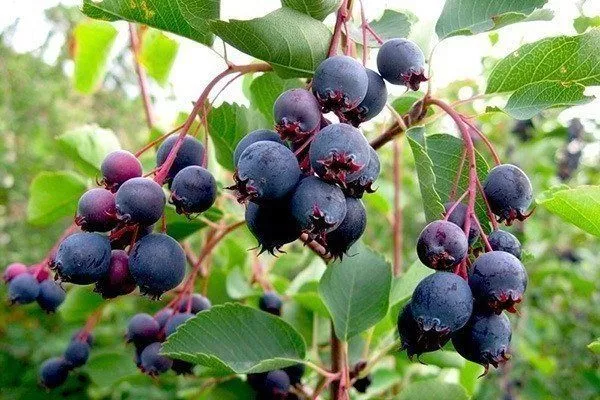
This is a mid-season variety, with the berries beginning to ripen in late July. The berries are large, up to 14-16 mm in diameter. They have a rich aroma. The color ranges from dark blue to black. The skin is covered with a waxy coating. The berries are spherical in shape. They are delicious fresh and good for processing. They contain many small seeds.
Peculiarities:
- planted no closer than 3 m from plants of other species;
- shoots that thicken the crown are often cut off;
- water regularly - the variety does not tolerate drought well;
- To prevent birds from pecking at ripening fruits, they organize protection;
- high winter hardiness;
- produces a lot of root shoots;
- excellent immunity.
Honeywood
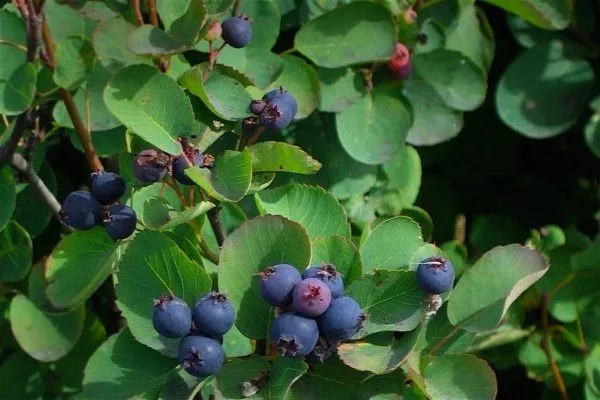
Honeywood is a product of Canadian selection. It was added to the Canadian registry as a cultivar in 1973. The bushes are upright when young, but as they grow, the shoots bend and droop downwards. The maximum height is 5 m, and the width is 4 m. The plant lives for about half a century. It begins bearing fruit in the second or third year after planting.
This late-ripening variety produces berries that ripen in early August. Flowering begins later than other varieties of Canadian serviceberry, making it less susceptible to spring frosts. The berries are blue-black, 16-18 mm in diameter, round or slightly flattened. The skin has a waxy coating. The berries are borne in clusters of 10-15.
Peculiarities:
- a small amount of undergrowth;
- the fruits are cloyingly sweet, they are rarely processed, and are usually used as a delicious dessert;
- high winter hardiness and drought resistance;
- grows on any soil, does not require fertilizing;
- demanding of humidity.
Forestburg
Forestburg is a variety representing the Canadian serviceberry. Breeding work was conducted in Canada, the plant's native home. The bushes are vigorous and spreading. Fruiting occurs in the third or fourth year after planting.
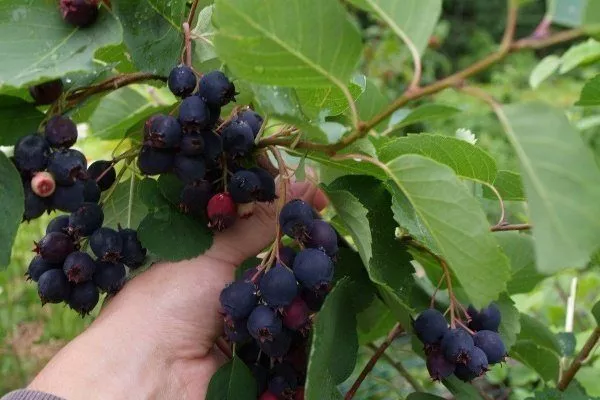
The berries ripen in late July. Flowering occurs in May. The berries are large, spherical, 13-16 mm in diameter. They range in color from dark blue to black, with a waxy coating. The flesh is juicy and delicious. The fruits grow in clusters of 8-10. They ripen evenly. The berries are versatile.
Peculiarities:
- moderate amount of basal shoots;
- Birds love to eat the fruits;
- the decorativeness of the bush - it is beautiful in bloom, with fruits, in autumn attire;
- consistently high yields every year;
- high immunity.
Krasnoyarsk
A late-ripening variety bred in Russia. This ornamental fruit-bearing shrub grows up to 3.5 cm tall. A single bush yields up to 10 kg of fruit.
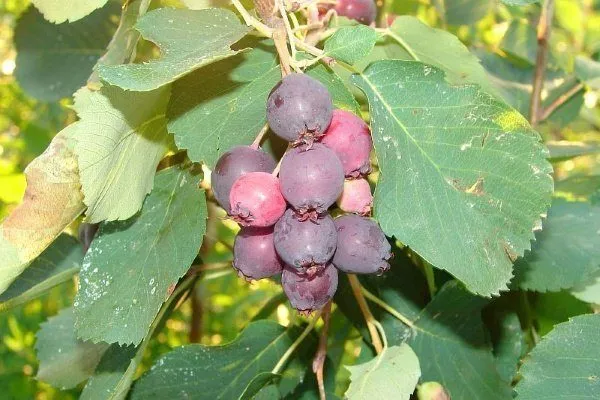
The berries ripen in July and are large, 10-15 mm in diameter. The skin is purple, and the flesh is juicy and fragrant. Each berry weighs between 1 and 4 g. They have a tart flavor; the riper the berries, the better their flavor.
Peculiarities:
- prefers sunny areas;
- self-fertility;
- bears fruit for 30 years or more;
- universal purpose of fruits;
- planting in spring or late autumn;
- minimal maintenance, bush formation without human intervention;
- propagation by root suckers;
- high winter hardiness – withstands frosts of more than -40°C;
- The distance between plants is 3 m.
Martin
This productive variety was developed by Canadian breeders. 'Martin' belongs to the Canadian species of serviceberry and is very popular in North America. The bushes are low-growing and multi-stemmed. Fruiting begins in the third to fourth year after planting, with peak yields occurring in the sixth to eighth year.
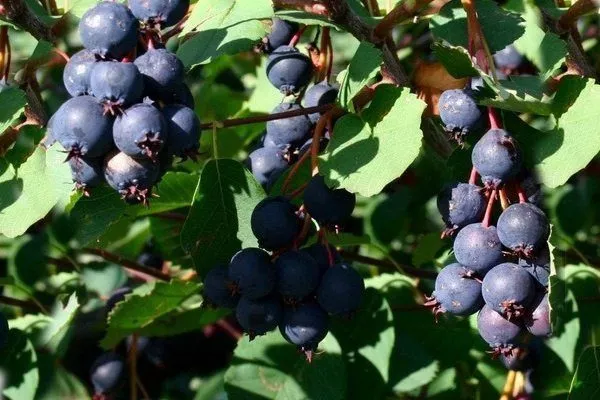
An early variety, ripening in June. The berries are large, spherical, and dark blue, up to 18 mm in diameter—comparable in size to cherries. They are very tasty.
Peculiarities:
- withstands frosts down to -40°C;
- friendly ripening;
- berries must be protected from birds;
- the fruits, when ripe, do not fall off;
- do not require careful pruning;
- It is not afraid of aphids and mites, but can be affected by powdery mildew.
Pearson
This variety belongs to the round-leaved amelanchier family. Developed by Canadian breeders, it produces vigorous, multi-stemmed bushes with numerous root suckers. Fruiting begins in the third or fourth year after planting.
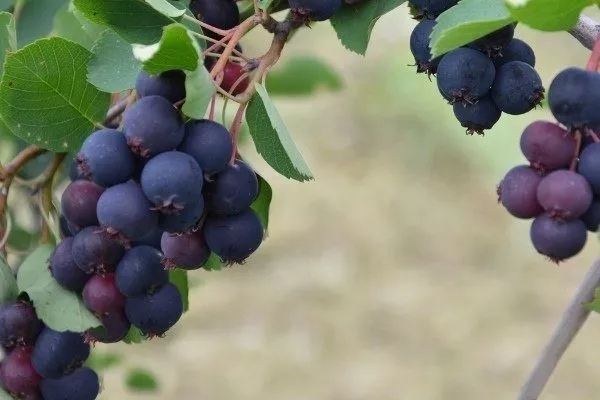
Ripens in late July. The berries are large and round, about the size of cherries, 16-18 mm in diameter. They are dark blue, almost black, with a waxy coating. They have an excellent flavor—the flesh is juicy and aromatic. The berries are good for all purposes—delicious fresh and suitable for processing.
Peculiarities:
- protection of berries from birds is necessary;
- consistently high yields;
- friendly ripening;
- high winter hardiness;
- immunity to diseases.
Nelson
This wild plant, discovered in 1974, was named after its discoverer. The cultivar was added to the register in 1992. The compact shrubs grow up to 1.5 m tall, reaching a maximum height of 4.5 m.
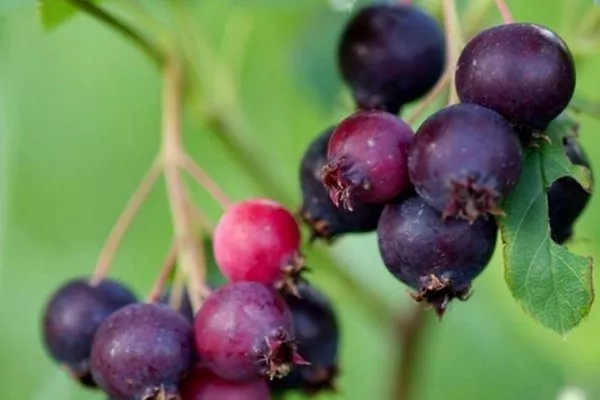
The fruits are spherical and large—up to 13 mm in diameter. When ripe, they turn blue-black. Each fruit contains several seeds. The berries grow in clusters of 10-12.
Peculiarities:
- fruits ripen unevenly;
- large-fruited;
- high winter hardiness.
Northline
An early-ripening variety from Canadian breeders. This variety belongs to the alder-leaved species. The bushes are upright, medium-sized, and reach a height of up to 4 m. Fruiting begins in the third year after planting. Yields up to 10 kg per plant.
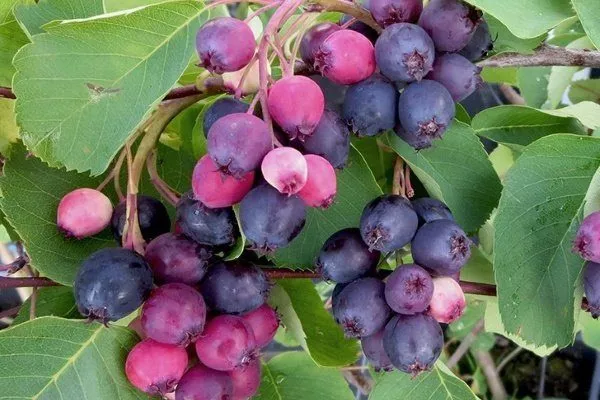
The pear-shaped berries grow in clusters of 10-12. The fruits are large, up to 16 mm in diameter. Ripening in June, they weigh 0.9-1.4 g.
Peculiarities:
- friendly ripening;
- undemanding to soils;
- grows well in sun and partial shade;
- excellent honey plant;
- withstands frosts down to -25°C;
- not afraid of winds;
- does not require regular watering;
- good transportability.
Pembina
A low-growing, perennial shrub of Canadian selection and the species of the same name. The bushes are ornamental, growing up to 3.5 m in height.
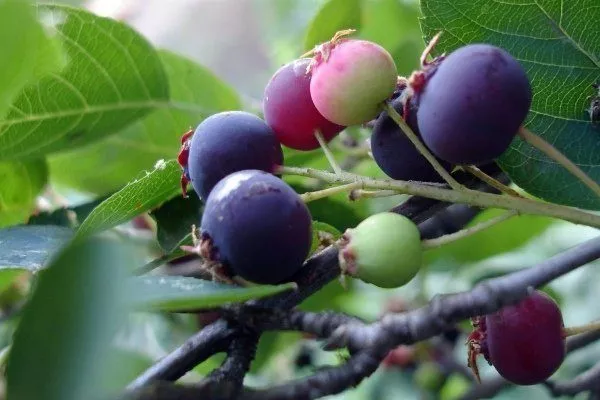
Ripens in mid-July. The berries are 14-18 mm in diameter. The bluish-gray fruits, fleshy and juicy, have a cloyingly sweet taste. Initially, the berries are reddish, turning blue-black as they ripen.
Peculiarities:
- few basal shoots;
- extremely winter-hardy plant – can withstand frosts down to -40-50°C;
- suitable for organizing windbreaks;
- propagates well by cuttings;
- The berries are used to make wine that tastes like Cahors.
Altaglou
This variety is derived from Amelanchier alderiifolia. This striking shrub looks magnificent at any time of year. It is planted for both decorative purposes and for its fruit. The height of the shrub is 6-8 m. The crown is elongated and pyramidal.
The fruits, unlike other varieties of serviceberry, are not blue, but creamy white. The berries have an excellent taste and aroma.
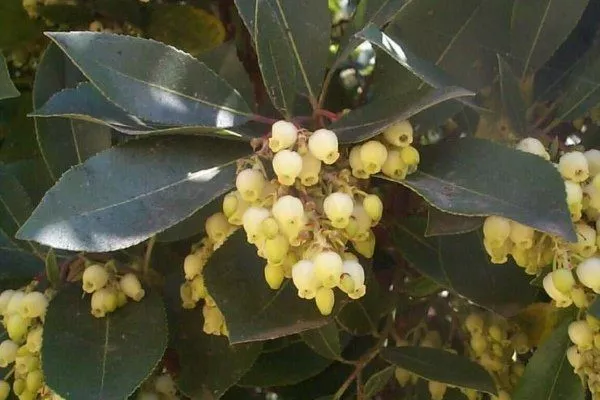
Peculiarities:
- In autumn the foliage turns crimson and does not fall off until frost sets in – the plant looks especially decorative;
- minor formation of root shoots;
- the crown thickens slowly - does not require much care.
Thyssen
Another Canadian-bred variety. It belongs to the alder-leaved species. The bushes are multi-stemmed, vigorous, and grow up to 5 m in height. The crown is rounded, eventually becoming broadly rounded. Fruiting begins 3-4 years after planting.
The fruits are spherical, blue-black, and very large, reaching 18 mm in diameter. They ripen in late July. The berries are delicious and can be eaten fresh or processed.
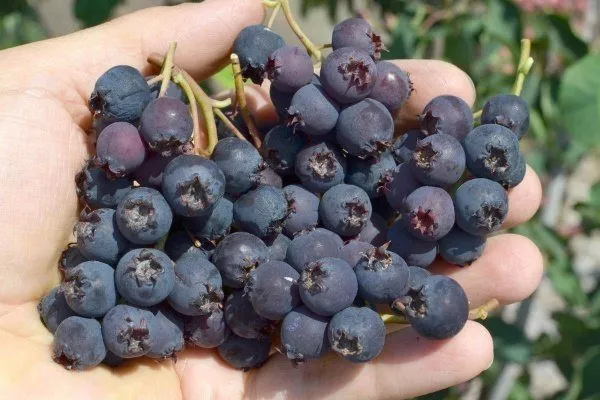
Peculiarities:
- moderate amount of root shoots;
- bird protection required;
- the maturation period is extended over time;
- high immunity to diseases;
- loves sunny and semi-shaded areas;
- can be affected by recurrent frosts during the flowering period;
- The variety is very long-lived – it bears fruit for 70 years or more.
JB30
A tree-like shrub with a wide and compact crown – up to 6 m. Height – 5-6 m. One plant yields 20 kg.
The fruits taste similar to wild serviceberries, but are much larger, reaching 15-17 mm in diameter. When ripe, they turn dark blue. They are very tasty, despite being low in sugar.
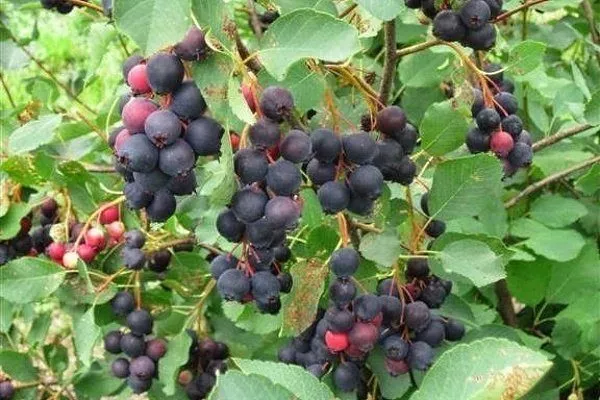
Peculiarities:
- prefers sunny places, but grows well in the shade;
- requires moderate moisture;
- high winter hardiness;
- fruits are universal.
Vir-17
A vigorous shrub with a compact crown and dense foliage. Fruiting begins in the 3rd or 4th year. Flowering occurs in the second half of May.
The fruits ripen in late July to early August. The berries are large, 15-16 mm in diameter. In terms of size, they rival the large-fruited Smoky variety. The berries are round-oval in shape and dark blue in color. When ripe, the fruits become almost black. The flesh is juicy, aromatic, and sweet.
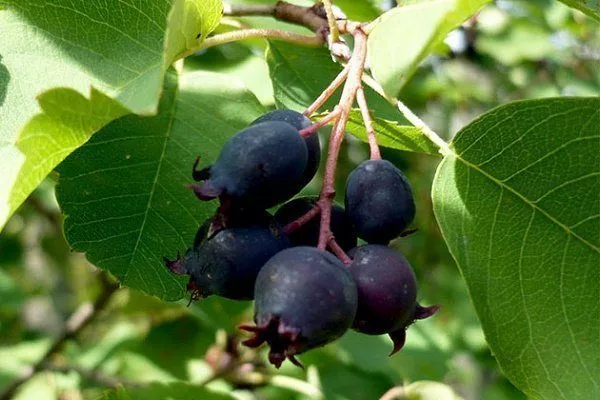
Peculiarities:
- protection from birds is necessary;
- stable yield and high immunity to diseases.
Prince William
The shrub grows up to 3 m tall and is used for landscaping. Without pruning, it becomes a multi-stemmed shrub. It produces abundant root suckers and produces abundant foliage. The plant lives and bears fruit for about 40 years.
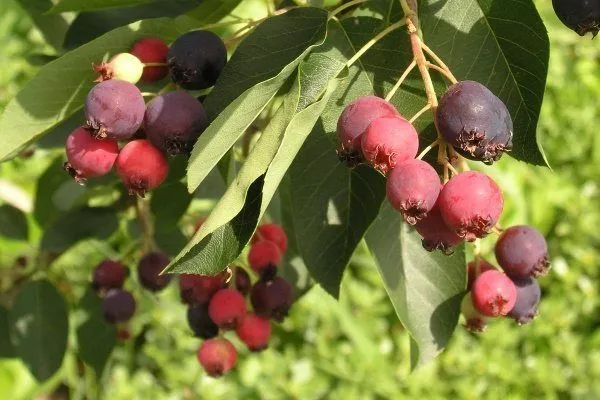
The plant blooms profusely. The flowers are snow-white and large, up to 2 cm in diameter. The fruits are 12-13 mm, spherical, reddish-purple, and sweet.
Peculiarities:
- grows in the sun and on the shaded side;
- prefers moderate air humidity;
- At high humidity, powdery mildew is observed;
- frost resistance – up to minus 34°C;
- In spring the leaves are reddish, in summer they are green and shiny, and in autumn they are yellow, red, and orange.
'Prince William' successfully tolerates difficult weather conditions that destroy other varieties of irgi - extreme heat and high humidity.
Other varieties
Sturgeon. A Canadian serviceberry variety. A new addition to the selection. Multi-stemmed, medium-sized shrubs reaching 2.5-3 m in height. Large, sweet berries are borne on long clusters. It is characterized by consistent fruiting.
- ✓ Resistance to diseases and pests.
- ✓ Soil and climate requirements.
- ✓ Purpose of cultivation (ornamental value, fruits).
- ✓ Productivity and ripening time.
Linnez. A low-growing, compact shrub of the Canadian serviceberry. The average plant height is 1.8 m. The fruits are large, sweet, and pleasantly fragrant. The bush prefers full sun but tolerates partial shade. This early, winter-hardy variety requires little care.
Surprise. A large-fruited serviceberry of Canadian selection. Instead of its original, lost name, the variety was renamed "Surprise." The bush grows up to 3 meters tall. The berries are round and dark purple. The fruits, covered with a bluish bloom, look stunning against the leaves. Winter hardiness reaches -35°C.
- Choose a sunny location with well-drained soil.
- Prepare a hole measuring 60x60 cm.
- Apply organic fertilizer before planting.
- Plant the seedling without burying the root collar.
- Water thoroughly after planting.
Helvetia. A dwarf plant. Reaches 1.2 m in height by 10 years. The plant blooms with white flowers. The berries are delicious. The leaves are beautifully colored in the fall.
Bluff. A new Canadian selection. The fruits reach 11 mm in diameter. The berries are delicious, with a moderately tart, balanced flavor. This medium-yielding variety is ideal for processing—the fruits have small seeds that retain their flavor and aroma.
Buffalo. A medium-yielding variety with dark blue berries. Each berry measures 11 mm in diameter. The sweet and sour fruits have a balanced flavor and a pleasant aroma.
Sukkess. A medium-yielding variety with quite tasty berries. Fruit size is 11 mm in diameter. Immune to fungal diseases.
Regent. A low shrub, up to 1.5 m tall. The berries are 13 mm in size, tender and sweet. This is a medium-yielding, ornamental variety. It is considered one of the most winter-hardy, able to withstand temperatures down to -45°C. This small plant, with a spreading crown, can be covered for the winter if necessary.
Lee No. 3. A medium-sized bush, up to 3 m tall. The plant is compact and spreading during fruiting. Few shoots are formed. The berries are 16 mm in diameter, oval-round, and dark blue.
Traditional. This tree-like shrub, reaching 8-10 m in height, blooms early and profusely. The crown spreads 4.5 m. The plant has a distinct trunk and beautiful branching. The fruits are dark blue. This variety is highly productive. The foliage is gray-green in summer and red-orange in autumn.
Gypsy girl. A variety with increased immunity to various diseases. The plant is tall and multi-stemmed. Flowering occurs in May. The berries are large, blue with a black tint. The flavor is bland, and the flesh is aromatic. This high-yielding, ornamental variety is undemanding of soil conditions, requires little care, and is a generous honey plant. It tolerates temperature fluctuations well and requires no winter shelter.
Bluesun. A medium-sized plant, reaching a height of 2.5 m by the age of 5. It blooms profusely. Berries weigh 1.1 g. The dark blue, spherical fruits have juicy, tasty flesh. Advantages: winter hardiness and early fruiting.
Ballerina. A tall, winter-hardy plant, reaching up to 8 m in height. Ripens in early July. The fruits are large, red, and delicious. This variety thrives in fertile soil and requires regular watering. It tolerates dry periods well, but will not produce a good harvest without ample watering and fertilizing.
Table of criteria for varieties
Irga – a useful and beautiful plant. When choosing a variety for your garden, evaluate the options based on key characteristics and compare them with the purposes for which you plan to plant the serviceberry. Table 1 lists serviceberry species and the varieties obtained from them through selective breeding.
Table 1
| A type of serviceberry | Varieties of serviceberry |
| Alder-leaved | Starry Night, Altaglow, Northline, Regent |
| Canadian | Honeywood, Park Hill, Pembina, Slate, Traditional, Ballerina, Forestburg, Martin, Mandan, Thyssen |
| Round-leaved | Pearson |
| Blood red | Holland, Success |
Comparison of several popular varieties of irgi according to evaluation criteria is presented in Table 2.
Table 2
| Variety | Criteria | ||||||
| Bush shape | Crown width, m | Height, m | Ripening time | Productivity | Berry size (diameter), mm | Taste | |
| Smokey | vertically growing | 6 | 4.5 | average | high-yielding | 14 | sweet, soft |
| Pembina | vertically growing | 5 | 5 | average | fruitful | 14 | full, sharp |
| Northline | vertically growing | 6 | 4 | average | high-yielding | 16 | full, sweet |
| Thyssen | sprawling | 6 | 5 | early | high-yielding | 17 | spicy, juicy |
| Honeywood | vertically growing | 4 | 5 | late | productive, especially when young | 16 | full, sharp |
Reviews
The serviceberry is a plant that combines both utilitarian and ornamental value. Its fruits possess unique medicinal properties, and the plant itself becomes a true gem in any garden. Thanks to selective breeding, every gardener can choose a serviceberry that suits their needs and aesthetic taste.
The article is good, thank you. I just wish the variety characteristics were listed for all categories. For example, I'm interested in low sucker production, and this characteristic isn't listed for all varieties.
Hello! Thank you for your positive feedback and recommendations.
The Canadian type of serviceberry, namely the Pembina and Honeywood varieties, has a low ability to form suckers.
Thank you so much for the article and your hard work! I learned a lot from it! Since we're living in a time of cosmic speed and a fast pace of life, I would welcome more tables with comparative characteristics! This will help young naturalists, like myself, make the right choice of how many varieties to plant in the garden! Thank you again, and I wish you success!