
The Irga Slate variety is deservedly popular among gardeners due to its reliability and high yield. Its winter hardiness makes it an ideal choice for regions with harsh climates. Growing this crop is an accessible and enjoyable experience, even for beginners. It's important to follow proper cultivation practices and pay close attention to the plant.
Who developed the variety and when?
Developed by Canadian breeders, it has become widely popular. In Russia, it is more commonly referred to by its Russian-language name, while "Sleyt" is used only as an alternative name.
The appearance of the tree
The shrub grows tall, reaching up to 2 m in height. It is distinguished by the following characteristics:
- It has an original crown configuration – it resembles an umbrella hat.
- The shoots are slightly curved, and the crown is characterized by a dense structure.
- Young seedlings are covered with reddish foliage, and in autumn the color takes on a yellow-red-orange hue.
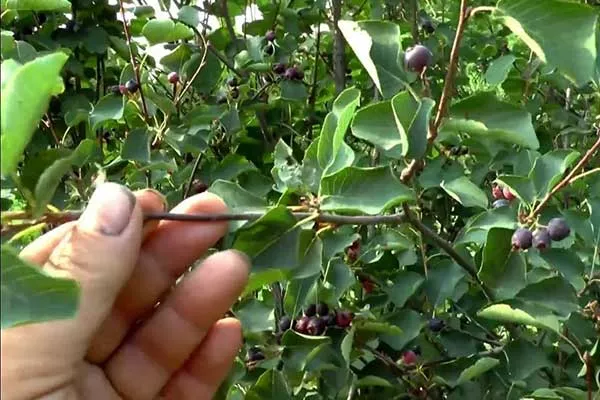
- At maturity, the branches are abundantly covered with rounded, green leaves with a matte surface and serrated edges.
Characteristics of fruits and their taste
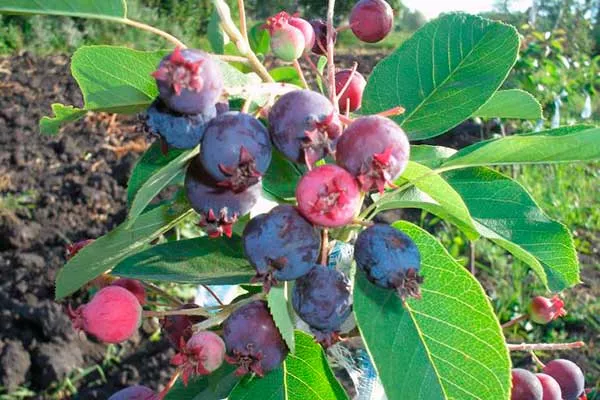
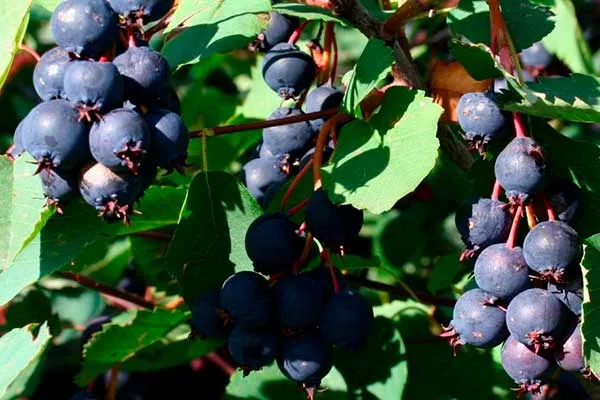
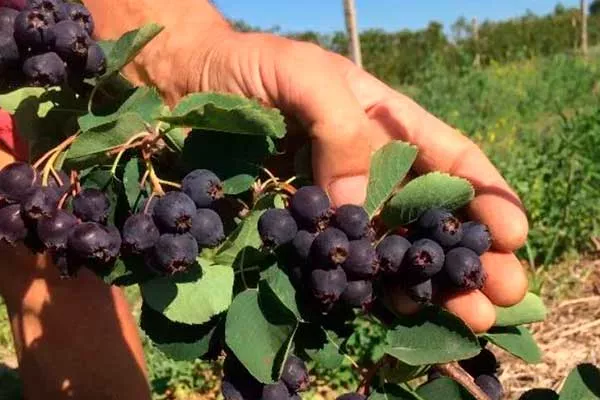
The berries are large and round-oblong, reaching 15 to 17 mm in diameter. Their color is initially dark blue, but over time it transforms to a purple-black hue. The skin is covered with a characteristic bluish-gray waxy coating. The flesh is fleshy, with a sweet taste and aroma.
Useful substances
Amelanchier is a veritable treasure trove of beneficial microelements and vitamins. It is known as a rich source of vitamin C, which helps strengthen the immune system and effectively combats vitamin deficiencies.
This berry is especially beneficial for people over 60, as it contains a high amount of vitamin P. It reduces the risk of heart attacks, helps prevent varicose veins, and promotes normal sleep.
Ripening period and yield
Serviceberry is an early-ripening crop. The first fruits usually appear in early or mid-July. Ripening occurs simultaneously and evenly. The bush begins to bear fruit approximately 3-4 years after planting.
Location and soil requirements
To grow Slate serviceberry, choose a site with mostly sunny or semi-shaded exposure. This plant has no special soil requirements and can quickly adapt to a variety of soil types.
The main rule is to avoid planting the seedling in poorly drained or highly clayey soils. Ideally, soil with a neutral pH level is ideal. The variety thrives in regions with a dry continental climate, where arid conditions prevail.
Planting and growing
Plant in spring or fall, choosing a location that isn't obstructed by tall plants. This helps protect other fruit crops from wind, which Slate is not susceptible to. When planting, add humus, superphosphate, and wood ash.
Step-by-step algorithm:
- Prepare the soil by loosening it to a depth of about 30-40 cm and remove weeds. Make sure the soil is well-drained.
- Choose a healthy, high-quality seedling. It should have a well-developed root system and fresh, green shoots.
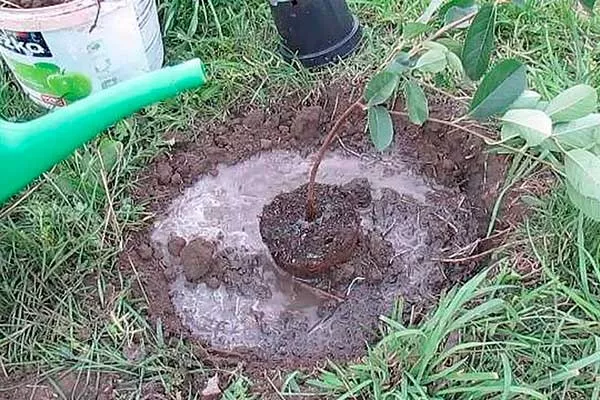
- Dig a hole approximately 50 cm deep and wide. Place the seedling in the hole, carefully spreading out the roots. Fill the hole with soil, lightly compact the soil around the seedling, and water it thoroughly.
- ✓ The seedling planting depth should be at least 50 cm to ensure stability and proper development of the root system.
- ✓ The distance between bushes should be 1.5-2 m to provide sufficient space for growth and development.
Caring for the Slate serviceberry includes regular watering during dry periods, applying phosphorus-potassium fertilizers once a year, and minor pruning to form a proper crown and remove damaged branches.
This variety is susceptible to various diseases and pests. Here are some of them and how to combat them:
- Powdery mildew. It appears as a white coating on leaves and shoots. Use fungicides, such as sulfur or thiophanate-based products.
- Leaf spot. It appears as brown spots on the foliage. Use copper-based fungicides or Bordeaux mixture.
- Anthracnose. White spots appear on leaves and shoots. Treat the shrub with copper-based fungicides.
| Disease/Pest | Resistance of Irgi Slate | Control measures |
|---|---|---|
| Powdery mildew | Average | Sulfur-based fungicides |
| Leaf spot | High | Bordeaux mixture |
| Anthracnose | Low | Copper-based fungicides |
Advantages and disadvantages
Before planting serviceberry, consider its positive and negative qualities. The crop has many advantages:
Reviews
The 'Slate' serviceberry is characterized by high winter hardiness and adaptability to a variety of soil conditions. These qualities make it an ideal plant for northern regions. Its ease of cultivation and minimal maintenance are significant advantages. However, it requires minimal care to achieve good yields.