
Planting and growing serviceberry is a task even an inexperienced gardener can handle. This beautiful North American plant, which produces abundant, delicious fruit, is low-maintenance, and hardy. Its simple cultivation distinguishes it from most fruit and berry crops. This article will teach you how to "settle" this exotic guest in your garden.
Brief description of the culture and its types
Many Russian gardeners are unfamiliar with this plant. But thanks to its decorative qualities, ease of maintenance, and ability to produce a bountiful harvest even in unfavorable growing conditions, it is becoming increasingly popular in our region every year.
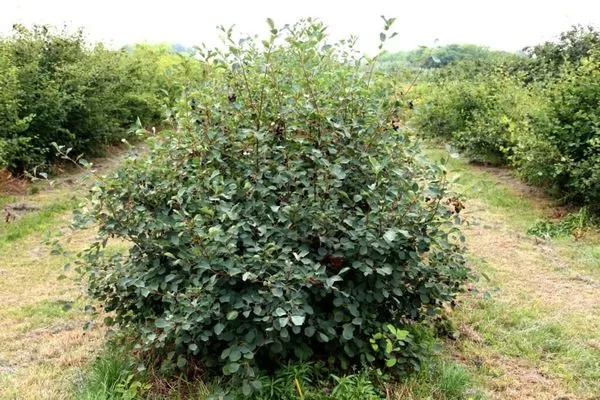
Amelanchier (also known as currant or Siberian grape) is a deciduous perennial, growing as a bush or small tree. It is a member of the Rosaceae family and a close relative of the apple tree. Its fruits are berries (apples).
The description of the plant's appearance includes the following characteristics:
- height — from 0.2 m (dwarf species) to 8-10 m;
- crown - lush, with a diameter of up to 6 m (this figure is determined by the variety and age of the irgi, the quality of the pruning; most often, gardeners give it dimensions from 1 m to 1.5 m);
- root system - fast-growing, well-developed, located superficially (in most species the roots go no more than 0.5 m deep, in others - up to 1 m), reaching 1.5-2.5 m in diameter;
- abundant root growth, which needs to be removed constantly;
- bark on the trunk - velvety, brownish-gray with a pinkish tint;
- shoots - pinkish-brown, graceful, densely covered with silvery-white pubescence in the spring (numerous hairs give the bush an extremely decorative appearance, they fall off after flowering);
- foliage - round or oval in shape, with smooth edges, smooth, with numerous parallel veins, growing singly on long petioles, dark green on the outside, lighter in color on the back (in autumn it turns red-yellow and crimson);
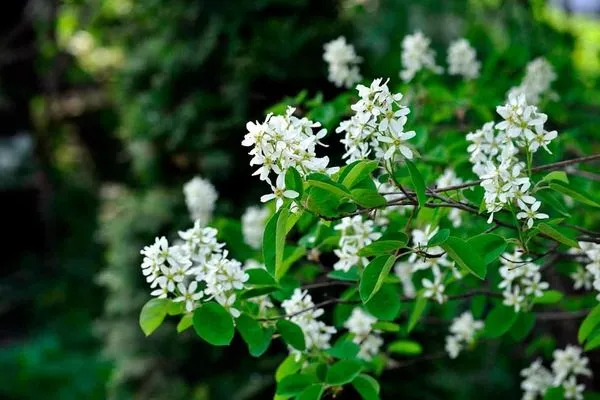
- flowers - simple, five-petaled, white or pink in color, collected in brushes, appear in May simultaneously with the blossoming of the leaves or before them, densely covering the bush;
- fruit — round, similar to miniature apples, the diameter varies from 0.5 cm to 2 cm depending on the species and variety, purple-red or purple-violet when fully ripe, with a characteristic bluish bloom.
The crop begins bearing fruit quickly, in the second or third year after planting. The majority of the harvest comes from last year's apical shoots. Productivity is 10-15 kg per bush. The plant's lifespan is 60 years.
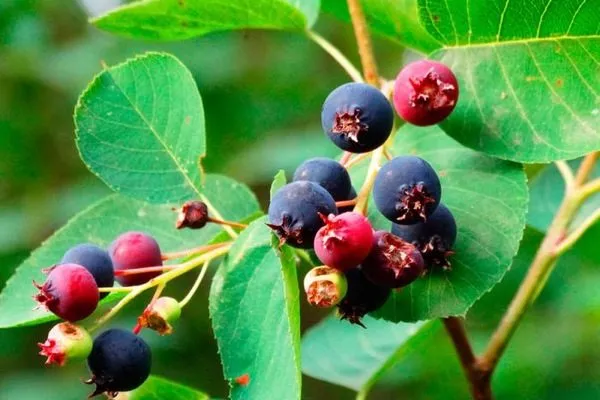
Apples ripen in the central part of the country in July and August. They are distinguished by their juiciness, very sweet flavor, and rich aroma. Their pulp contains a high sugar content (up to 12%) and low acidity. They are rich in vitamins (A, C, and B vitamins), pectin, anthocyanins, copper, and iron. They are eaten fresh and used in cooking:
- preparation of jam, pastille, marmalade;
- cooking compotes and syrups;
- drying and curing;
- winemaking;
- freezing.
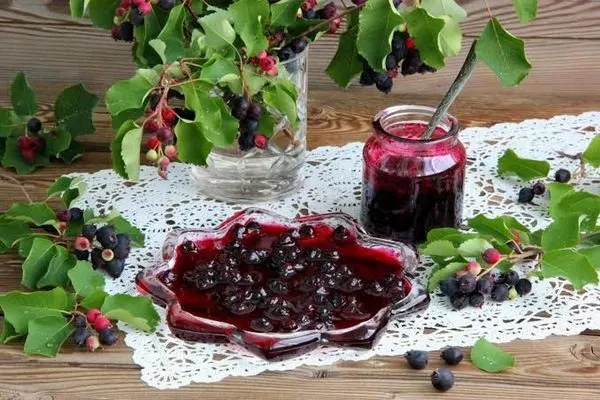
Serviceberry fruits are a delicacy with healing properties. They are beneficial for the heart and blood vessels, normalize blood pressure, strengthen the immune system, stimulate digestion, and have a sedative effect on the body. They are a favorite snack not only for adults and children, but also for birds.
Summer residents often grow Siberian grapes as an ornamental crop, blooming luxuriantly in the spring and delighting the eye with bright colors in the summer and fall.
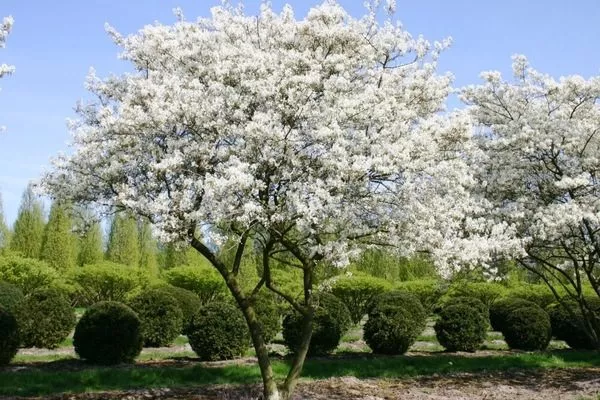
It is used in landscape design and is combined in mixed plantings with plants such as:
- spirea;
- rose hip;
- dogwood;
- thuja.
The shadberry's native homeland is North America. In the wild, it can be found in the United States and Canada, where it grows in forest clearings and on cliffs. It is successfully cultivated in the Caucasus, Crimea, central Russia, and southern Siberia. Currently, 25 species are known, 10 of which are suitable for horticultural use.
To obtain a harvest and decorate their plots, gardeners grow the most delicious and beautiful varieties of this exotic plant, including:
- Ordinary. It has the appearance of a shrub, reaching a height of no more than 2.5 meters. The shoots are covered with silvery hairs. After the hairs fall, they turn reddish-brown. The fruits are dark purple, almost black. They ripen unevenly in the clusters and tend to fall off when ripe.
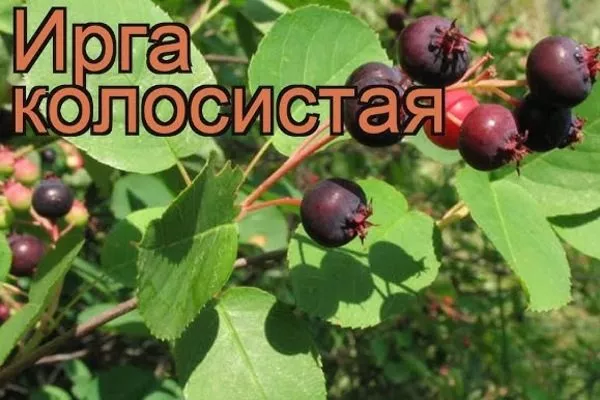
- SpikeletIt has the appearance of a bush or tree, no more than 5 meters tall. Its crown is dense and oval in shape. Numerous branching shoots are covered with reddish-brown bark, which turns gray as the tree matures. The apples are honey-flavored and reach 1 cm in diameter.
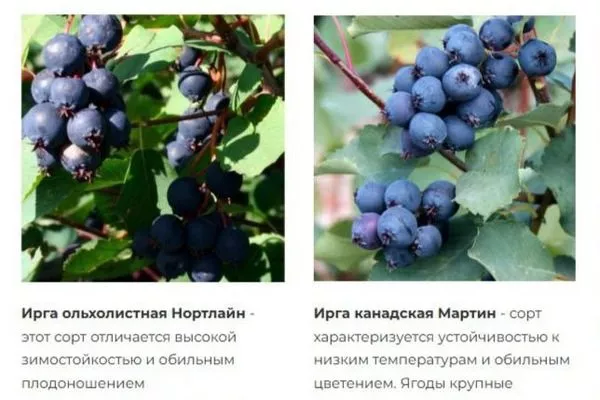
- Alder-leavedIt is distinguished by dense pubescence on young foliage, branches, and buds. The flower petals are vertically oriented. The fruits are elongated. The plant is very shade-tolerant.
- CanadianIt is a tall shrub, reaching up to 6 m in height, or a tree (8-10 m in height). The shoots are graceful and droop toward the ground. The foliage is green with a brown tint in spring, turning golden-crimson in autumn. The berries are round, sweet, and have a honey-like flavor.
Features of planting in spring and autumn
To ensure this exotic plant thrives in your garden and soon rewards you with a bountiful harvest, plant it wisely and within the recommended timeframe. Despite its undemanding nature and ability to thrive in extreme conditions, currants thrive best in a favorable environment.
Deadlines
Transplant this North American plant into your garden, observing the optimal planting times:
- from the end of September until mid-November (in the south of the country, it is permissible to plant irga until the end of autumn);
- in March, early April (before the buds swell).
Gardeners in the central part of the Russian Far East prefer to plant Siberian grapes in the fall, after the leaves have fallen. This way, the seedlings won't waste energy on developing green mass, but will instead focus their energy on rooting. After wintering, they will begin to grow vigorously.
Spring transplanting of currants into your garden is essential in areas with a short summer season and sudden cold spells. This should be done before the sap begins to flow.
Place of cultivation of irgi
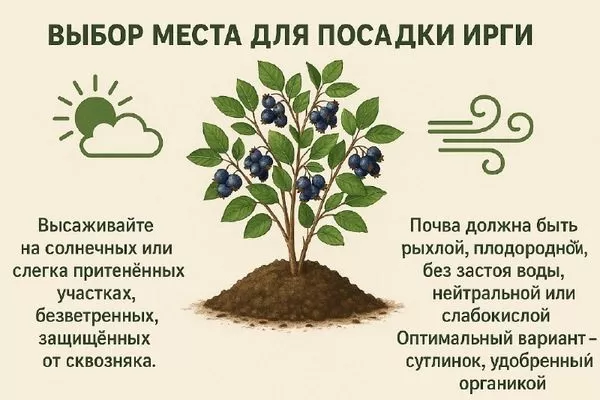
Select a plot of land in your garden for planting currants that meets a number of requirements:
- Well lit by the sunThe crop's yield and fruit quality (in particular, their sugar content) depend on the abundance of light. It is also necessary for the plant to display its decorative qualities to the fullest.
The serviceberry is shade-tolerant, but in low-light conditions it looks worse and produces little fruit. Its stems stretch. - Windless and protected from draftsWild varieties of serviceberry often grow in extreme conditions. They can be seen on rocks exposed to cold winds. To prevent premature flower and fruit shedding, ensure the plant is not exposed to strong air currents. This will ensure a good harvest.
Ripe apples are prone to falling. Wind will knock them off the branches if there's no protection in the area. Damaged fruit spoils quickly. - With fertile soilCurrants are undemanding regarding soil type and composition. They are so hardy that they can even grow on rocks. However, in such conditions, they produce few fruits, and their flavor leaves much to be desired.
To obtain a large, sweet, and abundant harvest, grow the bush (tree) in loamy or sandy loam soil that is loose, well-drained, moderately moist, and rich in organic matter. The soil should be neutral or slightly alkaline (pH 6.5–7.5). Growing in acidic soil, Siberian grapes develop slowly and are more susceptible to fungal attack. - Situated on a hillStagnant water is unacceptable. Low-lying areas with waterlogged soils are not suitable for planting serviceberries due to the increased risk of root rot. A hill or a homemade raised bed is the best option.
Experienced gardeners often use currants to create a hedge along the northern edge of a property. They're cold-resistant and can provide protection for other trees and shrubs in the garden. However, don't expect a good harvest from them in this case.
Requirements
This North American fruit tree (shrub) amazes domestic gardeners with its undemanding nature and resilience. It can grow and bear fruit even in harsh climates. It is resistant to many adverse factors:
- frosts down to -40°C (some varieties can withstand wintering at -50°C);
- periods of drought;
- summer heat;
- shading;
- poor soils.
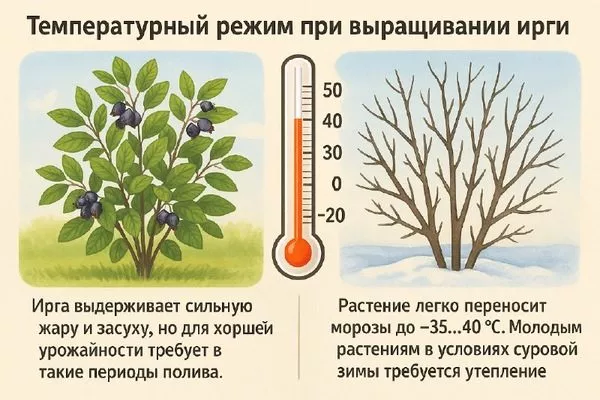
You can grow serviceberry almost anywhere in Russia. It adapts well to any climate, including the Moscow region, Transbaikal, and Crimea. It thrives best in temperate climates.
To ensure the crop remains disease-free, bears fruit abundantly, and produces a high-quality harvest, the following conditions are recommended:
- plenty of sunlight;
- moderate soil moisture and drainage (the plant tolerates drought better than waterlogging);
- the optimal temperature range for growth is from 0⁰С to +32⁰С;
- regular watering during the berry ripening phase;
- pruning and removal of root shoots;
- application of fertilizers;
- winter insulation when growing in harsh climates.

To ensure that growing Siberian grapes doesn't cause you any problems or difficulties, choose the varieties that are best suited to your area:
- drought-resistant - for southern regions where summers are hot and with little rainfall;
- characterized by increased frost resistance - for western and northern regions;
- dwarf hybrids - if the size of your plot is small.
The best option is to purchase a zoned variety from a local nursery. These seedlings are well adapted to the climate of your region. They tolerate stress better and are less susceptible to disease.
What to plant next to the serviceberry?
To ensure this exotic plant thrives in your garden and rewards you with a bountiful harvest, ensure it's planted in favorable surroundings. Grow it alongside crops considered good companions:
- rose hips;
- raspberries;
- gooseberries;
- red and black currants;
- plum;
- cherries;
- apricot;
- dogwood;
- spirea;
- low-growing species of thuja.
Do not plant the unpretentious currant next to plants that are on the list of bad companions for it:
- birch;
- maple;
- walnut;
- hazelnuts;
- apple tree;
- pear;
- horse chestnut;
- white acacia;
- viburnum;
- barberry;
- lilac.
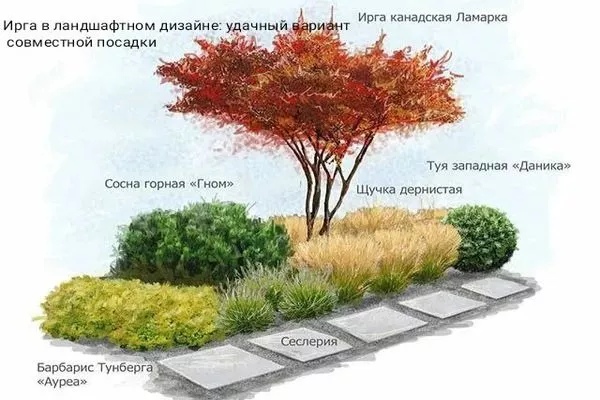
If you're using Siberian grapes to decorate your garden, avoid mixing them with lilies and peonies. They'll overwhelm them.
Preparing the soil and planting holes
Prepare the area for planting serviceberry well in advance: in the fall if the procedure is planned for spring, and several months beforehand in October-November. Perform the following tasks:
- dig the soil to the depth of a shovel blade;
- clear it of weeds and their roots;
- add humus or compost, wood ash;
- If the soil is acidic, enrich it with chalk, dolomite flour or lime.
Two to three weeks before the planned planting date, dig a hole in the area. Make it 60 x 60 x 50 cm. Partially fill it with a 1:1 mixture of garden soil and humus, enriched with superphosphate (30-40 g) and ash (200 g).
How to choose a quality seedling?
Buy planting material from a local nursery, not from an untrustworthy seller at the market. This guarantees good quality. When choosing, pay attention to the following:
- variety (suitable for the climate of the growing region);
- plant age;
- root condition;
- appearance.
Choose a strong, healthy seedling that's 1-2 years old. It should have the following characteristics:
- well-developed root system;
- shoots that do not show signs of wilting, damage by pests, or disease;
- free from defects, in particular mechanical damage;
- free from rot;
- with wet root shoots (if they are overdried, refuse to buy).
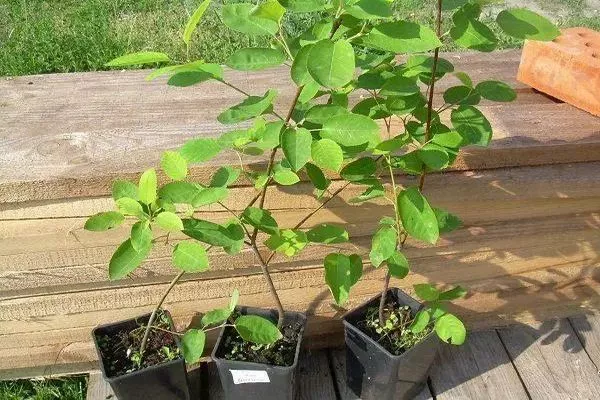
If you're purchasing a container plant, make sure the root ball is tightly enclosed. Currants with a closed root system can be transplanted into the garden at any point during the growing season. Provide moderate watering.
Preparation of planting material
Place the serviceberry seedling purchased from the nursery in a bucket of water. Before planting, do the following:
- take a good look at the plant;
- prune it (shorten the shoots by 1/3, remove diseased and broken branches);
- remove damaged root segments, make overly long shoots shorter;
- treat with a growth stimulator (for example, Kornevin).
Rules and schemes
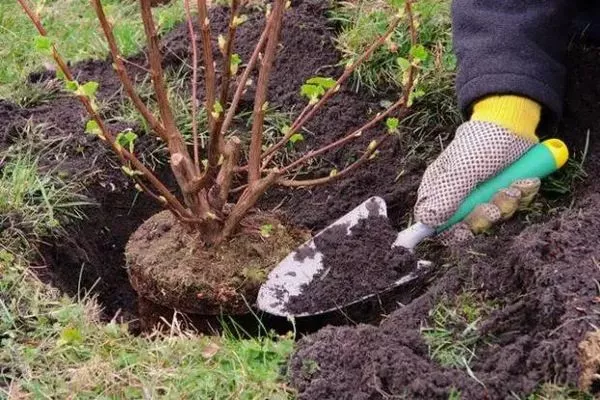
To ensure your currant bush takes root quickly and well in your garden, plant it properly. Follow these step-by-step instructions:
- Make a mound of soil mixture at the bottom of the hole.
- Place a seedling on it.
- Carefully straighten the roots. They shouldn't be too tightly intertwined. Point them downwards.
- Fill the hole with soil. Do not allow the root collar to be buried more than 2-3 cm deep to prevent the plant from rotting.
- Tamp the soil around the trunk.
- Water the seedling. Use 10-20 liters of water per bush.
- Mulch the tree trunk circle with organic matter.
After planting, prune the serviceberry. Leave 4-5 strong buds. This will stimulate branching.
If you purchased several plants from a nursery, plant them according to the diagram. Maintain the optimal distance between plants:
- 2-3 m - single planting or staggered;
- 1.5-2 m - in a row (if you plan to plant several rows, maintain a distance of 3 m between them;
- 0.7-1 m - if you are creating a hedge from irgi.

Do not reduce the specified spacing to avoid dense plantings, which can lead to disease problems due to poor ventilation and insufficient light.
The subtleties of planting different types of irgi
Cultivation of the common Siberian grape is somewhat different from other varieties. Differences also extend to the planting process itself:
- Canadian view It doesn't tolerate even the slightest shade. Choose the sunniest spot in your garden with moderately moist soil. Plant in spring or early fall. Increase the distance between plants to 4 m.
- Alder-leaved The crop is distinguished by its good tolerance to low light conditions. It is suitable for shady areas (but still produces better fruit in full sun). It is an excellent choice for northern regions. The distance between planting holes should be at least 3 meters.
If you plan to use the plant to create a hedge, give preference to spiked varieties or Lamarck's irgeThey are good at forming dense, impenetrable thickets.
Caring for irga immediately after planting
Although this overseas guest is unpretentious, it requires adherence to standard agricultural practices to maintain its decorative appearance, robust health, and ensure maximum productivity. Follow these care procedures:
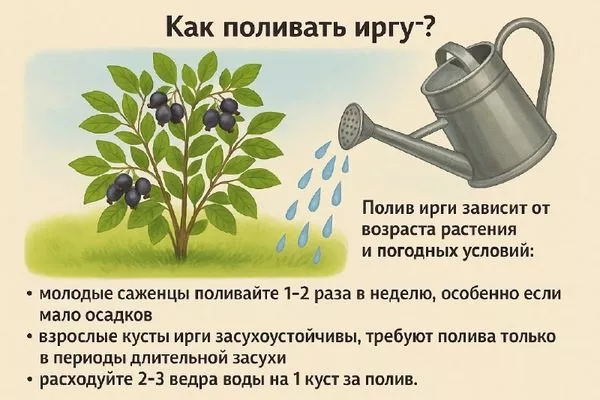
- WateringDuring the plant's first year, keep the soil moderately moist. Don't let it dry out too much. Avoid waterlogging. Water the young seedling 1-2 times a week (more frequently during droughts).
Serviceberry, starting at three years of age, can survive without frequent watering under normal weather conditions. It's sufficient to moisten the soil around the trunk once or twice a month, using 30 liters of water per bush (tree).
The main thing is to provide the crop with regular watering during the fruit formation period and during dry periods.
- Caring for the tree trunk circleAfter heavy rains and irrigation, remember to loosen the soil under the chokeberry. This will improve its aeration. Combine this with weeding. Regularly remove weeds, especially in the first few years of the plant's life. Weeds compete with the plant for nutrients and water and provide a breeding ground for pathogens and pests.
- MulchingCover the area around the tree trunk with organic matter. Use humus, grass clippings, and straw to prevent rapid moisture evaporation and weed growth. This technique also protects the roots from overheating in hot weather and freezing in winter.
- Top dressingTo ensure your currants produce a rich and delicious harvest, fertilize them several times per season.
In spring, after the snow melts, apply urea or ammonium nitrate (30-40 g per bush) to stimulate shoot growth. In early summer, apply superphosphate (40-60 g/m2) and potassium sulfate (15 g/m2). In autumn, enrich the soil under the bush with ash and nitrogen-free mineral complexes.
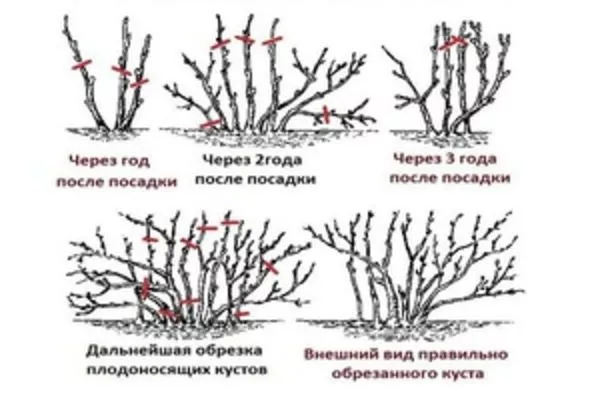
At least once every 3 years, add rotted manure or compost during autumn digging. - TrimmingIn early spring, prune out unproductive shoots from the currant tree: dried out, frozen, broken, weak, growing inward, old (6-7 years old).
Leave 10-15 strong, healthy skeletal branches of varying ages. By doing this, you can extend the plant's lifespan to 50-60 years.
If desired, you can give the irga a standard shape to make it look more decorative and to make harvesting easier.
Repeat the sanitation procedure in the fall (if necessary). Remove damaged plant parts at the end of the growing season.
Transplanting irgi
This procedure is difficult due to the extensive root system. A five-year-old bush can grow up to 2 meters wide (some varieties can reach 2 meters deep). Choose the planting site carefully to avoid having to relocate the serviceberry later.
If replanting is unavoidable, preserve the root ball. Do not disturb it. For an eight-year-old plant, its dimensions should be 1 m wide and 0.7 m deep. The bush will quickly recover its peripheral shoots if the replanting is successful.
Follow the planting procedures described earlier. Follow these step-by-step instructions:
- Carefully dig up the bush, including the root ball. The older the plant, the larger the root ball should be.
- At the new location, dig a hole corresponding in size to the volume of the currant root mass.
- Place the root ball of the bush into the hole. Fill the empty spaces with fertile soil.
- Compact the soil around the tree trunk.
- Water generously and mulch with organic matter.
Common mistakes and their consequences
Beginner gardeners often make mistakes when cultivating serviceberries, which can lead to numerous complications. Experts list the most common mistakes as:
- Incorrect choice of location for growing shrubsIn the shade or in low-lying areas where water stagnates, Siberian grapes bear fruit poorly, producing small and unappealing berries and suffering from fungal infections. Waterlogged areas are especially dangerous. In such conditions, the roots rot and the plant may die.
- Insufficient wateringDespite currants' drought tolerance, be sure to water them on hot, dry days. Young, fragile bushes especially need regular watering.
A lack of water negatively impacts the crop's appearance and yield. Its foliage wilts, dries, and falls prematurely, and few fruits are produced.
Apples grown with insufficient watering during the formation and ripening phases are of low quality. - Neglect of pruningWithout this procedure, the plantings become dense thickets. Under such conditions, the crop suffers from a lack of light, poor ventilation, and is more susceptible to fungal attacks.
- Incorrect use of fertilizersUsing fresh manure and excessive fertilizer dosages leads to root burn. A lack of nutrients negatively impacts the plant's productivity.

- Lack of prevention and protection against infectionsIn this case, serviceberry (especially when growing in unfavorable conditions) often suffers from fungal infections. Regularly inspect the plantings for the first signs of disease and parasites. Immediately remove and burn any affected branches. In the spring, apply Bordeaux mixture or copper sulfate to prevent the problem.
Fight pests, particularly aphids and codling moths. They damage the plant and carry infections. Folk remedies such as garlic or tobacco infusion, soapy water, or wormwood decoction will help.
Use biological preparations (for example, Fitosporin-M) if you notice signs of ill health in the plant.
The serviceberry is an easy-to-grow fruit tree that can brighten any garden. It blooms luxuriantly in spring, produces sweet and healthy apples in summer, and delights the eye with its variegated foliage in autumn. Plant it correctly to ensure this exotic plant quickly establishes itself in its new location and reveals its full glory.