
The Northline Amelanchier is a popular Canadian variety, ideal for both ornamental and commercial growing. This overseas variety attracts our gardeners and summer residents with its high yield, excellent flavor, and striking appearance.
Description of the plant
The Northline variety is a striking example of the alder-leaved type of serviceberry. It produces upright, multi-stemmed bushes of medium height, reaching 4 meters in height. They have a rounded crown, and the diameter can reach 6 meters.
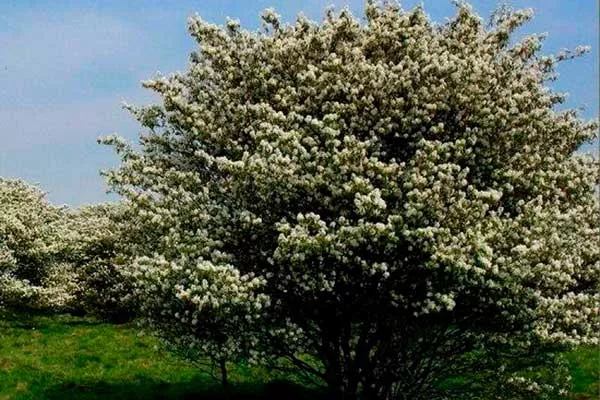
The bush has at least 25 trunks. The branches initially grow upward, but during periods of heavy fruiting, they bend, becoming arched, and the bushes themselves spread. The leaves are dark emerald, oval-rounded, with clearly defined veins, and their surface is matte.
The bushes have well-developed, powerful roots. The plant constantly forms root suckers. The flowers are white, collected in inflorescences of 12-15. Flowering begins in April-May and lasts about two weeks.
Description of fruits
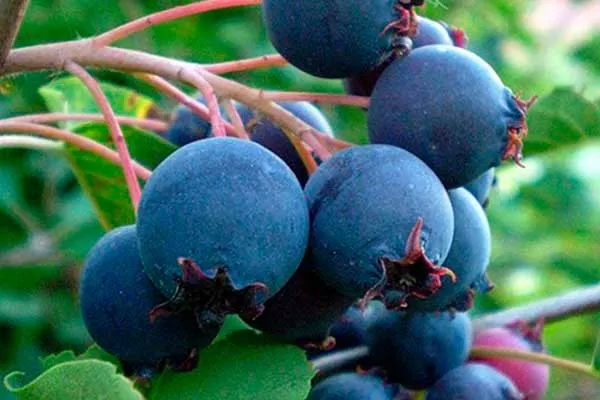
This variety is large-fruited. The berries are pear- or ovoid-shaped and reach 1.6 cm in diameter. Each fruit weighs on average 1 g. The surface of the fruit is smooth, with a thick waxy coating.
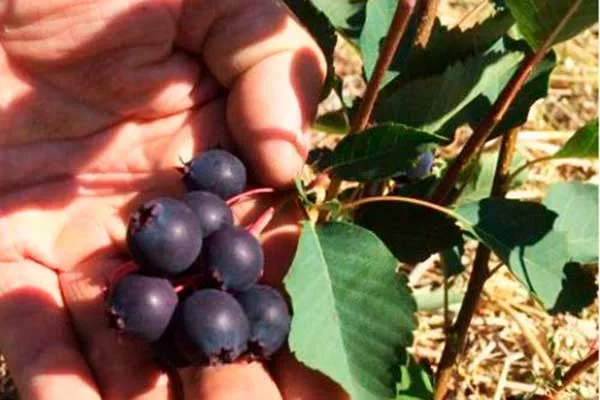
As they ripen, the fruits take on a reddish-purple hue. When fully ripe, the berries turn dark blue. The skin of the Northline serviceberry is thick and firm, and the flesh is juicy and dense.
Characteristics
The Northline serviceberry was developed by Canadian breeders (Alberta). This tall, productive variety is suitable for all types of gardens. It boasts high drought and winter hardiness, and moderate growth rate. It can withstand temperatures as low as -34°C.
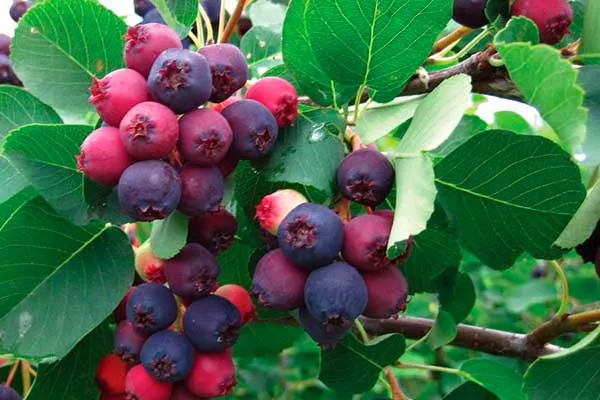
This variety has an early to mid-season ripening period, with fruits ripening from late July to early August. Fruiting begins 3-4 years after planting in a permanent location. The life cycle of the Northline serviceberry is at least 50 years.
Purpose and taste
The fruits are very aromatic and sweet, containing approximately 13% sugar. This pleasant taste is a characteristic feature of the alder-leaved serviceberry, as its berries are always high in sugars and low in organic acids.
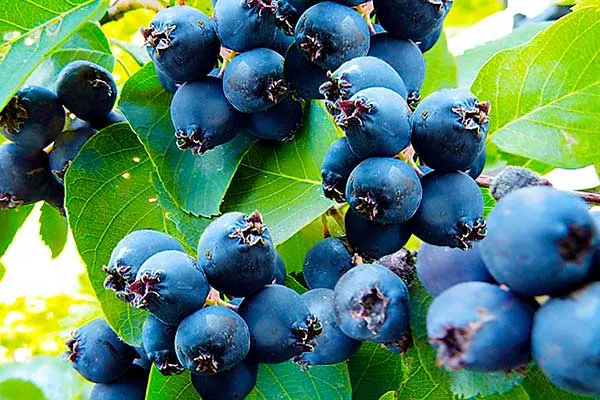
Ripe berries are suitable for fresh consumption and all types of processing. They are used to make a variety of desserts, compotes, baked goods, preserves, jams, frozen, and dried.
Pros and cons
Before planting the Canadian variety of Irga on your plot, it is recommended to not only evaluate all of its advantages, but also learn about its disadvantages.
Pros:
No particular disadvantages could be found in the Canadian Northline serviceberry.
Landing features
To ensure the shadberry thrives, grows, develops, and bears fruit, it's important to plant it correctly. It's important to choose a suitable location, high-quality planting material, and prepare the hole according to the recommended techniques for fruit and berry crops.
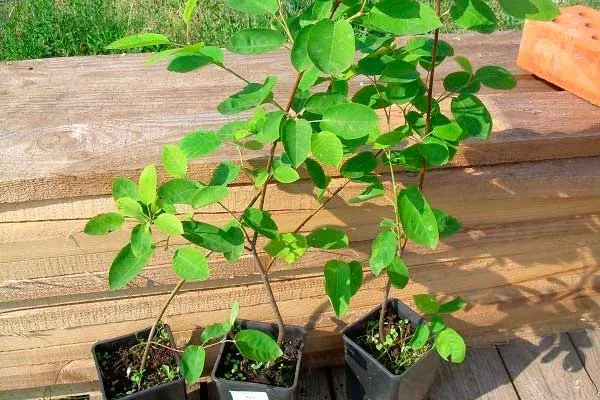
What to pay attention to during planting:
- Selecting a landing site. Serviceberry grows best in a sunny or partially shaded area, protected from drafts. However, it can also grow in the shade. This plant is resistant to cold northern winds.
- Soils. This variety can grow in virtually any soil, with the exception of poorly drained and heavy clay soils. The optimal pH is neutral. The best soil for the Northline serviceberry is light, fertile loamy or sandy loam soil.
On poor soils, the serviceberry begins to grow vigorously in width, as a result of which a lot of root shoots are formed, which are practically indestructible. - Groundwater. They should not be closer than 2-2.5 m to the ground surface. Otherwise, the irgi's root system will rot.
- Landing time. Spring and fall are suitable for this activity. In temperate and harsh climates, spring planting is usually chosen, while in the south of the country, autumn is preferred – irga is planted in September or the first half of October, a couple of months before frost.
- Preparing the pit. It is prepared in advance, 2-3 weeks before planting. The hole dimensions (depth x diameter) are 50 x 60-65 cm. The hole is filled 2/3 full with a nutrient mixture made from topsoil, rotted manure (20 l), phosphorus fertilizer (200 g), and potassium sulfate (80 g).
- Preparing seedlings. Before planting, soak the roots in water for 24 hours. They can also be treated with a growth stimulant solution (according to the instructions). Prune the seedling shoots by a third, leaving 5-6 buds.
- Landing. The roots are covered with soil and compacted, with the root collar buried 5-7 cm deep. After planting, the seedling should be tilted at a 45-degree angle relative to the soil surface. This tilt stimulates the formation of adventitious roots.
- ✓ The root collar must be planted at a depth of exactly 5-7 cm, otherwise the plant will either rot or not take root.
- ✓ The seedling should be tilted at a 45 degree angle when planting to stimulate the formation of additional roots.
If several irgi seedlings are being planted, for example, to create a hedge, the plants are placed in a checkerboard pattern, maintaining intervals of 50-70 cm.
Care
To ensure the bushes produce a profusion of large, sweet berries, certain care is necessary. It's fairly simple, so growing chokeberries is a breeze for both novice gardeners and those who don't frequent their plots.
Features of caring for the Northline serviceberry:
- Watering. This variety tolerates droughts well, as its roots are quite long and capable of extracting moisture from deep within. Irrigation is only necessary during prolonged droughts; in normal weather, rainwater is sufficient. The bushes are usually watered in the evenings. The recommended watering rate is 10-15 liters per plant.
- Loosening. After each soil moistening, the soil around the tree trunk is loosened, then mulched with humus, peat, straw, or other loose organic matter. Weeds are removed simultaneously with loosening.
- Top dressing. The shrub is very responsive to fertilizer, which dramatically increases yield. It is recommended to alternate between organic and mineral fertilizers. In fertile soils, no additional fertilizer is required; annual fertilization with phosphorus-potassium fertilizers is sufficient.
- Preparing for winter. The plant doesn't require any insulation; it can easily withstand temperatures as low as -40°C. In regions with very severe frosts, you can simply sprinkle the area around the trunk with peat or humus.
Trimming
Serviceberry grows very quickly, so it needs to be pruned periodically. However, pruning should be moderate, as it can cause significant stress on this plant. Mature bushes should be rejuvenated every 10-12 years. A signal for this procedure is a slowdown in growth to 10 cm per year.
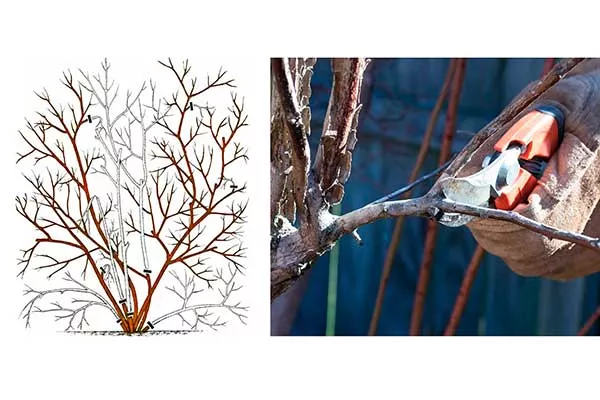
During pruning, all weakened, bent, elongated, and damaged branches are removed. All other branches are shortened to 2-2.5 m.
Northline Amelanchier is usually trained as a multi-stemmed shrub. To achieve this, during the first five years, all shoots are pruned back to the growing point, preserving only two or three of the strongest shoots. Thus, a mature, fully formed shrub has approximately 15-20 branches.
- Prune in early spring before the sap begins to flow.
- Remove no more than 1/3 of the branches at a time to avoid weakening the plant.
- Use sharp, disinfected instruments to prevent infections.
Harvesting
The fruits are harvested as they ripen. Clusters can be picked, even with two or three ripe berries—the rest will ripen in a few days. At least they won't be eaten by sparrows, who love to peck at ripe fruit.
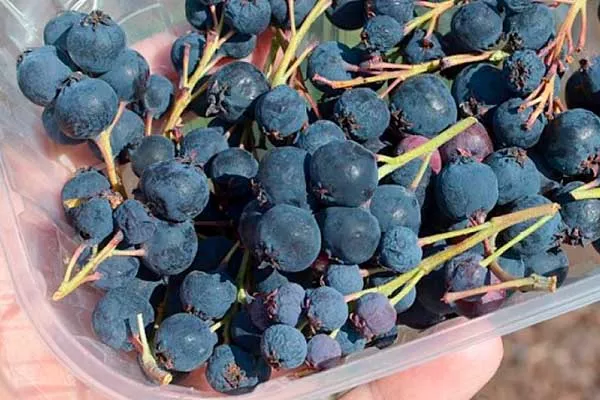
Picked berries can be eaten fresh if they are fully ripe. They can be used for juice, compotes, and various winter preserves. They are also suitable for drying and freezing.
Diseases and pests
The Northline variety is highly disease-resistant, so growing it usually doesn't pose any problems. However, under unfavorable conditions, the bushes can be affected by various infections. These are usually fungal in nature. For example, the serviceberry can be susceptible to powdery mildew, leaf spot, moniliosis, and other diseases.
Serviceberry diseases are controlled with standard fungicides. Systemic insecticides are used against insect pests. Serviceberry is most often attacked by apple aphids, hawthorn moths, and leaf rollers.
Reproduction
The best way to propagate serviceberry is by cuttings. This method uses woody cuttings taken from 5-6-year-old bushes. Cuttings are best taken in July. Serviceberry can also be propagated by division, layering, and suckers.

Reviews
The Northline Amelanchier was bred in its native Canada, so it naturally possesses all the best qualities of this remarkable plant. This "Canadian" variety is hardy, productive, and easy to grow, suitable for all occasions—from compotes to creating living hedges.