
The Irga Martin is a Canadian variety characterized by its low maintenance and resistance to a variety of climates. It is considered the best in its group, as the bushes not only produce large, sweet berries but also adorn the garden with large flowers in the spring and crimson foliage in the fall.
Who developed the variety and when?
Martin originates from Canada, but the exact breeding dates and parents are unknown. Sources indicate that the Thyssen variety was used for crossbreeding.
The appearance of the tree
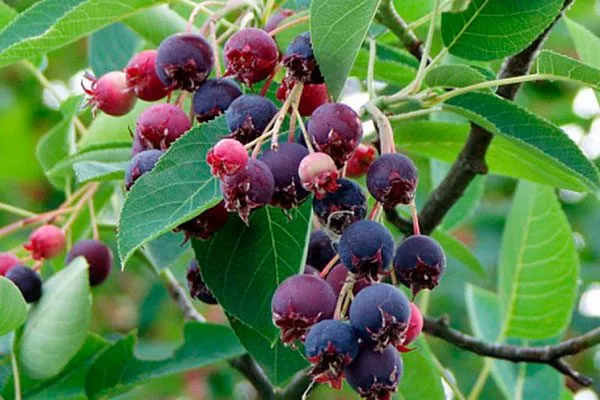
This serviceberry is a deciduous, multi-stemmed shrub of medium height, with shoots reaching up to 250-300 cm in length. It also has a medium spread, with the tree reaching 180-200 cm in diameter.
Other characteristic features:
- crown shape – rounded;
- shoots – quite flexible, covered with bark without pubescence;
- shade of bark – reddish when young, classic brown when mature;
- root system – superficial type, but many processes are capable of “going” deep;
- inflorescences – elongated with a dense arrangement of flowers in the amount of 16-20 units;
- buds – snow-white;
- leaf blade – dark green, with a matte surface;
- leaf shape – rounded, but the top is pointed and the edges are large and jagged.
Characteristics of fruits and their taste
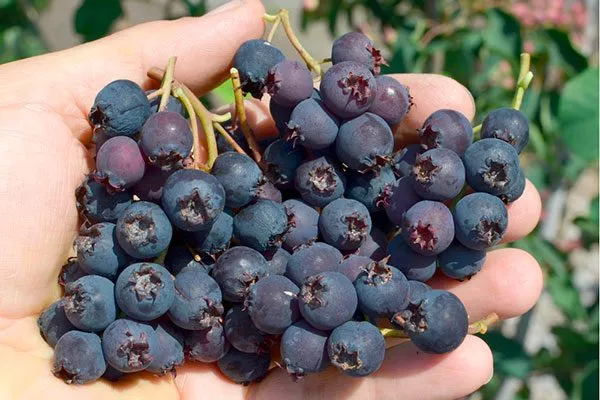
The berries are considered large – their length varies from 1.5 to 1.8 cm, and their weight reaches up to 1 g. The variety can also be identified by other characteristics:
- fruit shape – rounded-elongated;
- color - rich violet-blue, but when fully ripe it acquires black tints;
- surface – smooth, but with a waxy coating;
- pulp – tender, with increased juiciness;
- aroma – intensive;
- taste - sweet.
Ripening period and yield
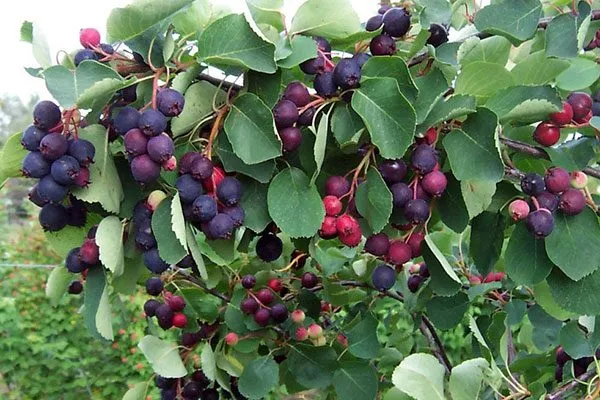
The fruits ripen in the mid-season. Berries begin to form in the first half of June and continue to bear fruit until early August, ripening simultaneously. The bushes begin to bear fruit in the third year after planting.
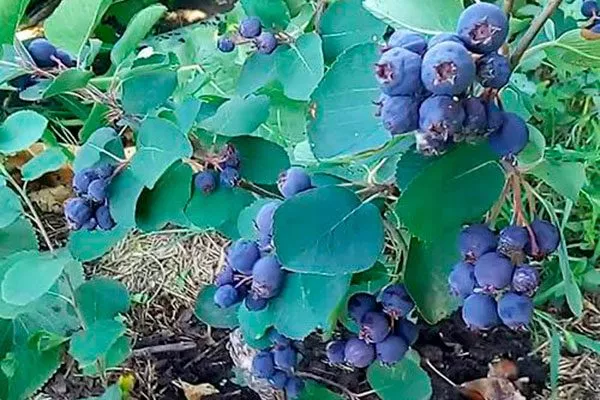
The Martin variety produces a harvest annually. While exact yield figures have not yet been determined, they are expected to be high. On average, other varieties of Canadian serviceberry can yield up to 20-25 kg per bush, which serves as a benchmark for yield estimates.
Frost resistance
This shrub can withstand temperatures down to -40 degrees Celsius without special shelter, but it's best to provide insulation for young seedlings during the first two to three years. In colder regions, mulch the root zone in the fall and lightly cover it with snow during the winter. During hot weather, supplemental watering is recommended.
Beneficial properties
The berries of this chokeberry are rich in sugars, organic acids, tannins, and other bioactive components, as well as ascorbic acid, the content of which increases during ripening and then decreases. The berries also contain carotenoids and manganese.
Thanks to this composition, consuming the berries helps strengthen the heart and blood vessels, normalize blood pressure, maintain digestive function, and improve bowel function. A general strengthening effect on the body is also noted.
Usage
Berries are versatile, very sweet and aromatic. Besides being eaten fresh, they are used in cooking to make fillings for baked goods, as well as to make jams, compotes, liqueurs, and wine.
Experienced housewives recommend combining Martin berries with sour fruits when making jam – this will add a pleasant sourness and further enhance the chokeberry's flavor.
Location and soil requirements
The Martin variety of serviceberry can be planted in both sunny and moderately shaded areas. However, it's important to remember that intense sun can be harmful to the plant. In southern areas, it's best to provide the bush with shade during the hottest part of the day. Other requirements:
- The plant tolerates wind well, but reacts negatively to the proximity of high groundwater levels – it should be planted in places where the water level is 200-250 cm below the ground surface.
- Although serviceberry adapts to a variety of soil types, loams and light sandy soils are ideal. Avoid excessively heavy clay, acidic, and saline soils. Maintaining a balanced, neutral soil pH is essential.
- ✓ The optimal soil acidity for the Martin serviceberry should be within the pH range of 6.0-7.5.
- ✓ To prevent diseases, it is necessary to ensure good air circulation around the bush, avoiding dense plantings.
Subtleties of planting
This variety of serviceberry is best planted in spring or early fall. It's crucial to keep at least 120-200 cm between plants. Important points:
- Preparation of planting holes should be done 2-3 weeks before planting, ideally a month.
- The recommended depth of the hole is about 45-55 cm, and the width is 55-65 cm.
- To prevent root rot, a drainage layer is placed at the bottom of the hole. Then, a soil mixture with added river sand, superphosphate, potassium salt, and humus is added.
- Planting a serviceberry seedling is simple. Place it in the center of a prepared hole and cover the root system with soil.
- It is important to follow two rules: tilt the seedling at a 45-degree angle and deepen the root collar by 5-6 cm for better rooting.
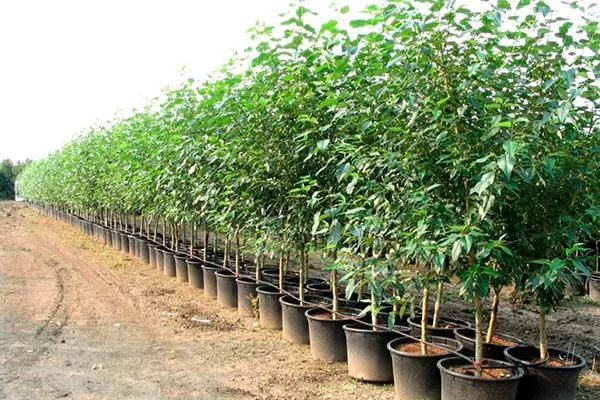
After planting, the bush is watered with 13-17 liters of water and mulched. The shoots are pruned by one-third, leaving six healthy buds for growth.
Care and cultivation
The shrub only needs to be watered during dry periods, approximately once a week, using 20-30 liters of water, depending on its age. The optimal time for watering is evening. Since the serviceberry thrives under sprinkling, evening watering will help improve the appearance of the leaves.
Other growing rules:
- If the required fertilizers were applied at planting, no additional feeding is required for 3-4 years. Subsequent fertilizer applications are made once a year, using phosphorus and potassium, especially in September to help the plant survive the winter. If foliage is sparse or wilted, nitrogen fertilizers are recommended in the spring.
- Pruning should be done carefully, as the serviceberry does not respond well to it. During the first five years of its life, shoots should be shortened to the growing point, leaving three to four of the strongest. This promotes the formation of a multi-stemmed bush. Each year, the two oldest shoots should be removed to rejuvenate the plant.
- In subtropical regions, covering with mulch for the winter is sufficient, while in colder climates, such as the Moscow region, mature plants should be insulated with a quarter-meter layer of humus and the roots covered with snow. Young seedlings should be covered with boxes filled with sawdust.
Pros and cons
This variety has only recently appeared in our market, but it has already become a favorite among gardeners. This is due to its many positive qualities.
Diseases and pests
The Martin variety of serviceberry is highly disease-resistant, but cold and rainy summers increase the risk of diseases such as gray mold and leaf spot. To prevent gray mold, stop watering the bush and protect it from precipitation. Sprinkling the soil around it with wood ash is recommended.
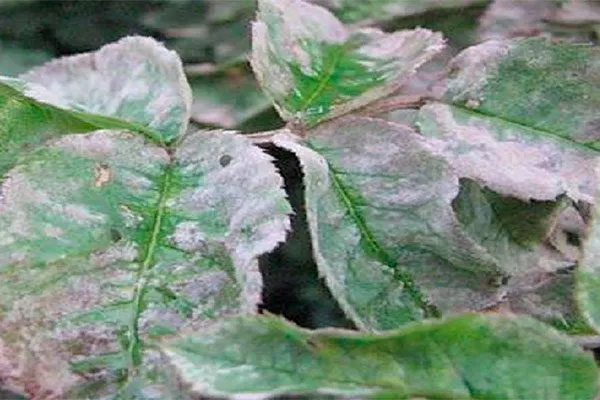
| Disease | Resistance of the Martin serviceberry | Control measures |
|---|---|---|
| Gray mold | Average | Stop watering, protect from precipitation, treat with ash |
| Leaf spot | Low | Treatment with copper-based fungicides |
If leaf spot occurs, treat the bush with a fungicide high in copper. Seed beetles, which can damage the crop, can be controlled with the insecticide Fufanon. To combat leaf rollers, which eat leaves, use wormwood infusion or Alatar.
Reviews
Irga Martin is a new variety that easily adapts to Russia's diverse climates. It boasts unrivaled sweetness and an enticing aroma, is easy to care for, and is versatile in its use, not only for its berries but also for its bushes. Ideal for beginning gardeners.