
The Krasnoyarsk Amelanchier is a popular variety, attracting fans of this winter-hardy plant with its large fruits and lack of extensive root growth. This Amelanchier is extremely winter-hardy, able to withstand temperatures as low as -52°C.
History of creation and regions of cultivation
The Krasnoyarskaya Amelanchier (Irga Krasnojarskaya) is a product of domestic selection. This new, winter-hardy variety belongs to the alder-leaved species and is ideal for growing in the Central Russian region, Siberia, and the Urals.
Description of the Krasnoyarsk variety
Krasnoyarsk serviceberry bushes are multi-stemmed and tall. Maximum height is 4 m, width 1.2-1.5 m. The crown is cap-shaped or umbrella-shaped. The leaves are large, oval or almost round, matte, with serrated edges.
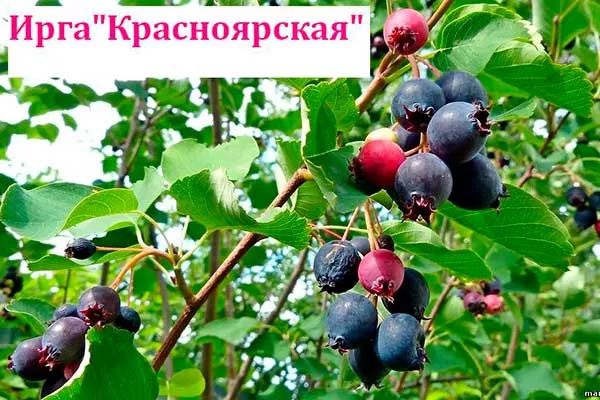
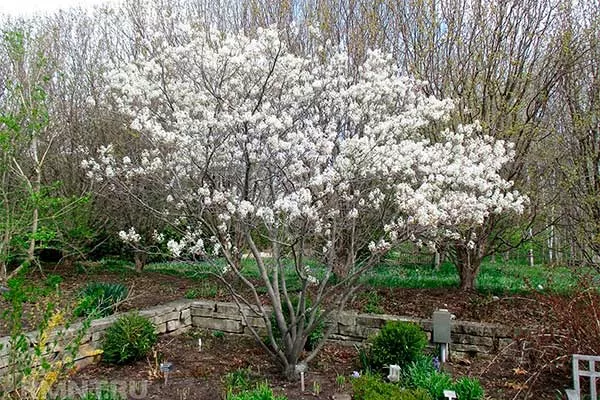
Young leaves have a reddish tint, turning green in summer and yellow-red-orange in autumn. This characteristic makes the plant ornamental. The flowers are white, collected in small racemes (7-15).
Description and taste of fruits
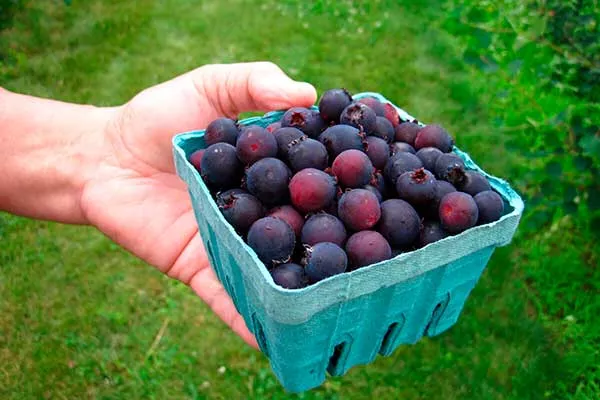
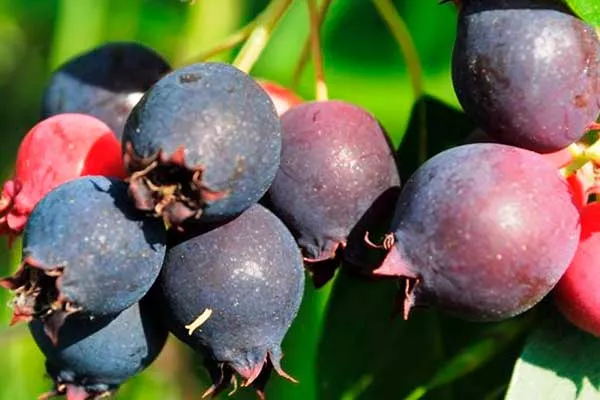
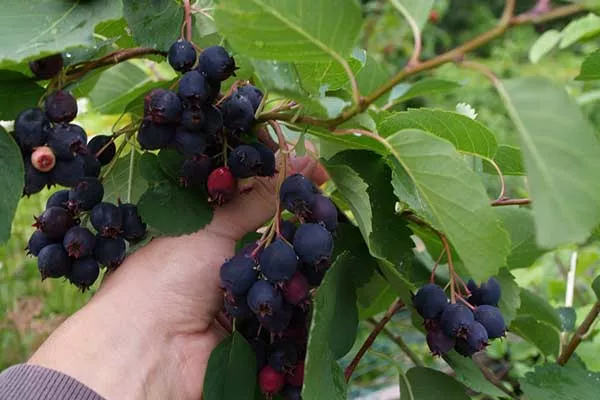
The fruits are oval-round, fairly large, reaching 16-17 mm in diameter. The average weight is 2 g. The color is purple-black, and the skin is covered with a bluish waxy coating. The flesh has a jelly-like consistency and a sweet, slightly tart flavor. There is no astringency. The aroma is pleasant, with fruity notes.
Ripening and yield
This variety belongs to the late-ripening group. The fruits ripen in June and July. The berries ripen in waves, allowing for 2-3 harvests. The fruits hold firmly to the branches and do not fall off when ripe. Krasnoyarsk Irga is a high-yielding variety, yielding up to 25-30 kg of berries per bush.
Pros and cons
Before planting the Krasnoyarsk serviceberry in your garden or dacha, it's helpful to familiarize yourself with all of its advantages and, at the same time, find out if it has any serious drawbacks.
Pros:
No particular drawbacks have been identified with this variety. It's worth noting, however, that yields depend on the quality of care.
Landing features
Krasnoyarsk serviceberry is planted in a well-lit or slightly shaded area. However, sunny sites produce higher yields, producing larger and sweeter berries. Furthermore, good lighting prevents the bushes from becoming leggy.
- ✓ The depth of the root system requires that the groundwater level be no higher than 2-3 m from the surface.
- ✓ The soil should be well-drained, although the serviceberry can grow in any type of soil.
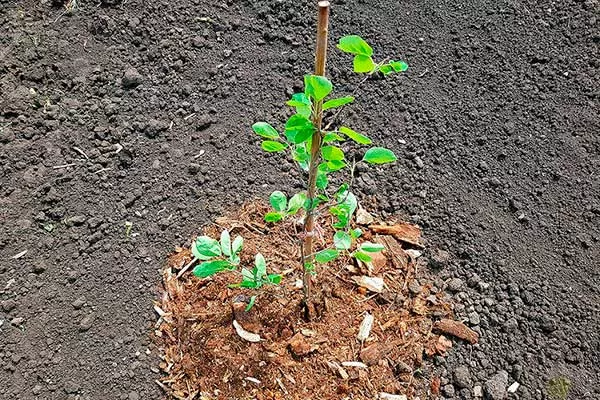
Landing features:
- Serviceberry grows best in loamy and sandy loam soils. Any acidity level is acceptable; it doesn't significantly affect serviceberry growth and development. However, the groundwater level should be as low as possible, as the Krasnoyarsk serviceberry's roots grow up to 2-3 meters long.
- The plot is prepared in advance—in spring or fall, depending on planting time. Weeds are removed, the soil is dug to a depth of 10-15 cm, and fertilizer is added during the digging process—potassium and phosphorus (40 g per square meter).
- The holes are dug large enough to comfortably accommodate the root system. A pre-prepared soil mixture is poured into the holes and mixed:
- turf soil;
- rotted manure;
- potassium sulfate;
- phosphate of lime.
- It is recommended to plant seedlings in a staggered pattern. The intervals between adjacent plants are 1-2 meters. The root-stem transition is deepened by 5-6 cm. The soil is compacted, watered generously (30 liters per plant), and mulched with peat, humus, and sawdust.
How to care for the Krasnoyarsk serviceberry?
The Krasnoyarsk serviceberry requires standard care. Regular care is key, and prompt response to any problems that arise is also crucial. Generally, the Krasnoyarsk variety, like any other serviceberry, doesn't require a lot of time or effort.
What to pay attention to when growing irgi:
- Watering. Watering should be moderate and regular. It's especially important to water the bushes during periods of drought. Waterlogging is contraindicated, and overwatering should be avoided, as this can lead to root rot.
Watering frequency depends on the weather and increases during dry periods. Moistening is especially important during berry formation and ripening. After watering, the soil is loosened to provide oxygen to the roots. - Top dressing. Serviceberries don't require much in the way of nutrition. Once a year, you can fertilize the bushes with phosphorus and potassium. You can also add organic matter—rotted manure, peat, or compost—which can also be used as mulch.
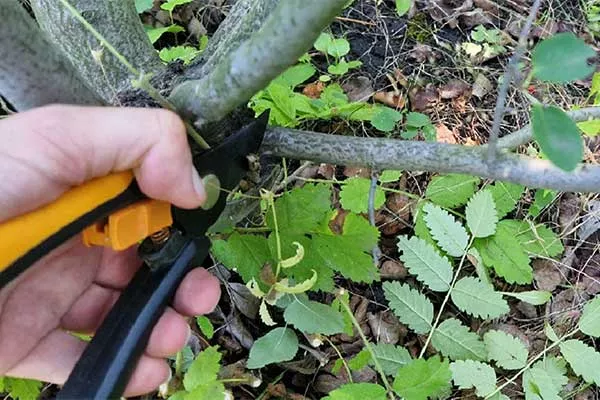
If the soil is very poor, nitrogen, such as nitroammophoska, is applied before flowering, and potassium-phosphorus compounds are applied during fruit formation. Potassium fertilizers are applied before harvesting. - Trimming. Pruning should be moderate and aimed at creating a beautiful crown. Diseased, dead, and broken branches are removed at the same time. Pruning is carried out in the spring or fall, after the harvest.
From several long shoots (about 1.5 m), only 2-3 are left. The cuts are treated with an antiseptic. It is important to remember that excessive pruning always leads to a loss of yield and can weaken the plant.
Do I need to cover it for the winter?
The Krasnoyarsk serviceberry is very frost-resistant, so it doesn't need any cover. Winter preparation consists of pruning; in regions with extremely low temperatures, you can cover the tree trunks with a thick layer of compost.
Diseases and pests
The Krasnoyarsk shadberry has excellent immunity, is very resistant to diseases and pests, and is almost never affected. Exceptions occur in cases of severe violations of agricultural practices, where bushes can become infected with gray mold, tuberculosis, and leaf spot.
- ✓ Gray mold appears as a gray, fluffy coating on leaves and fruits.
- ✓ Tuberculosis can be identified by reddish swellings on the branches.
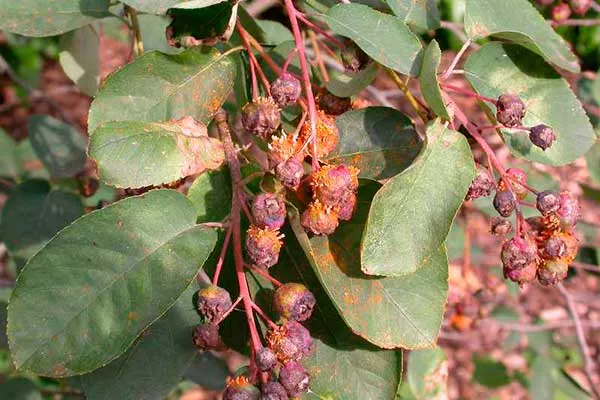
When signs of disease appear, the bushes are treated with Bordeaux mixture. It can also be used preventatively, reducing the risk of disease to virtually zero.
Reproduction
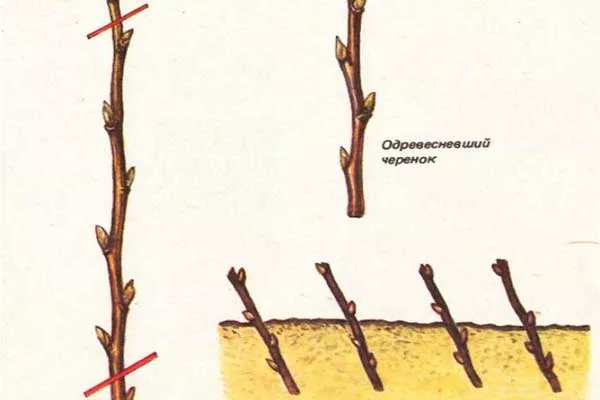
The large-fruited Krasnoyarskaya variety is propagated primarily by green cuttings and root suckers. Cuttings are taken from strong young shoots, then soaked in a growth stimulator, planted in a nutrient-rich substrate, and covered with plastic.
Application
The berries of the Krasnoyarsk shadberry can be eaten fresh, unprocessed. They are used to make marmalade, pastilles, preserves, juices, and compotes. The berries are also dried and frozen, and frozen berries can be stored for a very long time, retaining their beneficial properties.

The Krasnoyarsk serviceberry is a near-perfect variety, requiring minimal care yet able to thrive in the harshest conditions, withstanding temperatures as low as -50°C (-122°F). This serviceberry thrives in areas where other crops would freeze or require extensive winter insulation.