
The Ballerina serviceberry is a Dutch variety with a versatile use. It is grown as both a fruit tree and an ornamental plant. To ensure its beauty and abundant fruit production, it requires specific agricultural practices.
History of creation
The Amelanchier Ballerina was developed by Dutch breeders in 1980. This variety is not listed in the Russian State Register. It is claimed to have been developed from Canadian Amelanchier varieties.
Description of the plant
The Canadian Amelanchier 'Ballerina' can be grown as a shrub or a small tree. It is a tall plant, reaching 4-5 m in height and 6 m in width. The top is spreading and vase-like. The branches and trunk are gray or gray-brown.
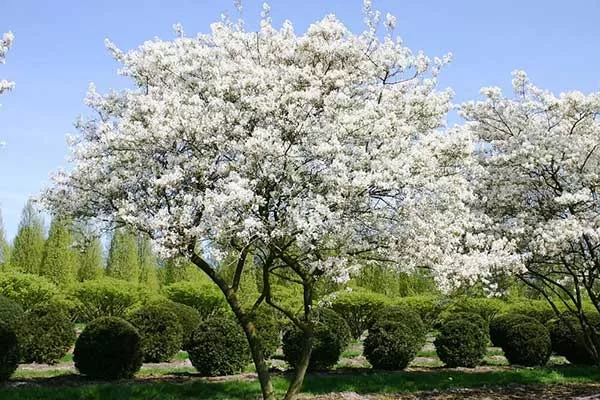
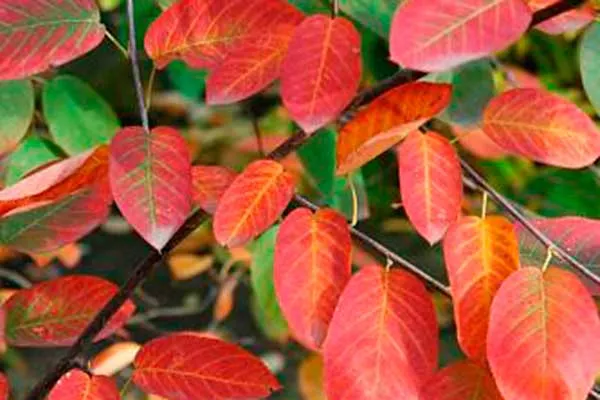
The leaves are arranged alternately. They change color depending on the growth phase. In spring, when they unfurl, the leaves are bronze; in summer, they turn dark green (glaucous on the underside); and in autumn, they turn red-yellow or purple.
The leaf size (length x width) is 40-90 x 30-55 mm. The shape is oval, the surface is smooth, with a glossy or matte finish. The Ballerina serviceberry is at its most attractive in the pre-winter period. The flowers are snow-white, star-shaped, and gathered in racemes. The roots are shallow and prone to branching.
Description and taste of fruits
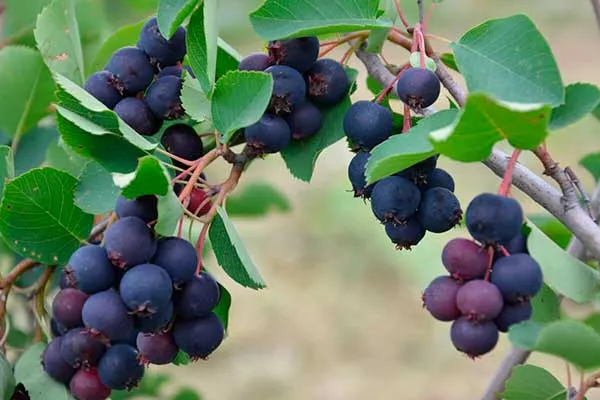
This variety produces large fruits. The berries turn red-black or dark purple as they ripen. Each cluster contains 6-8 berries. The average fruit size is 1 cm in diameter and spherical in shape.
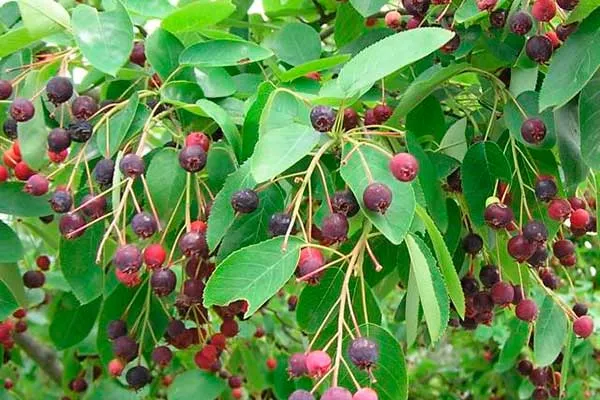
The berries' flesh is juicy and sweet. Some sources report that, in addition to the rich sweetness, the fruit's flavor also has an almond-like aftertaste.
Application
Amelanchier Ballerina is widely used for creating single and group plantings. Amelanchier Ballerina thickets are used to create various types of backdrops, borders, tree and shrub groups, hedges, seasonal compositions, and combinations with herbaceous plants.
The Ballerina variety, in addition to its ornamental value, is used as a regular fruit and berry plant. Ripe chokeberries are used to make jams, preserves, liqueurs, and cordials.
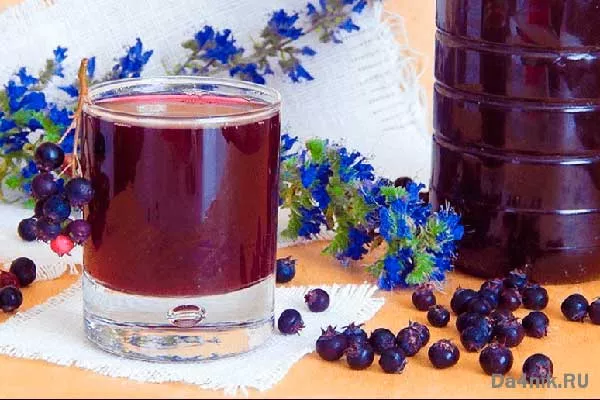
Serviceberry berries can be juiced, but only after they have been soaked. Spread the berries in a thin layer on a baking sheet and place them in a cold oven for 24 hours. Afterward, run them through a juicer. If you juice fresh, unsattenuated berries, the juice will curdle into a jelly.
Ripening and fruiting
The Ballerina variety is characterized by rapid growth and fruiting. This Canadian serviceberry is a mid-season variety. In temperate climates, the harvest is usually around early July. However, each region has its own specific ripening time, and weather can also play a significant role.
Productivity
The Ballerina serviceberry is characterized by high yields. On average, one hectare can produce approximately 2-2.5 tons of berries. The crop's yield depends largely on climate.
Growing regions
The Dutch variety Ballerina belongs to USDA Group 4. It can withstand temperatures down to -34°C. This serviceberry can be grown without problems in the Moscow region and other regions of Russia with relatively mild winters. In areas where temperatures are at risk of falling to critical levels, the plant requires insulation.
Pros and cons
The Dutch serviceberry "Ballerina" is popular among our gardeners for good reason. This variety has numerous advantages that will be appreciated by gardeners and summer residents who appreciate ornamental and fruit-bearing shrubs.
Pros:
No particular disadvantages have been found with the Ballerina serviceberry, except for the risk of powdery mildew in high humidity conditions.
Landing
In order for the Canadian serviceberry to produce good fruit, it is necessary to create optimal conditions for it.
Features of planting the Ballerina variety:
- the plant grows well in sunny areas;
- can grow on any soil, including heavy soil, but prefers moderately fertile soils, sandy loam and loamy;
- optimal soil acidity is slightly acidic and neutral;
- the best time for planting is autumn, in addition, during this period there is a lot of planting material on sale;
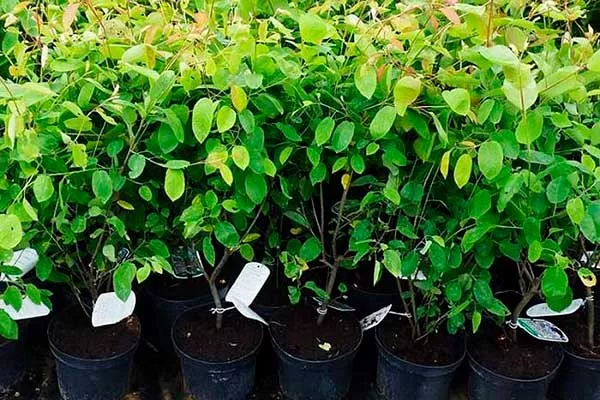
- Two-year-old seedlings are selected for planting; preference is recommended to be given to specimens with closed roots (in containers).
- ✓ The groundwater level should not be higher than 1.5 m from the surface.
- ✓ The soil must have good drainage capacity, avoid areas with stagnant water.
Serviceberry plants should be planted on a dry, cloudy, and windless day. It's best to prepare the soil in advance, adding organic and/or mineral fertilizers and, if necessary, acidifying agents such as lime, wood ash, and dolomite flour.
How to plant Ballerina serviceberry:
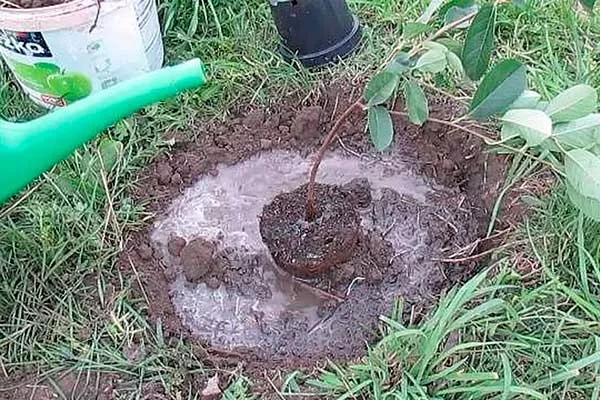
- For planting, prepare a hole at least 50 cm deep and 40-60 cm in diameter. The hole should be large enough to accommodate the seedling's root system. Dig the holes in advance, about a month before planting the serviceberry.
- A soil mixture of equal parts humus (or peat) and turf soil is added to the bottom of the hole. To speed up rooting, superphosphate and potassium sulfate are also added, 2 and 1 tablespoon each, respectively.
- The seedling is placed vertically in the planting hole so that its root collar is 5-6 cm below the ground surface.
- The roots of the seedling are covered with fertile soil, compacted and watered (30 l), and then mulched with humus or peat.
If planting several serviceberry seedlings at once, maintain a 2.5 m interval between adjacent planting holes. If planting bushes in rows, leave 1.5-2 m between them.
Care
To ensure that serviceberry bushes or trees remain attractive and bear fruit generously, simple but regular care is required.
Care features:
- The best time for pruning is spring. In autumn, it's not recommended to stress the plants, as their energy should be focused on preparing for winter. Spring pruning focuses primarily on sanitation, removing broken, dry, and diseased branches, and, if necessary, shaping the plant. Fall pruning should be minimal, limiting it to removing critically damaged branches. Generally, serviceberry pruning should not be performed until after its sixth year.
- Mature serviceberries are watered only during periods of drought. Newly planted young plants require irrigation to help them establish and adapt to their new location. 10-20 liters of water are poured per plant. The rest of the time, serviceberries are perfectly happy with natural moisture.
- Bushes are regularly inspected for disease symptoms. If necessary, plants are treated with fungicides.
- Pests generally don't pose a problem for gardeners growing Ballerina serviceberry, but attacks by insects such as spider mites, aphids, flower beetles, and loopers are possible. These can usually be controlled with simple preventative measures, such as soil disinfection and removal of plant debris.
- Fertilizer added to the planting hole provides the plant with nutrition for several years. Subsequently (the period depends on the soil characteristics), organic and/or mineral fertilizers (nitroammophoska) are added to the trunk area. Peat and humus can also be used as additional fertilizer, as they help insulate the plant in regions with harsh winters.
- In early spring, treat the plant and the soil around it with a 3% solution of Bordeaux mixture.
- Repeat the treatment after flowering, but use a 1% solution.
- In the fall, after the leaves have fallen, collect and destroy all plant debris around the plant.
Harvesting
It's recommended to pick berries as they ripen, otherwise they will be eaten by birds. Experienced gardeners use deterrents of various sizes, such as rattles, shiny strips, scarecrows, and nets. However, these need to be replaced regularly, as birds quickly become accustomed to them and no longer react to them.
The berries are picked in 3-5 stages. You can even pick clusters with 1-2 ripe berries. The rest ripen. Birds don't peck at green berries. Ripe chokeberries don't keep for long. They are best eaten immediately, frozen, or processed.
Reviews
The Canadian Amelanchier Ballerina deserves the utmost attention from gardeners and summer residents concerned with their landscape design. This variety will also be appreciated by lovers of juices and preserves made from fruits and berries rich in vitamins and other beneficial substances.