
The Rossiyanka persimmon is a variety ideal for growing in central Russia. It is frost-resistant, produces fruit in 3-4 years after planting, and requires little care. The fruits are sweet and large, with a smooth texture. The plant is renowned for its strong immune system and good productivity when properly managed.
Description of fruits and trees
The plant is medium-sized, reaching up to 4-5 m in height. Key tree characteristics:
- crown – wide, spreading;
- shoots – densely foliated;
- leaves - dense, oblong, rich green color;
- flowers – soft yellow in color, have an original shape - with petals curved outward.
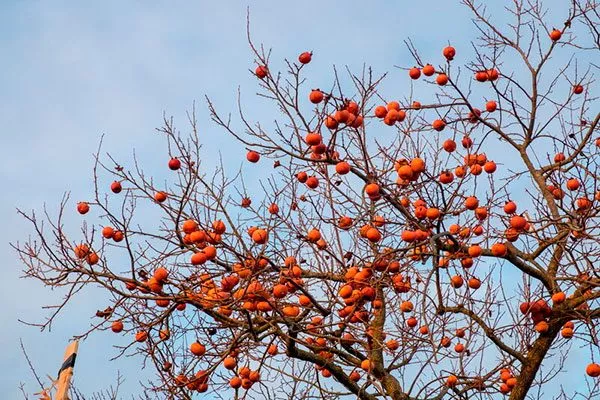
Distinctive features of the fruits:
- weight - varies from 120 to 140 g;
- color – bright orange;
- size - average;
- skin – dense, with a slight waxy coating;
- pulp – fleshy;
- taste - sweet, but when unripe there is a tartness.
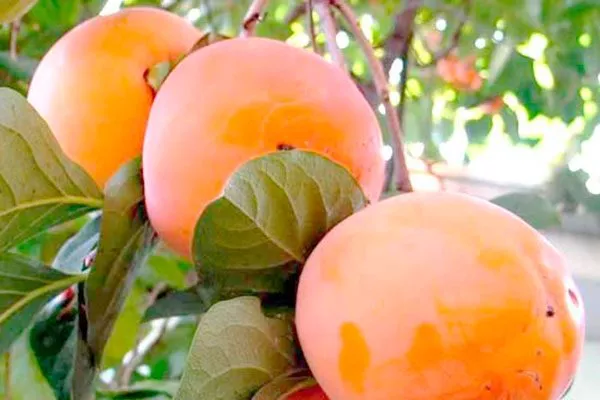
Rossiyanka is parthenocarpic, meaning it produces fruit without pollination. However, to preserve the flowers in central Russia, experienced gardeners recommend treating the tree with a gibberellin solution during flowering. Planting a pollinator nearby can provide additional benefits.
Characteristics of the Rossiyanka persimmon
The cultivar was created in 1959 in the Nikitsky Botanical Gardens in Crimea. It is believed that the variety received its name for its good frost resistance.
Useful properties and uses of Rossiyanka persimmon
Many gardeners value the fruits not only for their excellent taste, but also for their many valuable health benefits.
Persimmon has a rich composition:
- vitamins A, C, E, group B – strengthen the immune system, maintain healthy skin, vision and nervous system;
- antioxidants – fight free radicals, slowing down the aging process;
- potassium and magnesium – support the functioning of the heart and blood vessels and reduce the risk of hypertension;
- iron and copper – help increase hemoglobin levels and are useful for anemia;
- dietary fiber (pectin) – improve digestion, normalize intestinal microflora and remove toxins.
The fruits are characterized by low calorie content – 60-70 kcal per 100 g. Due to this, they are ideal for dietary nutrition.
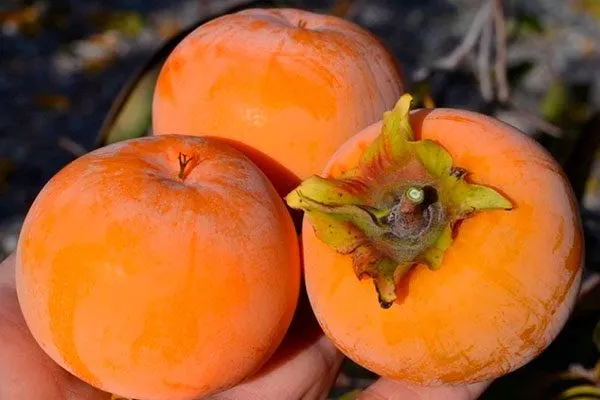
Persimmons are eaten fresh and dried. They are popular in cooking and are used in the following dishes:
- salads;
- desserts;
- jam;
- marmalade;
- smoothie;
- baked goods, etc.
In folk medicine, the fruit is useful for colds, to strengthen the immune system, and as a mild sedative.
Frost resistance, resistance to diseases and pests
The plant can tolerate temperatures down to -35°C. However, during severe winters, it is recommended to cover the trees to prevent damage from extreme cold.
Persimmon exhibits high resistance to most diseases and pests, making it suitable for environmentally friendly cultivation without the use of chemical pesticides.
Fruiting and ripening periods, productivity
Rossiyanka is a self-fertile variety that begins producing fruit as early as the third year after planting. The fruit is harvested in November, and the ripe fruit has a shelf life of approximately 30 days.
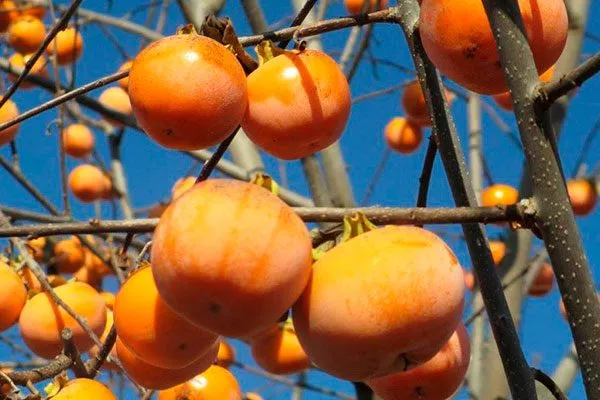
This variety has a versatile use: it's eaten fresh and used to make compotes, preserves, jellies, and other preserves. Productivity is good—an average of 222 centners per hectare, with a single tree yielding 50-60 kg of fruit.
Persimmon as a garden decoration
The shade of this picturesque tree offers a pleasant escape from the heat and a break from the hustle and bustle of gardening. The Rossiyanka's crown not only protects from the sun, but also delights with its unique shape and magnificent flowers, and later, brightly colored fruits.
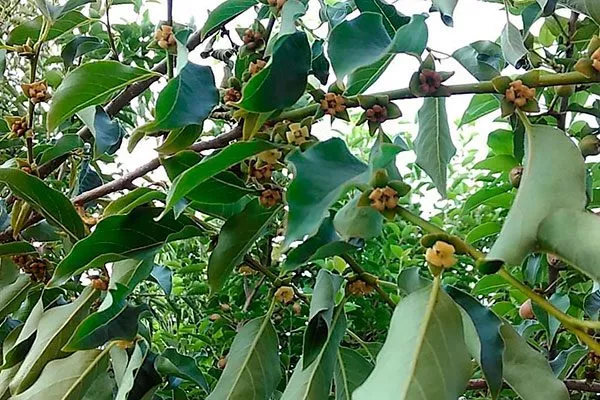
Main features of the culture:
- The plant's leaves are dense, dark green, and conical, creating a dense, decorative foliage. The flowers are pinkish, with delicately curled petals, making the persimmon particularly attractive during flowering.
- The fruits are a rich orange color and medium in size. They ripen in early November, when the tree has already shed its leaves, leaving only the bright, snow-dusted fruit on the branches—a true garden masterpiece.
- Persimmons are especially spectacular in autumn: their leaves change shades from light yellow to fiery red, transforming the plant into a living painting. At such moments, it's impossible to tear your eyes away from this natural wonder.
Hybrid form – Nikitskaya burgundy
This variety was developed in the Nikitsky Botanical Garden (Crimea) through experimental pollination of the Rossiyanka variety with the Eastern persimmon. The hybrid was named after the place where it was bred.
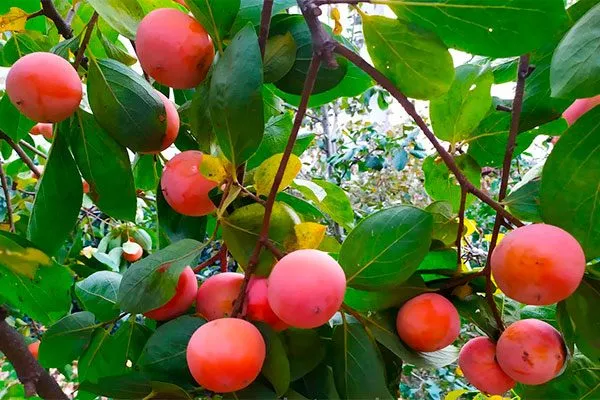
Distinguishing qualities:
- A low-growing tree, 3-4 m tall, with a compact pyramidal crown, suitable for small spaces. It has good winter hardiness, withstanding temperatures down to -25°C.
- The fruits are a rich burgundy color, weighing 100-120 grams on average, with a sweet flavor and a thin waxy coating. The flesh is tender and contains few seeds.
The variety begins to ripen in early October. The yield is quite good – approximately 50-70 kg per tree. It is characterized by strong immunity and disease resistance, making it easy to care for and suitable for organic farming.
How to plant Rossiyanka persimmon?
Proper cultivation of a crop is the key to successful growth, development, and future fruiting. The choice of location, soil quality, and planting depth determine how quickly the plant will take root and adapt to new conditions.
Mistakes at this stage can lead to stunted growth, reduced yield, or even death of the tree. This is why it's so important to follow all agricultural recommendations from day one.
Preparing the hole and soil before planting
First, select a site for the tree. Loosen the soil and enrich it with peat to make it light, breathable, and slightly acidic.
A few days before planting, dig a hole 60 cm deep and 24 inches in diameter. Place a drainage layer at the bottom: a fertile mixture of equal parts soil, manure, and river sand. Then, leave the hole open for 1-2 days to allow the soil to air out and warm up.
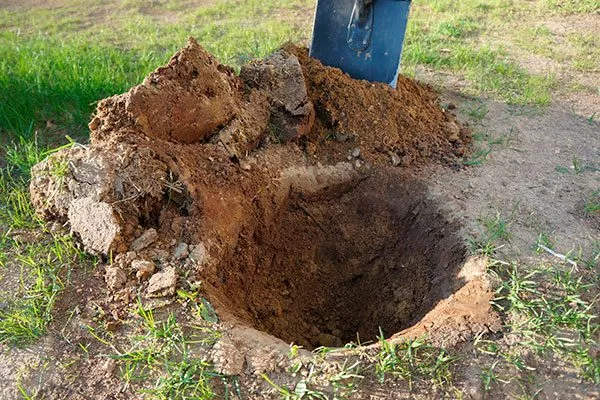
This type of feeding creates optimal conditions for the development of the root system and provides the plant with the necessary substances for up to 8 years.
Landing
For successful planting, it's important to create optimal rooting conditions for the seedling. Step-by-step instructions:
- Form a mound of humus and excavated soil into a mixture – this “hill” will serve as a base for the roots.
- When planting in sandy soils, add more humus, compost, and other components that improve moisture retention. Also, add a complete mineral fertilizer.
- Before planting, soak the plant in a rooting stimulator solution for 24 hours.
- Place the plant on the mound and carefully spread the roots. The grafting site should be 5-7 cm deep. Do not pack the soil too tightly, as this may damage the root system.
- Place a support stake nearby and tie the tree to ensure stability.
- After planting, mulch the area and water it generously – at least 20 liters of water.
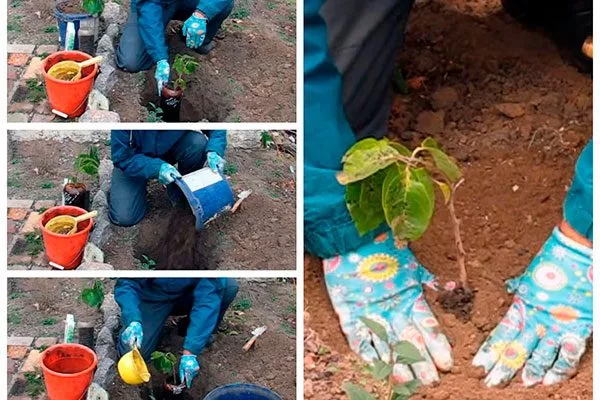
The distance between seedlings should be 4-6 m so that the trees do not interfere with each other during the growth process.
Caring for the Rossiyanka persimmon
The crop is undemanding and unpretentious, but to obtain a bountiful harvest, it's important to take care of it. Experienced gardeners recommend strictly adhering to basic agricultural practices.
Watering
During the first few years of its life, a young persimmon sapling especially needs regular watering. The plant tolerates excess moisture better than a lack of it. For a medium-sized tree, the optimal watering rate is 50-70 liters of water per root.
Underwatering can cause the roots to dry out and the plant to die. Gradually stop watering 1.5 months before the end of the growing season. This will improve storage and flavor of the fruit.
Loosening
Soil aeration is beneficial for persimmon growth. Loosen the soil around the tree at least six times during the growing season. To maintain the proper soil pH, periodically add a small amount of vinegar to the water used for watering.
Top dressing
Proper feeding of the Rossiyanka persimmon with both mineral and organic fertilizers is key to its vigorous growth. This process is especially important during the tree's first years of life. Excessive feeding can lead to excessive growth of vegetative mass, delaying the onset of fruiting.
For normal growth, a young plant requires up to 15 kg of organic matter, while an adult needs up to 20 kg. Applying nutrients after harvesting will help strengthen the tree's immunity and winter hardiness.
Pruning Rossiyanka persimmon and covering it for the winter
The first pruning of young persimmon seedlings should be performed two to three years after planting. Experts recommend not expecting high-quality fruit from the first year, as they don't appear until the third year. Focus on shaping the branches to ensure the tree looks attractive and avoids problems with brittle shoots.
Key recommendations:
- Without proper shaping, the fruit will be concentrated in the center, which can lead to damage. Regular pruning is essential to structure the crown and branches. Subsequent pruning involves cutting back new growth to a pair of lateral buds.
- Create new tiers of skeletal branches annually, leaving approximately 50-60 cm between tiers. Properly performed, this technique stimulates active tree growth and facilitates crown density management.
- Fruit sets on one-year-old growth, so it's important to maximize its production. Shoots are divided into fruit-bearing shoots, up to 25 cm long, and fat shoots—cut them in half if they exceed 30 cm.
- Remove damaged, broken, and frozen branches annually. If the tree isn't producing a normal crop, perform rejuvenation pruning, cutting back old wood to the 3-4 year old layer. Repeat this procedure every three years.
- Plan your main pruning work for spring, before the sap starts to flow, and remove weakened branches in summer.
Although the Rossiyanka variety is characterized by excellent winter hardiness, in the first years of life, young trees require protection from severe frosts using a covering or non-woven material, such as spunbond.
Potential problems when growing
Improper care of persimmon seedlings can lead to diseases that require immediate attention. The most dangerous are:
- gray mold;
- bacterial cancer;
- black spot;
- scab;
- powdery mildew.
Diseases are usually caused by poor agricultural practices or unfavorable climatic conditions. For treatment, use Bordeaux mixture or biofungicides such as Mucosan, Fitosporin, or Bicol. To control pests, spray the plants with insecticides such as Karbofos or Aktara.
You can't get rid of scale insects using traditional methods, so use chemicals immediately after detecting this pest to avoid wasted time and damage to the plant.
Harvesting and storage
Pick the fruit by hand, being especially careful not to damage it: gently grasp it with your hand and twist it by the stem. Store unripe fruit in a cool, dark place where the temperature does not exceed 15°C, and ensure the air humidity is appropriate.
Methods of reproduction
Growing more seedlings doesn't require experience or knowledge, but it's important to strictly follow the recommendations of experienced gardeners. There are several methods you can use to save money on purchasing new seedlings if you have mature plants.
Cuttings
Hold the event in the fall. Follow these steps:
- From an adult tree, cut several shoots 15-20 cm long with 2-3 buds.
- Remove all leaves from the cuttings.
- Place a drainage layer in the containers and fill them with a nutrient substrate consisting of garden soil and humus.
- Place the blanks deep into the soil and compact lightly.
- Place the containers in a warm and bright place with a temperature of about +24°C.
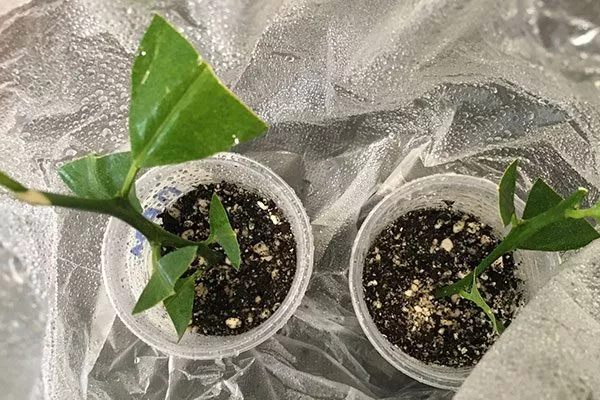
In winter, regularly moisten the cuttings with a spray bottle and feed them with mineral fertilizer twice a month. When new green leaves appear, you can plant them in open ground. Choose spacious containers, as persimmons don't like being repotted.
Graft
Persimmon propagation often involves grafting, which can be done in the spring or in August using the budding method. The procedure is as follows:
- In spring, cut cuttings of the varietal plant and store them in damp sand at a temperature of about +3°C.
- In mid-summer, make a T-shaped cut in the bark of the rootstock.
- Separate a dormant or sprouting bud from a persimmon cutting.
- Place the scion onto the cut on the rootstock and press firmly.
- Tie the graft with electrical tape or transparent film to secure it.
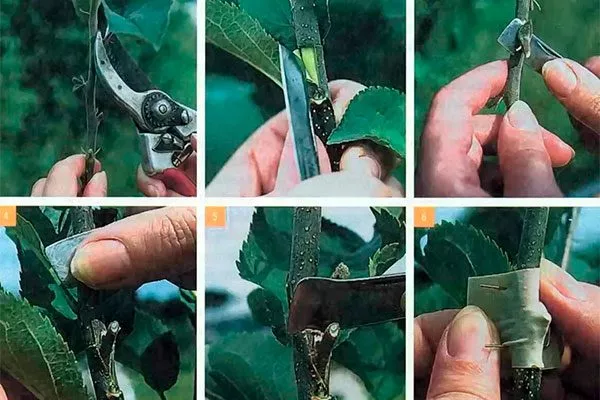
Check the results after a month. If the bud has begun to grow, you can remove the bandage and then resume normal plant care.
Answers to important questions
Gardeners often encounter various difficulties when growing crops. These typically relate to care, diseases, or climate conditions. Below are answers to the most common questions to help solve these problems.
Why doesn't the persimmon tree bear fruit?
A crop may fail to bear fruit for several reasons. The main ones are:
- there is only a male or only a female tree growing on the site;
- the plant is overfed with nitrogen fertilizers or is grown in soil with a high humus content;
- The tree is not sufficiently insulated for the winter, which is why the flower buds freeze.
Why does persimmon drop its fruits?
Fruit may drop prematurely if there's no suitable pollinator in the area. However, there may be other reasons:
- agricultural standards are not followed – the tree does not have enough light, moisture or nutrition;
- the plant is affected by disease or attacked by pests - this leads to the loss of ovaries;
- Sudden changes in temperature can cause fruit to fall off.
Why do leaves curl and dry out?
Over- or under-watering is a common cause of various problems. General information:
- With excessive moisture, root rot and other diseases develop on the roots;
- Lack of moisture prevents the necessary nutrients from reaching the leaves, causing them to curl;
- Lack of light causes leaves to curl and fall off, and a deficiency of microelements in the soil can significantly affect the health of the plant.
How to store persimmons so that they ripen?
Sometimes it's necessary to harvest the fruit before it's fully ripe. In such cases, they store well and ripen fully if stored in a dry, cool, and well-ventilated area at temperatures between 0°C and 3-5°C. Under these conditions, persimmons retain their marketability and flavor for several months.
To improve shelf life, select only undamaged specimens, free of blemishes and cracks. To speed up the ripening process, place bananas or other fruits that produce ethylene nearby—this promotes faster ripening. Storing at higher temperatures is equally effective.
Ripe fruits can be frozen, dried, or made into jam.
Pros and cons
The Rossiyanka persimmon hybrid has several advantages over other heat-loving varieties. It requires little maintenance, making it popular with both novice and experienced gardeners in our country.
This variety has no identified disadvantages.
Reviews
The Rossiyanka persimmon is an excellent choice for those looking to grow exotic fruits in their garden. Its frost resistance, ease of care, and good productivity make it a profitable choice for fruit tree enthusiasts. This variety adapts well to various climates, and its fruits delight with their flavor and are suitable for winter preserves.