
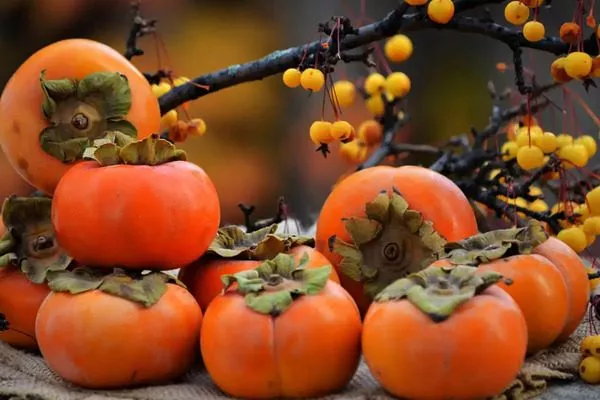
The Romashka persimmon is a productive fig variety with excellent flavor. Its fruits have an unusual segmented shape, reminiscent of a flower. This large-fruited, seedless variety is characterized by good yield, ease of care, and versatility.
Description of the Chamomile persimmon
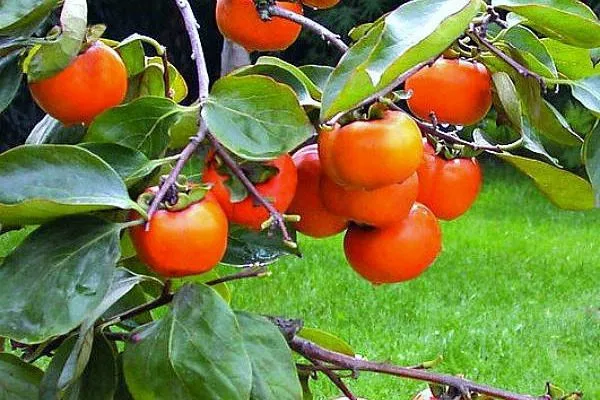
This variety is distinguished by its beautiful appearance. It grows into a robust tree, which becomes especially noticeable in the garden when the fruit ripens—they are vibrant and literally cover the branches.
Tree
The tree is tall, reaching 6-8 m in height. Its crown, symmetrical and neat, has a regular conical or spherical shape. Its appearance resembles that of an apple tree.
The leaves are green, glossy, elongated, and ovate. The outer surface of the leaf blade is glossy. The flowers are large, yellowish-white. The petals are dense and waxy.
Fruit
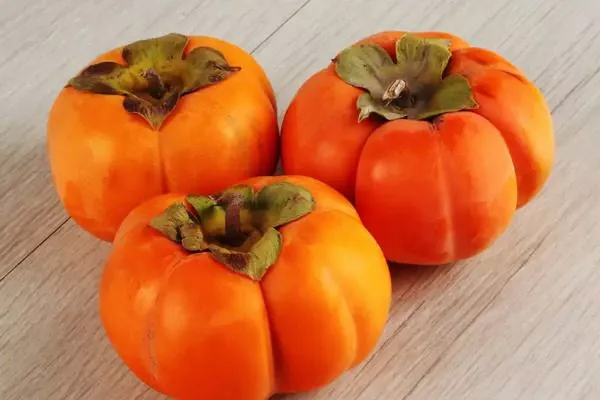
The Romashka persimmon fruit is large and unusually shaped—this variety is easily recognized by its appearance. The fruit is seedless.
Description of fruits:
- Color: orange, dark orange as it ripens.
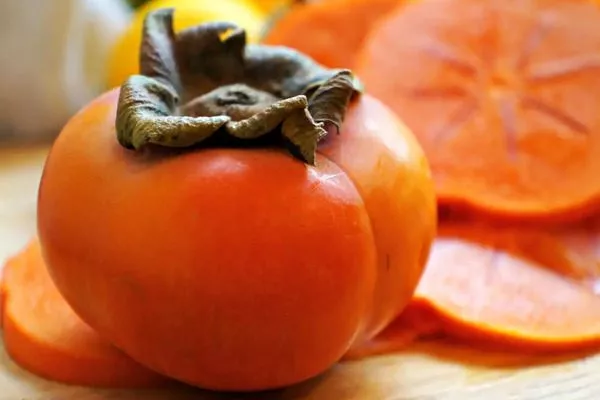
- Form: flattened, with characteristic relief and veins, reminiscent of a flower in appearance.
- Weight: 150 g
- Skin: thin, smooth, glossy.
- Pulp: dark orange, almost brown when the fruit ripens.
History of creation
The Romashka persimmon was not bred by human breeders. This variety is the result of natural selection.
Characteristic
The variety boasts excellent agronomic characteristics, allowing it to be grown without any particular problems. The main thing to consider is the crop's resistance to cold and other adverse factors.
Varietal qualities:
- Ripening periods. The Romashka persimmon is an early variety. It blooms in late May to early June, and the harvest ripens around the second half of October.
- Productivity. The Romashka persimmon is a high-yielding variety. A single tree can yield up to 70 kg of ripe fruit.
- Resistance to frost and drought. The Romashka persimmon is relatively frost-resistant, but does not tolerate prolonged drought. In winter, the roots can withstand temperatures as low as -6°C and as low as -8°C. Frost resistance is typical for persimmons.
Sudden temperature drops, especially in late autumn, can cause frostbite in young seedlings. To prevent frostbite, seedlings should be covered during the first few years. - Disease resistance. The Romashka persimmon is highly disease-resistant. It is particularly resistant to scab, powdery mildew, and gray mold. However, under unfavorable growing conditions, the risk of infection increases significantly.
- Taste and purpose. The fruits are very sweet, the flesh is juicy and soft, not cloying, with a light honey aftertaste and a subtle ginger aroma. They are versatile, suitable for both fresh consumption and canning.
- Growing regions. The Romashka persimmon is grown only in the southern regions of Russia – in the North Caucasus, Krasnodar Krai, and Crimea.
Pros and cons
The Romashka persimmon has both advantages and disadvantages. Before planting this variety in your garden, it's recommended to familiarize yourself with all its characteristics.
Pros:
Cons:
Landing
For the Romashka persimmon to thrive, grow well, and bear fruit, it's important to plant it correctly. Everything matters—the choice of planting location, the quality of the seedling, and the planting technique.
How to choose a seedling?
It's recommended to purchase Romashka persimmon seedlings from specialized fruit tree nurseries. Random sellers can sell substandard seedlings that won't meet the stated quality.
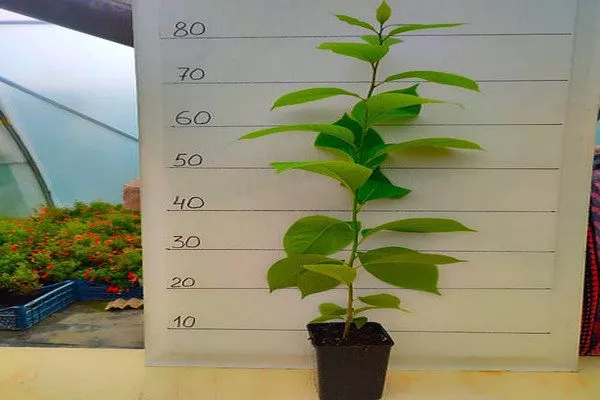
What to look for when choosing persimmon seedlings:
- Age: 1-2 years. The seedling should have 4 to 6 shoots.
- Roots are well developed, moist, long, without damage, rotten or dry areas.
- The bark is smooth, even, without defects.
- The leaves are green, shiny, without any signs of disease.
Site selection and preparation
Persimmon Romashka, like other persimmons, prefers bright, sunny areas. It doesn't respond well to even slight shade, which can cause reduced yields, stunted growth, and even death.
The tree should be planted on level or elevated sites; lowlands where moisture accumulates are unsuitable for persimmons. The maximum groundwater level is 1.5 meters above the ground surface.
The planting site is prepared in the fall. The goal is to improve the soil's characteristics, increase its fertility, adjust its acidity, and improve its structure. The soil should be loose, with a pH of 6-6.5. Persimmons grow best in loamy and sandy loam soils.
Features of soil preparation:
- The area is dug up to the depth of a shovel, removing plant debris and rhizomes.

- Organic fertilizer—compost or humus—is added during digging. The recommended rate is 10 liters per square meter.
- For clay soils, add 1 kg of coarse-grained river sand or wood chips.
- Soil acidity is determined using special test strips (available at agricultural supply stores). If the soil is acidic (pH below 5.5), add slaked lime or dolomite flour at a rate of 300 g per square meter. High-moor peat can be added to slightly acidic soils.
Preparing the seedling
The seedling's roots are inspected before planting. If any dry or rotted shoots are present, they are trimmed back to healthy tissue. The roots are also shortened slightly by 10-15 cm. The central conductor is also trimmed back to 80-90 cm. The root system is soaked in water for 24 hours. It is also recommended to soak the roots for half an hour in a growth stimulant solution such as Zircon or Kornevin.
If persimmon seedlings were purchased in the fall and planting is planned for spring, they are dug into a hole, covered with soil, and then snow. You can also store the seedlings in containers with drainage and soil. Keep them in a cool, frost-free room. In February, bring them into the light, into a warm room to allow the trees to awaken and prepare for transplanting.
Preparing the planting hole
The planting hole should be prepared several months in advance, if planting in the spring. It should be dug at least 2-3 weeks before planting. It's important to allow the soil to settle slightly and for any fertilizer placed in the hole to dissolve.
Features of preparing a planting hole for the Romashka persimmon:
- Approximate hole size: 50-80×80 cm. Volume: 50 liters. The hole should be large enough to accommodate the seedling's root system.
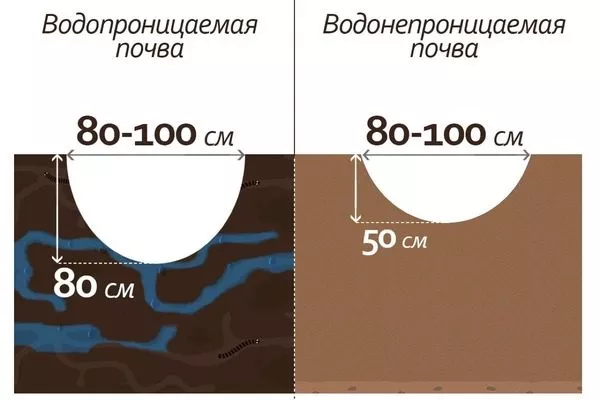
- A drainage layer, approximately 10-15 cm thick, is placed at the bottom of the hole. This is especially important for clay and heavy soils. The drainage layer will drain water away from the roots, preventing them from rotting. Expanded clay, broken brick, crushed stone, etc. can be used as drainage.
- The topsoil obtained from digging the hole is mixed with humus, coarse river sand, and peat in a ratio of 2:1:1:0.5. If the soil is low in fertility, it is recommended to add mineral fertilizer, such as 250 g of nitroammophoska.
- Mix the soil mixture thoroughly and pour it into the planting hole. Fill it 2/3 full. Form a mound of the nutrient mixture. Drive in a 1.5-2 m long support 10-15 cm from the center of the hole. Place the support on the south side of the seedling to protect its bark from sunburn.
Planting a seedling
Persimmons are planted in cloudy weather, without rain or wind. Under these conditions, the tree will experience less stress.
Landing features:
- The seedling is placed on a mound of earth previously poured into the hole, and the root shoots are carefully straightened out - they should lie on the slopes of the mound, without bending to the sides or upwards.
- Hold the seedling with one hand, and cover the roots with soil with the other, compacting it periodically so that there are no air pockets between the roots.
- A tree trunk circle is formed around the trunk of the seedling, with a small earthen ridge raked around the perimeter to prevent water from leaking out during watering.
- On loamy soils, the root collar should be placed at ground level after planting; on sandy loam soils, it should be deepened by 3-5 cm.
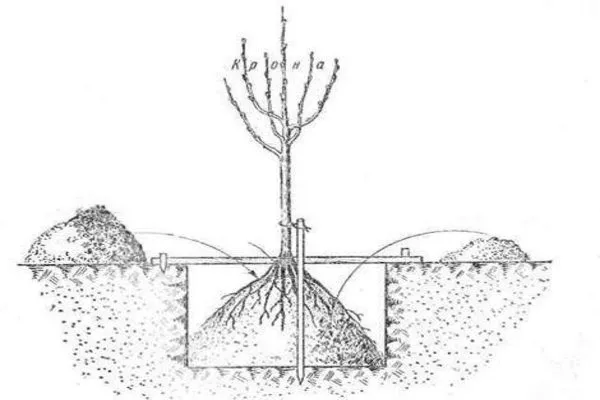
- The planted tree is tied to the support with soft twine or ribbon - not tightly, but with loops in the shape of a figure eight.
- The tree is watered with warm, settled water. The recommended watering rate per plant is 20 liters. Warm, settled water is used for watering. Once the moisture has been absorbed into the soil, the area around the tree trunk is mulched with straw, humus, peat, etc.
Care
To ensure the Romashka persimmon tree grows well, develops, and begins bearing fruit in the third or fourth year, proper care is essential. With proper care, the tree produces good and consistent harvests.
Watering
Persimmon Chamomile requires regular watering, but it is important to avoid overwatering, as excess moisture can lead to root rot.
Irrigation features:
- After planting, water the seedlings frequently but sparingly—about every other day, with 15-20 liters of water at a time. Frequent watering helps the seedlings establish themselves more quickly in their new location.
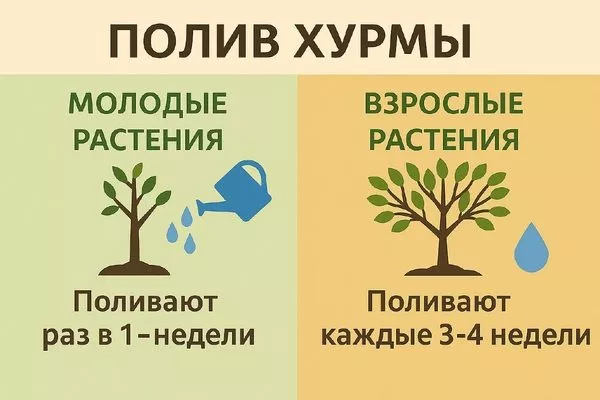
- Mature persimmons require less frequent but more generous watering. The recommended watering frequency is 1-2 times per month (young plants—once per week). The recommended watering rate is 50-60 liters. Watering is especially important during fruit set and ripening. If the persimmon tree experiences a moisture deficit during these stages of growth, its fruits will be small or even fall off prematurely.
- About a month before the onset of severe cold weather, watering is gradually reduced to allow the tree to prepare for winter. The last time the persimmon is watered is after the leaves have fallen. This watering is called a moisture-recharging watering.
- If it rains, the tree doesn't need watering; it gets enough rainfall. During periods of prolonged rain, it's necessary to create drainage ditches to help drain water to prevent root rot.
- It is recommended to pour water not into the tree trunk circle, but into a furrow 0.5-0.7 m deep, specially dug around the perimeter.
- For irrigation, use warm, settled water; river or rainwater is also suitable for this purpose.
- After each watering, the trunk area is mulched with organic materials, such as straw, freshly cut grass, compost, peat, etc.
Fertilizing persimmon with Chamomile
Persimmons are fertilized three times during the season. In the spring, nitrogen is added—either urea or rotted manure. In the summer and fall, persimmons require potassium and phosphorus mixtures. These increase yield and frost resistance. Nitrogen fertilizers are not applied in the fall, as they stimulate the growth of foliage, which will not have time to mature before winter.
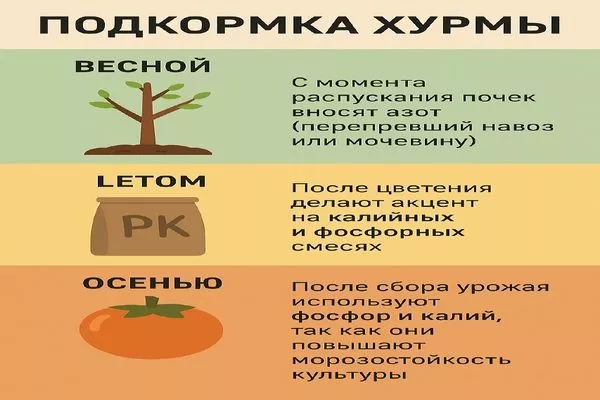
Persimmons can be fed with granules or a solution. In the former case, granules are scattered around the tree trunk and then worked into the soil to a depth of 5-7 cm. Fertilizer can also be applied as a solution—the granules are diluted in water. The resulting solution is then watered at the root of the persimmon.
.Trimming
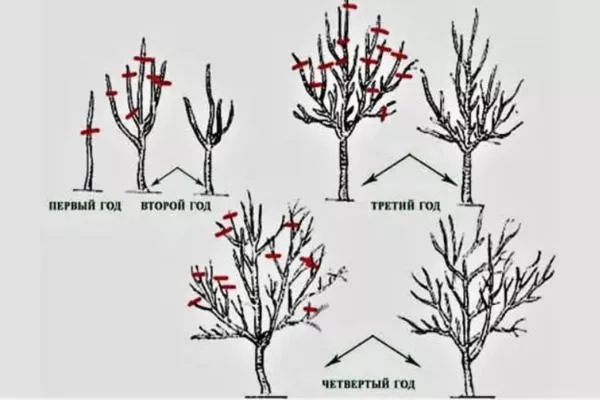
The Romashka persimmon is pruned annually. This is done in the spring, before the buds begin to swell, or in the fall, a month before frost. During sanitary pruning, weak, diseased, old, frost-damaged, or damaged shoots are removed. The tree also requires formative pruning, which aims to shape the crown.
For pruning, use sharp, disinfected tools such as pruning shears, loppers, and garden knives. Pruning is not recommended in summer. During this period, only diseased or wind-broken branches should be trimmed.
Features of pruning persimmon Romashka:
- Crown formation occurs during the first 3-5 years of a seedling's life. During the first year, the tree is pruned to 80 cm, leaving the side shoots intact.
- In the second year after planting, the skeletal branches are shortened to 40 cm. From the third year onwards, the crown is regularly pruned, thinned out, and all inward-growing shoots are removed.
- It is necessary to shorten overly long branches annually to prevent them from breaking under the weight of the fruit.
Pest and disease control
The Chamomile persimmon has a good immunity, but under unfavorable circumstances (damp and cool weather, widespread infection and pests, gross violation of agricultural practices, etc.), the risk of damage increases.
The variety can be susceptible to, among other things, powdery mildew, gray mold, scab, and bacterial canker. These are controlled through preventative and curative spraying. Preventative treatments include Horus, Fitosporin-M, Abiga-Peak, Bordeaux mixture, and other fungicides. Affected trees are sprayed with Trichodermin, Topsin-M, Fundazol, and other fungicides.
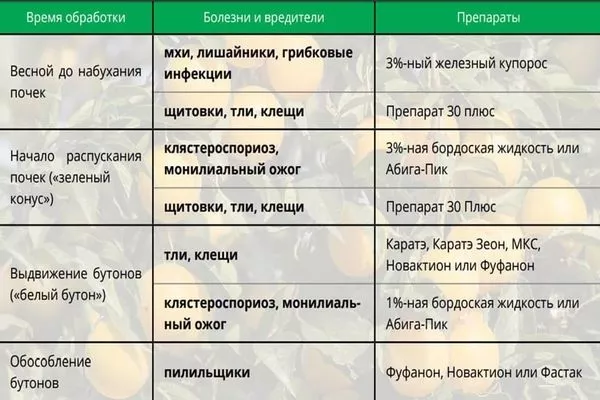
The Japanese wax scale poses the greatest threat to persimmons among pests. It can also be attacked by codling moths, red spider mites, aphids, leafhoppers, and other insect pests. To combat these pests, use biological products such as Actofit, Akarin, and Bicol, as well as folk remedies, as chemical fungicides are not recommended for use on fruit trees.
Harvesting and storage
The Romashka persimmon ripens in October. When the fruits have turned bright orange and are soft to the touch, and the leaves have almost completely fallen off, it's time to harvest. The fruits are carefully removed from the branches without removing the stems—this prevents damage to the flesh.
Harvested persimmons are stored at a temperature of approximately 0°C and humidity above 90%. The fruits are placed in wooden boxes, interleaved with sawdust and paper. The fruits are stored for no more than 3 months.
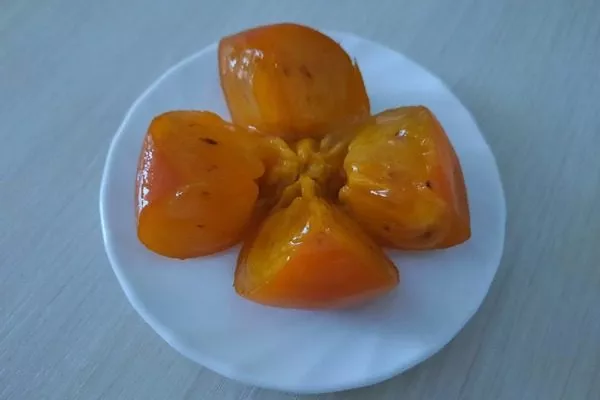
Overripe or defrosted persimmons can be stored for no more than a week. Cut persimmons can be stored in the refrigerator for no more than three days.
Reviews
The Romashka persimmon is an interesting and promising variety with excellent flavor and many other attractive qualities. Growing this persimmon requires some care, but the tree will surely reward the grower with abundant yields.