
The Roman Kosh variety is an excellent choice for persimmon lovers. It's hardy and easy to grow, and its large, juicy fruits have a sweet, almost honey-like flavor. Growing this persimmon in your garden is a true pleasure.
The history of the Roman Kosh variety
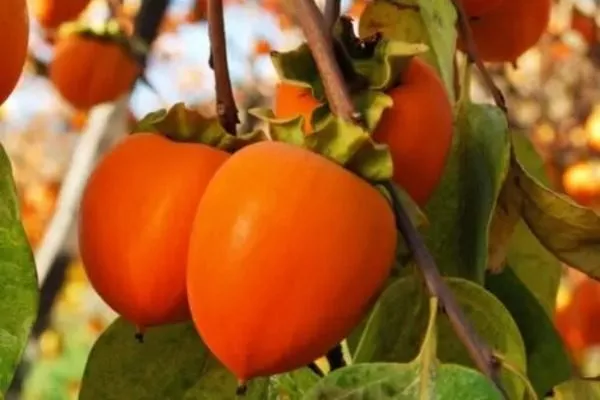
The Roman Kosh variety is an interspecific hybrid developed in 2014 by breeders at the Novokakhovske experimental farm (Kherson Oblast). It belongs to the Oriental (Japanese) and Virginian (American) persimmon species and can be grown in central and southern regions.
Description of persimmon Roman Kosh
The Roman Kosh persimmon tree is medium-sized, reaching 5 meters in height. It has a rounded, spreading crown. The trunk is medium-thick and yellow-brown in color. The leaves are wide and long, ovate, and pointed at the tips.
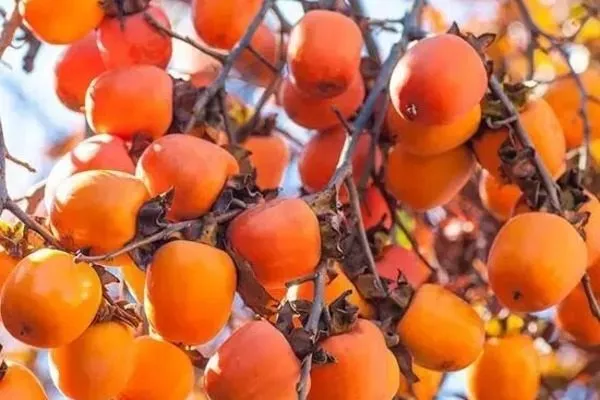
The fruits of the Roman Kosh persimmon are quite large, with thin, delicate skin and medium-sized brown seeds.
Fruit characteristics:
- Weight — 200-250 g.
- Form - flat-round, the cross-section has the shape of a square.
- Coloring - yellow.
- Pulp - yellow.
Taste and purpose
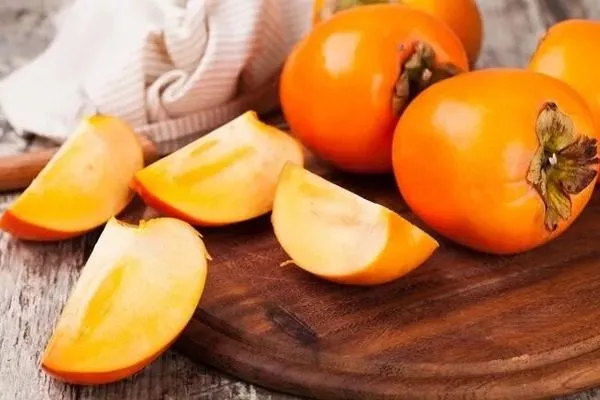
The Roman Kosh persimmon is very sweet, with a distinct honey flavor. The flavor becomes more pronounced as the fruit ripens.
Characteristic
The Roman Kosh persimmon has fairly good agronomic characteristics, allowing it to be successfully grown in many regions of the country.
Self-fertility
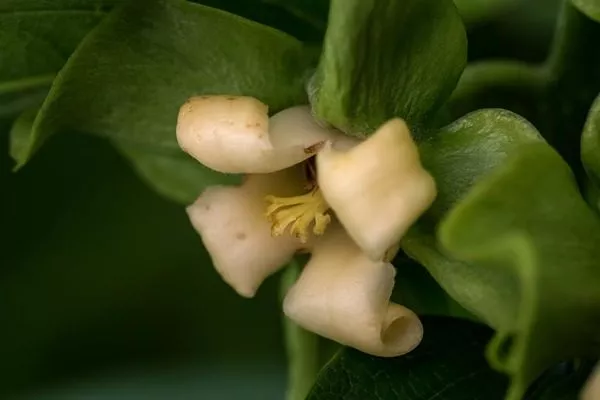
The variety is self-fertile, producing both male and female flowers. Roman Kosh persimmon can also pollinate other trees, including varieties with unisexual, female flowers.
Ripening time
The Roman Kosh persimmon is a mid-season variety. Its fruits begin to ripen in early October and can continue to bear fruit until November.
Productivity
The Roman Kosh persimmon is a high-yielding variety. Its average yield is 60-70 kg per tree.
Resistance to frost and drought
The variety tolerates short-term temperature drops well. The tree can withstand prolonged frosts down to -23 to -25°C, and short-term frosts down to -27°C. The variety has typical drought, disease, and pest resistance.
Pros and cons
The Roman Kosh persimmon has both advantages and disadvantages. It's best to learn about them all in advance; this will help you understand how suitable the variety is for your specific garden, climate, and intended use.
Pros:
Cons:
Landing
To ensure a healthy persimmon tree, producing abundant and long-lasting fruit, it must be planted correctly. Choosing a good location is especially important, as in unfavorable conditions, the tree will not only fail to bear fruit but may even wither.
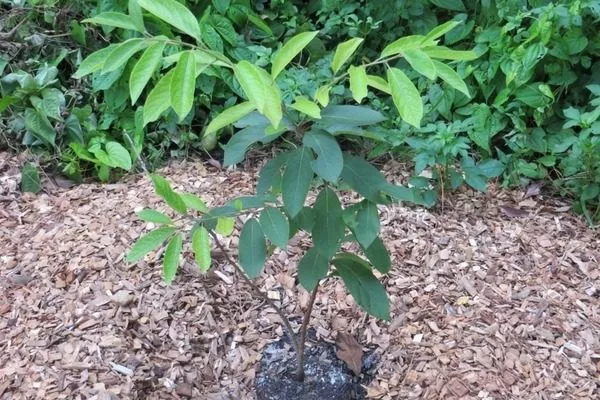
Selecting a site
The Roman Kosh persimmon requires a well-lit area, as it is a sun-loving variety. It's best to choose locations with ample daylight. While the tree can be planted in partial shade, this will negatively impact flowering and fruiting.
Persimmons are planted in areas where the groundwater level does not rise more than 0.75 m to the surface. It is also important that the area is free from cold, gusty winds.
Site preparation
The plot where the persimmon tree will be planted is prepared in the fall. It is cleared of debris and plant debris, then dug deeply, adding organic matter such as compost or humus (10 liters per square meter). If the soil is clayey or heavy, add sand or wood shavings (1 kg per square meter).
The variety prefers acidic and neutral soils that are light and loose. Optimal pH: 5–8. The tree grows best in sandy loam or loamy, fertile soils. If the soil is alkaline, water it with 9% table vinegar. Make a solution of 100 ml per 10 liters of water (per square meter).
Preparing the planting hole
Planting holes for persimmon seedlings are prepared in advance, approximately two weeks before planting. This allows the soil to settle slightly and the fertilizer to dissolve.
Features of preparing a planting hole:
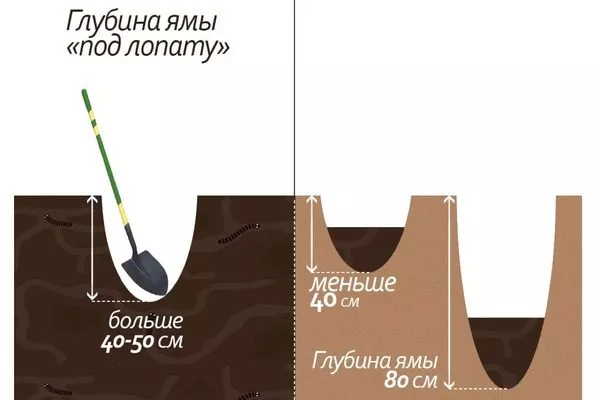
- The hole should be large enough to accommodate the root ball and roots. If a large amount of sand and/or compost is to be added to the hole, the depth and diameter should be increased to 60–80 cm.
- If several seedlings are being planted, then 5 m intervals are maintained between adjacent holes.
- Place a drainage layer at the bottom of the planting hole. Pebbles or sand can be used for drainage. The layer should be 15-20 cm thick. Drainage is especially important if the soil is clayey and drains slowly.
- The soil from the hole is mixed with humus or compost—10-20 liters is sufficient. Add 250 ml of nitroammophoska to the mixture, mix thoroughly, and pour it into the hole, filling it 2/3 full.
After this, the hole is covered, for example, with a piece of roofing felt. And after a couple of weeks, they begin planting the seedlings.
Planting a seedling
Persimmons can be planted in the spring, from March to May, or in the fall, from September to November. The exact timing depends on the climate and weather conditions. The planting techniques are the same in both spring and fall.
Planting persimmon:
- The tree is placed in a hole, the roots are placed on top of the earthen mound, straightening them out so that they do not bend.
- The free space is filled with the remaining soil, which is compacted, forming a depression around the trunk to make watering easier.
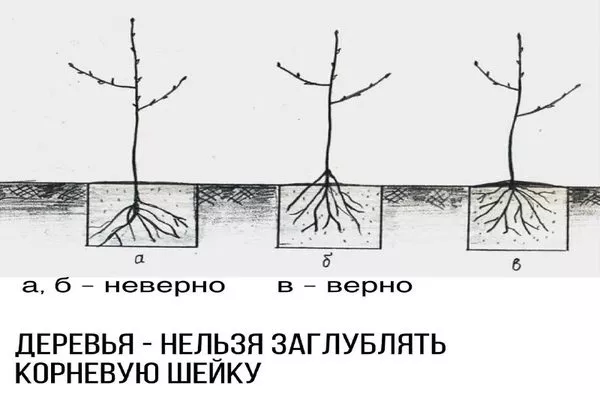
- After planting, the root collar should be buried several centimeters deep.
- A support, preferably wooden, is installed near the seedling. The tree is tied to it with soft twine.
- Planted persimmons are watered with warm, settled water. Each tree requires 20 liters of water.
Care
The Roman Kosh persimmon requires standard care, including watering and fertilizing, and in regions prone to severe and prolonged frosts, winter shelter.
How to water?
The tree requires ample watering, with about 20 liters of water given at a time. Regular watering is especially important during periods of drought. Overall, the variety is undemanding in terms of watering, tolerating both water stress and overwatering.
What to feed?
The Roman Kosh persimmon requires several applications per season. The composition of these applications depends on the growing season. In the spring, during bud break, urea or organic fertilizer is applied, as the tree requires a lot of nitrogen.
In the summer, when flowering and fruit set begin, potassium-phosphorus fertilizers are applied. In the fall, after harvest, additional potassium and phosphorus are added to help increase the tree's winter hardiness.
Trimming
Persimmon pruning is carried out in the spring for both sanitary and formative purposes. After wintering, all damaged, dead, broken, and other branches are removed.
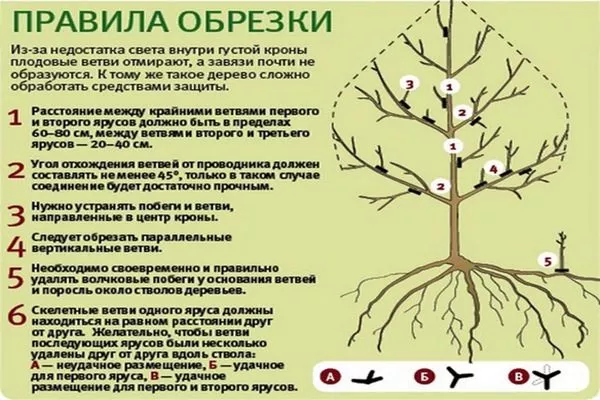
Tree formation is carried out during the first years of its life:
- After planting, the seedling is pruned to 0.8 m. In the fall, a shoot emerges from the terminal bud, continuing the central conductor. Of the lateral buds, only two are left to grow, located radially—one at trunk level (approximately 0.5 m), the other 30-40 cm higher. Shoots growing from the remaining buds are regularly pinched. Alternatively, the buds themselves are simply removed.
- In the second year of life, the central conductor is pruned at a height of 1.5 m. Lateral branches are pruned to a height of 40-50 cm.
- Later, when the tree begins to bear fruit, its crown is thinned out, removing damaged and dead branches. Only shoots longer than half a meter should be pruned.
It is important to note that excessive pruning, after the crown skeleton has been established, negatively affects the longevity of the persimmon.
Pest and disease control
The Roman Kosh variety has good disease and pest resistance, allowing it to be grown without or with minimal chemical use. The tree is treated primarily with organic products and folk remedies.
Although the variety is not susceptible to pathogens, under unfavorable circumstances it can be affected by:
- Powdery mildew. It is accompanied by the appearance of a gray-white coating on the leaves. Affected plant parts are pruned and burned, and the tree is then treated with fungicides such as Skor, Topaz, and others.
- ScabThis disease causes dark spots to appear on leaves and shoots. Affected parts are destroyed, after which the tree is sprayed with Bordeaux mixture.
- FusariumThis disease causes dry spots, blackening of the trunk, peeling bark, and yellowing of the leaves. The tree must be removed, and the soil underneath treated with copper sulfate.
- Bacterial cancer. This severe disease attacks the tree's bark, causing its death within 2-3 years. To prevent the disease, preventative treatments with Bordeaux mixture are necessary. HOM, Abiga-Peak, or other fungicides can also be used.
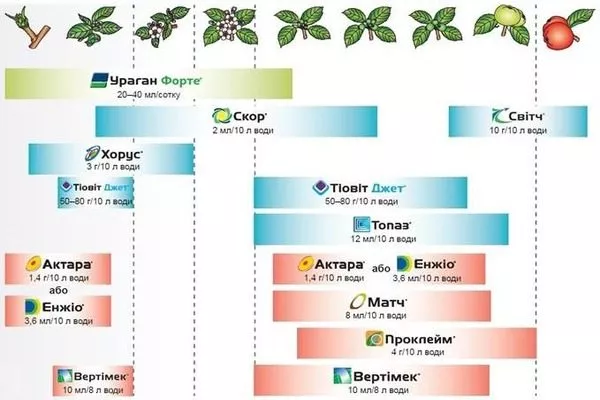
The Roman Kosh variety is not susceptible to pest damage, but attacks are possible if they spread en masse.
The greatest danger to the Roman Kosh persimmon is posed by:
- Ticks. Insecticides such as Iskra, Fufanon or their analogues containing colloidal sulfur help against them.
- Mediterranean fruit flyIt is controlled primarily with the help of sticky traps.
- Mealy mealybugThe insecticide "Aktara" works well against it.
To combat insects, it is recommended to use biological preparations, for example, Bicol, Actofit, Akarin, and Boverin.
Harvesting and storage
Roman Kosh persimmons reach the desired ripeness after ripening. Under favorable conditions, they can be stored until approximately mid-January. The optimal temperature is 0°C and humidity is 90%. At lower humidity levels, the fruits shrivel, while at higher humidity levels, they rot.
Persimmons can be stored in a cellar, on a balcony, or in a pantry. The room should be regularly ventilated. The fruits are placed in boxes in two layers, sprinkled with wood shavings. The lower fruits are placed with the calyxes down, the upper ones with the calyxes up.
Reviews
The Roman Kosh persimmon is rightfully considered one of the best varieties by our gardeners. It successfully combines excellent fruit flavor with excellent agronomic characteristics, allowing you to grow delicious persimmons without any problems.