
The Prok persimmon is a frost-resistant variety with tasty and juicy fruits. It combines stable yields, good shelf life, and versatility. Thanks to its excellent characteristics and simple cultivation techniques, it ensures maximum ease of cultivation, even on a large scale.
Description of the persimmon variety Prok
This compact tree grows from 1 to 4.5 meters in height. This variety was developed by American breeders and is renowned for its high productivity.
Plant characteristics:
- trunk and main branches – covered with dark gray bark;
- shoot formation – active;
- young shoots – smooth, dark brown in color, with drooping tops;
- crown – dense, well-foliated;
- leaves - bright green, rounded, arranged alternately;
- flowers – light yellow, bell-shaped, formed in the leaf axils;
- cups – consist of five petals.
Fruit characteristics:
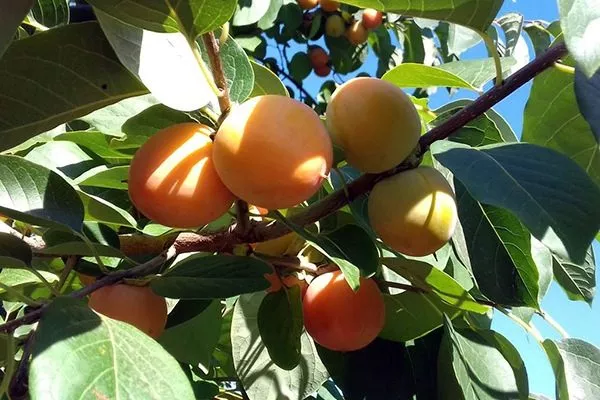
- color – deep orange color;
- form - rounded with a slight narrowing towards the base;
- weight - varies from 100 to 180 g;
- skin – thin, uniform in color and elastic, resistant to cracking and tolerates transportation well;
- pulp – light orange, juicy, fibrous and dense;
- seeds – large, flat, dark brown in color.
The Prok persimmon has a distinctly sweet flavor and rich aroma. The fruit is versatile: it can be eaten fresh or used to make compotes, jams, and other homemade preserves.
Characteristics of the Prok persimmon
This variety is grafted onto frost-resistant Virginia persimmon rootstock, significantly increasing its tolerance to low temperatures. The plant is recommended for cultivation in Central Russia, the Middle Belt, and the North Caucasus.
Frost resistance
The Prok persimmon is recommended for growing in cold regions, as it can withstand temperatures down to -29°C. It performs best in the southern regions of the country. However, even in the Moscow region, it successfully overwinters without damage, maintaining its vitality and productivity.
Resistance to diseases and pests
The variety has a genetically determined high immunity to all major fungal diseases. However, during cool seasons, especially when planted in a shaded area exposed to northerly winds, gray mold may develop, affecting ovaries and fruits.
The most dangerous pest for persimmons is scale insects. At the first sign of their appearance, treat the plant with Karbofos to prevent the spread of the pest and preserve the harvest.
Fruiting and ripening periods
This is an early-ripening variety. The first harvest can be expected 3-4 years after planting, and the crop shows consistent results from 5-6 years. The fruits ripen in the second half of October, although in southern regions this period may be two weeks earlier.
Productivity depends on the climate: in warm climates, up to 80 kg of fruit can be harvested from one tree, while in more moderate conditions the yield is around 60 kg.
Harvesting and storage
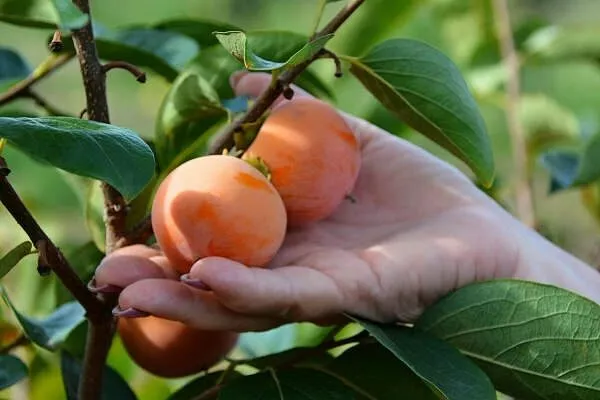
Persimmons are harvested shortly before the first frost. In the central part of the country, this usually happens in late October or early November. Pull the fruit carefully, along with the hard stems, twisting them like you're screwing in a light bulb.
After harvesting, store the fruit in special boxes with insulated compartments to prevent damage during storage. The optimal temperature is no higher than 5°C in a well-ventilated area. Under these conditions, persimmons will retain their appearance and nutritional value for up to 70 days.
Beneficial properties and nutritional value
Proca fruits are rich in valuable nutrients and offer a wide range of health benefits. Regular consumption helps strengthen the immune system and maintain overall health.
Composition of persimmon:
- Vitamins. Contains a high concentration of vitamin C, a powerful antioxidant that strengthens the immune system and increases the body's resistance to infections.
- Minerals. Rich in potassium, which helps regulate blood pressure and maintain cardiovascular health.
- Dietary fiber. They contain a large amount of fiber, which helps normalize digestion and improve the functioning of the gastrointestinal tract.
- Antioxidants. They protect cells from the effects of free radicals, slow down the aging process and maintain cellular health.
- Phytonutrients. They have anti-inflammatory and potentially antitumor properties.
Methods of reproduction
The Prok persimmon variety is propagated in two ways: by seedlings and by seeds. The most common method is planting two-year-old seedlings, which take root more quickly and begin bearing fruit earlier.
The seed method is used much less frequently, as it requires a lengthy preparation period: young plants grow indoors for about two years before being transplanted outdoors. Seeds are obtained from fully ripe or overripe fruits. The seeds are planted in individual pots.
For planting, prepare a nutrient substrate by mixing in equal proportions:
- compost;
- sand;
- turf soil.
How to plant?
Transplanting persimmon seedlings into open ground depends on their type (seed or grafted) and the regional climate. Favorable seasons for planting:
- Spring. Suitable for areas with mild to moderate winters. Plant seedlings purchased from nurseries in March-April, when the soil has warmed and is saturated with moisture. Spring planting promotes rapid rooting and vigorous growth throughout the season.
- Autumn. Recommended for areas with cold winters. Work should be carried out in October-November. This period allows the seedling to establish itself and strengthen its root system, ensuring it will begin growing immediately with the arrival of spring.
For cultivation, use high-quality planting material. Follow these basic rules:
- Buy from trusted suppliers who specialize in fruit crops.
- Choose plants with a root system that is intact, not over-dried, and shows no signs of rot.
- The roots must be moist and well developed.
- Pay attention to the condition of the trunk and leaves - there is no damage or spots.
- Don't buy plants at spontaneous markets - there is a high risk of purchasing a diseased specimen or one that doesn't match the variety.
For planting, choose a sunny or semi-shaded location, protected from cold winds. The soil should be well-drained, with no standing melt or rainwater. The optimal pH is between 6 and 7.5. Loosen the soil to a depth of 45 cm, and remove stones, weeds, and debris.
Step-by-step instructions:
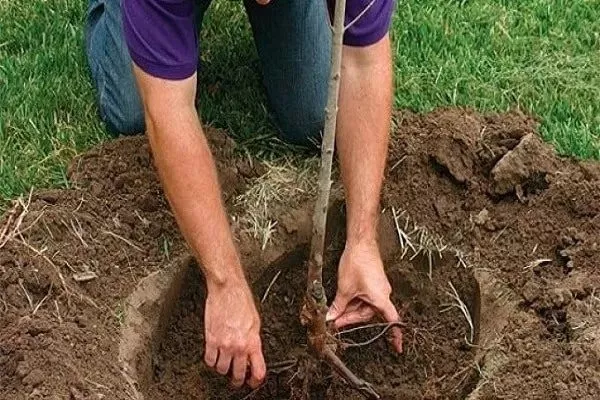
- Inspect the seedling's roots: remove any damaged or diseased areas. Trim any overly long roots if necessary. Soak the plant in water for several hours before planting.
- Dig a hole twice the size of the root ball. Place the seedling in the center and gently spread out the roots.
- Fill with fertile soil, compact it to eliminate air pockets, and water generously.
- Create a hole around the trunk to retain water. Add mulch (bark, sawdust) to retain moisture, control weeds, and protect from temperature fluctuations.
After these steps, the persimmon planting can be considered complete. With proper agricultural practices, the young tree will quickly take root and begin to grow.
Caring for persimmon
Persimmon Prok is an easy-to-care-for variety, but it does require attention. Proper care will ensure vigorous growth, consistent fruiting, and a strong immune system. Follow standard care procedures:
- Watering. Young seedlings require regular watering – 1-2 times a week in dry weather. Water mature trees generously (up to 40 liters of water per plant) once every 10-14 days. Avoid waterlogging: persimmons dislike waterlogged soil. The final watering should be done in September to prepare the tree for winter.
- Top dressing. The crop requires constant feeding – apply a combination of organic and mineral fertilizers 3-4 times per season. Apply fertilizer according to the following schedule:
- in the spring (April-May) – nitrogenous substances (for example, mullein infusion or urea) for active growth;
- in summer - phosphorus-potassium mixtures (superphosphate, potassium sulfate) for fruit formation;
- in autumn – Ash solutions to strengthen the immune system and prepare for winter.
- Trimming. Carry out this procedure in early spring before bud break. Remove dead, frozen, and diseased branches and shoots that are crowding the crown. Prune competing shoots near the central core. Create a transparent, cup-shaped, or sparsely layered crown to allow sunlight to penetrate.
- Mulching. Apply a 5-7 cm layer of mulch around the tree trunk. It retains moisture in the soil, suppresses weed growth, and protects the roots from sudden temperature changes. Renew the mulch twice a season – in spring and fall.
- Preparing for winter. This is especially important in the central part of Russia and the Moscow region. Wrap the trunk with spunbond, burlap, or agrofibre. Cover the base with soil. Wrap young seedlings completely in non-woven fabric or spruce branches. Mulch the area around the trunk to insulate the root system.
- Protection from diseases and pests. High humidity can lead to gray mold. To prevent this, avoid planting in the shade, ensure good crown ventilation, and treat with fungicides at the first sign of infection.
Pros and cons
The Prok persimmon is very popular among gardeners and is among the top 5 most-sold varieties. It is valued for several key advantages:
Flaws:
Reviews
Prok is a popular and sought-after persimmon variety. It is prized by gardeners for its excellent characteristics: good frost resistance, consistent yield, and ease of care. This cultivar produces large, tasty berries that store well and can be eaten fresh or processed. It also has a strong immune system.