
The Nikitskaya Burgundy persimmon is a resilient and high-yielding variety, popular for its large, sweet, and aromatic fruits. Characterized by good frost and disease resistance, it is successfully grown in temperate climates. The fruits ripen in the fall and are consumed fresh and used for winter preserves.
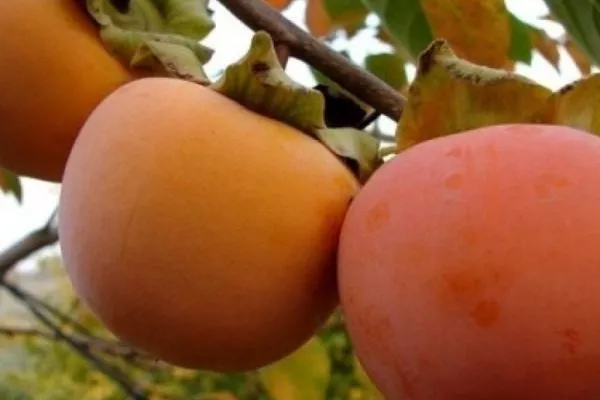
Description of the Nikitskaya Burgundy persimmon variety
This is a medium-sized plant, reaching 5-6 meters in height. This variety was bred in the Nikitsky Botanical Garden and included in the State Register in 2014. It is recommended for cultivation in all regions. The Rossiyanka persimmon was used in its selection.
Distinguishing characteristics:
- tree - forms a compact crown: branches extend from the trunk almost at a right angle;
- bark – gray, with longitudinal grooves;
- shoots – light brown;
- leaves - dark green, large, broadly oval in shape, with short petioles, the upper side is glossy, the lower side is slightly pubescent, the edges are whole and slightly wavy.
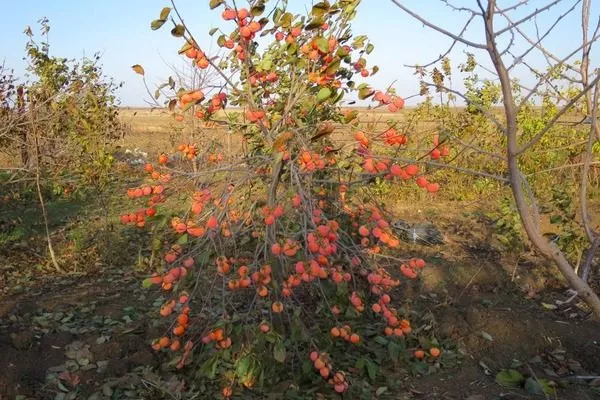
The fruits of the Nikitskaya Bordovaya variety are large, and under good growing conditions they can weigh between 100 and 140 g. Other characteristics of the fruit:
- skin – thin but elastic, with a reddish-orange tint, gloss and a pronounced waxy coating;
- pulp – juicy, sweet, with a jam-like texture;
- aroma – saturated.
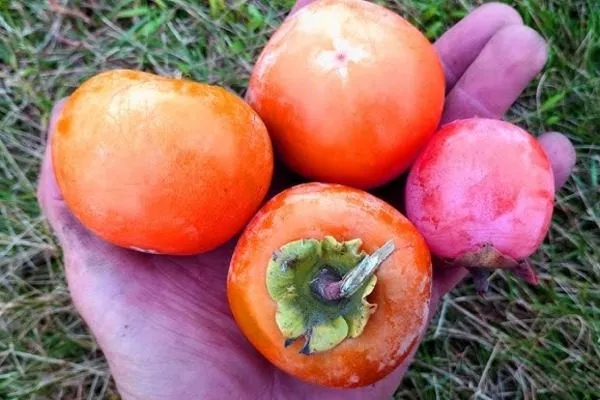
The taste received the highest tasting score – 5 points.
Characteristics of Nikitskaya Burgundy Persimmon
This plant will delight you with large, sweet fruits with a rich aroma that will satisfy even the most discerning connoisseurs. It's easy to care for, adapts well to various climates, and produces fruit reliably, allowing you to enjoy juicy and healthy fruits every season.
Frost resistance of Nikitskaya Burgundy persimmon
The plant isn't known for its frost resistance and thrives in regions with mild winters. Temperatures dropping to -29°C may cause partial freezing of annual shoots.
However, damage to generative and vegetative buds typically does not exceed 20%. This allows the tree to quickly recover and continue bearing fruit.
Resistance to diseases and pests
Nikitskaya Bordovaya is characterized by high resistance to major diseases and pests. These qualities make it an attractive choice for both experienced and novice gardeners.
Pollinator for Nikitskaya Burgundy persimmon
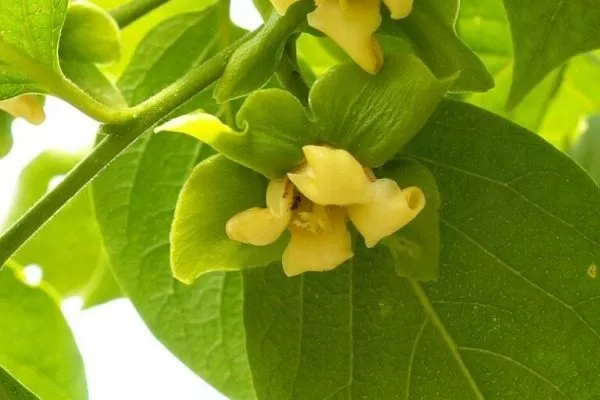
This variety belongs to an intermediate group of cultivars that produce only female flowers. Under favorable conditions, the tree can produce fruit without pollination, but to ensure abundant and consistent harvests, it is recommended to plant pollinators—male or self-fertile varieties—nearby.
Popular pollinators for Nikitskaya burgundy:
- Satellite;
- Find;
- Gayley.
This significantly increases productivity and improves fruit quality.
Fruiting and ripening periods
This variety is characterized by consistent annual fruiting. A six-year-old tree can produce an average of up to 35 kg of fruit, while more mature specimens, with proper care, can yield up to 100 kg. In commercial cultivation, yields reach 140 centners per hectare per season.
This is a mid-season variety: fruiting begins in October and continues until early November. The further south the region, the earlier the harvest period begins.
Taste qualities, application
The Nikitskaya Burgundy persimmon is distinguished by its high-quality flavor, confirmed by its top tasting score. The fruit's flesh is juicy, sweet, and aromatic, with a slight tartness characteristic of many persimmon varieties.
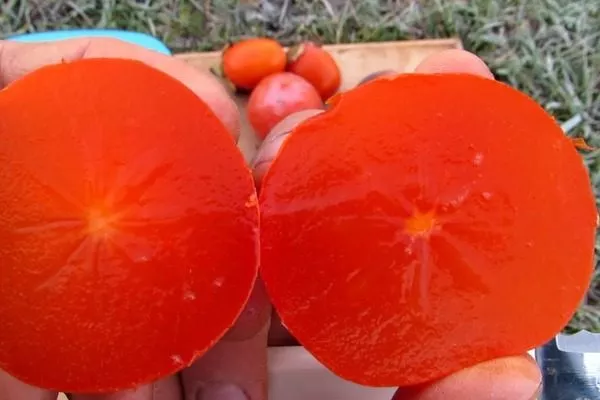
Its consistency is reminiscent of jam, making the fruit particularly pleasant for fresh consumption and processing. Persimmons are often added to desserts and used in a variety of healthy dishes.
How to plant Nikitskaya Burgundy persimmon?
To obtain a bountiful harvest, it's important not only to ensure high-quality plant care but also to carefully select a growing site. Follow these simple guidelines.
Planting conditions and terms
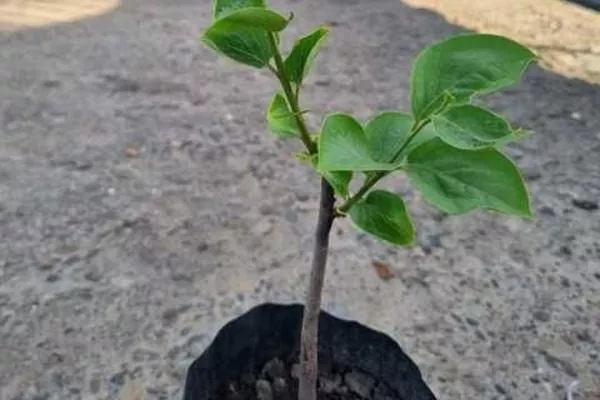
The tree grows best in fertile soils - loamy or sandy loam, with deep groundwater (at least 1 m), since the main part of the roots of the Nikitskaya Bordovaya variety is located in the upper soil layer at a depth of 20-60 cm.
The plant is sensitive to drafts, so choose a site protected from winds for planting. It loves light, so it requires an open, well-lit location.
When grown in the shade, the tree develops poorly, and young fruits may fall off before ripening. Overwatered soil can lead to root rot, and underwatering can cause the ovaries to develop small and flavorless.
How to plant correctly?
Begin preparing the site for Nikitskaya Burgundy persimmons well in advance. About three weeks before planting, dig the soil to the depth of a shovel, removing weeds, debris, and rocks.
Fertilize the soil with organic matter: add 5 kg of humus or cow manure per square meter, then water thoroughly. Alternatively, dig and add organic matter in the fall, followed by spring planting.
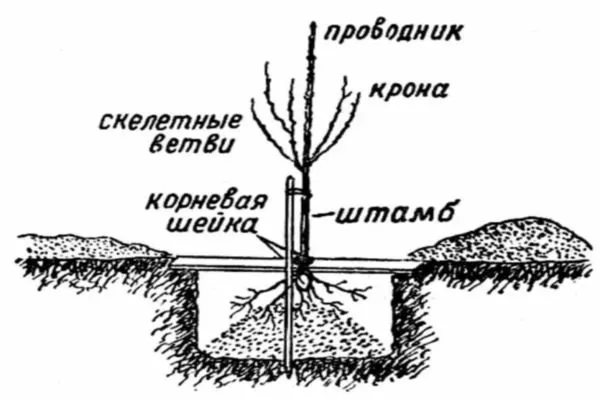
Step-by-step algorithm:
- Dig a planting hole about 65 cm in diameter and depth – it should be at least 20 cm wider and deeper than the roots.
- Place drainage at the bottom using fine gravel, pebbles, sand, broken bricks or nut shells.
- Add a nutrient-rich layer made from equal parts humus, turf, peat, and sand. Form the mixture into a mound.
- Inspect the bare-root seedling, trim off any damaged areas, or treat them with a potassium permanganate solution. Then soak the roots in a growth stimulant for 2 hours.
- Place the plant in the center of the hole and secure the support nearby.
- Carefully spread the roots over the mound and cover with soil, compacting it with your hands.
- Mulch the tree trunk circle and water with warm, settled water.
Aftercare
Caring for the Nikitskaya Burgundy persimmon involves several basic rules. Follow standard agricultural practices:
- Watering. Young seedlings require regular but moderate watering—about 10 liters of water per trunk circle. Do this once a week if there's no rain. Mature trees only need watering once or twice a month.
- Top dressing. Don't begin fertilizing until the second year after planting. Two to three applications per season are sufficient. Use organic matter (cow manure, bird droppings, or compost) in early summer, and mineral fertilizers after flowering.
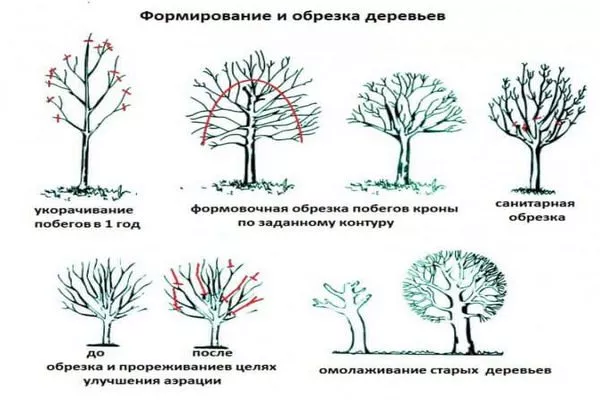
- Trimming. Remove broken and damaged shoots. Perform sanitary pruning in spring or fall. Prune leaves and shoots affected by disease or pests immediately. Treat large cuts with garden pitch.
- Pre-winter care. For the winter, mulch the tree trunk area with peat, leaves, or wood shavings, and cover the trunk with insulation. Cover the branches with spruce branches, and young trees with spunbond.
Potential problems when growing
The main pests of the Nikitskaya Burgundy persimmon are scale insects, false scale insects, and caterpillars, which feed on the plant's leaves. To control them, use folk remedies or insecticides.
The following are effective against scale insects and false scale insects:
- Aktara;
- Fufanon.
- The following will help against caterpillars:
- Mospilan;
- Actellic;
- Lepidocide.
Another problem is fruit drop, which can be caused by improper irrigation. Overwatering promotes vigorous branch growth, which negatively impacts fruit set. Insufficient moisture can also lead to fruit drop, especially in drought conditions. Therefore, it's important to properly regulate watering.
To prevent persimmon fruit drop, use gibberellin. Applying indole-butyric acid to the calyxes also promotes fruit growth.
Harvesting and storage
The first harvest of Nikitskaya Burgundy persimmons occurs three to four years after planting, around mid-autumn. In southern regions, this occurs in September; in more temperate climates, it occurs in October.
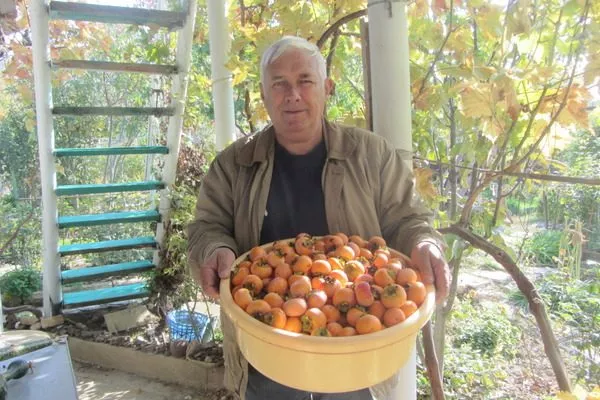
For transport, harvest persimmons when they are technically ripe. At home, wait until they are fully ripe, so that the astringent flavor is lost. Store the harvest in dry, dark areas with humidity no higher than 75%, as exposure to light will cause them to rot.
Methods of reproduction
You can increase the number of seedlings in your garden yourself. Use the most suitable method:
- Cuttings. Take healthy, semi-woody cuttings 10-15 cm long with 2-3 buds. Root them in damp sand or a sand-peat mixture at 20-25°C. To speed up the process, use rooting stimulants. Once roots appear, transplant the cuttings to their permanent location.
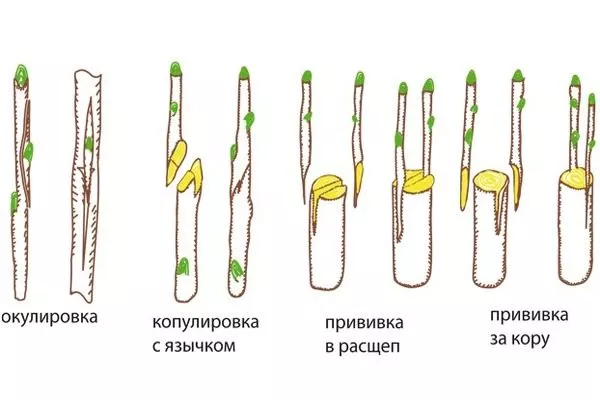
- Graft. A common propagation method used to obtain high-quality seedlings with desired characteristics. Begin this process in the spring, when the tree begins to grow actively. To do this, graft cuttings of the Nikitskaya Bordovaya variety onto a rootstock (for example, one more resistant to frost and disease).
- Layers. This method involves rooting one of the plant's shoots: bend it to the ground, make small cuts in the bark, and secure it in the soil. Once the shoot has rooted, separate it from the mother plant and transplant it to its permanent location.
- Seeds. This method is used less frequently because persimmon seeds often lose their varietal characteristics—these plants may not inherit all the qualities of the parent variety. Sow the seedlings in containers with nutritious soil, and when the seedlings emerge, thin them out and plant them in the ground once they're sufficiently established.
Each of these methods has its own characteristics and is applicable depending on the goals and growing conditions.
Pros and cons
Advantages:
Flaws:
Reviews
The Nikitskaya Burgundy persimmon is an excellent choice not only for experienced gardeners but also for novice gardeners. This variety boasts numerous positive qualities and produces abundant harvests, provided proper care and site preparation are taken. The fruits are delicious and store well.