
The Meader persimmon is a winter-hardy, self-fertile variety, ideal for growing in cold climates. The tree is easy to grow, disease-resistant, and produces a bountiful harvest of juicy, sweet, and tart fruits. Thanks to its excellent flavor and rich nutritional content, the fruit is prized both fresh and in homemade preserves.
Description of the Meader persimmon variety with photos
This Virginia variety is characterized by good productivity and vigorous growth. Distinguishing features:
- an adult tree reaches 3-4 m, although individual specimens can grow up to 10 m;
- It blooms already in May, and the fruits are fully ripe by October;
- A characteristic feature is the formation of an excessive number of ovaries - some of them may fall off in an unripe state.
Ripe fruits are renowned for their rich flavor and valuable nutritional value. Thanks to the virgin olive oil, this variety is rich in iodine, iron, magnesium, vitamins C and P, and also contains glucose.
Description of fruits:
- form - round, slightly flattened;
- color – bright orange with a reddish tint and a waxy coating;
- weight - about 70 g;
- pulp – At full maturity it becomes dense, juicy, with a light rum aroma.
Regular consumption of Meader persimmon has beneficial effects on health:
- has a diuretic effect;
- helps calm the nervous system;
- improves vision;
- strengthens the immune system;
- helps slow down the aging process.
Its low calorie content makes it suitable for those watching their weight. This variety is beneficial for anemia, cancer prevention, and thyroid disorders. The fruit helps improve memory and concentration.
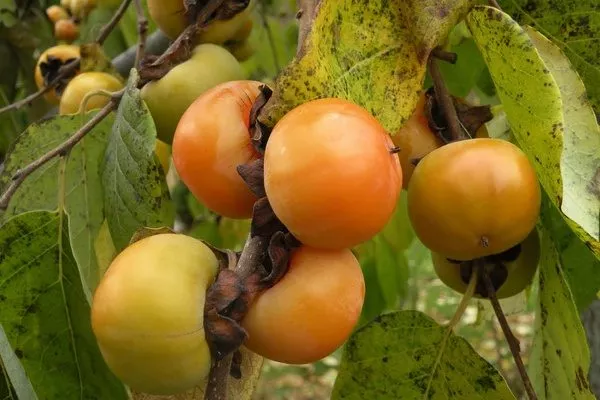
Characteristics of the Meader persimmon
This exotic variety can thrive and produce fruit reliably even in regions with harsh winters. The plant can withstand temperatures down to -30°C, making it suitable for growing in cities with temperatures below -20°C.
The crop is characterized by good productivity: a single mature tree (approximately six years old) can yield up to 20 kg of fruit. The harvest ripens in late September to early October, and the harvest period lasts about two weeks.
Mider is resistant to most diseases and rarely suffers from pests. Another important advantage is its self-fertility: the tree does not require a pollinator. Unlike many other varieties, ripe fruits do not fall off, making harvesting easier.
How to plant Meader persimmon?
One of the key conditions for successful cultivation is choosing a high-quality seedling purchased from a reputable nursery or trusted supplier. This determines how well the tree will take root. The planting site should be sunny, protected from wind and drafts.
Basic requirements:
- To increase the survival rate, pre-treat the roots of the seedling with Kornevin or prepare the site by adding urea, organic fertilizers, or Novofert.
- Plan to purchase seedlings in the fall, but plant them in the spring, after the soil has warmed up. Until then, bury the young tree at an angle and carefully cover it for the winter to prevent frost damage.
- When planting, bury the grafting site well below soil level – this will protect the plant from freezing in cold winters.
Step-by-step instructions:
- Dig a hole 60-70 cm deep and wide.
- Place drainage at the bottom of the hole - a layer of broken brick, crushed stone or coarse sand.
- Prepare a nutrient mixture of turf soil, humus, peat and wood ash.
- Fill the hole two-thirds full with the prepared substrate and make a mound in the center.
- Lower the seedling and carefully spread the roots along the slopes.
- Fill the hole with soil, compact it lightly and form a tree trunk circle.
- Pour warm water (at least 20 liters), wait until it is absorbed.
- Mulch the surface with peat, sawdust or humus to retain moisture and protect the roots.
- Install a support and tie up the seedling to protect it from the wind.
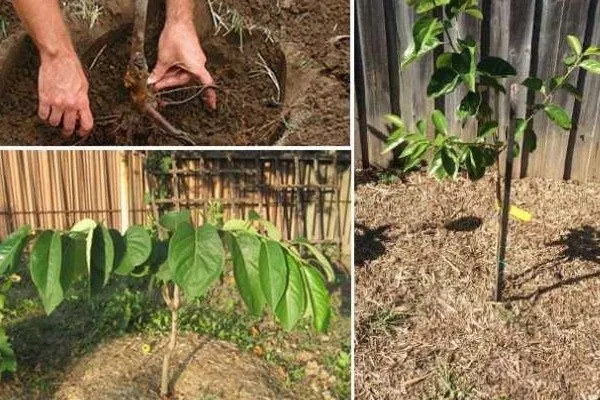
Caring for the Meader persimmon
One of the most important conditions for successfully growing the Meader persimmon is regular watering and preventing soil compaction around the trunk. Due to the sensitive root system, mulching with peat or sawdust is recommended.
Basic rules:
- Throughout the season, the plant requires both organic and mineral fertilizers. To improve the flavor of the fruit and protect the tree from drying out in the fall heat, add granulated superphosphate or hydrogel to the soil.
- As cold weather sets in, add additional potassium and rock phosphate, which helps the plant survive the winter and reduces the risk of damage. In regions with harsh climates, be sure to cover the trees for the winter.
Persimmon Meader requires pruning—this is an important part of care that helps shape the crown, improve light, increase yield, and prevent overcrowding. Follow the pruning schedule:
- formative – carry out in the 2-3 year after planting, leaving 3-4 main skeletal branches;
- sanitary - perform in early spring: remove dry, diseased, frozen shoots;
- rejuvenating – Start the procedure after 6-8 years if the tree has weakened and has begun to bear fruit less.
The Meader persimmon rarely suffers from pests and is practically not affected by diseases, but in unfavorable years or if agricultural practices are not followed, some difficulties may arise:
- Scale insect - Covers shoots and leaves, sucking out the sap. Spray the tree with a solution of Fufanon or Actellic.
- Aphid - It deforms the leaves and slows growth. Apply an infusion of garlic, laundry soap, or the biological product Fitoverm.
- Spider mite - It appears in hot weather and covers the leaves with a web. Treat with Actofit or pour warm water over the tree.
- Moths and moths - Damage to the ovaries. Trapping belts, light traps, and Lepidocide are effective.
- Gray mold (botrytis) - Appears in rainy weather, affecting fruits and leaves, covering them with a gray coating. Remove affected parts and spray with Horus or Switch fungicide.
- Black spot (Alternaria) - Dark spots appear on the leaves and fruits, which expand over time. Treat with Bordeaux mixture (1%) or Oxychom, and thin out the foliage.
- Powdery mildew - The leaves become covered with a white coating, become deformed, and dry out. Use Skor, Fundazol, or a solution of baking soda and soap (1 teaspoon baking soda + 0.5 teaspoon soap per 1 liter of water).
- Root rot - The plant is wilting, not growing, and the roots are darkening and disintegrating. Improve drainage, fertilize the soil with Previkur or Trichodermin, and avoid overwatering.
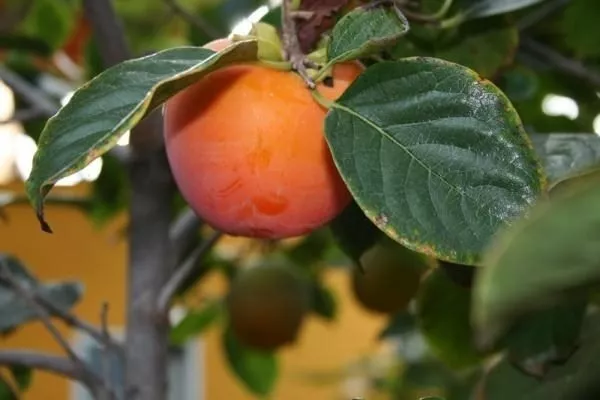
Harvesting and storage
The ripening period for the Meader persimmon is quite long – it can extend up to 1.5 months. The first fruits can be harvested in the second half of September. In cooler climates, harvesting shifts to October and can continue until early November.
Harvest the fruit when it's slightly soft and the leaves on the tree have fallen by about half. For ripening at home, use two main methods:
- Place the persimmons on paper in a warm corner of the room or in containers in a single layer, cup-side down to prevent them from touching. Place the containers in a well-ventilated area.
- Place the fruit on the top shelf of the refrigerator.
After 10 days of these conditions, the fruits will reach full ripeness and be ready to eat. The room where the persimmons are ripening should not be dry; provide additional humidity.
Pros and cons
Advantages:
Flaws:
Reviews
The Meader persimmon combines hardiness, good productivity, and excellent flavor. This variety requires no pollination, is frost- and disease-resistant, and its fruits contain numerous nutrients. With proper cultivation practices, even in harsh climates, you can reap a bountiful harvest of delicious and aromatic fruit.