
Commercial persimmon cultivation is a dynamically developing branch of agriculture that combines traditional growing methods with modern technology. Growing consumer interest in healthy eating, increasing demand for fresh and processed fruits, and the opening of new export markets are creating favorable conditions for the industry's development.
History and distribution of persimmon
Persimmon is one of the oldest fruit crops, and its cultivation history spans several millennia. The plant's origin is considered to be East Asia, primarily China, where it was cultivated as early as 2,000–3,000 BC.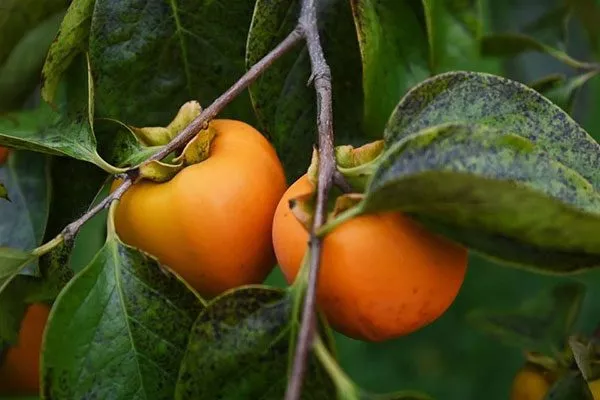
In ancient Chinese culture, the fruit symbolized abundance and prosperity and was used not only as food but also in folk medicine. Gradually, persimmons spread to Korea and Japan, where they became an integral part of the culinary tradition.
It arrived in Europe in the 19th century through trade and quickly took root in countries with mild climates. Today, the main regions of commercial cultivation are:
- Asia – China (the world's leading producer, more than 70% of the world's harvest), South Korea, Japan;
- Mediterranean – Spain, Italy, Israel, Türkiye;
- America – Brazil, USA (especially California);
- CIS – Ukraine, Russia, Azerbaijan and Georgia.
Thanks to its adaptability to climate, persimmon is gradually expanding its cultivation area. In recent decades, it has become increasingly common in plantations in South America, Australia, and Africa.
What is large-scale commercial persimmon cultivation?
This is the industrial cultivation of persimmons on a large scale, with the goal of producing a stable harvest for sale on domestic and foreign markets. Unlike hobby gardens or small plantations, this approach utilizes modern agricultural technologies.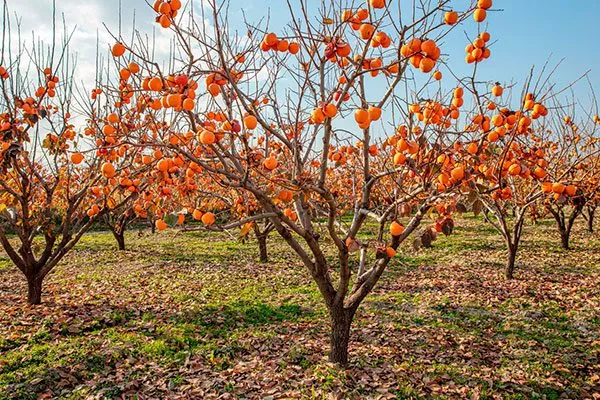
Key Features:
- Industrial scale – planting gardens covering tens and hundreds of hectares, designed for long-term use.
- Systematic agricultural technology – use of drip irrigation, automated watering and feeding systems, mechanized tree care.
- Modern varieties – cultivation of high-yielding, transportable and disease-resistant varieties that meet the demands of the global market.
- Storage and processing infrastructure – construction of cold storage facilities, logistics centers and fruit processing plants (drying, puree and juice production).
- Market orientation – supply of the harvest not only in fresh form, but also as raw material for the processing industry, export to countries with high demand.

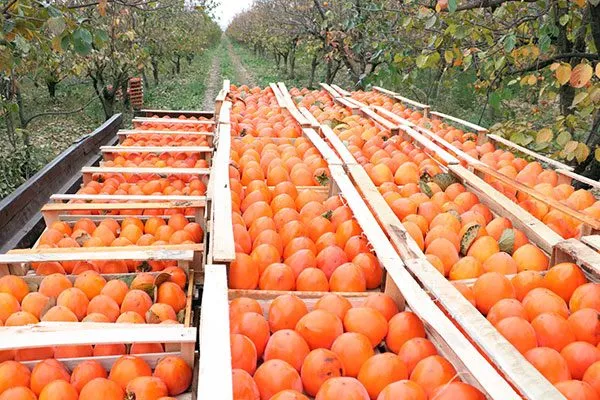
Peculiarities
Growing persimmons has a number of specific characteristics that must be considered when establishing and operating commercial plantations. Large farms strive for consistent results, high yields, and the highest possible fruit quality. Success depends on numerous factors.
Use of commercial varieties
Commercial persimmon varieties are selected for commercial orchards, not just any variety. These varieties include:
- characterized by high productivity and stable fruiting;
- have fruits that are uniform in size and shape, making them easy to transport and store;
- are resistant to diseases and pests;
- meet market demands in terms of taste and ripening time.
In Spain, the Rojo Brillante variety, popular for export, is widely grown. In Israel, the Sharon variety, prized for its lack of astringency, is the most popular. Dozens of varieties are cultivated in China, including both traditional varieties and newly selected varieties adapted for processing.
Taking into account climatic conditions
Persimmon is a heat-loving crop that requires a long growing season and mild winters. For large-scale plantations, it's important to adhere to certain requirements:
- optimal conditions are subtropical and warm temperate climate;
- At low winter temperatures (-10…-15°C) trees may freeze, so choose frost-resistant varieties or use agricultural protection methods;
- It is important to protect against sudden temperature changes and late spring frosts, which have a detrimental effect on flower buds.
Wind protection
Young persimmon trees are sensitive to strong gusts of wind. This can lead to broken branches, damaged bark, and premature fruit drop.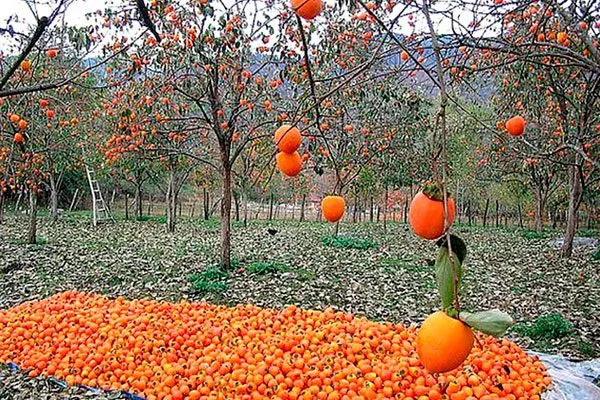
For industrial gardens use:
- living protective plantings (strips of poplar, acacia, pine or cypress) planted around the plantation;
- artificial windbreak structures – nets or fences, especially in open and windy areas;
- tree crown formation – ensures stability and uniform load distribution.
This not only reduces mechanical damage, but also improves the microclimate in the garden, retaining moisture and increasing pollination efficiency.
Features of persimmon cultivation
Large-scale persimmon cultivation differs from amateur gardens in that every stage must be carefully planned and technologically supported. Mistakes can lead to significant financial losses, so farmers and agricultural companies take a comprehensive approach to cultivating the crop.
Soil preparation
The foundation for the future harvest is laid at this stage. It's important to create conditions for the persimmon's root system to develop freely, receiving sufficient moisture and nutrients.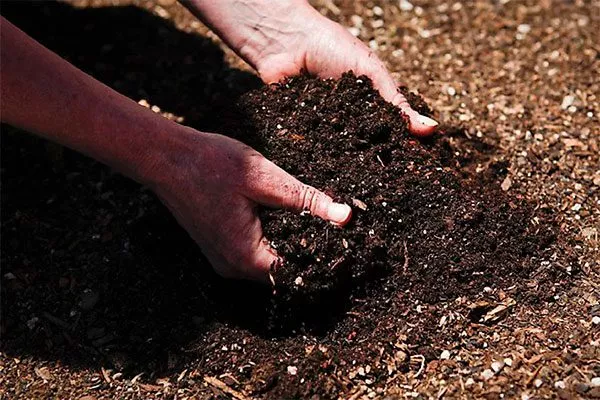
Basic requirements:
- Soil type. Light and medium loamy soils with good drainage are preferred.
- Acidity. The optimal pH is 6-6.5.
- Organics and minerals. When digging, add manure, humus, phosphorus and potassium fertilizers.
Selection of varieties
Choosing the right variety is key to ensuring the resulting fruit will be in demand and profitable. In commercial gardening, selection is based not only on taste but also on transportability, shelf life, and disease and weather resistance.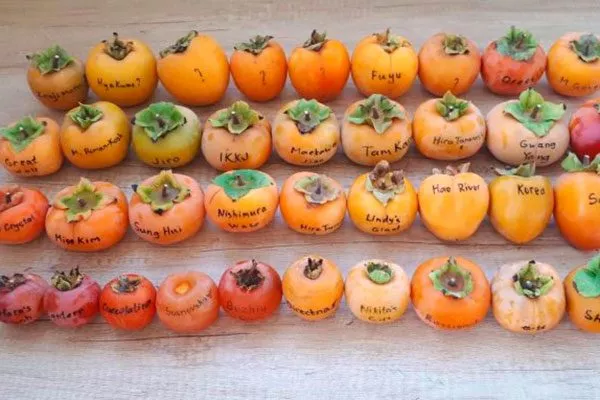
Which varieties to choose:
- export – dense, transportable;
- cold regions – frost-resistant;
- processing – sweet, high in sugars.
Modern breeding involves selecting hybrids with early fruiting and disease resistance.
Landing technology
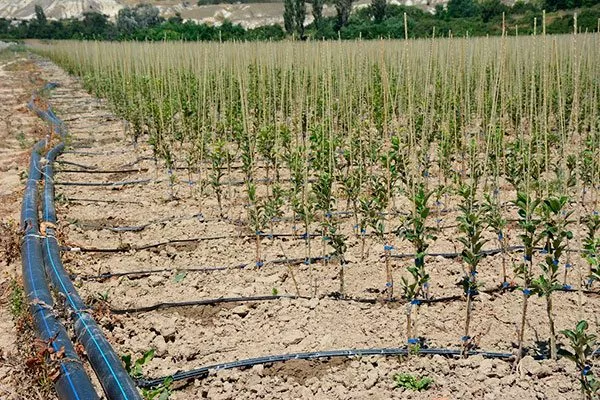
Planting trees on commercial plantations requires particular precision and organization. Not only the number of seedlings is important, but also their proper placement, which affects lighting, ventilation, and ease of mechanical maintenance.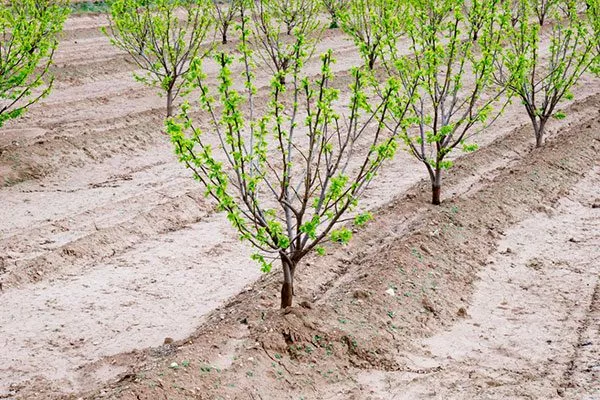
Please consider the following points:
- Planting pattern – 5×5 m or 6×4 m, depending on the variety.
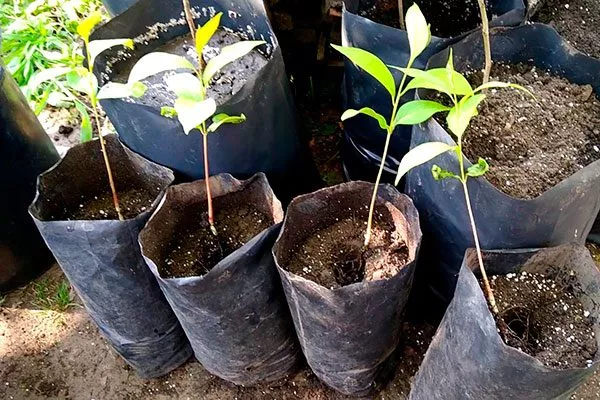
- Planting material – Use quality rootstock seedlings.
- Landing dates – In autumn, start the event in warm regions, and in spring – in areas with a risk of frost.
- Preparing the pits – Apply fertilizer and treat the roots of the seedlings with a clay slurry.
Garden maintenance
After establishing a plantation, focus on maintenance. This stage lasts for years and requires a systematic approach. Large farms employ modern mechanization and automation, which reduces costs and improves production efficiency.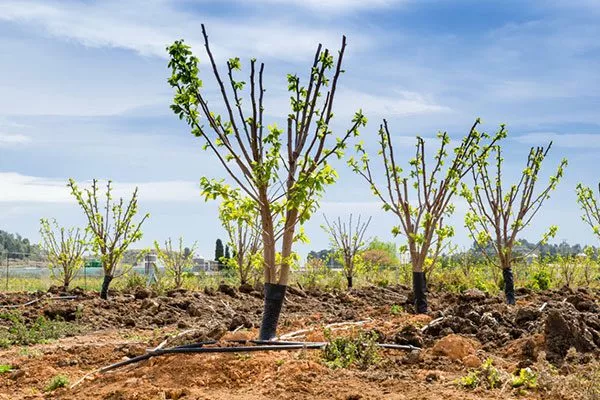
Follow these recommendations:
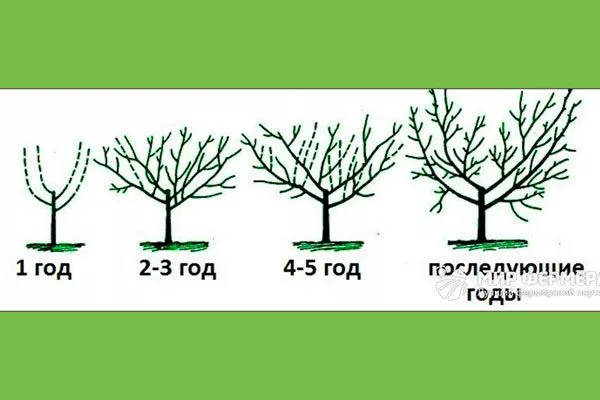
- crown formation – for ease of harvesting and uniform fruiting;
- watering and fertilizing – using drip irrigation;
- plant protection – from diseases and pests using integrated treatment systems;
- pollination – predominantly parthenocarpic varieties for yield stability.
Use mechanized platforms and controlled atmosphere refrigeration units.
Modern methods of intensive cultivation
Commercial gardening is now unimaginable without technologies that make production more precise, predictable, and cost-effective. Intensive cultivation methods allow for large yields even in limited spaces and ensure consistently high fruit quality.
Drip irrigation
Traditional irrigation isn't always effective on large plantations: it leads to water overuse, uneven moisture distribution, and an increased risk of disease. In contrast, drip irrigation delivers moisture directly to the tree's root zone.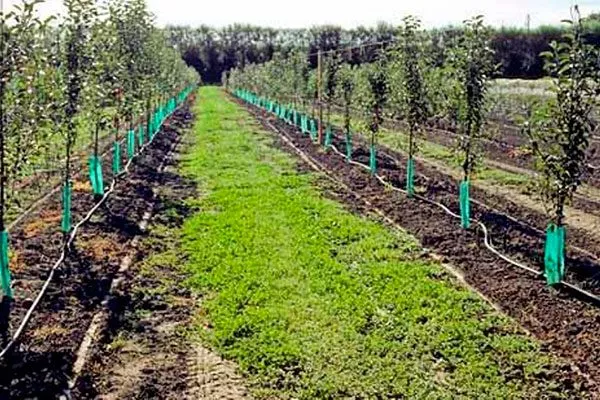
This method not only reduces liquid consumption but also improves fertilizer efficiency. The main advantages of this method are as follows:
- water is used economically and goes exactly where it’s needed;
- Fertilizers are applied through the system along with irrigation, which improves the absorption of nutrients;
- leaves and fruits remain dry, reducing the risk of fungal infections;
- uniform soil moisture is maintained, which is especially important during ovary formation.
Automated microclimate control systems
When growing on a large scale, it's important not only to provide plants with moisture but also to control all environmental factors. To achieve this, use automated systems that analyze indicators and manage agricultural processes without human intervention.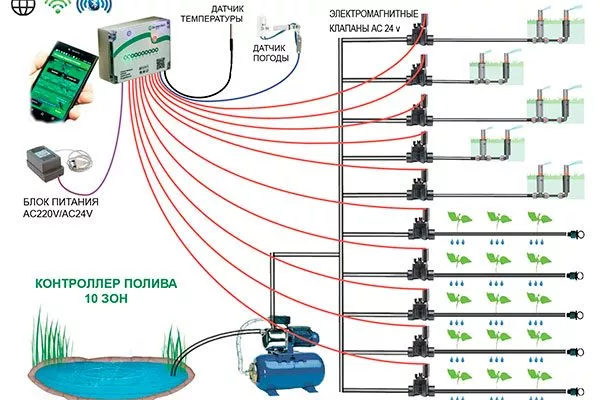
The following solutions have come into practice:
- temperature, humidity and light sensors that transmit data in real time;
- automatic switching on and off of irrigation and fogging systems;
- integration of anti-hail nets and systems for protection against overheating or frost;
- Risk prediction using software, allowing farmers to take action in advance.
Biostimulation technologies
Even with proper care, persimmon trees are susceptible to stress—from temperature fluctuations, drought, or pruning. To help plants recover faster and continue growing vigorously, use biostimulants—an environmentally friendly tool that increases resilience and improves crop quality.
Biostimulation is used in several directions:
- preparations based on amino acids and algae stimulate growth and increase plant immunity;
- microelements and organic complexes help trees survive stressful conditions;
- treatment during the flowering period improves fruit set and uniformity;
- The sugar content and shelf life of the harvest increases, which is important for export.
Agrotechnical measures
Agricultural technology plays a key role in successfully growing persimmons on a commercial scale. Even with the right variety selected and modern orchard establishment technologies in place, the quality of the harvest largely depends on how well-organized the care is.
Soil cultivation
Proper soil preparation and regular maintenance are the foundation of a productive garden. Persimmons don't tolerate stagnant water and require well-aerated soil, so farmers pay close attention to the soil structure and condition.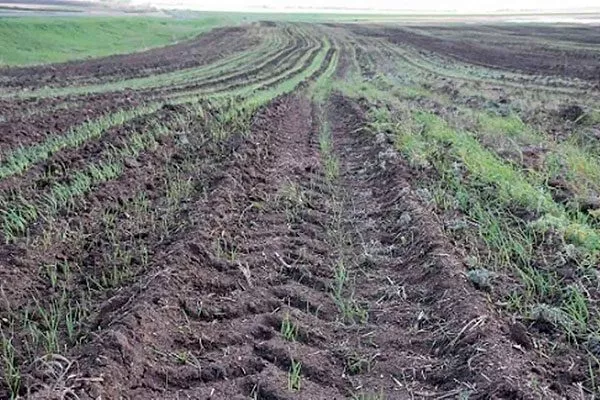
On industrial plantations, soil works include a whole range of activities:
- deep plowing and loosening to improve air and water permeability;
- weed control using mechanical or chemical methods to reduce competition for moisture and nutrients;
- mulching with organic materials or agrofibre, which reduces moisture evaporation and protects the root system from overheating;
- drainage measures in areas with high groundwater levels.
This cultivation system creates favorable conditions for the development of the root system and ensures the longevity of the garden.
Fertilization
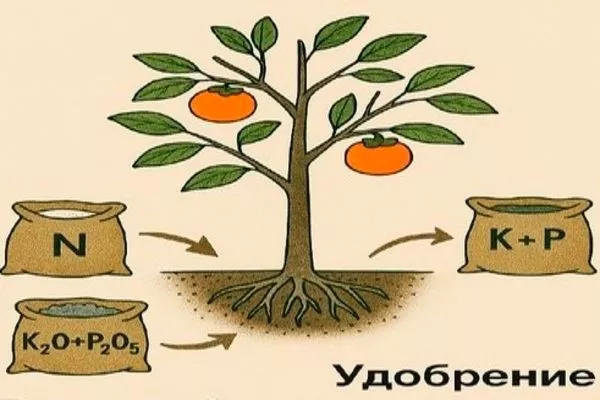
Persimmons require balanced nutrition, especially during the flowering and fruiting stages. On large farms, fertilizing systems are developed based on soil analysis and foliar diagnostics, allowing for precise nutrient application.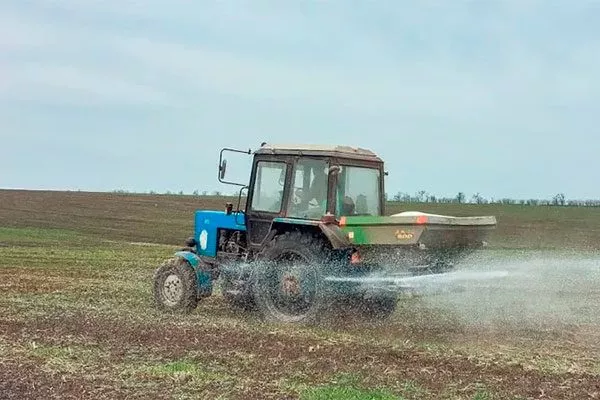
The main approaches are as follows:
- organic fertilizers (humus, compost) improve the structure of the soil and increase its fertility;
- mineral complexes with nitrogen, phosphorus and potassium ensure growth, flowering and fruit filling;
- microelements (boron, zinc, magnesium) promote better pollination, fruit setting and high-quality fruit coloring;
- fertigation through drip irrigation allows nutrition to be delivered directly to the roots in dissolved form, increasing the efficiency of its absorption.
A balanced diet not only increases yields, but also makes the fruits sweeter, more aromatic, and more transportable.
Pest and disease control
Protecting the orchard from biotic threats is one of the most important aspects of agricultural management. Persimmon is susceptible to insect attacks (scale insects, aphids, and codling moths) and a number of fungal diseases (late blight, powdery mildew, and gray mold).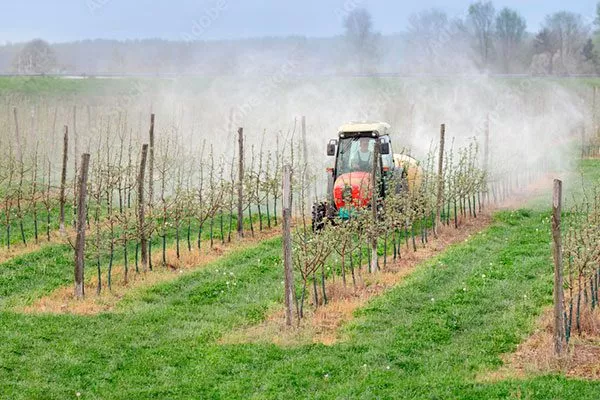
On an industrial scale, the fight against them is based on an integrated approach:
- regular monitoring of the garden's condition using pheromone traps and visual inspections;
- preventive treatment with biological preparations and fungicides to reduce the risk of infections;
- the use of entomophages (beneficial insects) and biological insecticides to reduce the use of chemicals;
- Sanitary measures: timely pruning, removal of infected branches and disposal of plant residues.
An integrated protection system helps maintain tree health and reduce the use of agrochemicals, thereby increasing the environmental value of the product.
Commercial aspects of cultivation
Large-scale persimmon cultivation is not only a matter of agricultural technology and innovation, but also a serious business venture. The economic viability of a plantation depends on many factors, and its commercial appeal is growing thanks to stable domestic demand and extensive export opportunities.
Production profitability
A key performance indicator is the revenue-to-cost ratio. At a large enterprise, the main expense items include:
- planting a garden (purchasing seedlings, preparing the soil, irrigation and drainage system);
- agricultural maintenance (fertilizers, biostimulants, protection from diseases and pests, pruning, watering);
- labor costs, including payment for qualified personnel;
- energy costs for automated systems and equipment.
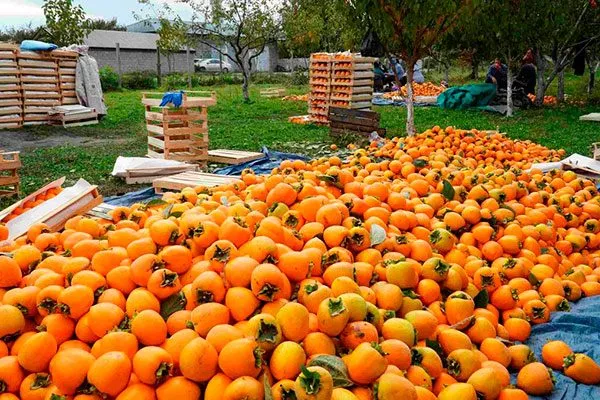
Income is generated through fresh fruit sales, processing, and export. With the right combination of high-yielding varieties, modern technology, and quality control, the profitability of an industrial persimmon plantation can reach 25-35%, and even higher with high export prices.
Logistics and storage costs
After harvest, persimmons require careful handling and temperature control. Key logistics costs include:
- transportation from the plantation to cold storage facilities;
- storage in chambers with a controlled atmosphere to extend the shelf life of fruits;
- sorting and packaging products for sale or export.
Marketing strategy
A successful commercial project requires not only cultivation technology but also a competent approach. A marketing strategy includes:
- market segmentation – division of products into categories: for processing, for domestic consumption and for export;
- brand building and promotion of fruit quality (organic products, sweet varieties without an astringent taste);
- participation in exhibitions and agri-food forums to find new partners;
- concluding long-term contracts with chain stores and export companies.
The integration of agricultural technology, logistics, and marketing transforms persimmon plantations into a highly profitable business with a sustainable economic model. Proper organization of all processes helps mitigate risks and maximize the crop's potential in domestic and international markets.
Statistics
Persimmon occupies a significant place in global agriculture, particularly in Asia and Europe. According to the Food and Agriculture Organization of the United Nations (FAO), production is showing steady growth, demonstrating its commercial potential and sustainable demand.
According to the FAO, annual persimmon production worldwide is approximately 1 million tons. The main producing regions include:
- China – The provinces of Shaanxi, Shanxi, Hebei, Henan and Shandong produce 70-80% of the world's persimmon.
- Japan – The Kyoto region of Yamanashi Prefecture is one of the oldest centers of persimmon cultivation, where various varieties are grown, including traditional dried types.
- Spain – Since the 1990s, persimmon production in Valencia has increased significantly, reaching 500 thousand tons in 2020.
The bulk of the world's harvest is produced in Asia and Southern Europe, where the crop has traditional significance and has been successfully adapted to modern agricultural methods.
Prospects and opportunities for further expansion
The commercial persimmon industry continues to grow rapidly thanks to growing global demand, increased consumer awareness of the fruit's health benefits, and the opening of new export markets.
Stable demand for fresh and processed fruits creates favorable conditions for investment in new plantations and the modernization of existing orchards. Investors can consider several key areas:
- expansion of plantations in areas with a suitable climate, optimized for industrial gardens;
- infrastructure modernization – irrigation systems, logistics centers, cold storage rooms for storing and sorting fruits;
- technological innovations – automation of agricultural processes, digital monitoring systems and the use of biostimulants;
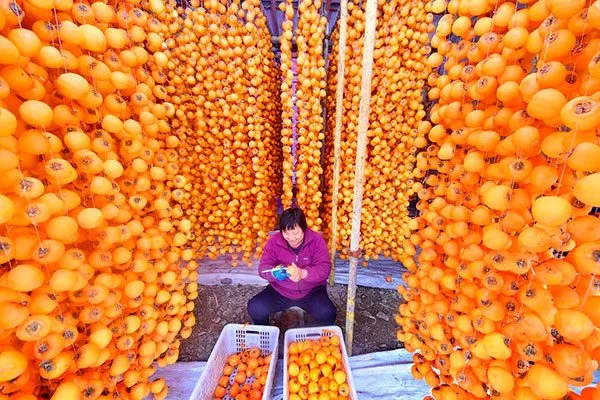
- processing – production of dried fruits, purees, frozen persimmons and ready-to-eat products;
- marketing and export projects – expanding our presence in international markets and promoting brands focused on quality and organic production.
To improve the efficiency and profitability of commercial plantations, it is worth using integrated approaches:
- integration of modern agricultural technologies with traditional methods of garden care;
- use of varieties with high yield and disease resistance;
- rational organization of labor and logistics, allowing to reduce costs and minimize losses;
- implementation of monitoring and data analysis systems for crop yield forecasting and timely adjustment of agricultural practices.
These measures create the foundation for sustainable growth in the industry and enable the efficient use of both existing and new resources, ensuring long-term profitability and a stable presence in the global market.
Currently, the commercial persimmon cultivation industry demonstrates stable growth and high economic potential. Modern technologies and the introduction of intensive cultivation methods allow for increased yields and product quality, while a well-thought-out marketing and logistics strategy ensures successful promotion in both domestic and international markets.