
Watering is an important part of persimmon care, especially for newly planted young trees. This exotic crop, which, thanks to advances in breeding, is now grown by gardeners not only in the south of the country but also in central Russia, produces a bountiful and high-quality harvest with proper irrigation. This article will cover all aspects of this process.

Features of the persimmon root system
The southern fruit tree is characterized not only by its developed above-ground part, but also by its underground part. It has a powerful underground taproot system, consisting of:
- main root, going to a depth of 0.7 m to 2 m (sometimes up to 3 m):
- multiple smaller lateral (adventitious) processes directed in different directions.
Thanks to its taproot's ability to penetrate deep into the soil and its extensive network of peripheral roots, persimmons draw nutrients and moisture from different levels: from the upper and lower soil layers. This ensures its good drought resistance and prevents it from experiencing high groundwater levels.
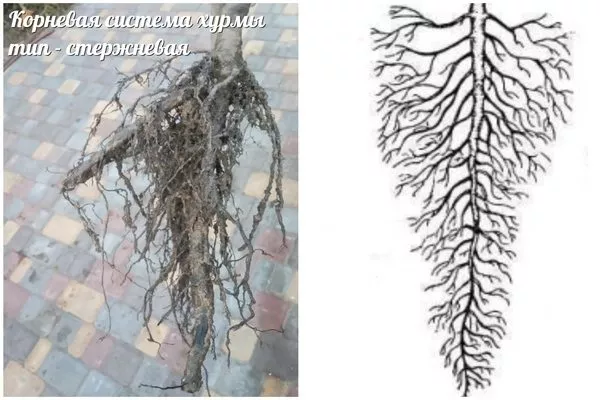
The components of the tree's underground system perform different functions:
- superficial root shoots absorb nutrients from the fertile soil layer and absorb fertilizer mixtures applied by the gardener to the trunk circle;
- The main stem and deep roots extract moisture, allowing the plant to withstand periods of drought.
Due to the nature of persimmon roots, persimmon seedlings require frequent, moderate watering during their first few years.
| Age of the tree | An indicator of the depth to which active roots extend | How often should I water? |
| 1 year | 0.2-0.3 m | 2-3 times a week |
| 2 years | 0.4-0.5 m | 4 to 8 times a month (1-2 times a week) |
| 3 years | 0.6-0.8 m | weekly, 4 times a month |
Fruit trees don't tolerate damp soil. Stagnant water around the tree trunk is harmful, and waterlogging is downright fatal.
Factors influencing irrigation regime
Many gardeners struggle to find the right balance when it comes to watering their persimmons. Under-watering is detrimental: seedlings struggle to establish themselves in poorly watered conditions, stunting their growth, and mature trees experience reduced yields and poor fruit quality. Excessive watering, however, can lead to plant rot and fungal infections.
To calculate the optimal watering frequency, it's important to consider a number of factors. These include:
- air and soil temperature;
- volume of precipitation;
- air humidity indicator;
- wind speed;
- soil type (its structure deserves special attention).

The climate of the growing region is key to determining the most suitable irrigation regime for persimmons. In the south, where summers are very hot and droughts are common, water evaporates quickly. The tree requires more frequent irrigation than in the central part of the country.
If you've planted a fruit tree in a sandy soil area, you'll need to water it more frequently than gardeners growing in loamy or black soil. You can find more information on planting and caring for fruit trees here. Here.
How to determine the need for watering?
You can determine whether your persimmon tree needs watering by taking a closer look. A tree suffering from water deficiency will exhibit the following external signs:
- withered foliage;
- yellowing and falling of leaves belonging to the lower tier;
- lightened color of the bark.
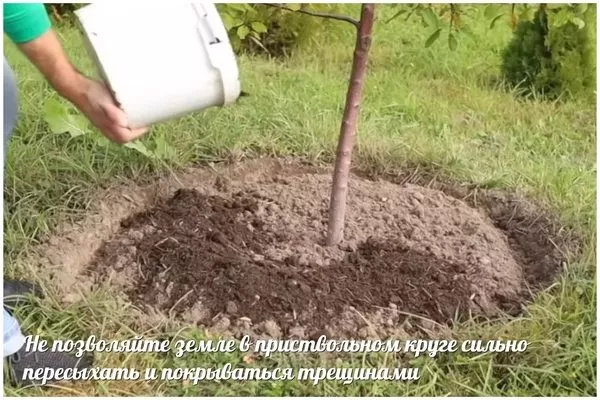
Pay attention to the condition of the soil around the tree's trunk. If the surface is cracked, water the tree immediately.
Rules for watering persimmons at home
When growing fruit trees in your garden, pay special attention to water consumption rates, application frequency, and other aspects of proper irrigation. Although persimmons tolerate short dry periods well, a large, high-quality harvest can only be achieved with regular irrigation.
Optimal watering conditions
When moistening the soil around the tree trunk, try to provide the fruit crop with the most favorable conditions for its growth and fruiting:
- moderate soil moisture (at least 19-20% of the full field moisture capacity for young plants);
- 900-1200 mm of precipitation per year (if there is not enough rain, compensate for the lack of water by irrigation);
- The air humidity level during the growing season is 60-70% (it is especially important to maintain it on hot days by spraying the crown).

A lack of natural precipitation is typical for the southern regions of the country. For example, in the Krasnodar Krai, less than 700 mm of precipitation falls annually. Under these conditions, it is necessary to increase the frequency of water treatments.
If watered more frequently than necessary, the tree will actively grow foliage at the expense of fruiting. This often results in ovary drop. Overwatering the soil also risks root rot and fungal diseases.
If a garden crop doesn't get enough water (due to insufficient watering or prolonged drought), gardeners face complications such as premature leaf and fruit drop. Not only can improving the watering regimen but also proper fertilization help solve the problem. Read on to learn how to fertilize persimmons. Here.
Humidification regime depending on the season
At different times of the year, the persimmon irrigation regime has its own characteristics, determined by its life cycle:
- in the spring months, when the crop is actively growing, it requires more moisture;
- During the summer season it needs stable, moderate and regular moisture;
- In autumn, a gradual reduction in the frequency of irrigation is required, since the tree enters a dormant period and needs proper preparation for winter.
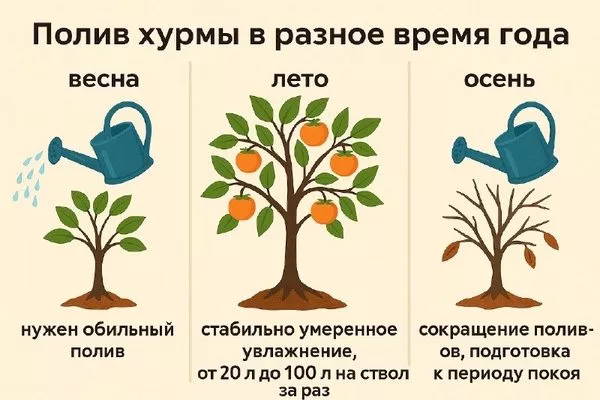
Pay particular attention to watering in the summer, when the ovaries are forming and the fruit is developing. Water the persimmon tree at the roots, using between 20 and 100 liters per trunk, depending on its age. A general guideline is to use up to 60 liters of water per square meter of fruit tree. One bucket a week will not be enough for the tree.
Persimmon during the period of active growth
During the spring and summer seasons, fruit trees experience a phase of intensive growth and development, as well as fruit formation. Their moisture requirements are quite high. During this period, the soil around the roots should not be allowed to dry out. Water moderately, following these guidelines:
- Immediately after planting, water the persimmon seedlings every 2-3 days for several weeks, using 10-20 liters of settled, lukewarm water per trunk at a time (you will find the most useful information about choosing planting material Here);
- young plants up to 3 years old require irrigation, carried out with a frequency of 1-2 times a week (at least 3 times a month) while observing the consumption rate of 25-40 l/trunk;
- adult trees from 3 to 5 years old require watering once a week (pour 40 to 80 liters of water under 1 trunk);
- A crop older than five years is hardy and drought-resistant; with sufficient rainfall, it does not require mandatory irrigation (to obtain a high-quality harvest, it is still recommended to “water” it 3-4 times during the growing season, using up to 100 liters of liquid at a time).
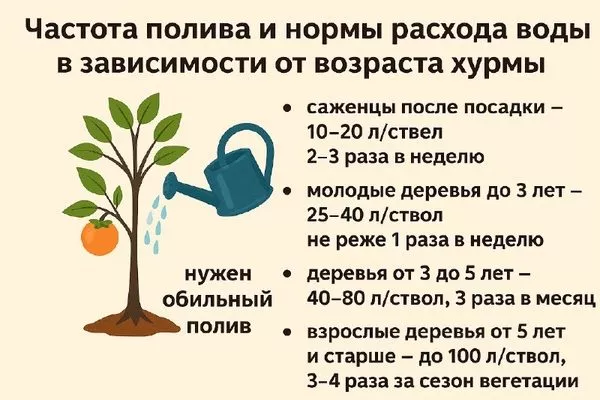
Even robust mature trees need watering if the season is dry. Drying out the soil to a depth of 30 cm or more is dangerous and can lead to the tree's death.
Persimmon during the dormant period
In late autumn, once the harvest has been gathered, persimmons need to be prepared for the cold season. They need to be given ample water to prevent winter drying out due to lack of moisture in the garden soil. Perform a moisture-replenishing irrigation, following these guidelines:
- get down to business after the leaves have fallen en masse, a few weeks before frost (approximately in November);
- the temperature regime should be at the level of +2-5°C, not higher, and the soil should not yet begin to freeze due to nighttime cold snaps (under such conditions, a slowdown in sap flow in the green organism is observed and its need for moisture is significantly reduced);
- Do not rush the procedure to avoid waking up the tree before winter (this is dangerous for garden crops, especially for seedlings)
- saturate the soil in the area around the trunk to a depth of 1-1.2 m for mature persimmons, and from 0.7 m for young plants (in a moist state, the soil freezes more slowly than in an overdried state, due to which the tree gradually adapts to the cold season);
- If the autumn is rainy, the tree does not need moisture-recharging watering;
- To understand whether the crop needs this autumn procedure, take a handful of soil from a depth of 40 cm: if it crumbles in your hands, carry out the procedure;
- use up to 120 liters of water per trunk (for young specimens - 2 times less);
- if necessary, carry out the procedure in several stages, watering the tree trunk circle every other day;
- Water should be completely absorbed into the soil, without stagnating for long periods in the root zone and without blocking the oxygen supply to the underground parts of the plant.
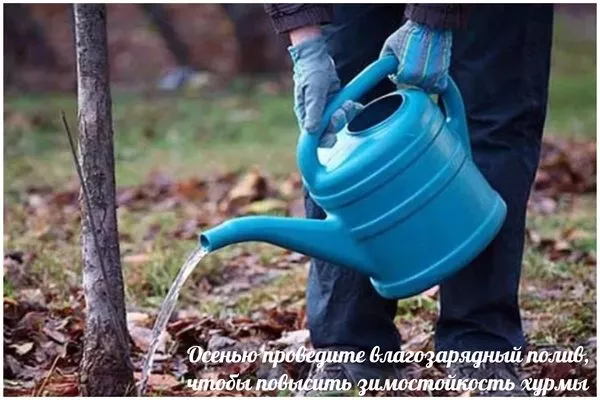
For fruit trees growing in the temperate climate zone, moisture-replenishing irrigation is essential. It prevents the bark from drying out. In this condition, it is unable to protect the persimmon from frost and cracks easily. Properly performed irrigation ensures good winter hardiness of the tree.
Watering persimmons in hot weather
During the peak summer season, when temperatures exceed +30⁰C and dry weather sets in, increase watering of the fruit tree without changing the liquid consumption rates:
- water young plants every other day;
- those who have reached productive age - 2 times a week.
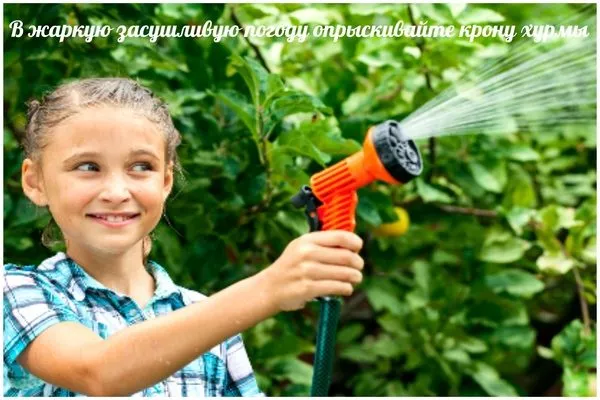
In hot weather, garden plants also suffer from dry air. Misting the crown or placing open containers of water near the tree's trunk can help solve this problem.
Water quality recommendations
When irrigating persimmons, not only the frequency and rate of water application are important, but also the quality of the water. It must meet the following requirements:
- be transparent without turbidity;
- soft (the salt content in it is no more than 2 mg-eq/l);
- no pungent odor;
- with a pH level of 6.0-7.0;
- heated to +22°C (ideally, the temperature of the water for watering a fruit tree should be the same as the ambient temperature, the permissible deviation is plus/minus 5°C).
You can check its acidity and salt content using special test strips and devices. Regular soap will also help. If it produces a lot of foam, the water is soft.
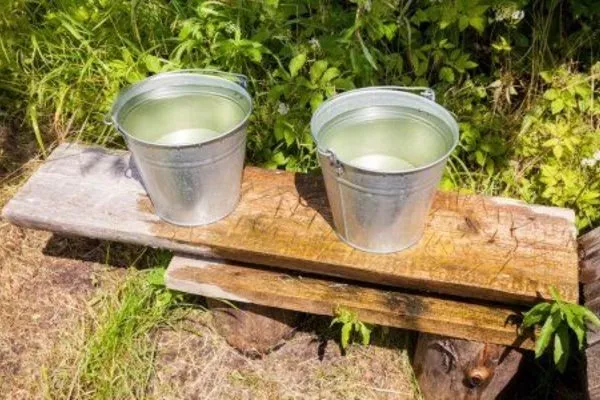
Use river, rain, well, or borehole water for irrigation. In a pinch, tap water will do. To improve its quality, take the following steps:
- let it sit for several hours to get rid of chlorine and solid impurities (they will settle to the bottom);
- slightly acidify hard water with lemon juice (citric acid powder will also work) to make it softer;
- Leave it in an open container in the sun to allow the liquid to warm up to the desired temperature.
Ice spray causes a lot of damage to trees:
- the roots lose the ability to absorb moisture from the soil, and the leaves continue to evaporate it;
- the green mass withers and loses turgor;
- there is a slowdown in the growth and development of culture;
- the root zone may become covered with mold, and the roots may begin to rot;
- the plant becomes more susceptible to fungal and viral diseases and pest attacks.
Avoid heating water intended for irrigating fruit trees to temperatures above 30°C. This can burn the persimmon's roots and harm beneficial soil microflora.
Step-by-step instructions for watering
Carry out watering procedures following the effective method of watering fruit plantings developed by experienced gardeners:
- Check the soil moisture level around the tree. Take a small amount of soil from a depth of 10-15 cm. Squeeze it into your fist. If a lump doesn't form and the soil crumbles in your hands, begin watering.
- Use a watering can with a diffuser attachment. Fill it with water that has been left to stand and warmed in the sun.

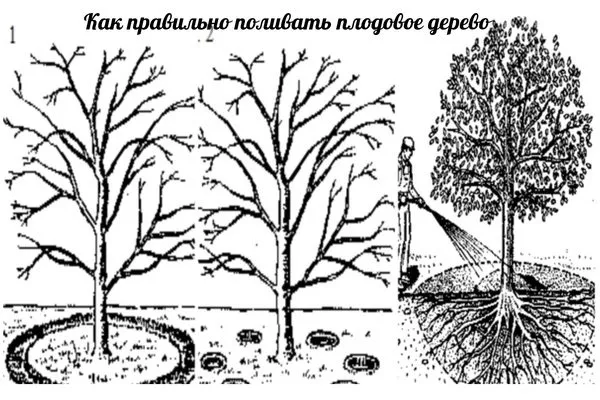
- Apply water at the roots, staying within the tree's trunk circle. To prevent water from spreading, create a ridge of soil around the tree immediately after planting.
- Water slowly and evenly, allowing the moisture to fully absorb into the soil. Follow the recommended water application rates per trunk as stated earlier.
- After the water has been absorbed, loosen the soil slightly and cover it with mulch.
Signs of insufficient and excess moisture in the soil
Persimmon is sensitive to both insufficient and excessive soil moisture. This southern plant requires moderate irrigation. To determine whether you are able to provide this, monitor the condition of the tree and the soil beneath it.
| Signs | Moisture deficiency | Over-watering of the soil |
| Foliage | withers, turns yellow, falls off | becomes faded and soft |
| Bark, roots | the bark becomes lighter, looks dry, cracks, and may begin to peel off in older trees | root rot, softening of the trunk, mold on the bark, its darkening and peeling |
| Fruit | small, light in weight, hard and tasteless, fall off before ripening, low yield | they fall off when unripe, while ripe ones crack, become affected by fungus, and rot |
| Soil in the tree trunk circle | looks overdried, covered with cracks | damp, moldy, gives off a sour smell |
Additional tips for healthy hydration
Experienced gardeners offer beginners tips on how to maximize the effectiveness of watering. Following these tips will help ensure a high persimmon yield and prevent diseases, particularly root rot.
Mulching: A Tool for Moisture Retention
Don't be lazy about covering the soil with a layer of organic matter after watering the tree trunk area. This helps create a favorable soil microclimate and has many positive effects:
- mulch retains moisture in the soil for a long time;
- suppresses weed growth;
- regulates the soil temperature, preventing sharp fluctuations that cause stress to the plant.

Use natural materials such as straw, wood chips, compost or non-acidic peat for this purpose.
Monitoring soil moisture levels for informed irrigation decisions
To ensure your persimmon tree maintains optimal soil moisture levels, monitor it regularly. Monitoring this important parameter will help you grow a healthy, strong tree that produces a bountiful harvest (read more about how to determine the ripeness of sunny fruits). here). If the soil consistently contains sufficient water, the fruits will become larger and sweeter.
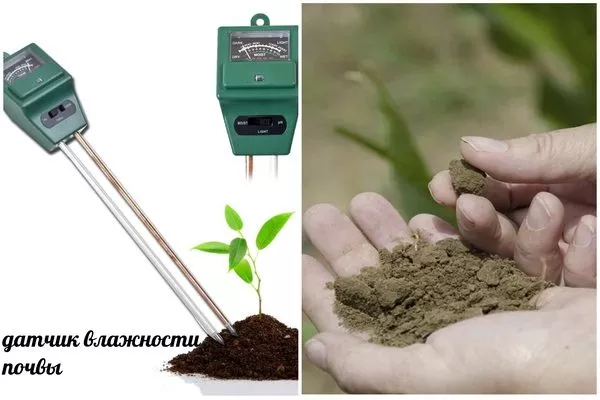
To monitor the soil moisture level in the tree trunk area and maintain this parameter within the limits recommended by experts (19-20%), use:
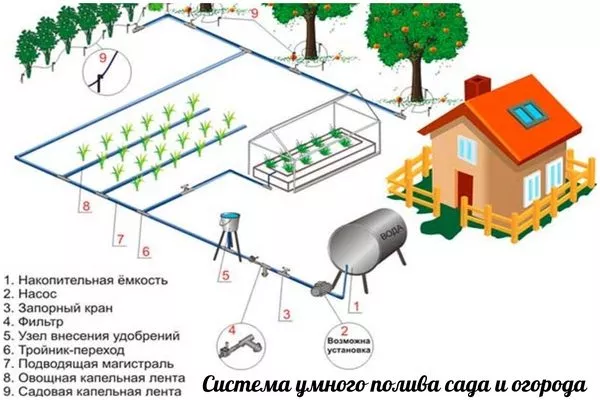
- Special devices. They're called "moisture sensors." Install this smart device deep within the tree's roots to obtain accurate readings. Ideally, it should be connected to a smart irrigation system that automatically regulates water flow.
- Folk methodsIf you don't have any equipment, you can monitor soil conditions using reliable, old-fashioned methods. These will help you determine whether your tree needs watering. The most popular ones are:
- Using a wooden skewer. Insert it into the soil to a depth of 15 cm. Remove it after 10 minutes. If the skewer is dry and clean, the soil is dry. The tree needs watering immediately. For more accurate results, test the soil in several places around the tree's trunk.
- Using filter paper. Take a handful of soil from under the persimmon tree, 10-15 cm deep. Sprinkle it over the leaf and press lightly with your palm. If the paper is immediately damp underneath, no watering is needed; if a damp spot appears on it after a while, the moisture level is optimal; if it remains dry, it's time to water the fruit planting.
Modern irrigation technologies
In recent years, many innovative solutions have emerged for automating the irrigation of various tree seedlings, including persimmons. These solutions improve the efficiency of watering, helping garden plants stay healthy and produce a more abundant, high-quality harvest.
Experts consider modern irrigation methods that provide crops with sufficient water without causing them harmful stress:
- Drip systemThis method delivers water directly to the plant roots. It minimizes moisture loss, ensures uniform distribution, and ensures thorough soil penetration to the desired depth.
Additional benefits include preventing weed growth and reducing the risk of leaf diseases (drip irrigation keeps leaves dry).
- Installation of micro-sprinklersThe devices deliver liquid in the form of a fine mist (they spray the liquid to the consistency of water pollen).
This method allows for covering a much larger area than drip irrigation. It is recommended for young seedlings and for planting persimmons with wide spacing between trees. - Applications of intelligent irrigation controllersThese smart devices use current weather data and soil moisture readings from sensors.
They automatically adjust the irrigation regime, optimize water use, and reduce water loss. They ensure that soil moisture under fruit trees is supplied only when truly needed.

Basic recommendations
Experienced gardeners offer beginners several tips on how to properly irrigate persimmon plantings:
- Observe the watering regime, do not exceed the frequency of procedures and the water application rates (they are specific for each age of plants);
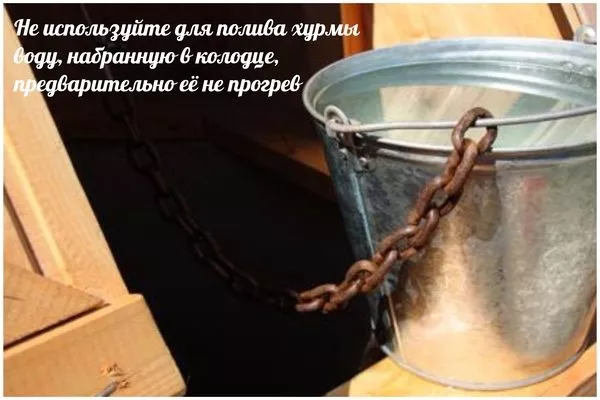
- Do not use water collected from a well or borehole without preparation (it is too cold and will need to be preheated to +22°C);
- adjust the schedule taking into account climatic and weather conditions (in dry and hot weather, water the trees frequently; in rainy weather, refrain from watering);
- When growing persimmons in sandy soil, water them frequently, as such soil does not retain moisture;
- water the plantings with rainwater, soft and rich in oxygen;
- Water seedlings more often than adult plants;
- trees older than 5 years in areas with a moderate climate (enough rainfall, no heat or drought) can be watered several times per season: during the fruiting period and before wintering;
- do not allow the soil in the area around the tree trunk to become waterlogged (this can lead to root rot) or dry out to a depth of more than 30 cm (the tree may die);
- carry out the procedure in the morning and evening hours to avoid rapid evaporation of moisture;
- During dry periods, spray the crown to increase air humidity, or place a container of water next to the trunk;
- use special devices and folk methods to control soil moisture levels;
- If possible, install drip irrigation or a smart irrigation system;
- do not neglect mulching, which can reduce the amount of watering;
- There is no need to pour water directly onto the root collar, but rather saturate the trunk circle with it gradually and evenly;
- Don't be lazy in loosening the soil after heavy rains and irrigation, so that a dense, air-impermeable crust doesn't form on its surface.
Common mistakes and their consequences
Novice gardeners, when caring for such a capricious southern plant as the persimmon, often make mistakes. Due to improper cultivation practices, they encounter many complications, ranging from a deterioration in the tree's appearance and a decline in yield, all the way to death.
Among the most common mistakes regarding watering a fruit tree, one can see:
- Irregular irrigationIt is especially detrimental to newly planted young plants. They require moderate soil moisture, several times a week, to ensure proper root development.
- Frequent irrigation or use of large volumes of liquid, significantly exceeding the normExcessive moisture is dangerous for fruit trees. It can lead to waterlogging around the tree trunk, root rot, and root death. Under such conditions, the persimmon tree may die.
- Insufficient or too infrequent wateringA lack of moisture leads to stunted tree growth, reduced yield, and smaller fruit. Neglecting watering can cause problems for both young plants and those grown in arid climates.
- Using cold waterAn ice shower causes severe stress on fruit crops, reduces their immunity, and increases the risk of disease.
- Lack of drainage when planting persimmonsGrowing fruit trees in poorly aerated soils (dense, clayey) with low drainage capacity can lead to water stagnation in the root zone. This leads to underground rot and fungal diseases.

Proper irrigation of persimmons is the key to maintaining their health and producing a bountiful, high-quality harvest. This involves adhering to water consumption standards, applying the right amount of water, and adjusting the schedule based on weather conditions and the age of the plants. Use modern technologies and traditional methods to simplify this process, making it more efficient and cost-effective.