
The Gora Goverla persimmon is an original variety developed in 2014 by specialists at the Novokakhovskoye farm in Ukraine. It belongs to the Caucasian persimmon species (common persimmon) and quickly gained recognition for its adaptability and ability to produce fruit in a variety of weather conditions.
Description of the variety
This persimmon variety is distinguished by its abundant fruiting, largely due to its impressive size – the trees can reach 500 cm in height.
Other varietal characteristics:
- The tree grows 30-40 cm annually. Its crown branches widely, creating the impression of strength and resilience to heavy fruit loads. The branches are robust and brown.
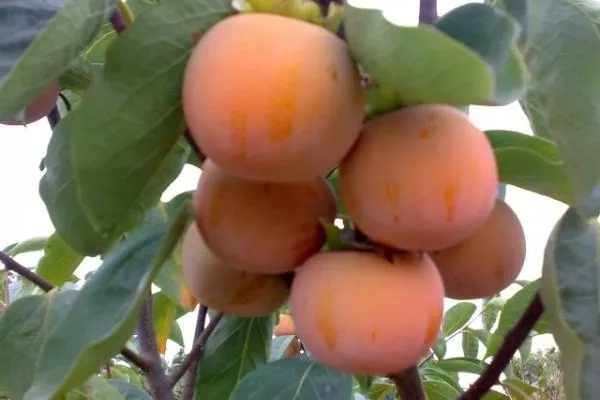
- The leaves are ovate, medium-sized, with a smooth surface and clearly visible venation.
- The tree begins to bloom in May and June. The flower buds are small and have four petals.
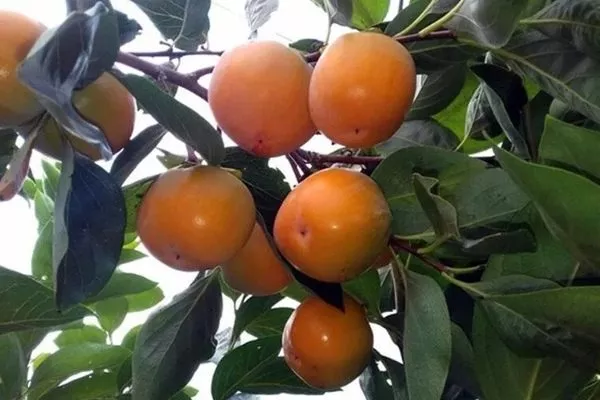
- The fruits are quite large (weighing 190-280 g) with a flattened, round shape. Their skin takes on a rich orange-red hue, and the flesh is firm but tender, with a pleasant aroma.
- Inside the fruit are medium-sized brown seeds, which are easily separated from the edible part.
Main characteristics
Initially, the variety was intended for cultivation in areas with a temperate and continental climate, but thanks to the efforts of breeders, its growing area was expanded to the northern and eastern regions.
This plant prefers a warm climate and demonstrates good frost resistance, withstanding winter frosts down to -24-25°C, but in areas with harsh winters, it is recommended to mulch the trunk circle and cover young trees with agrofibre.
The tree can be grown in an open garden or in a pot on a balcony or terrace. Consider these other factors:
- the harvest is collected in October, and the fruits retain their freshness and quality until February if stored properly (temperature +1-3°C, humidity 80-85%);
- the plant demonstrates increased resistance to the main diseases of stone fruit crops, but preventative treatments against fungal infections and pests (such as aphids and codling moths) are still necessary;
- The productivity of an adult tree is 60-70 kg.
Harvesting persimmons requires special care and attention—they must not be shaken or knocked down; they must be picked exclusively by hand. To do this, you must:
- support the fetus with one hand;
- another one carefully unscrew the stalk.
This is a process that requires patience, as the persimmon stalk is short and very strong.
How to use the Goverla Mountain persimmon variety?
Mount Hoverla is a fruit rich in minerals and vitamins essential for overall health. It contains vitamin C, B vitamins, potassium, magnesium, iron, and other important components.
This persimmon variety:
- helps strengthen the immune system;
- optimizes the functioning of the cardiovascular system;
- regulates cholesterol levels in the blood;
- promotes better absorption of food.
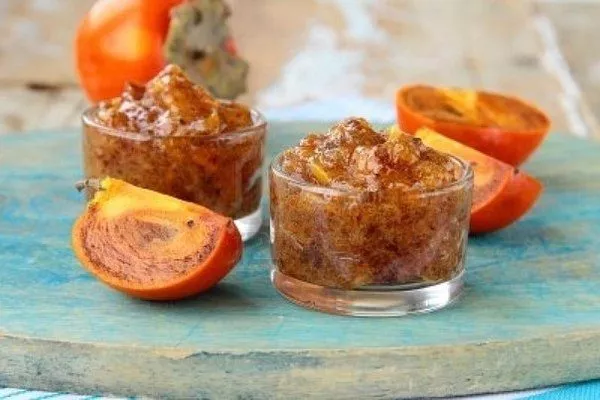
Persimmon pulp has an incredibly sweet flavor with a slight astringency that disappears after the fruit is fully ripened or frozen. The fruit can be eaten fresh, used to make jams, dried fruits, sweets, and even wine.
In addition, the Mount Hoverla persimmon is ideal for creating salads, pairing well with other fruits, nuts and cheeses.
Its versatility makes the Goverla Mountain persimmon a valuable plant for both private gardens and industrial cultivation.
The variety is valued not only for its tasty fruits, but also for its attractive appearance:
- in the spring the tree is decorated with cute flowers;
- in summer it is covered with green foliage;
- in autumn attracts the eye with its bright fruits and golden leaves.
Peculiarities:
- the plant is ideal for single plantings, creating alleys or as an accent in garden compositions;
- branches of the Mount Goverla persimmon also serve to create windbreaks and natural shade;
- flowers attract bees and other pollinators;
- During the winter months, the fruits serve as food for birds, which adds ecological value to the plant;
- Thanks to its deep root system, the Mount Hoverla persimmon can be used to strengthen slopes and prevent erosion.
Planting persimmon
The optimal period for planting is early spring or autumn, when there is no longer or no danger of frost.
Before planting, it is necessary to add organic components (humus or compost) to the pre-prepared hole, as well as mineral preparations with a high phosphorus content.
Selecting a location, soil, and planting material
When choosing a location for persimmon planting, choose a sunny spot protected from drafts. The seedling should be planted in an open, evenly lit area where it will not be exposed to strong winds.
Given the thinness of persimmon wood, it's necessary to provide additional protection by placing it behind a building or structure. Alternatively, you can use shields made of wood and non-woven fabric.
Persimmons prefer loamy soil with good drainage. However, avoid wet soils and low-lying areas to prevent rotting and plant death. Insufficient moisture can reduce the size and juiciness of the fruit, while excess water can lead to root rot.
Before purchasing a persimmon seedling, consider the following tips:
- Choose seedlings from specialized nurseries to ensure the correct variety and adaptation to local conditions;
- Check the tree for damage, rot, diseases and pests, starting from the leaves and ending with the roots;
- If possible, inspect the area where the seedling was grown;
- It is desirable that the roots have a lump of earth, not bare, and that the tree trunk is strong;
- It is better to plant persimmon on the same day it was purchased, or the next day, but not later.
Rules for planting a seedling
Proper planting procedures are key to the future development and yield of the plant. The optimal time for this operation is spring, when the soil temperature reaches 17 degrees Celsius.
According to the experience of experienced gardeners, seedlings purchased from nurseries demonstrate a higher survival rate compared to those grown from seeds.
The landing process includes the following steps:
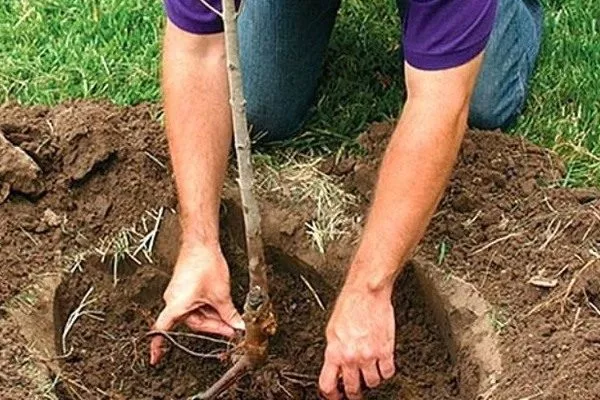
- Carry out preparatory work by digging a hole with a volume of at least 50 liters.
- Place a layer of pebbles or sand at the bottom of the hole for drainage.
- Add humus, then fill with fertile soil, creating a small mound.
- Place the seedling on the mound, carefully spreading the roots. It's important to bury the root collar 5 cm below the soil surface.
- Fill the hole with soil, being careful not to compact it too much.
- Fix the seedling together with the support peg.
- Water the soil using 20 liters of water per trunk.
Propagation by seed
Propagation by seed is considered unprofitable, as it takes 2-3 years. However, if you're interested in doing so, follow these guidelines:
- select a pot and place the seed in it horizontally, covering it with a layer of soil to a depth of 2-3 cm;
- moisten the soil with warm water using a spray bottle;
- cover the container with glass or a plastic bag to create greenhouse conditions;
- Water and ventilate regularly as needed to prevent the seed from rotting;
- The first shoots will appear in a month. Open the pot when the first two leaves grow;
- when the plant reaches a height of 50 cm, transplant it into a more spacious container for the development of the root system;
- Renew the soil and pot according to how the plant grows, doing this 2-4 times a year;
- During the warm season, take the plantings outside to strengthen and harden them;
- In case of cool or frosty weather, return the plant indoors at night;
- Spray with general purpose fertilizer once or twice a month;
- when the plant reaches a height of 75-80 cm, trim the top to stimulate the growth of lateral branches;
- When the height reaches 120-150 cm, transplant the seedling into open ground.
Caring for persimmon
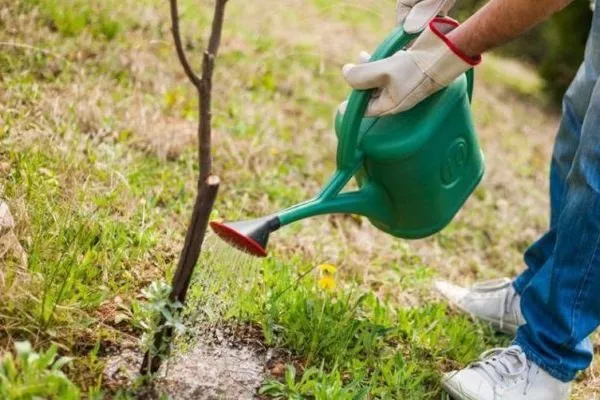
An optimal approach to watering and fertilizing persimmons is key to their healthy development and productivity. Seedlings require regular irrigation—two to three times a week, while mature trees require watering once or twice a month, with increased frequency during droughts.
Watering, mulching and loosening
Persimmons don't tolerate prolonged drought, which can cause unripe fruits to fall. Regular, abundant watering without stagnant water prevents root rot. During the summer, the tree requires more moisture.
To maintain its level, you can spray the plant daily in the morning or evening, and place containers of water around the trunk. When fertilizing in the summer, be sure to moisten the soil before and after application.
Mulching and fluffing:
- The beds with seedlings and the soil around an adult tree must be regularly loosened to prevent the formation of a crust, which disrupts gas exchange and leads to deterioration of the root system;
- To reduce the time spent on watering and tilling, it is recommended to mulch the area around the trunk - for this you can use straw, hay and other organic materials, as well as agrotextiles;
Organic mulch will help maintain moisture and looseness of the soil, prevent weed growth, and act as a natural fertilizer for persimmons.
Pruning, crown shaping
The persimmon tree's crown structure is maintained in perfect condition through regular, annual pruning. This is a key element of care, affecting yield, as persimmons bear fruit exclusively on young shoots.
The haircut should be carried out as follows:
- in the first year of life, the tree is pruned to 80 cm in height, leaving lateral shoots;
- after two years, the skeletal branches are reduced to 40 cm;
- In subsequent years, the procedure is aimed at forming a voluminous crown and reducing the length of the stems to avoid them breaking under the weight of the fruit.
Feeding and preparation for winter
The combined use of mineral and organic components significantly increases tree productivity. The first fertilizers are applied during spring planting. If planting is planned for the fall, no fertilizer is added to the hole, as excess nitrogen can stimulate foliage development. This will lead to a decrease in frost resistance, which can be critical.
Persimmons are fertilized several times during the season. The main steps are:
- in the spring, after the buds have opened, nitrogen is added (for example, rotted manure or urea);
- in summer, after flowering, the emphasis is on potassium and phosphorus fertilizers;
- In the fall, after harvesting, phosphorus and potassium are used to strengthen frost resistance.
Experienced gardeners recommend using liquid fertilizers. Feed the plants with a weak solution of mineral fertilizers every two weeks during the growing season until the persimmons ripen.
Nuances:
- Vermicompost is the most effective organic fertilizer. It is diluted at a ratio of 80-100 g per 1 liter of water and left to infuse for 24 hours. The infusion is used for watering every other day.
- Wood ash is used as a potassium-phosphorus additive, prepared in a ratio of 1 tablespoon per 1 liter of water and infused for 20-25 hours.
- During the first 3 years, the soil is fertilized in a tree trunk circle with a radius of up to 70-80 cm, after which it is expanded to 150 cm.
- One tree aged 3 to 5 years will require 10-15 kg of organic matter, one aged 6-10 years – about 20 kg, and after 11 years – up to 25 kg.
- During the flowering period, plants are protected from diseases and pests using preparations such as Actofit, Horus, Fitosporin and others.
It's important to consider the zoning of the selected seedling variety. If it's not frost-resistant enough, the young tree will die in its first winter. To increase the plant's resistance to low temperatures, cover the plants with agrotextile for the first few years after leaf fall.
Reviews
The Gora Goverla persimmon is not just a tree with sweet and fragrant fruit, but also a beautiful addition to any garden. This persimmon variety is suitable for both commercial cultivation and for creating an impressive landscape for a private home or cottage. By following proven soil selection, watering, and care methods, you can achieve impressive yields.