
The Yakovlevskaya pear is a winter variety with high yields. It is characterized by frost resistance and resistance to most pear diseases and pests. Although relatively new, this variety has already become a favorite not only among gardeners but also among consumers for its excellent taste.
History of creation
The creators of the variety are employees of the State Scientific Institution All-Russian Research Institute of Genetics and Breeding of Fruit Plants named after I.V. Michurin: Stanislav Pavlovich Yakovlev, Anatoly Pavlovich Gribanovsky, Nikolai Ivanovich Savelyev and V.V. Chivilev.
This variety was added to the State Register of Breeding Achievements of Russia in the early 2000s. Yakovlevskaya was created by crossing the high-yielding Daughter of Zarya variety, which produces fine-grained, aromatic fruits, with the frost-resistant Talgarskaya Krasavitsa variety, which produces elongated, amber-colored fruits.
Varietal features and characteristics
To determine the necessity and feasibility of planting this pear variety, you need to carefully examine all the characteristic features of the crop, from the description of the tree and fruit to frost resistance and demands.
Dimensions and height of the tree
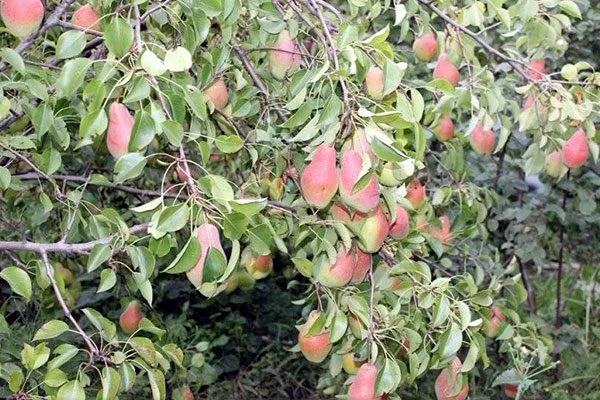
This is a medium-sized tree, reaching a maximum height of 8-10 m. It is characterized by a mixed fruiting pattern and has the following external and other characteristics:
- crown – pyramidal type, medium density (depending on the type of formation, the shape may be cone-shaped);
- foliage shape – oblong-oval;
- Features of the leaf blade – medium size, sharp long edges on both sides, but there is some dullness at the base;
- leaf surface – smooth and slightly glossy, dark green;
- edges – finely serrated with serrations;
- branches – erect, medium in thickness and smooth;
- lentils – numerous;
- kidneys – small format, compacted, slightly concave to the side, conical;
- petioles – wide-long;
- stipules – awl-shaped;
- bark – with a burgundy tint.
Fruit characteristics
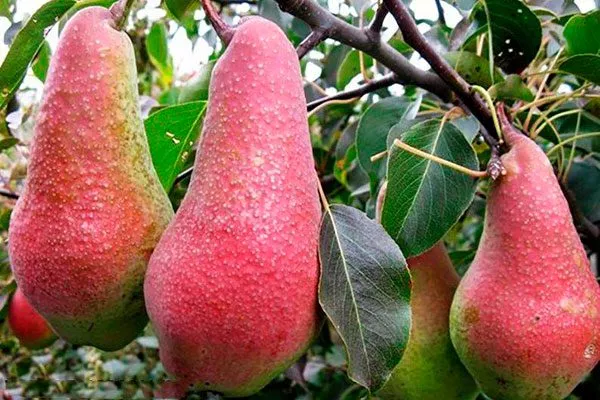
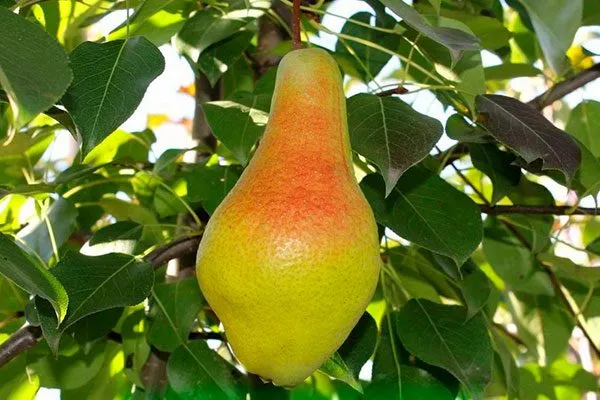
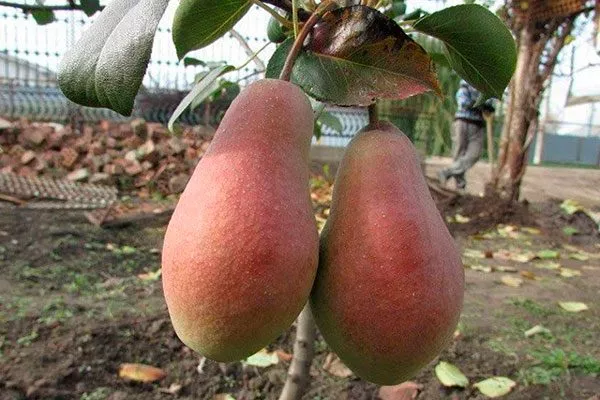
Fruit sizes vary depending on proper farming practices, weather conditions, and climate. The minimum weight of pears is 115 g, the maximum is 220 g. Brief description of pears:
- form - correct pear-shaped, but elongated at the top;
- peel – thin and imperceptible when chewing;
- surface – mixed (silkiness, oiliness and a waxy protective coating are observed at the same time);
- skin color – initially green and slightly emerald, but after reaching consumer maturity it acquires a reddish coating;
- pulp shade – can be cream or white;
- peduncle – long and concave;
- funnel – small and narrow;
- saucer – small, but thickened;
- cup – non-falling and semi-closed type;
- heart – bulbous;
- bones – brown, slightly long, conical;
- seminal chamber – closed;
- pulp – medium-dense, quite juicy and tender;
- pulp structure – semi-oily, fine-grained and slightly granular type.
- ✓ The variety has high resistance to scab, but requires preventive treatment in conditions of high humidity.
- ✓ The fruits have a unique combination of oiliness and graininess, which is rare among winter varieties.
Life expectancy
Cultivated pear varieties can live up to 80-95, and even 100 years under favorable conditions. However, after 45 years, trees begin to show signs of aging, which affects yield and branching mass.
Fruiting and yield
This variety begins bearing fruit in its fifth or sixth year. Yields increase rapidly until the tree reaches its 20th year, and with proper care, it can consistently produce the maximum number of large fruits up to 40 years of age.
In private farms with high-quality care, a single plant can yield up to 45-55 kg of pears. Under commercial cultivation conditions, the yield can reach up to 180 centners per hectare.
Flowering and pollinators
The Yakovlevskaya pear is self-fertile, meaning it pollinates with its own pollen. However, having other varieties with similar flowering times in the garden, such as Saint-Germain, Saratovka, Pervomayskaya, and Nika, can improve yields through more effective cross-pollination.
Ripening time and harvest
Southern winds and summer sunshine often allow harvesting to begin as early as the first ten days of September. However, if summer brings cold and rainy weather, the fruit ripens much more slowly, so the harvesting period extends into the final days of September.
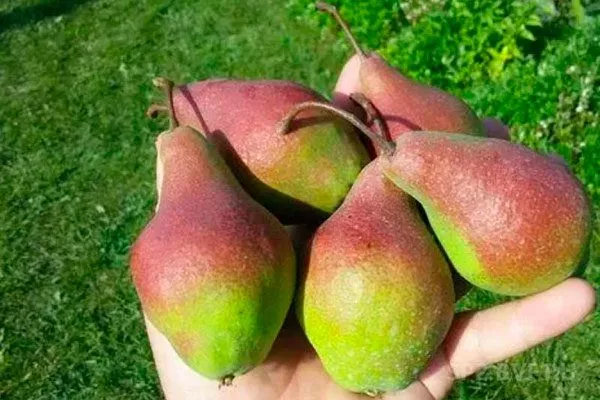
The frost-free weather that continues into the autumn months allows the pears to continue to ripen on the branches, absorbing sweetness and juiciness until the 20th of October.
Tasting qualities and uses of fruits
Ripe pears of this variety are distinguished by tender, buttery, and juicy flesh with a slight graininess. Sugar and vitamin C content ranges from 9 to 11%, giving the fruit a harmonious combination of sweet and sour flavor and a distinct pear aroma with floral notes.
These qualities are rated by tasters at 4.5 on a five-point scale. The fruit is suitable for fresh consumption, dried fruit, wine, and also for making preserves, marmalades, marmalades, compotes, juices, and nectars.
Transportability
The fruit is highly transportable: when stored under special conditions, the variety retains its marketability and flavor for up to six months. Wooden or plastic containers with ventilation holes are used, and each fruit is wrapped in parchment paper for protection.
Resistance to drought and frost
This variety has above-average winter hardiness compared to other varieties traditionally grown in Central Russia. It successfully withstands even extreme conditions, such as artificial freezing in winter conditions down to -38 degrees Celsius, after which minimal damage was recorded.
The variety is very demanding of regular and abundant watering in hot, dry weather, and its deficiency leads to a decrease in fruit size and yield.
Immunity to diseases and insects
This variety is known for its high resistance to debilitating pests and diseases, meaning it doesn't require systematic maintenance throughout its lifespan. However, preventative treatments should be performed at least once a year.
Cultivation regions
This pear variety was bred for cultivation in the Central Black Earth Region and adapts perfectly to the conditions of the Tambov, Oryol, Tula, Kharkiv, Belgorod, and Lipetsk regions. It also grows and produces fruit well in regions such as Voronezh, Kursk, and elsewhere.
Planting the Yakovlevskaya pear
The variety demonstrates unpretentiousness in growing conditions and thrives in a variety of soil types. The Yakovlevskaya pear is ready for planting in the second year after the plant has been formed on the rootstock or has successfully rooted. Important points:
- Given the variety's sensitivity to excess moisture, a drainage technique using sand is used on heavy soils to achieve a better soil structure.
- If the groundwater level is located superficially, then the conditions become unsuitable for the full development of the tree.
- The best time to plant is early spring, starting in March, or autumn until mid-October.
- The planting soil should be fertile, easy to cultivate, and slightly airy. Slightly acidic loess (loamy sandy loam soil) enriched with organic matter is preferred.
- Planting pattern: 4x5 m.
- The holes are filled with substrate two weeks before planting, allowing the soil to settle. The ideal depth for each hole is 45-55 cm with a diameter of 55-65 cm. A stake is placed inside to support the plant.
- If the roots are exposed, their ends need to be renewed by trimming.
- Fertilizers are added to the hole: up to 180 g of superphosphate and about 20-25 g of potassium sulfate.
- ✓ The optimal soil pH for the Yakovlevskaya pear should be between 6.0 and 6.5. Testing the soil's acidity before planting is essential.
- ✓ The distance to groundwater should be at least 2.5 meters. Too close can lead to root rot.
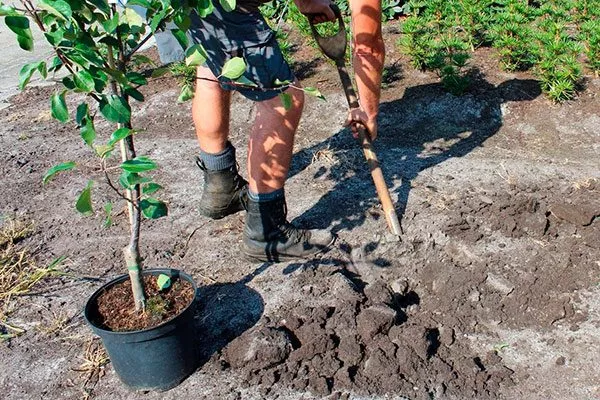
After planting, the seedlings need to be tied down and watered thoroughly. The root collar should remain above the soil level after compaction, as should the grafting site.
Rules for caring for the variety
After completing planting work, it is time to begin the usual care of the pear in accordance with agricultural requirements:
- Allow the tree about 10 days to adapt to the new conditions. After this, regularly loosen and weed the area around the trunk, and cover it with a layer of mulch.
- The pear tree should be watered during the following periods:
- before flowering begins, if the winter was snow-poor and the spring was dry;
- 20 days after flowering;
- during the process of fruit formation;
- at the beginning of September to stimulate the filling of fruits with juice and the development of roots;
- before the onset of winter, to create a moisture reserve for the spring, improve wintering conditions and protect the tree from rodents.
- When fertilizing a pear, consider the following:
- During the first 4 years after planting, the tree usually does not require additional nutrition, provided that the planting soil mixture was correctly composed;
- from the beginning of the third year of vegetation in early spring, fertilize with nitrogen-containing fertilizers, for example, urea or ammonium nitrate, in the amount of 20-22 g per 1 sq. m;
- In the fifth year of development, before the onset of fruiting, in the fall, it is recommended to apply organic fertilizer in combination with Superphosphate (45 g/sq.m) and potassium sulfate (25 g/sq.m).
- Pruning pear tree branches helps shape the tree's crown, optimize its growth conditions, increase yield, and improve fruit quality. During the first six years, it's important to shape the crown, leaving 5 to 7 main scaffold branches and removing excess ones to ensure sufficient light and space for development.
Advantages and disadvantages of fruit crops
The Yakovlevskaya pear variety has the following advantages:
Among the disadvantages, it should be noted that this variety requires more careful maintenance and careful crown shaping. Incorrect or missed pruning can lead to dense branches, which reduces the yield and quality of the harvest.
Preparing for winter
A mandatory step is to coat the trunk and lower branches with a lime solution. For winter protection, use the following components per 10 liters of water:
- 1 kg of lime;
- 3.5-4 kg of clay;
- 2.5-3 kg of liquid diluted mullein;
- 50 g each of copper sulfate and office glue;
- 100 g of brown laundry soap;
- 5 ml Epin or Heteroauxin.
In addition to whitewashing, do the following:
- coat the trunk with manure, which will repel rodents and improve the structure of the plant;
- mulch with peat mixed with grass;
- in severe frosts, wrap with heat-insulating non-woven material;
- cover with spruce branches.
Methods of reproduction
The variety is best propagated by grafting onto rootstock, but cuttings and layering can also be used.
How to Increase Your Yield: Tips and Advice
Increasing the yield of a pear orchard is a long process that requires patience and hard work. However, by following the advice and recommendations of experienced gardeners, you can reap a bountiful harvest of juicy and sweet pears:
- To increase pear yield, regular pruning is recommended. This allows for light to reach the crown, improves air circulation, and improves the overall health of the plant. Pruning helps shape the crown and stimulates the growth of new fruit-bearing shoots.
- To ensure a good harvest, regularly feed the plants with mineral and organic fertilizers. It's important to remember that an excess of nutrients can also negatively impact pear yield.
- Another important aspect is proper watering. Pear trees require adequate moisture, especially during dry periods. However, excess moisture can lead to root rot and fungal diseases. Therefore, it's important to maintain optimal soil moisture levels.
- To increase pear yields, it's important to pay attention to pest and disease control. Regular plant inspections, preventative measures, and timely treatment will help avoid crop losses.
Gardeners' reviews of the variety
The Yakovlevskaya pear, not to be confused with the Yakovleva variety, is considered versatile and easy to grow. It boasts excellent shelf life and yield, strong immunity, and a unique pear-floral aroma.