
Fire blight is an infectious disease. Besides pears, the bacterium attacks hawthorn, cotoneaster, quince, rowan, apple, serviceberry, apricot, strawberry, raspberry, cherry, plum, rose, and sour cherry. If even one infection is left untreated, the disease can destroy a significant number of garden trees in a very short time.
Geography of the disease
It was first recorded in the 13th century in New York State. From there, the disease spread to Canada, Mexico, and Chile. Gradually, the bacterium spread throughout the world.
It first appeared in Russia in 2009, and by 2018, the disease had affected more than 200,000 hectares of horticultural crops in the country.
Causes of fire blight
The main factors in the development of infection are considered to be:
- the presence of bacteria carriers - birds and insects;
- pruning trees with undisinfected tools;
- excessive levels of nitrogen in the soil;
- damage to the pear tree trunk.
Pathogen
The causative agent of the disease is the bacterium Erwinia amylovora, a member of the Enterobacteriaceae family. The pathogen penetrates plant blood vessels and absorbs their juices. It can coexist with fungal vectors. Under favorable conditions, it can kill a fruit tree within a couple of seasons.
A favorable environment for development
A diseased tree can infect all plants in the area. It secretes a bacteria-filled fluid, which is carried long distances by wind and high temperatures. The rate of infection depends on several factors:
- age of the tree - young seedlings are more prone to developing infection than mature pear trees;
- julienne - some trees have increased immunity and are practically not affected by fire blight;
- climate — when the air temperature rises to +20 degrees, the bacteria begins to divide at a rate of 3 times per hour.
The bacterial blight pathogen thrives in warm, humid weather. It can thrive in both large amounts of liquid and small droplets of water.
Signs of the disease
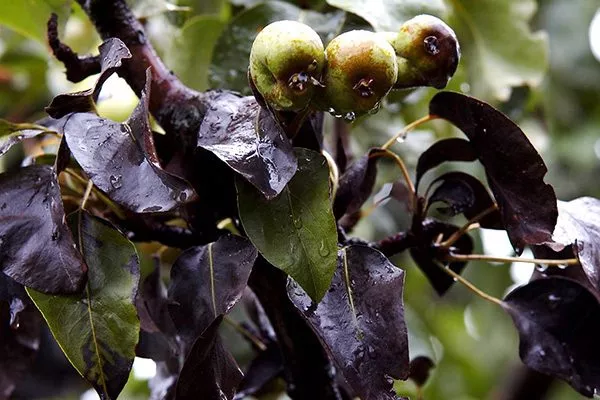
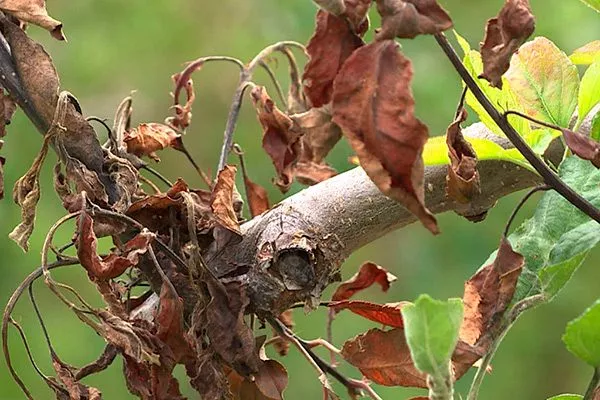
Signs of tree infestation appear in spring and summer. Leaves turn black and dry out, but remain attached to the branches. Infection of flowers can lead to the failure of fruit to appear on the affected branches.
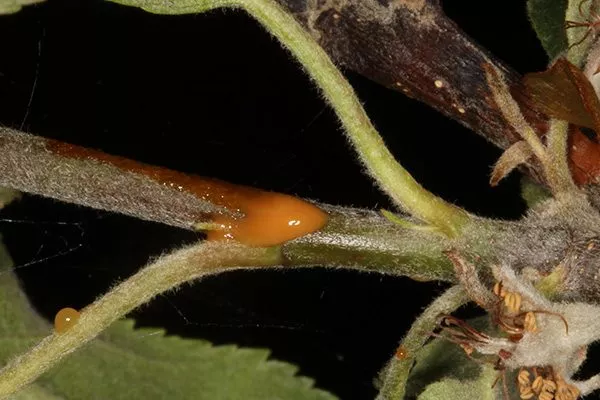
In humid conditions, infected shoots exude a liquid. Initially, it appears milky-white, but upon exposure to the environment, it darkens, turning brown.
In the early stages of the disease, a gardener can still save the pear tree. To do this, remove all blackened areas and disinfect the cut areas. Failure to do so will result in the infection spreading to the tree trunk, causing:
- the bark becomes soft;
- large white spots appear on it, which gradually darken;
- the affected areas begin to peel off, forming ulcers;
- brown "streaks" spread around the holes.
From this point on, the plant is doomed. All the gardener can do is quickly remove the diseased tree from the plot to save the remaining crops.
How to treat fire blight?
Treat the plant if it's affected by no more than 1/3. The bacteria co-exist with the fungi. When treating, use bactericidal (antibacterial) and fungicidal (antifungal) products.
Antibiotics
These are considered the most effective treatment for fire blight. Popular medications include:
- Tetracycline: 2 tablets per 3 liters of water. Combine with streptomycin.
Streptomycin – 1 ampoule per 5 liters of liquid. Has a short duration of action. - Ofloxacin: 1 tablet per 1 liter (medical dressing) or 2 tablets per 10 liters (spray). This is a strong medication, so strictly follow the dosage.
- Gentamicin – 1 ampoule per 1 liter of water. A powerful antibiotic.
Repeat this procedure approximately three times per season. Choose cloudy days, otherwise the microorganisms contained in the preparations may be destroyed by sunlight. In severe cases, the frequency of treatments may be increased (1 spray every two weeks). Supplement these with injections.
Remove bark from the affected area of the branch and inject streptomycin. If you don't have any tools, soak a piece of gauze in the solution (1 tablet of ofloxacin per 1 liter of water) and apply it to the cleaned area. Secure the bandage with tape or film.
Chemicals
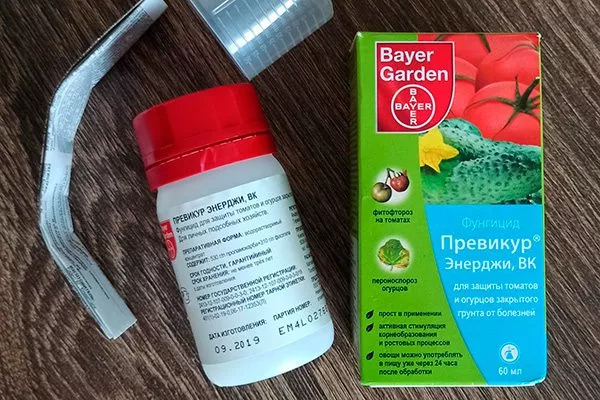
Previcur Energy has proven itself effective. It contains fosetyl aluminum, which quickly spreads from the roots to the top of the tree, killing harmful bacteria.
In other cases, use fungicides (Zineb, Poliram, Acrobat, Polihom) or copper oxychloride. They won't cure fire blight on their own, but they will reduce the damage the bacteria causes to the plant.
Treat trees 3 times per season:
- Before the sap begins to flow.
- After flowering.
- When all the leaves fall from the tree.
Biopreparations
Fitolavin is considered the most effective biological agent. It contains an antibiotic produced by strain 696 of Streptomyces lavendulae. It penetrates and spreads throughout the plant, killing the bacteria.

- ✓ The air temperature must be at least +15°C to activate microorganisms.
- ✓ The soil must be pre-moistened for better penetration of the preparation.
Treat the infected tree with a solution of Fitolavin (20 ml per 10 liters of water) several times. Perform the procedure when:
- In the inflorescence, the buds are separated from each other, but still covered by sepals.
- About 20% of flowers are open.
- The diameter of the fruits reached 2 cm.
- The fruits have grown to 4-5 cm.
Gamair is considered the next most effective treatment. From the moment the buds open, spray the tree three times with the prepared solution (20 tablets per 10 liters), leaving about 7 days between treatments.
A universal remedy is Fitosporin. Dissolve 15 g of powder in 10 liters of water, let it steep for about 2 hours, and then apply it to the infected plant. The best time to apply is before flowering. The weather should be cloudy but warm.
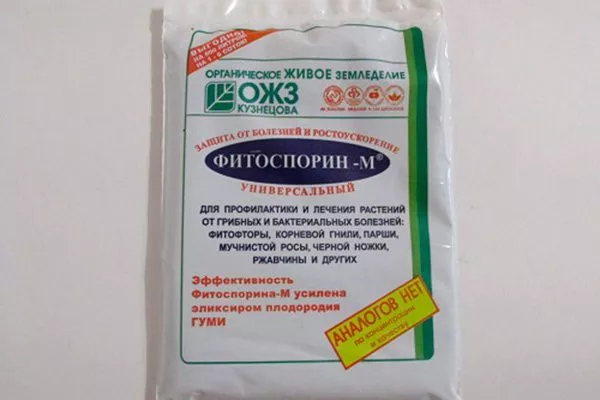
Only one treatment is allowed per season. If it rains afterward, repeat the spraying a week later. For prevention, reduce the powder concentration by half.
Traditional methods
A few days before flowering, spray diseased trees with a sweet solution (250 g sugar, 1 tbsp honey, 10 liters of water, and a penicillin antibiotic according to the instructions). This stops the spread of bacteria and repels insects from infested areas.
Other folk remedies are not considered reliable against fire blight. Use them as a way to stop the spread of bacteria. The most effective spray solutions are:
- Dissolve 10 g of boric acid powder in 10 liters of water;
- stir 200 g of ash into 10 liters of liquid;
- 10 tablets of succinic acid per 10 liters of water;
- For 10 liters of liquid, add 2 tablespoons of sugar, 10 g of yeast, stir and let sit for 2 hours.
Radical measures
When only one tree in the local area is infected, and the rest of the crops are healthy, radical measures can be used: uproot the diseased pear tree and burn it far away from the site.
The final step is to remove all wild plants growing nearby and treat nearby trees with pest control products.
When a diseased pear tree is only 1/3 damaged, it can still be saved. To do this:
- Treat all garden tools with alcohol.
- Cut off affected branches from the diseased tree 40 cm below the level of infection.
- Disinfect the cut areas, then cover with garden pitch.
- Treat the remaining branches with a fungicide based on copper sulfate.
- Disinfect instruments with 70% alcohol solution or 10% copper sulfate.
Consequences of treatment
Antibiotics suppress the tree's immune system, making it vulnerable to other diseases. Support the plant with immune stimulants (Zircon, Cytovit, Silk). Use them strictly according to the instructions.
Disease prevention
By following simple recommendations, you can prevent infection with fire blight:
- Before flowering, spray the trees with an antibiotic solution made from 250 g of sugar, 1 tbsp of honey, and 10 liters of water. This treatment prevents insects from spreading the infection.
- Remove wild plants regularly.
- Treat trees with Ecogel, Narcissus, etc.
- Watch for garden pests (aphids, mites) and get rid of them promptly. Any pest can transmit disease.
- Don't neglect whitewashing trees.
- Treat pear trees with copper-containing fungicides twice a year. This is especially necessary if fire blight has been detected in adjacent areas.
- Practice sunburn and frostbite prevention.
Which pear varieties are resistant to fire blight?
| Name | Resistance to fire blight | Ripening period | Productivity |
|---|---|---|---|
| November | High | Late | High |
| General Leclerc | High | Average | Average |
| August dew | High | Early | High |
| Williams | Average | Average | High |
| Maria | High | Late | Average |
| Bere Durando | High | Late | High |
| The Fugitive of Magnitogorsk | Average | Early | Average |
| Carmen | High | Average | High |
Some pear varieties are resistant to this disease. They share good immunity and tolerance to heat and frost. The main varieties resistant to fire blight include:
- November;
- General Leclerc;
- August dew;
- Williams;
- Maria;
- Bere Durando;
- Fugitive Magnitogorsk;
- Carmen.
If errors are made during planting or tree care, even belonging to a certain variety does not save the tree from the threat of fire blight.
If fire blight has completely destroyed the plant, it must be destroyed. If a gardener can spot the first signs of this dangerous disease and begin treatment promptly, they have a good chance of saving the pear tree. A comprehensive approach will help stop the spread of the infection and ensure the health of the fruit crops.