
The Williams pear is an ancient variety, mentioned as early as the 18th century. Today, it is known worldwide, prized for its rich chemical composition and unusual pear flavor—with wine-muscat notes. Being a cultivar, not a hybrid, the Williams is not known for its resistance to many adverse factors.
Who developed the variety and when?
The pear's origins are in the southern part of England, in the town of Berkshire. The cultivar was introduced to the public in 1770 and registered in 1776. Breeder Wheeler used the Common pear variety for crossbreeding. The second variety remained unknown or was simply forgotten over time.
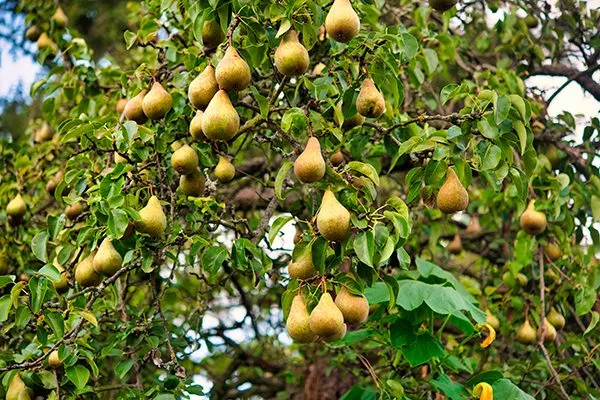
Williams Richard, who was responsible for the pear's propagation, gave it its name. The first seedlings were brought to Crimea in the 1860s, but the variety was only added to the state register of the Russian Federation in 1947.
Varieties of the variety
Over several centuries, the tree has undergone mutations and selection, resulting in three more varieties of the Williams cultivar. Each has its own unique characteristics, so when purchasing a seedling, it's important to check the specific subvariety of the tree.
| Name | Tree height | Crown shape | Fruit weight |
|---|---|---|---|
| Main variety | 200-250 cm | rounded-pyramidal | 150-200 g |
| Williams Summer Pear | up to 200 cm | pyramidal | up to 180 g |
| Winter variety of Williams | tall | spreading | 150-250 g |
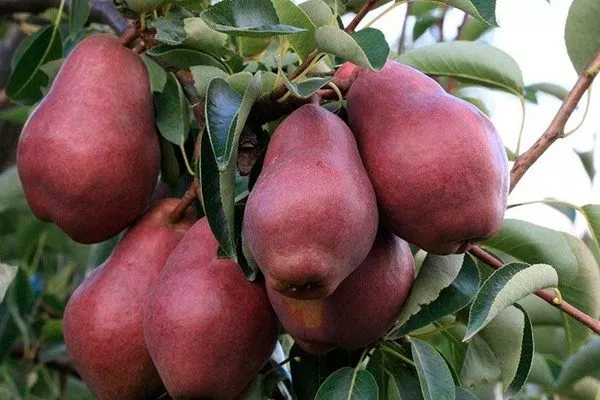
| Red Williams | short | compact, pyramidal | 150-200 g |
Main variety
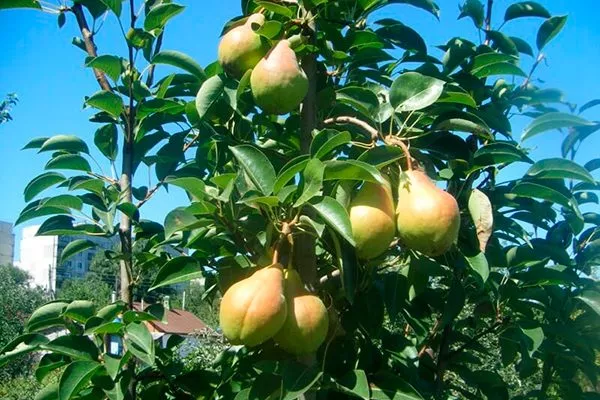
The original Williams is a medium-sized or dwarf variety, as the tree height does not exceed 200-250 cm. Features:
- shoots – grow upward, strong, erect and arched;
- crown shape – rounded-pyramidal;
- dense branches – average;
- foliage – powerful;
- lentils – in small quantities;
- leaves - ovoid, large, shiny and smooth;
- leaf blades – have veins on the sides in light shades;
- flowers – whitish-cream, medium;
- inflorescences – contain about 7 flowers;
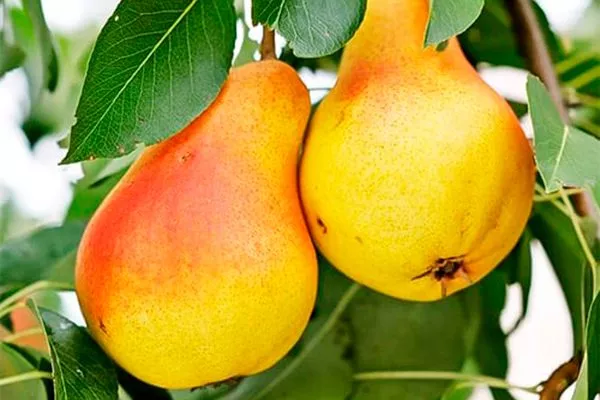
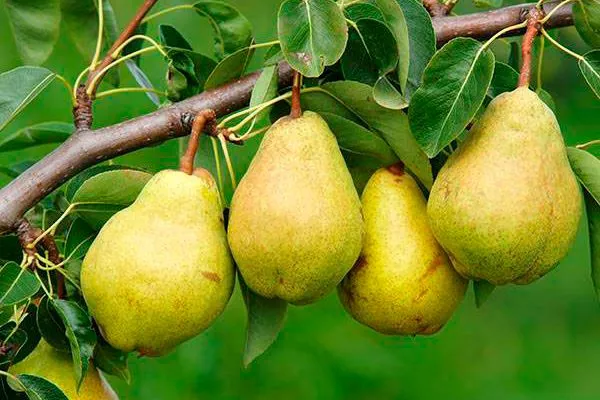
- weight of fruits – 150-200 g;
- form - elongated pear-shaped;
- color - yellow with a golden tint, with scarlet-pink inclusions and rusty spots on one side;
- pulp – very juicy and tender, melts in your mouth;
- structure – oily type;
- peel – refined and shiny; surface - with subcutaneous gray dots;
- peduncles – medium in length, powerful in thickness, slightly curved in shape;
- taste - sweet nutmeg;
- seeds - oval, brownish, small in size.
The yield is quite high: about 250 kg can be harvested from a mature tree, and approximately 70 kg from a young one. 180-210 centners per hectare.
Williams Summer Pear – Description and Characteristics
A distinctive feature of this variety is that the tree stops growing after 10 years, as abundant harvests prevent this. Another name for this variety is Summer Duchess. The variety is characterized by the following characteristics:
- Tree. It has thick, straight-curved shoots. The bark has yellowish hues. The leaves are large and glossy, boat-shaped with a pointed tip.
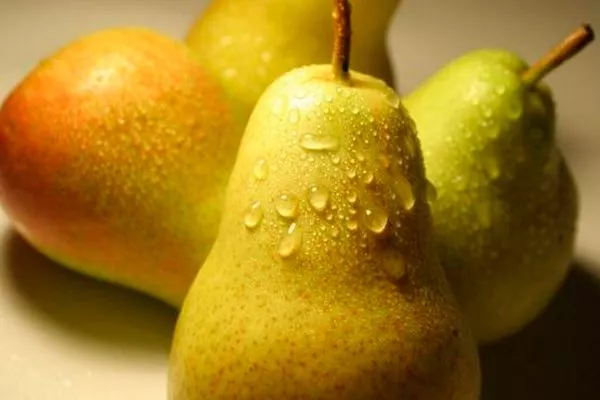
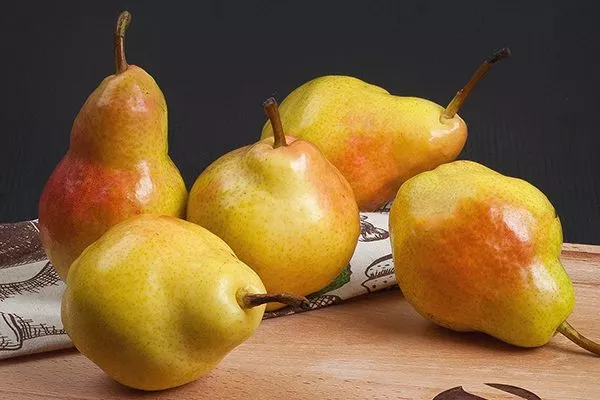
- Fruit. Medium-sized, barely reaching 180g, they have an oblong shape and uneven, bumpy skin. They are yellow-green in color with a pink spot on one side, but the flesh is white with slightly yellowish notes.
Other nuances:
- there are no more than 4 pears on one ovary;
- the time of full maturity is from August 15, but the fruits cannot be left until this time, as their shelf life decreases (therefore, the harvest is collected 10 days earlier);
- increased productivity;
- resistance to drought and frost – high (unlike the original);
- easily tolerates rain and sudden cold snaps;
- has a strong immune system, so it is not susceptible to diseases and pests;
- taste – sweet.
Winter Williams variety – description and characteristics
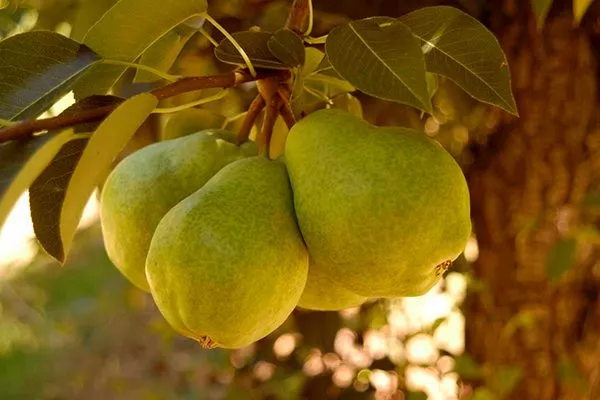
Another name is Williams Cure, as this subvariety was discovered by a priest of that name. Unlike other varieties, it is characterized by late ripening and a longer shelf life, as well as tall growth. Other distinctive characteristics:
- crown – spreading;
- bark – gray, with numerous cracks;
- leaves - emerald hue, but the petioles are burgundy;
- anthers of inflorescences – pink;
- weight of oblong fruits – 150-250 g and more;
- skin – compacted;
- color - lemon-yellow at technical ripeness;
- the peculiarity of pears is there is a brown stripe located longitudinally;
- taste - sweet and sour, with a nutmeg aftertaste;
- resistance to frost and drought – high, self-recovers after freezing.
Red Williams – description and characteristics
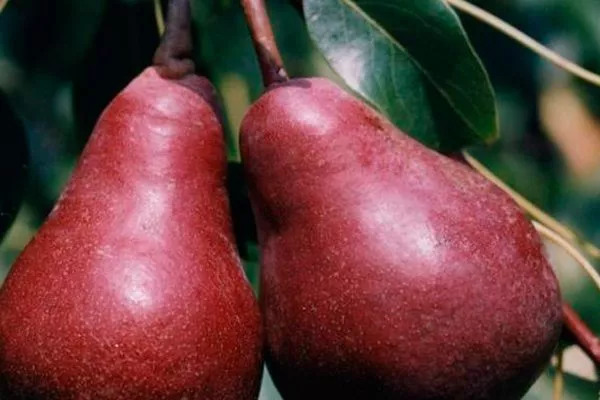
The main characteristic is the dark red skin. The tree is considered short, which facilitates harvesting. Other characteristics:
- crown – compact, pyramidal:
- foliage – weak;
- shoots – standard, gray;
- bark – smooth at any age;
- leaves - ovoid, elongated, dark green;
- peel – refined;
- pulp – creamy shade, grainy texture;
- taste - sweet and sour, nutmeg;
- ripening period – the last days of August;
- resistance to drought and frost – at an average level.
General features
Regardless of the subvariety, Williams pears share common characteristics, which may vary slightly from one another. However, they are based on the characteristics of the original variety.
Life expectancy
All varieties grown indoors can live for 80-90 years, but to achieve this, it is important to periodically rejuvenate the plants by pruning.
Fruiting cycle
The variety begins bearing fruit 3-5 years after planting, depending largely on the subvariety and growing conditions. In the south, fruiting occurs earlier, in the north later. Peak yield is considered to be 7-8 years.
Self-fertility and pollinators
All Williams trees are self-sterile, which is their main common trait and a significant drawback. Therefore, the trees absolutely require pollinating neighbors:
- For a unique look, plant nearby pear varieties such as Lesnaya Krasavitsa, Olivier de Serre, Passe Crassan, Bere Bosc, and Aleksandrovka. Quince trees can be used for grafting, as well as pear trees.
- Suitable summer sub-varieties are Pass Krassan, Lesnaya Krasavitsa and Aleksandrovka.
- For a winter representative, the ideal choice would be Williams Summer and Clapp's Favorite.
- For the red variety, choose Bere Hardy, Clapp's Favorite, and Bere Giffard.
| Subvariety | Scab resistance | Resistance to leafhopper |
|---|---|---|
| Main variety | Average | Low |
| Summer subvariety | High | High |
| Winter subvariety | High | High |
| Red subvariety | Average | Average |
Disease resistance
The subvarieties of the original Williams variety are improved versions, making them resistant to diseases and pests, which cannot be said of the main variety. It has average immunity. It is particularly susceptible to scab, leafhoppers, and aphids.
Therefore, be sure to carry out preventative treatments with fungicides and insecticides during the spring and summer. To avoid harming the fruit and the body, use biological products or Bordeaux mixture.
Drought resistance
The Williams pear has low drought tolerance, especially when young. Young trees require careful watering because their roots are not yet strong and fully developed.
This variety has average frost resistance, so pre-winter insulation is recommended. Podmorta are generally frost- and drought-resistant.
Caloric content and beneficial properties
Pears are ideal for a variety of diets due to their high fiber content and low calorie content. They promote satiety and help the body eliminate excess fat, cholesterol, and toxins. Pears contain:
- 47.6 kcal;
- 0.6 g protein;
- 0.3 g fat;
- 11.3 g carbohydrates;
- 87.5 g of water.
In addition to their pleasant taste and low calorie content, Williams pears also have other beneficial properties:
- Consuming this fruit helps strengthen the immune system and has a beneficial effect on the functioning of the gastrointestinal tract, liver and kidneys.
- Due to their high vitamin C content, pears help strengthen and improve the elasticity of blood vessels.
- In addition, decoctions and infusions of Williams pears are used to treat bronchitis, tuberculosis and tachycardia.
- Pears can be used as an antidepressant.
Taste
All varieties are characterized by a higher sugar content and sweetness with muscat and wine notes. However, Red Williams and the winter variety also have a tart edge.
Usage
All Williams varieties received a tasting score of 4.8 points. They are considered a dessert pear, and are used to make preserves, marmalades, jams, desserts, fillings, juice, compote, and alcoholic beverages.
Regions for cultivation
The original variety is intended for cultivation in warmer climates, as it is not winter-hardy. Other varieties can be planted in central Russia, the Urals, Siberia, and the Far East.
Growing rules
The subtleties of planting and care depend on the specific variety/subvariety, but the original variety has the following characteristics that are taken into account when growing:
- For planting, choose areas on level or slightly elevated terrain, as pears are not recommended for planting in lowlands.
- The ideal option would be a southern or southwestern slope with plenty of sunlight.
- Young seedlings do not tolerate drafts and strong winds, so it is preferable to choose a quiet place for planting.
- If you are planning to plant a tree in the spring, prepare the hole in advance in the fall, as autumn planting of pear trees is preferable.
- Mix the fertile soil from the hole with humus, peat, wood ash, and mineral fertilizer. Place the seedling in the center of the hole and begin covering it with soil. Firm the soil around the roots and install a stake to support the tree. After planting, water the seedling thoroughly.
- During the first five years, the tree's crown needs to be shaped. Pruning should be done regularly, at least twice a year.
- During periods of severe drought, be sure to water the Williams pear, otherwise the lack of moisture will negatively affect both the fruit and the tree itself.
- In northern regions, not only young seedlings but also mature trees should be covered. For this, use spruce branches, agrofibre, etc.
- Be sure to whitewash the trunks in spring and fall, including some of the lower branches. This will protect the tree from unwanted insects and diseases.
- The harvest must be timely, as the fruits are held firmly by their stems and do not fall off. Their weight (by the time they ripen, they become juicy and very heavy) can cause branches to break.
- ✓ The optimal soil pH for Williams pear should be between 6.0 and 6.5. Outside this range, the tree may have difficulty absorbing nutrients.
- ✓ The depth of groundwater should not exceed 2 meters, otherwise the root system may suffer from over-watering.
Don't forget to mulch the tree trunk area to maintain the desired moisture level. Weed regularly and loosen the soil to improve oxygenation.
Harvesting
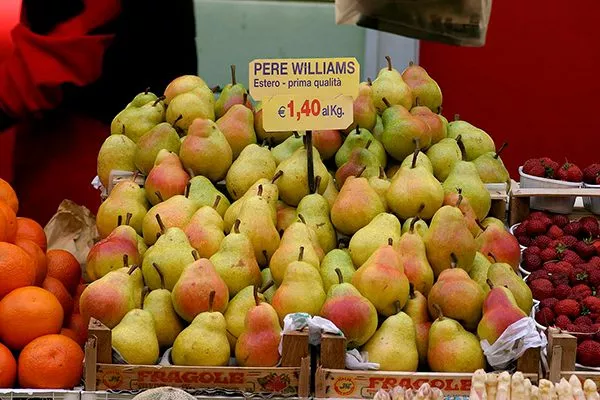
The first fruits ripen early—after June 20th—but the harvest can be fully harvested from late July or early August. If you plan on long-distance transportation, feel free to pick unripe fruits—they may ripen en route.
Storage
If pears are fully ripe, they won't last long. They won't last more than a week indoors. However, under suitable conditions, they can be stored for 40-45 days in a cellar or refrigerator. Other considerations:
- Early fruit picking also helps extend their shelf life. If you harvest in early August, although the fruit may be slightly unripe, it will last longer, about two weeks, and will be easier to transport.
- There are other methods for extending the shelf life of pears. For example, each fruit can be wrapped in paper, preferably oiled parchment.
- You can use a special wooden box for fruits, where each fruit is placed in a separate hole.
- The optimal storage temperature is from -1 to 2-3 degrees, while it is necessary to monitor the humidity level, which should not exceed 85-90%.
- Regularly inspect the condition of the fruits and stems. If you discover any problematic specimens (overripe, insects, mold, dryness, etc.), remove them from the container immediately. Wipe the area where they were stored, especially if juice has leaked, dry thoroughly and treat with an antiseptic.
Williams pears can be frozen and even dried. However, drying them will take a long time due to their increased juiciness.
Methods of reproduction
This variety can be propagated by all available methods—vegetatively and generatively. Here's a brief overview of each:
- Seed technology. This is a labor-intensive process that takes several years, so it's rarely used by gardeners. Furthermore, it's not always possible to obtain a tree with 100% of the parent's characteristics.
- Cuttings. This is the most popular method, as Williams pear root suckers form quickly. Therefore, if you plant cuttings in early spring, you can transplant them to their permanent location in the fall. And vice versa. Keep in mind that the tree must be at least 6-7 years old; sucker branches should not be pruned.
- Air layering. An excellent option is to take cuttings from a tree aged 3 to 4 years.
- Root shoots. They can be extracted from the ground near a tree of absolutely any age, but the shoots themselves must be two years old.
- By vaccination. Any pear, even a wild pear, can be used as a rootstock, and in the case of the Williams variety, even quince will do.
Advantages and disadvantages
The Williams family has an impressive number of positive qualities, among which the following stand out:
But the original variety also has its drawbacks:
Potential problems in cultivation
Growing a pear tree can be challenging, including susceptibility to disease and pest attacks. It's important to pay close attention to disease and insect prevention. Also, be aware of its low winter hardiness, which means young seedlings need to be covered before the onset of cold weather.
Reviews of Williams varieties
The Williams pear variety has earned fame and respect among gardeners worldwide for its low maintenance, high yield, excellent flavor, and beneficial properties. With proper care and adherence to basic agricultural principles, this plant will delight you with a bountiful and flavorful harvest every year.