
The Vidnaya pear is a self-pollinating variety with a late ripening period. It is characterized by very abundant yields and excellent winter hardiness. It is a dessert variety, widely used for breeding, landscaping parks, and garden plots. It is sometimes called "bumpy" due to the peculiar surface of the fruit.
Who developed the variety and when?
The variety appeared in 1958 thanks to the intensive work of Efimova N.V. and Petrov Yu.A. Massive testing was conducted over the course of 14 years, as a result of which in 1972 the Vidnaya pear was added to the Russian register and awarded the title of elite.
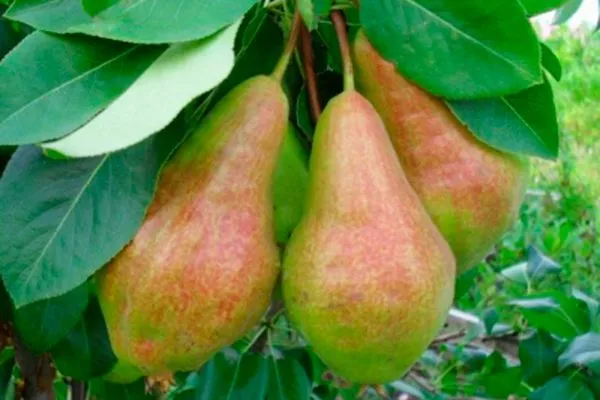
Description of the pear
The Vidnaya pear is an easily recognizable variety by its external characteristics. Just look at the tree's structure, height, and fruit description. For gardeners, it's important to know the plant's root system, as this influences watering methods and site selection.
Tree
It's considered a tall tree, reaching 5-6 m in height. Its crown is very spreading, with a diameter of 4.5-5 m and a broad pyramidal shape. The plant tends to become dense, so heavy pruning is necessary. Other characteristic features of the tree include:
- Root system. It is considered a taproot and powerful plant - large shoots are buried 7-8 m below the ground surface, and small roots spread out to the sides by 150-200 cm, and only 20 cm deep.
- Branches. The skeletal shoots are hardened, while young branches are flexible and bendable. They are covered with small thorns. When young, the bark is smooth and brownish-red, but in maturity it takes on an olive-gray hue. The smooth surface remains unchanged, but light spots develop on the bark.
- Foliage. Ovoid-shaped, petiolate. Arranged alternately, the tip is pointed. It reaches 9-10 cm in length, with a smooth, glossy surface and serrated edges. In summer, it has a bright green hue, turning yellowish and then light brown in autumn.
- Flowers. Arranged in corymbose inflorescences of 8-12, they have a simple structure and a strong fragrance. The flowers are 2.5-3.5 cm in diameter and snow-white in color. Budding begins in mid-May in central Russia (earlier in the south, later in the central zone). Flowering lasts approximately 13-15 days.
- Seeds. They are quite small, pot-bellied, and dark brown in color, eventually turning black. Each fruit contains 7-10 seeds.
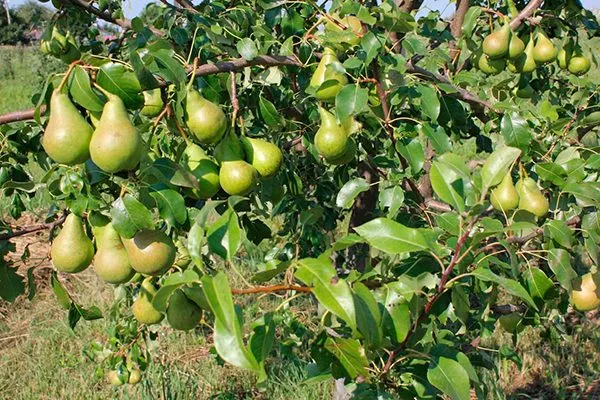
Fruit
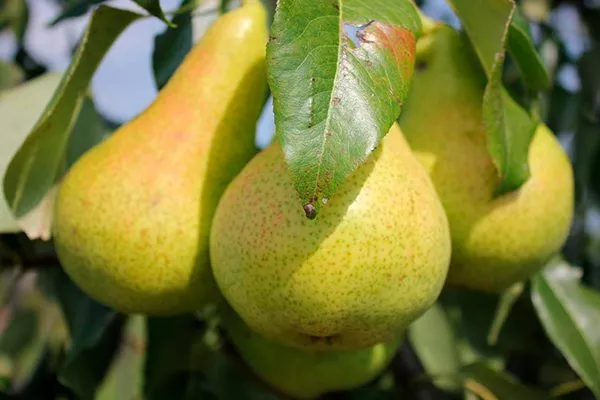
Pears are characterized by an elongated, pear-shaped form that tapers to a point near the stalk. The fruit is symmetrical, but the surface is ribbed and uneven. Brief description:
- Caloric content and composition. Per 100g of product, there are 45-47 kcal. It contains proteins (0.43%), carbohydrates (7.4%), fats (0.45%), and dietary fiber (no more than 13-14%). The liquid content is approximately 3%.
- Taste characteristics. The variety's flavor and aroma combine tartness, sweetness, and muscat notes. Vidnaya earned a tasting score of 4.2.
- Size and other characteristics of fruits. The skin is glossy, initially a classic green, later turning a rich yellow. On one side (where sunlight reaches), there's a reddish blush. Weight ranges from 130 to 220 g, and the flesh is white and juicy. The skin is firm, so it won't tear if accidentally knocked.
- Application. The fruits are used for fresh-picked consumption and for processing into compote, juice, jam, pie fillings, etc.
- Harvesting. This pear variety is unable to ripen completely after being removed from the vine, so harvesting occurs only when the fruit is technically ripe. Otherwise, the fruit will not only remain green and hard, but will also begin to spoil rapidly. Leaving it on the vine for extended periods of time is also prohibited, as it will cause the pears to rot.
- Storage and transportation of fruits. The marketable appearance is preserved for a maximum of 7-8 days, but the pears do not crack during transportation.
- ✓ The fruits do not ripen after being picked from the tree, which requires precise timing of harvesting.
- ✓ The tree is highly resistant to scab, but requires protection from other diseases and pests.
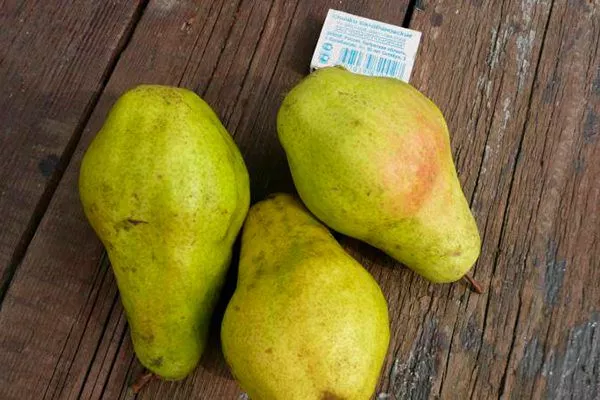
Characteristics of the Vidnaya Pear variety
This variety is characterized by good frost resistance, but its development was focused on the central part of Russia and the Moscow region. Despite this, the tree produces fruit well both in the south of the country and in harsher climates. The main thing is to prepare the plant for winter according to the requirements of the region.
Life expectancy
The Vidnaya pear tree's shoot growth is impressive—40-60 cm per year, and even more under very favorable conditions and proper care. The minimum lifespan of the tree is 40-70 years, but the plant can live for a century.
Winter hardiness
According to the originators, shoots and roots do not freeze at temperatures of -25 degrees.
Productivity
The fruit ripens in early August, but this time depends on the specific climate. In the south, the fruit is harvested earlier, in the north much later. From a single mature tree, starting at age five, gardeners harvest 50-60 kg.
Fruiting cycle
The first fruits can be harvested in the fourth year after planting. During this period, the number of pears is small, but after a couple of years, the yield increases significantly. Fruiting is gradual—the fruits ripen one after another over 25-35 days, so the harvest is not immediately collected.
Self-fertility
The pear tree is self-pollinating, so it doesn't need a donor plant. In fact, Vidnaya is often used as a pollinator. But if you want even greater yields, you can plant Vietnamese, Vostorg, Chizhovskaya, Lada, Osennyaya Yakovleva, or Rogneda pears nearby.
Advantages and disadvantages
The variety is relatively easy to grow, and the pears have a pleasant sweet-and-sour flavor, making Vidnaya a favorite among gardeners and consumers.
Features of agricultural technology
To ensure easy care of this type of pear, it is extremely important to pay serious attention to the planting process:
- The planting time varies depending on climate conditions. In southern regions, autumn—late September or early October—is ideal, allowing the tree to establish itself before the cold weather sets in and begin active growth in the spring.
In cooler climates, it's recommended to postpone planting until spring, when the soil has warmed up; this is usually around late April. It's important not to delay planting, as buds that swell before planting can hinder the young tree's rooting. - A suitable location for a pear tree is a sunny spot with ample space. Avoid shaded areas, as this will reduce the fruit's flavor and yield. A north-facing location protected from drafts and strong winds is preferable.
A site with stagnant water or marshy soil is unsuitable for planting. If the site is low-lying and water lingers, ensure adequate drainage or create an artificial mound. The groundwater level should not rise above 200 cm. - When preparing the soil, remember that this pear variety isn't particularly picky about soil composition, but black soil and light sand with low acidity are considered preferable. Use lime to neutralize excess acidity—about 3 kg per 10 square meters.
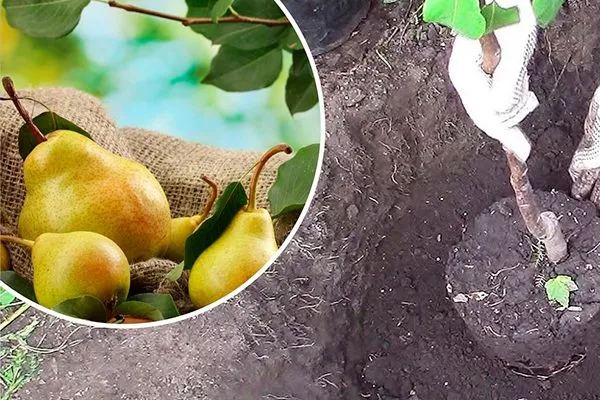
- The planting hole should be prepared in advance, preferably in the fall or early spring. A deeper and wider hole is dug, approximately 100 cm in diameter and depth.
Humus, compost, superphosphate, potassium nitrate and wood ash are added to the fertile soil, everything is thoroughly mixed and added to the hole, forming a low mound. - Before planting, the seedling is immersed in a biostimulating solution; a weak solution of potassium permanganate is also suitable. The plant is soaked in the solution for 24 hours, after which the roots are treated with a mixture of cow manure and clay and left to dry.
Install a support approximately 150 cm higher than the seedling. The root collar should remain 8 cm above ground level. Fill the hole with soil, compacting it well. Then water the plant with 30 liters of water and mulch the area around the trunk.
- ✓ The seedling planting depth should be such that the root collar is 8 cm above ground level, which will prevent it from rotting.
- ✓ The distance between trees should be at least 5 m to ensure sufficient space for crown growth.
Care Features
Care procedures are simple, but keep in mind the main points for this variety:
- Irrigation. A growing tree less than a year old requires regular root system watering: 20 liters of water every seven days. A mature plant requires abundant watering at a rate of 40-60 liters (the amount varies depending on soil type and weather conditions) during three key phases:
- when the buds swell;
- at the stage of fruit setting;
- shortly before harvest.
Subsequent watering is scheduled for the end of the season, 21 days after harvesting the fruits, to recharge with moisture before winter.
- Fertilization. The initial application of fertilizers is planned for the 2nd year after planting the seedling, then the following schedule follows:
- starting in the spring, at the time of the first soil cultivation, complex mineral fertilizers with nitrogen are used;
- finishing in the fall – phosphorus and potassium are added during digging;
- weekly spraying with a wood ash-based solution throughout the growing season;
- Every 2-3 years it is recommended to add organic matter: rotted compost, manure or a solution of bird droppings.
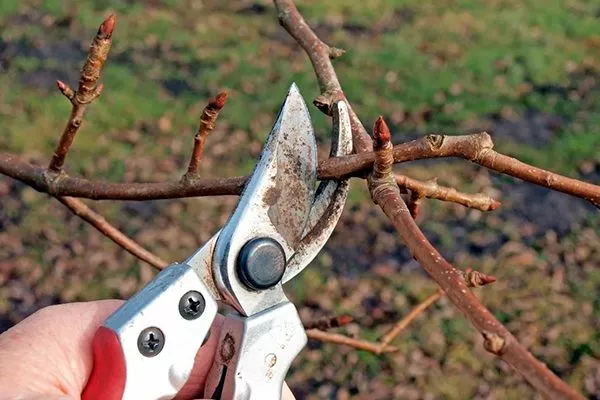
- Shaping and cutting. In the second year of planting, the young tree undergoes formative pruning, limiting the crown to a height of half a meter. In subsequent years, three to four strong branches are retained to create a multi-layered crown.
With the arrival of spring, sanitary pruning is performed, removing dry, weak, or damaged branches (dead branches can also be pruned in summer). Every 5-7 years, the tree is rejuvenated.

- Preparing for winter. This variety, reputed to be hardy down to -25°C, requires no additional insulation for winter. After the leaves fall, clear the area around the tree trunk of any remaining vegetation and apply a thick 15-20 cm layer of mulch.
In anticipation of frost, the trunk and large branches are protected with a clay-lime mixture. To protect the bark from the cold, the trunk is wrapped in a frost-preventing material.
Diseases and pests
Vidnaya is immune to ergot and scab, but is susceptible to attack by some insects and diseases under unfavorable conditions. Recommendations for disease and pest prevention include:
- Use in the spring, before flowering and after harvesting, spraying with a solution of copper sulfate (100 g per 10 l of water) or 3% Bordeaux mixture to prevent and treat fungi;
- Maintain proper distances between fruit-bearing trees and avoid unsuitable neighbors;
- Keep the area around the trunks clean – remove weeds, fallen fruit and leaves, as well as dry and diseased branches;
- burn plant residues in a timely manner, but the ash can later be used as fertilizer for pears;
- in autumn, loosen the soil around tree trunks;
- When pruning, use only sharpened and disinfected tools, and also treat damaged areas of the bark;
- Plant plants with a pungent or intense aroma in the area around the trunk to repel harmful fauna;
- In spring, spray the trees with a solution of wood ash or green soap once every 1-1.5 weeks.
Gardeners' reviews
Vidnaya is a pear variety that captivates with its intense aroma and consistent yield. This tree is easy to care for, making it suitable for even the most novice gardener. It is frost-resistant and suitable for growing in cold climates. This variety is of great importance for both commercial orchards and breeders.