
The Velesa pear has long been widely grown in the central regions, but is most commonly found in the Moscow region. The tree not only has a strong immune system but also tolerates frosts. These qualities have made it so popular among gardeners.
Origin of the variety
The Velesa pear was created by crossing the Lesnaya Krasavitsa and Venus varieties. It is thanks to the Lesnaya Krasavitsa variety that the new variety is highly cold-resistant, produces consistent yields, and the fruit has a pleasant flavor.
The selection was conducted at the All-Russian Selection and Technical Institute of Horticulture. The variety was developed by N.V. Efimova and Yu.A. Petrov. In 2001, the Velesa pear was added to the state register.
Description of the plant
The Velesa pear is a late hybrid, beginning to bear fruit approximately five years after planting. The tree is medium-sized, not too tall, and does not take up much space.
Tree structure and height
A young tree has a spreading crown of medium density. Gradually, it takes on a broad pyramidal shape.
Main features and description of the tree:
- the pear tree grows to a height of no more than 4 m;
- the main branches are long, thick, curved;
- shoots of a classic brown shade with an admixture of brown, quite large;
- the branches are evenly distributed with rings that are not too large;
- the leaves are smooth, rich dark brown in color, with curved, finely serrated edges;
- the annual growth of branches averages 40 cm;
- The crown reaches 3 m in width and is sparsely foliated, which makes caring for the tree much easier.
Description of fruits
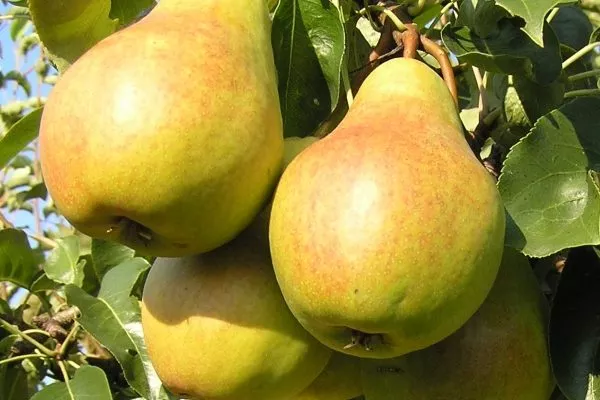
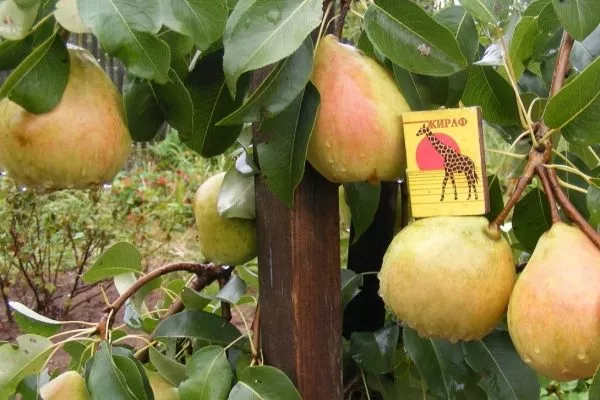
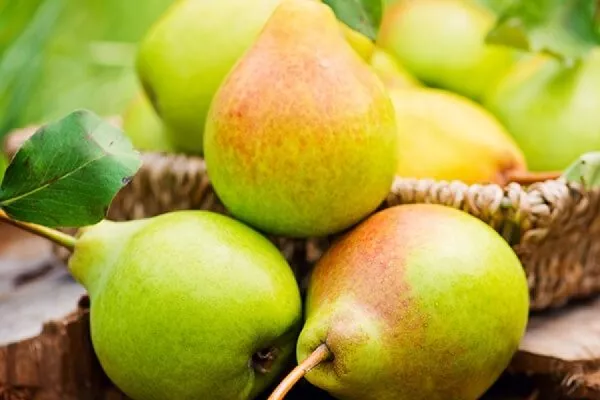
The Veles pear's fruits have a classic pear shape, which is what attracts farmers. The flavor is pleasant and delicate.
Features and description of fruits:
- the average weight of one pear is about 50-200 g;
- the fruits are regular in shape, round, tapering slightly towards the stalk;
- the pulp density is medium, the color is creamy;
- the taste is sweet, with a slight sourness;
- the skin is smooth and thin;
- The fruits are yellow-green in color, with a red or orange tint.
Nutritional value per 100 g:
- carbohydrates – 10.3 g;
- water – 85 g;
- organic acids – 0.5 g.
Tasting score: 4.6-4.7 points out of 5.
Features of fruiting
This variety is considered self-fertile and boasts many positive qualities. Reliable fruiting requires little care. Each year, the pear will yield a tasty and nutritious harvest.
Flowering and fruiting periods
Flowering begins in the second half of May. The main characteristic of the Veles pear is its rapid budding and shoot formation. Toward mid-May, snow-white flowers begin to bloom vigorously.
Fruit bearing is average. A tree on a seedling rootstock bears its first fruit approximately 5-6 years after planting, sometimes as late as 7 years. Yields increase rapidly.
When growing the Veles pear on an industrial scale and strictly adhering to agricultural practices, approximately 10-13 tons of harvest can be collected from 1 hectare.
Do you need pollinators?
Although this variety is considered self-fertile, to increase yield, it is recommended to plant other pear varieties nearby. They will act as pollinators.
Good choices include the following pear varieties:
- Rogneda;
- Northerner;
- Lada;
- Chizhovskaya;
- Just Maria;
- Voskresenskaya large;
- Otradnenskaya.
Other varieties can also be used, but the main thing is that they begin flowering around the same time as the Veles pears.
Characteristics of Velesa
This variety boasts good yields and is easy to care for. It is grown not only in small gardens and homesteads, but also on an industrial scale.
Productivity
The Velesa pear is considered a high-yielding variety. A single mature tree can produce approximately 100 kg of fruit. The fruit ripens around the second half of August.
The first fruits are harvested unripe. This technique increases the subsequent harvest and prevents tree branches from breaking under the weight of the harvest.
Winter hardiness and drought resistance
The variety has average winter hardiness. The tree easily tolerates temperatures down to -15 to -20°C and requires no additional winter protection.
Like any fruit tree, the Veles pear dislikes drought, especially prolonged drought. If timely watering is not provided, the tree may drop unripe fruit. Therefore, watering is especially important once the fruiting season begins.
Regionalism
This variety is recommended for cultivation in the central regions of Russia. The Velesa pear has several advantages, making it well-adapted to the weather conditions of Belarus and Ukraine.
Strengths and weaknesses of the variety
The Velesa pear has gained great popularity among farmers due to its numerous advantages. However, the variety does have some drawbacks.
Landing features
Spring and fall planting are acceptable. When choosing the right time, be sure to consider the climate of your region. Young seedlings are best planted in the spring, when the soil has warmed up sufficiently.
When is the best time to plant the Veles pear?
Pear trees can be planted in spring in almost any region of the country. Fall planting is suitable for southern regions with mild winters. Experienced gardeners prefer spring planting, which allows the tree to establish roots well and begin growing before frost sets in.
Planting times depend on the specific time of year:
- spring – from the 20th of April until mid-May;
- autumn – from the second half of September until the beginning of November.
How to choose a seedling?
This stage is the most important, as it determines how quickly the young tree will establish itself in its new location and the future harvest. When choosing a seedling, follow these tips:
- the optimal age of the tree is 1.5-2 years;
- Choose seedlings only from a nursery; avoid buying at the market or from unverified sellers;
- tree height not less than 1.5 m;
- the seedling should have at least 5-6 side branches;
- the roots of the seedling are strong, elastic, without signs of rot or swelling;
- the bark is smooth, clean, without scratches or other damage;
- the main large roots have lateral branches;
- the top is mature and woody.
Selecting a site
The Veles pear prefers light, sandy loam soils. When choosing a planting site, consider the following criteria:
- soil acidity no more than 6 pH;
- groundwater should not be located too close, otherwise this will lead to the death of the pear;
- If the groundwater level is 2 m above the soil level or there is a risk of flooding on the site, then a drainage system is necessary;
- It is not advisable to expose the area to cold winds, as the tree does not like drafts;
- A mature tree grows to about 3 m in width, so choose a fairly spacious location;
- the tree loves heat and requires a lot of light to grow;
- the southern or south-eastern side of the plot is ideal for pear trees;
- the planting site should not be located in a lowland or pit, as cold air masses may accumulate there;
- other plants should be kept at least 3 m away.
- ✓ The soil pH level should be strictly within 5.5-6.5 for optimal nutrient absorption.
- ✓ The depth of groundwater is at least 2.5 m to prevent rotting of the root system.
Planting hole
The planting hole should be larger than the seedling's root system. Follow this pattern:
- First, clear the area of debris and plant debris, and weed out the weeds.
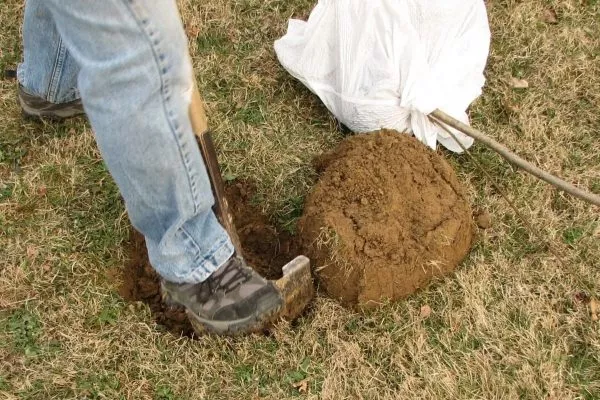
- Dig a hole 70 cm deep and 1 m wide.
- Set the top fertile soil aside and mix it with well-rotted humus or rotted horse manure (up to 30 kg). Add ammonium nitrate (80 g), wood ash (0.8 kg), and potassium sulfate (150 g).
- Mix all the ingredients with top soil and pour into the hole, forming a mound in the center.
- Drive a wooden stake into the southern side. This will act as a support and protect the young bark of the seedling from sunburn.
Planting diagram – step by step
The Veles pear is planted like any other fruit tree. Follow these steps:
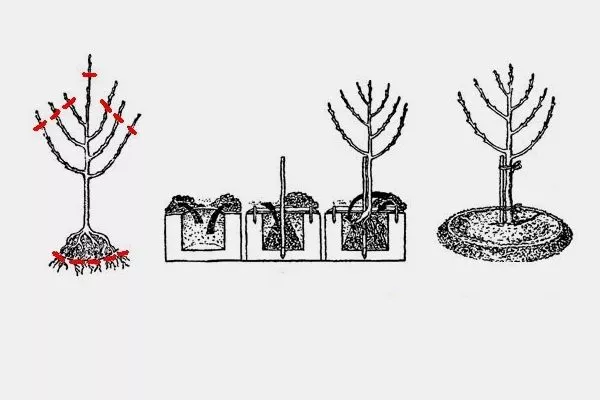
- Before planting, dip the roots of the seedling into a clay mixture and leave for several hours.
- Trim the roots and shorten the branches.
- Place the tree in the center of the hole on a mound of earth and carefully spread out the roots to avoid any kinks.
- Fill the hole with soil and periodically gently shake the tree to remove any air pockets in the soil.
- Make sure that the root collar is 5-7 cm above the soil surface.
- If you are planting a seedling with an open root system, remove about 90% of the leaves, which will prevent the loss of excess moisture and allow the plant to adapt more quickly to its new location.
- Lightly compact the soil, do not pack it too hard.
- Tie the tree to the wooden support using soft cotton cloth. Avoid wire or thick cables, as they can damage the young bark of the seedling.
- Form a ridge of soil around the planting circle to hold water inside.
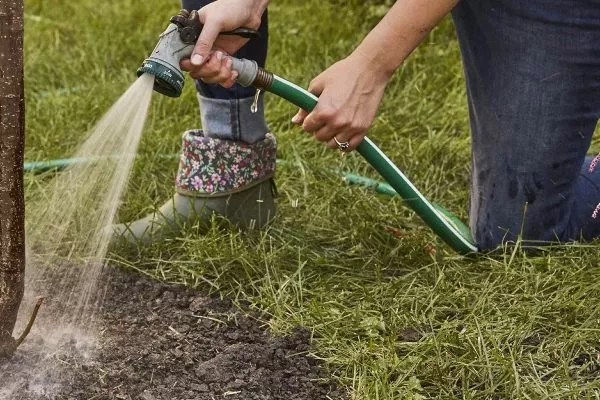
- Water the tree with water (20 l).
- When the moisture is completely absorbed, loosen the soil and add mulch (peat or dry grass).
In the first year after planting a pear tree, remove about 80% of the blossoms. This will ensure better establishment of the seedling in its new location. The following year, remove up to 50% of the fruit that has set. Throttling the harvest allows for larger, tastier fruits.
Care
The tree is easy to grow, but it does have high moisture requirements. Without regular watering, you risk losing your entire harvest. It's also important to ensure timely fertilization and proper winter preparation.
Watering
The Veles pear tree appreciates proper watering, and quality, not quantity, is key. Insufficient and frequent watering can cause significant damage to the tree, so it's crucial to adhere to a specific schedule.
Young pear trees require more frequent watering. During the growing season, water the trees 4-5 times per season (30 liters each time). After watering, loosen the soil and mulch the area around the trunk to prevent rapid evaporation. During dry summers, increase watering, but avoid overwatering the soil.
Mature, established trees tolerate short periods of drought much better. Pear trees' vertical roots are capable of penetrating deep into the soil and independently extracting moisture.
Only 4 times during the entire season, carry out abundant watering and strictly during the following periods:
- in spring, before flowering begins;
- after flowering is complete;
- during the period when the fruits begin to fill out;
- after the harvest is complete.
Apply water strictly within the tree's trunk circle, enclosed by a mound of soil. Water carefully to avoid accidentally washing away the roots. Sprinkler irrigation is ideal, as it distributes the moisture evenly across the soil surface.
Fertilizers
A properly fertilized pear tree produces stable and good harvests for many years. Fertilizers are applied throughout the growing season. Depending on the specific stage, specific nutrients are added to support growth, development, and fruiting.
Follow the following feeding scheme for the Veles pear:
- Spring. When the buds begin to swell, add ammonium nitrate – 30 g of the substance per 1 sq. m (you can dissolve it in water in a ratio of 1:50).
After flowering, use nitroammophoska – dissolve the substance in water at a ratio of 1:200. For one mature tree, use two buckets of 10 liters of nutrient solution. - Summer. When the pear tree finishes blooming, apply nitrogen-containing fertilizers foliarly. After two weeks, apply potassium sulfate (20 g), superphosphate (50 g), and rock phosphate (40 g). Spray the foliage with the prepared solution.
- Autumn. After harvesting, use nitrogen-free fertilizers. Superphosphate (50 g) and potassium chloride (20 g) are suitable – this amount is calculated per 1 square meter of area. Apply fertilizers strictly after watering.
- In early spring, apply 50 g of ammonium nitrate per 1 m² to stimulate growth.
- At the beginning of summer, add 30 g of superphosphate and 20 g of potassium salt per 1 m² to support fruiting.
- In autumn, add 5 kg of humus per 1 m² to improve the soil structure and prepare it for winter.
Preparing for winter
Don't neglect this step, as it determines how well the tree survives the winter. Follow these tips:
- In October, remove all fruit remaining on the tree.
- Cut off diseased and broken branches and remove fallen leaves.
- Perform a moisture-recharging watering—at least 100 liters of water per mature tree. This is necessary if the autumn is dry and there is no rain.

- In November, clear the tree trunk of moss and dead bark, then whitewash it. This will protect the tree from rodents and pests. To prepare the solution, dissolve 2 kg of lime, 400 g of copper sulfate (previously dissolved in hot water), and 70 g of casein glue in 10 liters of water.
The result should be a solution with a consistency similar to sour cream. - Mulch the tree trunk circle with a layer of at least 30 cm.
- Cover the trunk with thick paper to prevent rodents from damaging the bark during the winter. Avoid using materials that don't allow air to pass through.
During snowy winters, build a snowdrift around the tree. This will not only protect the trunk from frost but also hydrate the soil in the spring. Mature trees do not require additional shelter.
How to prune a pear tree correctly?
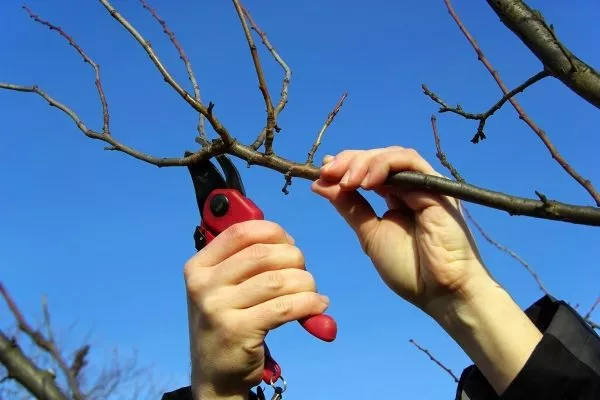
Pear tree pruning is crucial. Skipping it is not recommended, as it can negatively impact fruiting and the tree's health. Formative, thinning, regulating, and sanitary pruning are essential.
Crown formation
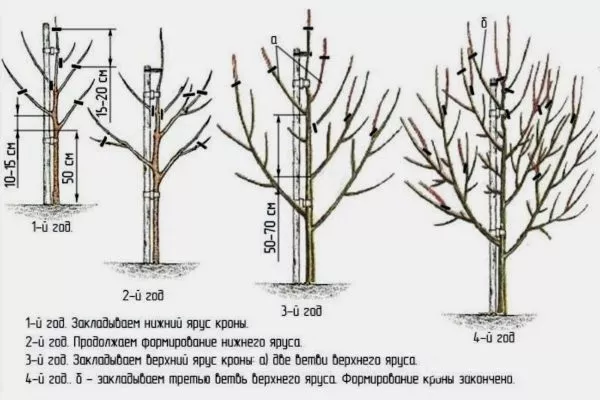
For this variety, an improved bowl-shaped crown is recommended. This shape is suitable for medium- and low-growing fruit trees. It provides good interior lighting and excellent ventilation, making tree care and harvesting much easier.
It is very easy to make such a formation if you follow the following scheme:
- During planting, the first stage has already been completed – the tops of the branches have been trimmed.
- In the second and third years after planting, before sap begins to flow, select three strong branches growing in different directions and spaced at least 15 cm apart. These will become the future skeletal branches. Shorten them by 1/3, and cut the remaining branches back to a ring.
- Cut the central conductor above the base of the top branch.
- In the third and fourth years, begin forming the second row of branches. On the main branches, select two shoots spaced about 50 cm apart and shorten them by half. Prune the remaining branches that grew on the main branches back to the ring.
- In subsequent years, ensure that all branches are approximately the same length. If one branch becomes dominant, it may take over the role of the central leader, which is undesirable.
Regulatory pruning
This procedure involves adjusting the crown density and is performed as follows:
- Prune back some of the shoots growing inward. Create conditions for good ventilation and good lighting.
- Prune only when absolutely necessary; it is not necessary to do it every year.
- You can leave the shoots that grow inside the crown, but do not shade the neighboring branches and do not cross, since they also contain rings on which the fruits are formed.
- Pruning should be done in early spring, before the sap begins to flow.
Maintenance pruning
This pruning is necessary to maintain a stable harvest. The simplest option is to pinch off young and green shoots that have not yet developed wood. This procedure is performed in the summer. Shorten young shoots by 5-10 cm, but no more.
This procedure stimulates the growth of additional shoots on the pruned shoots. These shoots will eventually begin to form flower buds.
Sanitary pruning
Every year, in late autumn, a sanitary pruning is performed, removing all diseased, dead, and damaged branches. If necessary, the procedure can also be performed in the spring if broken or frost-damaged shoots appear after the winter.
Rules for pruning
When pruning a pear tree, it's important to follow simple but important rules. Otherwise, you risk causing serious damage to the tree.
Please adhere to the following rules:
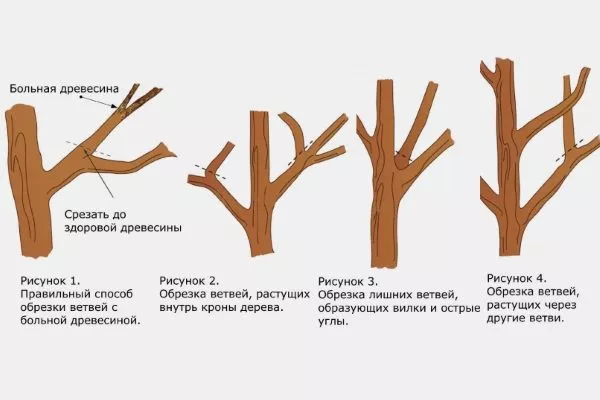
- carry out the procedure only with a sharp and well-sharpened tool (lopper, pruning shears, knife, saw);
- cut branches so that no stumps or knots remain, as they can become a breeding ground for fungal diseases;
- pre-treat the instrument with a disinfectant solution - for example, a solution of 1% copper sulfate, 3% hydrogen peroxide, alcohol, etc.;
- Cut large diameter branches in several stages;
- Coat the cut areas with garden pitch.
Diseases and pests
The Veles pear has a strong immune system, but under unfavorable conditions or if agricultural practices are not followed, it can be affected by the following diseases:
- Pear rust. In spring, small green-yellow spots appear on the leaves and gradually grow. For treatment, use fungicides, such as Delan or Bordeaux mixture (follow the instructions). Prune all infected branches promptly.
- Pear cancer. Numerous cracks appear on the branches and trunk, and the bark peels off. In the spring, small dark red spots appear on the leaves.
Treatment: Remove all diseased branches and disinfect wounds. Treat the pear tree with Hom, Abiga-Peak, or Oxychom (according to the instructions). - Bacterial burn. Shoots, inflorescences, and leaves begin to turn yellow, as if burned. A yellowish or cloudy-white mucus is secreted.
Treatment: Remove all affected shoots. Treat the tree with copper-containing products during flowering.
The Veles pear can be attacked by the following pests:
- Pear sawfly. The pest attacks only the ovaries and completely destroys the seed chambers. Treatment: Apply chemicals before, during, and after flowering, according to the instructions (BI-58 Novy, Danadim, Rogor-S).
- Leafroller aphid. Leaves, stalks, and petioles are deformed. Treatment: Treat the tree with organophosphorus preparations strictly during the green cone phase.
- Copperhead. Shoots and leaves become sticky from insect secretions. Treatment: Spray the tree with chemicals according to the instructions (Rogor-S, Danadim) before flowering. Repeat the treatment a week after flowering has finished.
Ripening period and harvest
This is an autumn variety. Harvesting is done in several stages:
- at the end of August or the beginning of September – at the first signs of fruit ripeness;
- after September 15-20.
The harvesting process
Harvest on a sunny day, in the morning. Pick the pears carefully, stems included.
Place the fruit immediately in the storage boxes. Arrange the pears in a single layer, wrapping each fruit in a layer of paper. This will significantly extend their shelf life.
What is the best way to store fruits?
Pears can be stored for 1-3 months at a temperature of +2°C. Store the fruit in a dry, well-ventilated cellar.
What are the fruits good for?
Pears are ideal for fresh consumption. The fruit has a short shelf life, so when the harvest is abundant, they are processed. Pears make delicious jams, preserves, and compotes.
Gardeners' reviews
The Veles pear is considered easy to grow and doesn't require constant attention. This has made it a popular choice among farmers. It's found in both small private gardens and large farmsteads.