
The Ussuri pear is popular among both novice and experienced gardeners. It is frost-resistant and produces a good yield, but requires pollinators. With proper and timely care, the plant will thrive in your garden and delight you with beautiful, juicy fruits in abundance.
Description of the tree
The variety was developed by renowned breeder I.V. Michurin by crossing the wild Ussuri pear with the French Bere Royale. It has the following distinctive characteristics:
- The height reaches 10-12 m, growing in diameter up to 50 cm.
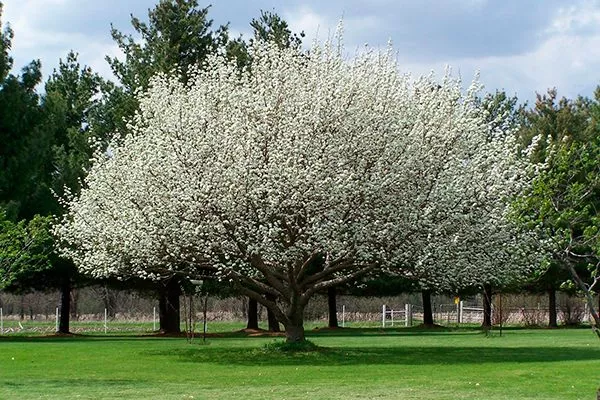
- It has a wide, elongated crown.
- It is characterized by uneven bark, colored dark gray, almost black.
- The shoots are bare and yellow-gray. The roots are located in the upper soil layers and do not penetrate deeper than 1 m.
- The branches are densely covered with ovate leaves with rounded bases and serrated edges. The leaves have a glossy, dark green surface. The undersides are matte and light. In autumn, they turn crimson.
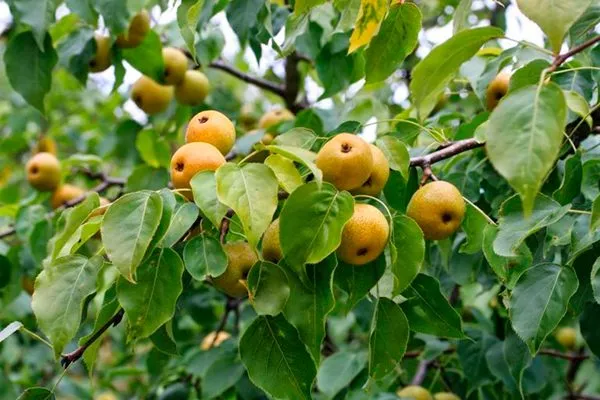
The frost-resistant flowers are 3 cm in diameter and snow-white in color. They have a strong fragrance.
Characteristics of pear fruits
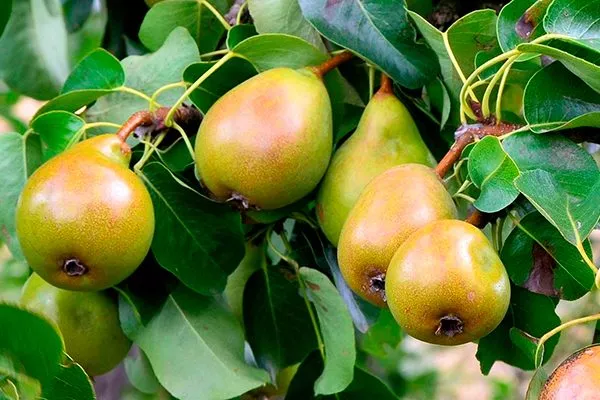
Typically ripens in clusters containing 5 to 10 fruits. Characteristic features:
- They are medium-sized and yellow with a crimson blush.
- The average weight is from 50 to 70 g, but sometimes there are specimens weighing 90 g.
- The shape can be round or oblong, and the taste is distinctly tart.
- The pulp is rich in vitamins and organic acids.
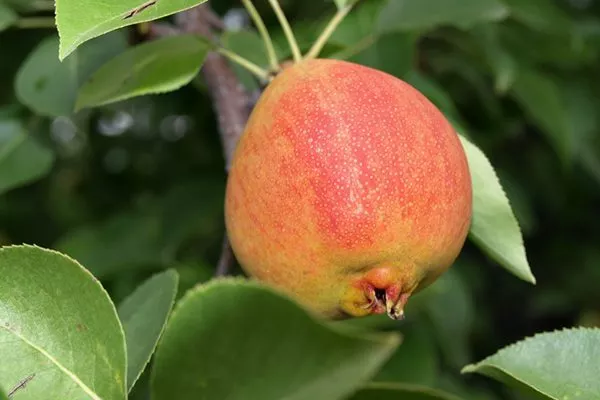
Pears become fit for consumption after prolonged storage. The fruits are often used for processing, including drying, making jam, compotes, and tea.
Pollination
It is a self-sterile species. To obtain a harvest, it is necessary to plant varieties with similar ripening periods nearby, as without cross-pollination, no fruit will form.
- ✓ The distance between pollinator trees should not exceed 50 meters for effective cross-pollination.
- ✓ Choose pollinator varieties with the same flowering period to ensure maximum cross-pollination.
Productivity
It is characterized by high yields, producing at least 70 kg of fruit per tree. It begins bearing fruit relatively late. The first harvest can be expected only 9-10 years after planting.
Flowering and ripening times
In early spring, the plant is covered abundantly with white, fragrant flowers in clusters. The fruits ripen by late August or early September. The trees are long-lived and can live for at least 70 years, maintaining their fruiting capacity throughout.
Health benefits of pears
Pears are not only delicious and juicy, but also a valuable source of nutrients. They offer numerous health benefits. Key properties:
- They contain significant amounts of vitamins (vitamin C, vitamin K, vitamin B6) and minerals (potassium, copper, manganese), which play an important role in maintaining health.
- Rich in soluble and insoluble fiber, which promotes normal digestive function, maintains bowel health and helps prevent constipation.
- They contain antioxidants (flavonoids and polyphenols), which help fight oxidative stress in the body, preventing cell damage and reducing the risk of cardiovascular disease, cancer, and other chronic diseases.
- Regular consumption can help lower total cholesterol levels, which promotes heart health.
- Potassium helps lower blood pressure and reduces the risk of developing hypertension and other heart diseases.
- Vitamin C and other antioxidants promote healthy skin, improve its texture and protect against premature aging.
- Phytonutrients reduce inflammation in the body, which is beneficial for various inflammatory conditions.
Pears can be an important part of a healthy and balanced diet, helping to maintain overall health and well-being.
Pros and cons of the Ussuri pear variety
It has a number of advantages that make it a popular choice for planting in Russia. The following are highlighted:
Gardeners note the following disadvantages: late fruiting, difficulty harvesting due to its tall growth, and self-sterility. In acidic soils and during cold periods, the fruit may become too sour and tough.
Using Ussuri pear as a rootstock
This is a common practice in horticulture. The rootstock plays a crucial role in determining the growth, yield, and resistance of the entire plant to various stress conditions. Reasons why the Ussuri pear is considered a good choice as a rootstock:
- Frost resistanceIt has high frost resistance, making it a good choice for regions with cold winters. Using this variety as a rootstock helps improve the overall plant's tolerance to low temperatures.
- Resistance to diseases and pestsThe Ussuri pear is more resistant to diseases and pests than some other varieties. Using it as a rootstock can help reduce the risk of disease and pest damage to other varieties.
- Compatibility with different varieties. It exhibits good compatibility with various species. It promotes better survival and growth of commercial species.
- Fruit yield and qualityRootstocks contribute to increased yields and improved fruit quality in grafted varieties. This is especially important for commercial orchards and farms, where these factors play a crucial role.
- Good growth and developmentThe Ussuri pear promotes healthy growth and development thanks to the good characteristics of its rootstock.
Optimal conditions for growing
It's unpretentious when it comes to environmental conditions. For successful growth, provide it with the following conditions:
- Requires good lighting for normal development and fruiting. Choose a location with access to sunlight.
- The crop is not demanding in terms of soil composition, but moderately fertile soils are preferable for it.
- Ensure good drainage to prevent standing water, which can cause damage.
- Regular fertilization promotes healthy growth and development. Avoid overfertilizing.
Planting and caring for Ussuri pear
Proper planting is essential for the successful development of the crop. Give the plant sufficient attention.
- Test your soil for pH and nutrient content 6 months before planting.
- Add organic fertilizers (compost or humus) at a rate of 10 kg per 1 m² 3 months before planting.
- One month before planting, loosen the soil to a depth of 60 cm to improve aeration and drainage.
The main steps for planting and caring for the Ussuri pear:
- Soil preparationPears grow best in medium-carbon soils with good drainage. Before planting, prepare the soil by adding compost or humus to improve its structure and fertility.
- LandingPlant in spring or fall. Choose plants no older than 1-2 years. Prepare the planting holes 2-3 weeks before planting. For spring work, prepare the holes in the fall.
- Top dressingRegular fertilization is important for healthy growth and yield. Apply organic and mineral fertilizers in spring and fall, following package instructions.
- WateringProvide regular watering, especially during periods of drought and during fruit formation. Moderately moist soil is preferred.
- TrimmingThis procedure is necessary to shape the tree's crown, improve air circulation, and maintain the overall health of the plant. Pruning should be performed during the dormant period, preferably in the spring before active growth begins.
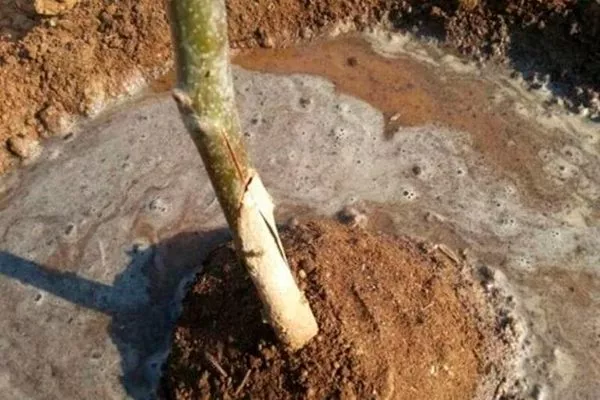
By following these planting and care guidelines, you can grow healthy plants and enjoy a bountiful harvest every year.
Harvesting
Choose the right harvesting time to avoid overripening, which can negatively impact shelf life. It's best to harvest at the very beginning of ripening. Harvest in dry weather. Store the harvested fruit in ventilated wooden crates.
Place the fruit in one or two layers, sprinkling it with paper or sawdust if necessary. Store the fruit in a cool place at a temperature of 0 to 2°C and a humidity of approximately 85%. Under these conditions, the shelf life is approximately 8 months.
Diseases and pests
The Ussuri pear is generally resistant to diseases and pests. However, it can be susceptible to certain problems, including the following diseases and pests:
- Firefly. A serious infectious disease that causes the shoots, flowers and leaves to wither and ultimately results in the death of the entire plant.
- Rust. A fungal disease that causes orange spots on leaves that can eventually lead to leaf drop.
- Pear moth. The larvae of this insect feed on fruits, causing them to rot and fall off.
- Spider mite. Small pests feed on plant juices and can cause leaf discoloration and drying out.
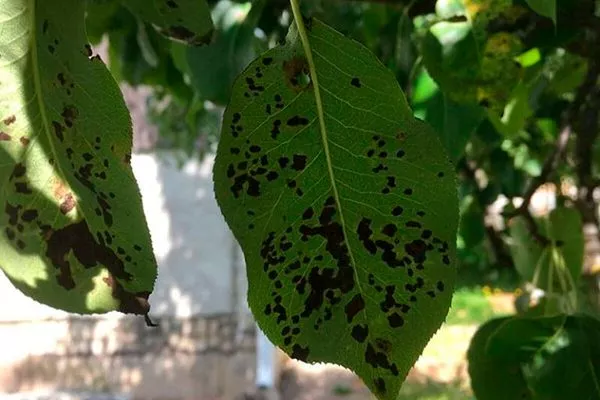
Regularly remove diseased and damaged plant parts to prevent the spread of diseases and reduce the risk of infection. Use chemical or biological products. Gardeners recommend Abiga-Peak, Kumulus, Streptomycin, and Fitosporin-M.
Reproduction
The culture can be propagated in various ways. Use the appropriate option:
- Cuttings. This involves separating a portion of a branch (a cutting) and then planting it to form a new plant. Take cuttings in late summer or early fall.
- Layers. This method involves using a part of a plant for propagation, but in this case, the separated part has roots. Take cuttings from pre-prepared shoots and plant them to create new plants.
- Seeds. This method involves sowing seeds to produce new plants. This method is not often used, as the resulting species may not retain all the characteristics of the parent plant.
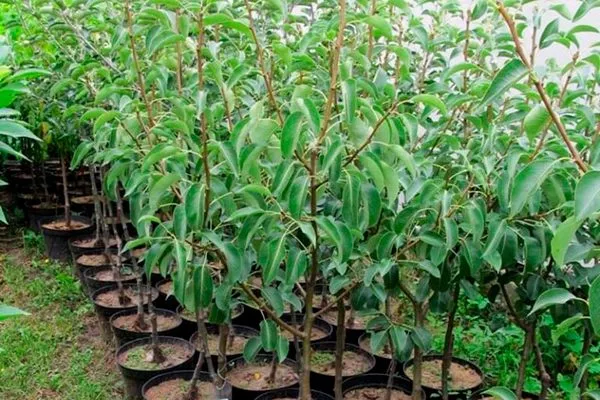
Each of these methods has its own characteristics and advantages, and the choice of a particular propagation method may depend on personal preference and environmental conditions.
Reviews of pears
The Ussuri pear is a top choice for gardeners due to its ease of cultivation and care. It is highly frost-resistant and undemanding of soil conditions. Timely fertilization and supplemental feeding help increase yield and fruit quality.