
The Tyoma pear variety has received many positive reviews from gardeners. It is characterized as frost-hardy and disease-resistant. It boasts numerous advantages and boasts a high yield. With proper care, yields are significantly higher.
What type does it belong to?
In terms of ripening time, the Tyoma pear belongs to the mid-late varieties.
History of selection and regions of distribution
Breeder A.M. Lukashov used a local wild species of Ussuri pear as the basis for creating a new variety. Pollen from the Ussuri pear was used to pollinate the flowers of the Finland Yellow variety. In 1917, the first fruits of the hybrid seedlings appeared, which later became the basis for the Tyoma variety.
In the late 1940s, it was submitted for state testing. It was recommended for cultivation in the Far East and West Siberian regions. It was subsequently distributed throughout the eastern region beyond the Urals.
Description of the Tyoma variety
Before planting a crop, study its characteristics and features. A botanical description is provided below.
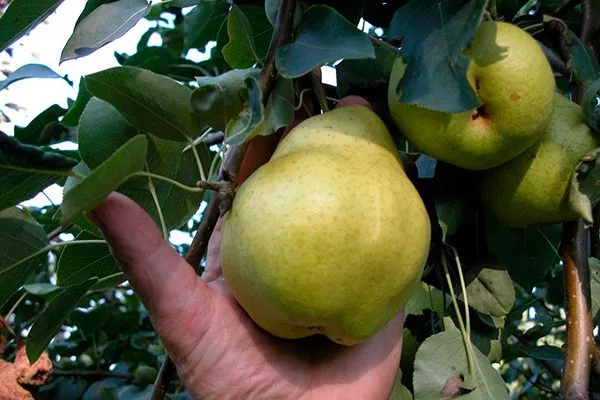
Tree
It is distinguished by its strong growth and reaches a height of 3.4 to 3.7 m. It has the following distinctive features:
- The spreading crown of medium density has the shape of a wide pyramid.
- Skeletal branches, covered with brown bark, extend from the trunk at an acute angle.
- The straight shoots are well developed and colored greenish-brown.
- Young branches are covered with small ovoid leaves.
- The upper side of the leaf blades is glossy and dark green, and the lower side is light green with slight pubescence.
- Long thin petioles are slightly pubescent.
During flowering, snow-white medium-sized buds appear on the trees.
Fruit
They reach a weight of 90-100 g during the fruiting season. Key fruit qualities:
- Sometimes specimens weighing up to 350-400 g are found.
- They are light yellow in color with a reddish blush.
- The taste is sourish and tart, which is typical for industrial varieties.
- Numerous subcutaneous dots are visible on the surface.
- The peduncle is curved, from 2 to 4 cm long.
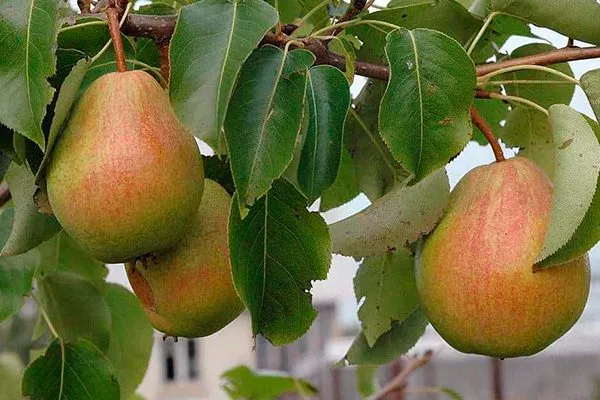
Beneath the smooth skin lies juicy, yet crumbly, white flesh.
Characteristics
The crop is capable of producing fruit successfully even in harsh, cold conditions. Its characteristics reflect a number of features:
- Drought resistance and winter hardiness. It has a high frost resistance rate, quickly recovers from winter and begins active growth in the spring.
- Resistance to diseases and pests. Resistant to scab and fungal infections. May be susceptible to other diseases common to pears. Regular preventative measures are important.
- Pollination, flowering period and ripening time. It is self-sterile, so it's important to plant other varieties with similar ripening periods nearby. The best pollinators for this crop are Paul, Palmira, and Olga.
Ripening begins in early September in the harsh conditions of Siberia, while in warmer climates, such as central Russia, the harvest can be collected as early as late August. - Fruiting, yield. Fruiting is stable and begins 3-4 years after planting, making them an attractive choice for gardening. Yields are high: private gardens can yield up to 12 tons of fruit per hectare, with the maximum yield reaching 26 tons per hectare.
Planting and care
A successful harvest depends largely on proper planting. Pears, being heat-loving crops, require special attention to selecting and preparing the planting site:
- Recommended timeframes. The best time to plant seedlings is spring, especially in regions with cold winters. This allows the young plants to adapt and establish roots by early summer, making it easier to survive the first winter.
- Selecting a location. Choose the sunniest and airiest locations, preferably slightly elevated, where the trees will receive maximum light. Avoid low-lying areas, where the risk of root rot increases.
- Preparing the soil. The soil should be loose, well-drained, and not too acidic. If the pH is high, add lime or other neutralizing agents.
- Suitable neighbors. It grows well alongside other fruit trees, especially apple trees. Avoid planting near junipers, as they can cause disease.
- ✓ The planting hole depth should be at least 60 cm to provide sufficient space for the root system.
- ✓ The distance between seedlings should be 4-5 meters for optimal development of the crown and root system.
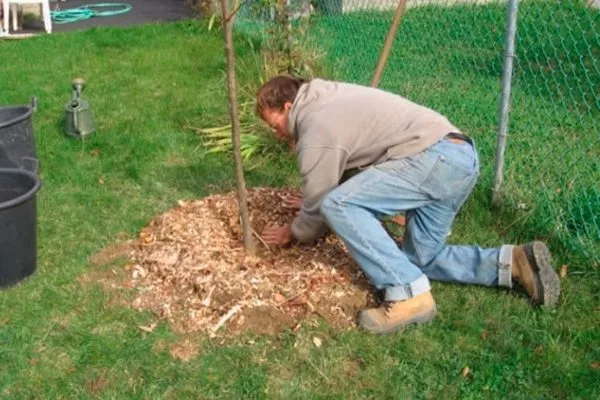
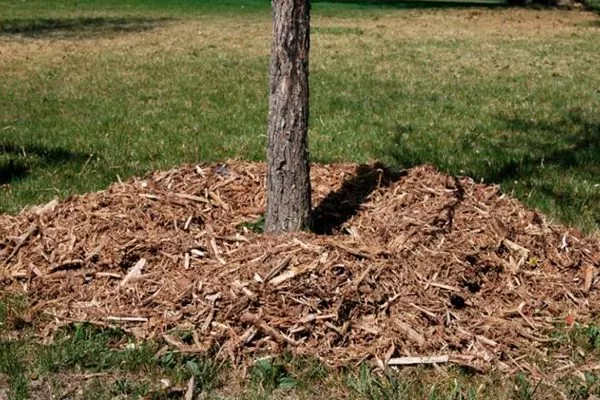
Soak the seedlings in a growth stimulant and dip them in a clay slurry with added mullein. Begin preparing the site in the fall: add organic matter and form planting pits. When planting, ensure proper root distribution, and afterward, water thoroughly and mulch the soil around the trunk.
Subsequent care of young trees plays a vital role in crop formation. Ensure the following important agronomic practices:
- Watering. This is an essential part of care. After planting, water young plants regularly, then water as needed, avoiding overwatering, which can damage the root system.
- Top dressing. These are essential for normal growth and fruiting. Regularly add compost and humus to improve soil fertility, as well as mineral fertilizers such as urea, ammonium nitrate, potassium, and phosphorus.
- Pruning and crown shapingCarry out pruning every spring and fall to remove diseased, dry, and damaged branches and form a proper crown.
Diseases and pests
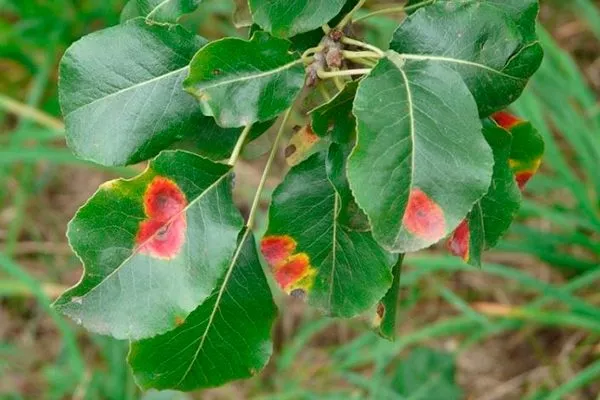
Disease and pest prevention and protection are important aspects of crop care. Despite its relative resistance to fungal infections, regular preventative measures are necessary:
- Treat trees during periods of frequent rainfall and low temperatures, when conditions become favorable for fungal growth. Use solutions of copper sulfate or Bordeaux mixture.
- It can be susceptible to other diseases, such as black canker, fruit rot, and rust, so comprehensive protection is required. Use biological and chemical pesticides to control them.
Reviews of the variety
The Tyoma pear is a popular variety among both novice and experienced gardeners. Planting and caring for the seedlings is a simple process, requiring no special skills or knowledge. It's important to follow basic instructions to ensure the plant regularly produces tasty and juicy fruit.