
The Talgarskaya Krasavitsa pear was introduced over 50 years ago and has remained among the top ten most popular autumn varieties ever since. Its main advantage is its large fruits and excellent flavor. It is an early-fruiting, high-yielding variety that requires little care. This makes it an ideal choice for beginning gardeners.
Origin of the variety
The Talgarskaya Krasavitsa pear was developed at the Kazakh Research Institute of Fruit Growing and Viticulture. A team of specialists led by A. N. Katseiko worked on developing the variety.
Talgar beauty was obtained through pollination Forest beautyOther pear varieties were also used during the work: Goverla, Conference.
Description of the Talgar Beauty
This variety produces trees that are not very tall. However, to ensure the pears grow and develop fully, the seedlings should not be planted too close together.
Tree height and description
The pear tree is medium-sized, with a medium-density crown and long, pendulous branches. The tree grows up to 3 meters in height. The crown is broadly pyramidal and moderately dense. The branches are positioned at a 90-degree angle to the trunk. The shoots are not very thick and are glabrous.
Bark
The bark is gray, both on the main trunk and on the branches. A distinctive feature of this variety is its peeling bark.
Leaves
Description and characteristics of leaves:
- large;
- long-pointed;
- egg-shaped;
- the surface is smooth, glossy;
- dark green color;
- are located on elongated petioles.
Fruit
Description and characteristics of fruits:
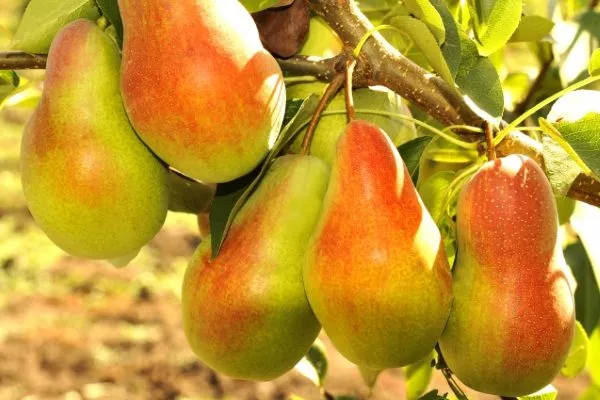
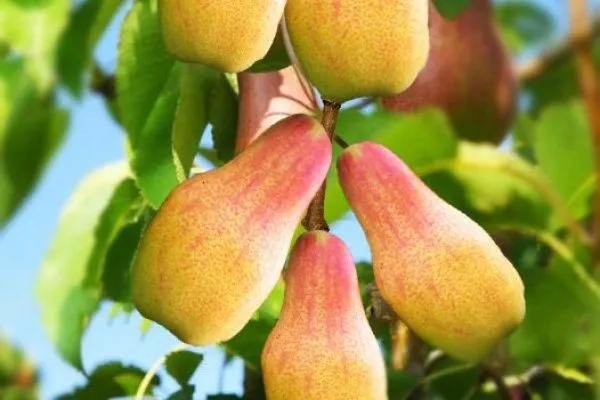
- large pears – average weight about 160 g;
- the fruits have a regular pear shape, the top is usually slightly beveled;
- the skin is completely free of rust;
- the flesh is creamy, crisp and fine-grained;
- the taste of the fruit is sweet and rich;
- the skin is shiny and smooth, slightly oily;
- the main color is pale yellow, with a red blush;
- subcutaneous points are numerous, but small;
- the stalk is of medium thickness and length, slightly curved in shape;
- small funnel, may be absent altogether.
A distinctive feature of this variety is that the fruits are formed in clusters.
Chemical composition of fruits (per 100 g):
- sugar – 9%;
- dry matter – 15%;
- titratable acids – 0.37%;
- catechins – 54.0 mg;
- ascorbic acid – 7.0 mg.
Main characteristics
The Talgar Beauty pear can be grown in a variety of regions and climates. Minimal care is sufficient to ensure a consistent harvest.
Productivity
The crop is early-bearing, and the first harvest can be collected as early as four years after planting the seedling in its permanent location. In subsequent years, the yield is stable and abundant, increasing with each season.
A single mature tree can yield approximately 50 kg of pears. If the variety is grown commercially, the yield is approximately 200 centners per hectare.
Regionalism
The variety was developed for cultivation in the North Caucasus region. The pear was named after the small town of Talgar, located near Almaty.
Today, the Talgar Beauty is actively grown in the Krasnodar and Stavropol Krais. The variety is very popular among gardeners in Belarus, Kazakhstan, and Ukraine.
Frost and drought resistance
This variety is resistant to even severe frosts. A mature tree can withstand temperatures down to -30°C without additional shelter. Young seedlings, especially in the first year after planting, are best insulated for the winter.
The tree also has good drought resistance. It tolerates short periods of drought well, but proper watering is essential for a bountiful harvest.
Application
The fruit is versatile. It's a dessert variety, so it's best eaten fresh. However, if the harvest is abundant, the pears can also be processed, canned, or used in a variety of desserts.
Pears are not suitable for freezing. After freezing, they lose their flavor and become watery.
The nuances of flowering
Flowering begins in the second half of May. Numerous ovaries appear on the tree. The flowers are large, white, and fragrant. Thanks to the late flowering period, recurring spring frosts pose no threat.
Do you need pollinators?
The variety is self-sterile, so to ensure a bountiful harvest, pollinator trees must be planted nearby. Pears are ideal for this role. Clapp's Favorite or Conference.
Consumer qualities and presentation of fruits
The fruits have an attractive appearance. The flavor is delicate and pleasant, and the pears are sweet and juicy. The fruits are undamaged when pressed during harvesting and withstand transportation well, including long-distance shipping. Under optimal storage conditions, the pears retain their flavor and marketability until December.
Advantages and disadvantages of the variety
The Talgar Beauty pear is truly an amazing variety, with virtually no downsides and a host of advantages:
Preparing for landing
This stage is considered one of the most important. The speed of the tree's adaptation to its new location after planting and the future harvest depend on how well the seedling is selected and prepared.
- ✓ The optimal planting depth of a seedling should take into account the soil type: deeper on light soils, shallower on heavy soils.
- ✓ The distance between seedlings should be at least 4 meters to ensure sufficient space for root system growth.
Selecting a seedling and preparing it
Saplings aged 1-2 years are ideal for planting. They are easy to distinguish. A one-year-old tree has no lateral branches, and the trunk is covered with strong buds from the middle to the top. A sapling grows to a height of approximately 11 meters. A two-year-old pear tree reaches 5 meters in height and has several lateral branches with buds.
Regardless of the age of the seedling, follow these tips when choosing it:
- the bark is smooth and flexible;
- branches are elastic, without visible damage;
- the root system is well developed and there are 3-4 main shoots, and many additional roots are present;
- the roots are elastic and quickly return to their previous shape if bent, there are no signs of rot;
- the bark is free from scratches and damage.
Before planting, properly prepare the seedling to speed up its adaptation to the new location. Follow these steps:
- place the cutting in a 3% magnesium solution and leave for 24 hours;
- then treat it with a clay-manure slurry (take 1 part manure and 2 parts clay, dilute with water until you get a mass the consistency of sour cream) and leave it to dry for several hours;
- trim the leaves so that the seedling directs all its energy towards rooting;
- shorten all branches and the trunk by about 1/3.
Planting dates
Both spring and fall planting are acceptable. Specific timing is determined based on regional weather conditions. Seedlings can be planted in the spring once stable warm weather sets in and the threat of spring frosts has passed.
When planting in the fall, carefully check the weather forecast. Plant the pear tree at least 3-4 weeks before the first frost. This will give the seedling enough time to establish roots in its new location and prepare for the coming cold weather.
Preparing the landing site
Prepare the planting hole no later than 10 days before you plan to plant the seedling. For spring planting, it's best to do this in the fall.
- Determine the soil acidity and, if necessary, correct it one month before planting.
- Two weeks before planting, add organic fertilizer to improve the soil structure.
Please follow the following instructions:
- Clear the area of debris, plant debris and weeds.
- Dig a hole about 80 cm deep and at least 90 cm wide (determine the dimensions taking into account the size of the seedling).
- Mix fertile soil (about 20 cm of the top layer) with potassium sulfate (70 g), superphosphate (300 g), rotted compost or humus (20 kg), and wood ash (900 g). Mix all ingredients thoroughly.
- Place the prepared nutrient mixture on the bottom of the hole, forming a mound.
- On the south side, drive in a wooden stake that will serve as a support for the seedling.
- Cover the hole with any waterproof material and leave it in this state until the seedling is planted.
Planting technology
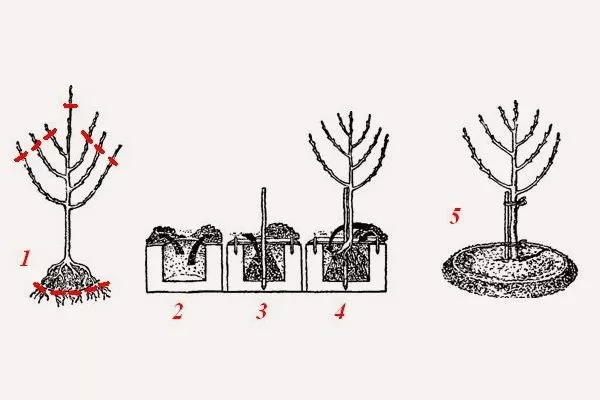
Plant the Talgar Beauty pear tree according to the following scheme:
- Remove the waterproof material from the pre-prepared hole.
- Place the seedling in the center of the hole and carefully straighten the roots along the mound so that there are no kinks.
- Position the tree so that the root collar is approximately 5-7 cm above ground level.
- Gradually fill the hole with soil and shake the seedling periodically to remove air pockets from the soil.
- Compact the soil lightly, but not too hard.
- Tie the tree to the support with any soft material. Avoid using wire or hard ties, as they can damage the young bark of the sapling.
- Form a furrow around the diameter of the hole (depth about 10 cm) and water the pear with 20 liters of warm water.
- Cover the tree trunk circle with a layer of mulch to prevent moisture evaporation and the appearance of weeds.
Tree care
This pear variety can grow with virtually no attention from the gardener. However, it's important to remember simple but important care rules: timely watering, periodic fertilizing, and proper pruningThese procedures will help the tree develop better and produce larger harvests.
Watering rules
Pear trees don't like excessive waterlogging or stagnant moisture. However, prolonged periods of drought can also cause serious damage. Important watering periods:
- before flowering begins – this affects the formation of buds;
- after flowering during the period of ovary formation;
- in summer – for the ripening of the harvest;
- In autumn – moisture-charging watering to properly prepare the tree for winter.
A mature tree only needs to be watered 4-5 times per season. Be sure to consider weather conditions. It's best to avoid watering during rainy and cool summers. A pear tree requires approximately 50 liters of water per watering. This amount can be divided into two waterings: one in the morning and one in the evening.
When performing moisture-replenishing watering in the fall, adhere to the following schedule: apply 60 liters of water per square meter of area. Moist soil helps the tree withstand even the heaviest waterings much more easily. This procedure is not necessary during rainy autumns with heavy precipitation.
A young tree needs more frequent watering:
- 1st year after planting – water once every 10 days with 15 liters;
- up to 4 years of age – water the tree once every 20 days with 20 liters.
The optimal watering method is sprinkling. If you don't have the necessary equipment, simply form two circles of furrows in the soil around the trunk, about 5 cm deep, and fill them with water.
Fertilization
Features of feeding the Talgar Beauty pear:
- During the first 2-3 years, if the planting hole was properly prepared, the tree does not require additional fertilization.
- In the 4th year after planting, organic fertilizers are added in the fall - for example, ready-made cow manure (15 kg), humus or compost (25 kg), a mixture of chicken manure (pour 1 kg of fertilizer into 3 liters of water and leave for 5 days).
To add organic matter, dig 10 cm deep furrows around the crown. Add the fertilizer and cover with soil. - Every spring, apply mineral fertilizers – saltpeter (40 g), potassium chloride (100 g), superphosphate (400 g),
- In spring, before flowering, apply complex mineral fertilizers according to the instructions.
It's best to fertilize pear trees with a water-based solution. In cloudy and damp weather, sprinkle the dry mixture around the tree trunk, then loosen the soil.
Tree pruning
Corrective and sanitary pruning is essential for the Talgar Beauty. The first pruning is performed in the spring, before the buds open—in the first half of April. Young seedlings are in dire need of this procedure.
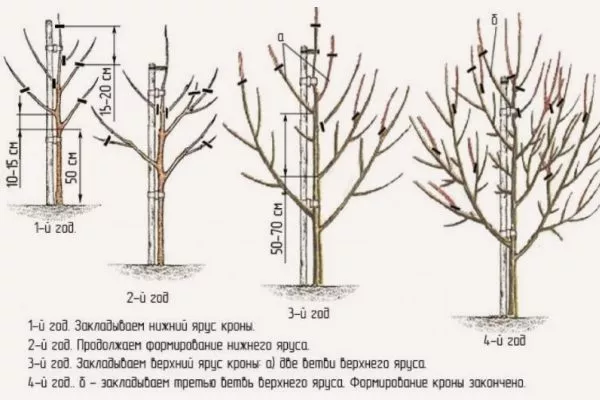
Carry out crown formation according to the following scheme:
- In the 2nd year. Shorten the main trunk by 25 cm. Leave 3-4 branches that will form the first tier, and remove the remaining shoots. Shorten the branches of the tier by 30%, and remove all competing branches.
- In the 3rd year. Shorten the main trunk by 15 cm. Form a second tier of branches 40 cm higher than the first. Leave 2-3 shoots in the second tier. Shorten the branches in the second tier by 30% and remove competing branches.
- In the 4th year. Shorten the main trunk by 20 cm. Form a third tier, leaving 3-4 branches. In the third tier, shorten the branches by 30% and remove all competing shoots.
- On the 5th year. Cut the main conductor to the level of the third tier branches.
In October, carry out sanitary pruning and strictly after harvesting. Remove all diseased, dry, deformed, and damaged branches.
Rejuvenating pruning is necessary approximately every seven years, which has a positive effect on the tree's yield. During this process, remove old branches, but do not remove more than 40% of the crown, as this can negatively impact the pear tree's health.
Use only sharp, sterile tools for pruning. Avoid leaving stumps, as they can become a source of infection. Coat all cuts with several layers of oil-based paint or garden pitch. This will prevent infection and speed up wound healing.
Loosening the soil and removing weeds
Regular soil loosening improves aeration of the surface layer. This procedure is essential after applying dry fertilizer.
Preparing for winter
A mature tree can withstand even severe frosts. Young seedlings require additional insulation in the first few years after planting, as cold temperatures can damage the trunk and branches.
When preparing a tree for winter, carry out the following procedures:
- Clear the soil under the pear tree of branches, fallen leaves and fruits, and weeds.
- Dig up the tree trunk circle to destroy pests that overwinter in the soil.
- Whitewash the trunk. To prepare the whitewash, dissolve lime (2 kg), powdered clay (1 kg), and copper sulfate (300 g) in water (10 liters for a mature tree and 20 liters for a young tree up to 4 years old).
Apply the mixture to the trunk and main branches of the first tier, covering approximately 30% of the tree. This procedure increases the tree's frost resistance and protects it from rodents and pests. - Insulate the trunk with spruce branches or any non-woven material.
- Mulch the tree trunk circle with sawdust in a layer of at least 20 cm.
If the winter is snowy, periodically carefully clear the branches of snow to prevent them from breaking under its weight. To insulate the roots, form a snowdrift about 50 cm deep around the pear tree.
Diseases and pests
Like any fruit tree, the Talgar Beauty pear can be affected by various diseases and pests:
- Leaf rust. Uneven, rusty-colored spots appear on the leaves. To treat the problem, apply Bayleton 5 times in the summer (as per the instructions).
- Black crayfish. Cracks and damage resembling burnt areas appear on the branches and trunk. Treatment: Clean the affected area with a wire brush to remove healthy tissue and treat with 2% copper sulfate three times. Wait two hours between treatments.
If the tree is more than 60% damaged, it cannot be saved. Uproot the pear tree and remove it from the site. - Pear copperhead. Before blooming, buds become deformed, a sticky coating appears on the leaves, and white, ball-shaped clumps appear on the fruit. Treatment: Treat the tree with Thiophos (as per instructions) a few weeks before flowering.
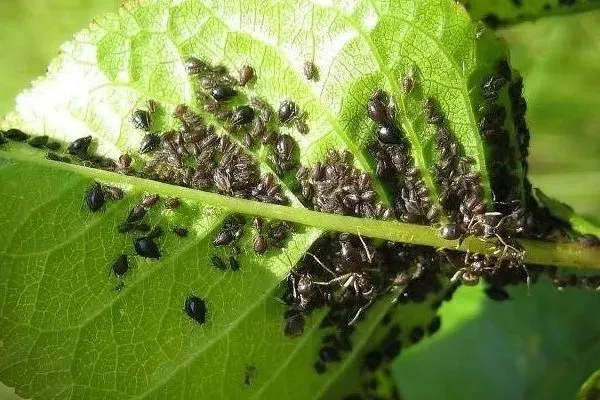
- Aphid. Colonies of small pests appear on young shoots and leaves.
Treatment: treat the ovaries with Iskra-Bio according to the instructions, and young leaves with Kinmiks.
Harvesting
Harvesting takes place in the second half of September, when the fruits ripen evenly. Pick the fruits on a dry, sunny day, preferably before lunch. If the fruit is picked too late, the flesh turns brown and the shelf life is significantly reduced, but the flavor remains intact.
Reviews
The Talgarskaya Krasavitsa pear is characterized by rapid growth, ease of cultivation, and consistent yields. The fruits are delicious and juicy, with a long shelf life. This is a fairly old variety, but it's gaining more and more fans each year.