
The Sweet Beauty pear is an excellent choice for growing due to its high winter hardiness and disease resistance. Many gardeners appreciate this variety for its large fruits and juicy flesh. With proper care, you can enjoy a stable harvest for many years.
Description of the variety
The trees have a columnar shape, growing up to 2.5 meters in height. The crown is characterized by a narrow pyramidal configuration, making the plant compact and suitable for growing in confined spaces. A distinctive feature is the lack of large, spreading branches, making it easy to care for.
- ✓ Absence of large spreading branches, which is rare among other pear varieties.
- ✓ The ability to bear fruit annually without rest periods, which is an exceptional characteristic for pears.
Characteristics of fruits
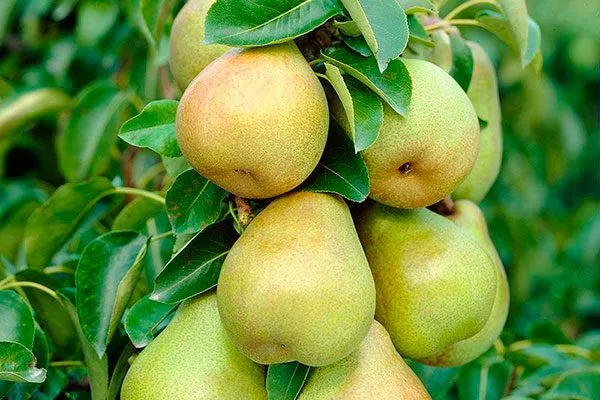
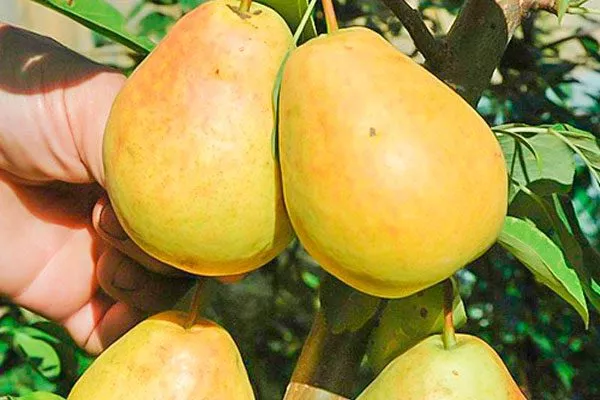
They have a regular and slightly pot-bellied shape, resembling an elongated light bulb. Distinguishing features:
- The fruits are large in size – about 250 g, sometimes there are specimens reaching 400 g.
- They have a yellow-green color and a slight blush.
- The creamy flesh is dense and juicy.
- The taste is sweet, without sourness.
- The aroma is rich and pleasant.
- The skin is dense but thin. There is a dull coating on the surface.
Ripening and fruiting
Harvesting begins in late July and continues until the first week of August. The fruit has a shelf life of 10-15 days after harvest. Due to its early maturity and annual fruiting, you can achieve good yields each season – up to 12 kg of fruit per tree.
Regionality of the variety
Gardeners successfully cultivate the Sladkaya Krasavitsa pear in many regions of Russia, including the Central, Volga, Southern, Ural, and Siberian regions. Growing conditions and yields may vary depending on the climate of each region.
Growing and care
The plant can be grown both outdoors and in pots. For optimal growth, choose a sunny location. Maintain a minimum distance of 2 meters between plants. The soil should be fertile, well-drained, and moderately moist.
Step-by-step algorithm:
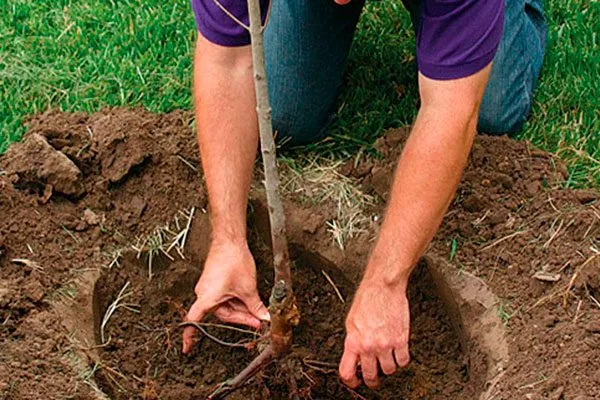
- Dig a hole approximately 60x60x60 cm in size.
- Add compost or humus to the hole to improve soil fertility. Add a small amount of mineral fertilizer.
- Before planting, check the root system for integrity and health. Trim any damaged or twisted roots if necessary.
- Place the seedling in the center of the hole so that the roots are evenly distributed. Fill the hole with soil, compacting it firmly around the roots.
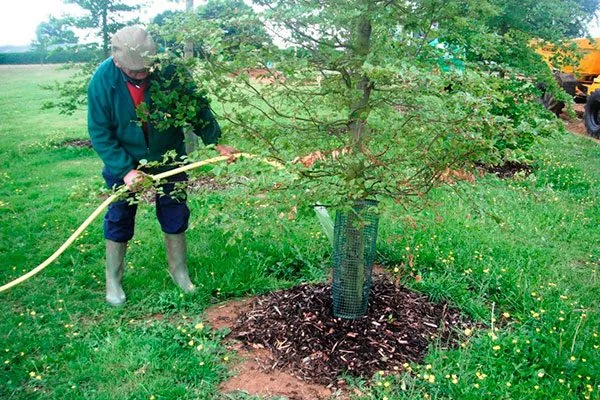
- After planting, water the seedling thoroughly. Make sure the water penetrates evenly into the soil.
The Sweet Beauty pear is distinguished by its high winter hardiness down to -35°C, making it suitable for a variety of climates. However, young plants require winter insulation. If frost is expected, prepare a shelter for the seedling to protect it from adverse weather conditions.
Caring for a pear tree includes regular watering, especially during the ripening period. Pruning should be done in spring or fall. In the first year after planting, remove all side shoots, leaving only the central stem. In subsequent years, form a framework of 4-5 branches positioned at the same level.
The crop can be susceptible to various diseases and pests, which negatively impacts the yield. The main diseases include:
- Powdery mildew. It appears as a white coating on leaves and stems.
- Late blight. Characterized by spots on the leaves and softening of the roots.
- Firefly. It appears as brown spots on foliage and melons.
- Alternaria. Accompanied by brown spots on leaves and fruits.
The Sweet Beauty pear can be attacked by aphids, spider mites, wireworms, and other insects. Aphids feed on the plant's sap, spider mites cause webbing on the leaves, and wireworms attack the roots.
Gardeners' reviews
Sweet Beauty is a popular winter-hardy variety with many positive characteristics. It requires little care and yet produces abundant harvests. Proper care is essential to ensure juicy, sweet fruits every season.