
The Santa Maria pear is often found in stores and markets, prized for its excellent taste and attractive appearance. This delicious and beautiful Italian pear has become truly popular among our gardeners and summer residents.
Who developed the variety?
The Santa Maria pear was developed by Italian breeders. Florence is considered its birthplace. The variety was developed there in 1951. The originator was A. Moretinni. The variety was obtained by crossing the Coscia and Duchess Summer pears.
What does a tree look like?
Santa Maria pear trees are considered medium-sized; they can grow up to 5 m in height or even higher—the size depends largely on the rootstock used to obtain the seedlings.
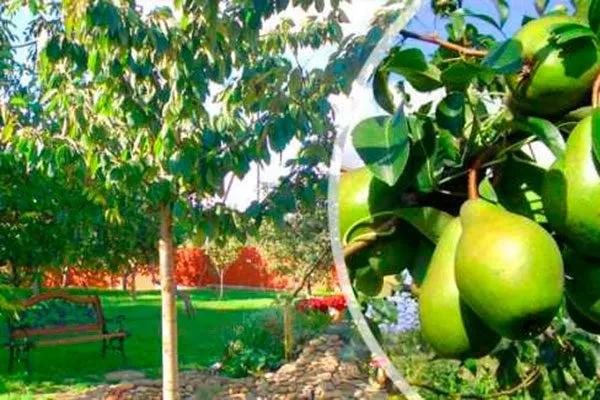
The tree's crown is compact and is usually shaped into a rounded form. Branches grow upward, at right angles to the trunk. The tree has medium-sized, glossy, dark green leaves.
Appearance and taste of fruits
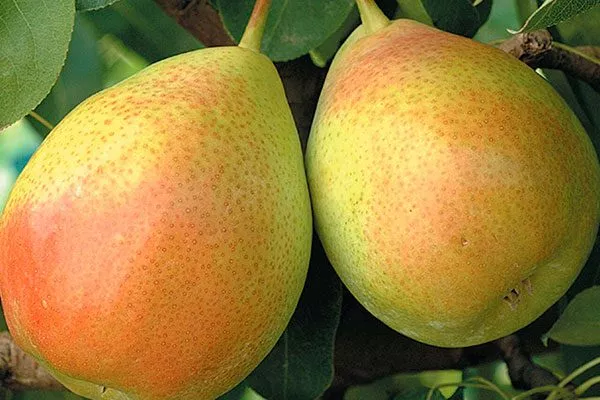
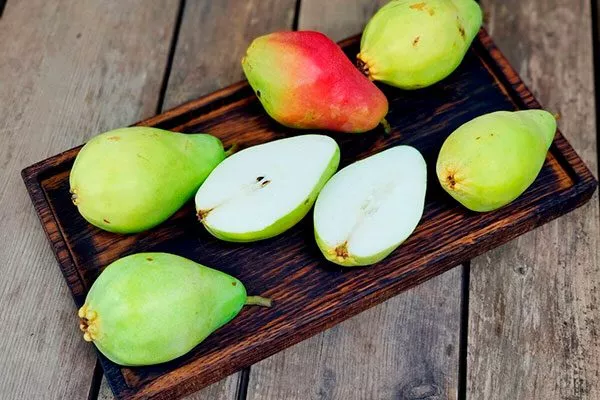
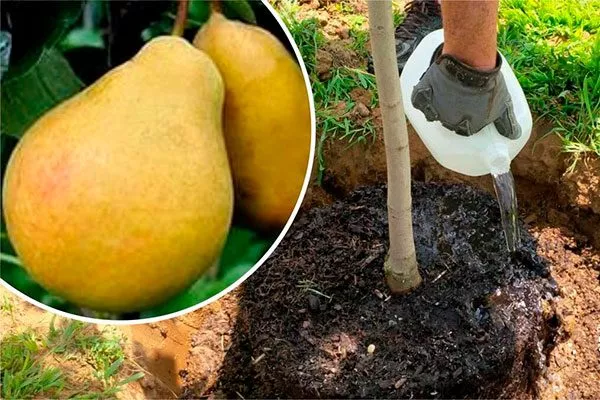
The fruit is a standard pear-shaped fruit. The average weight is about 200-230 g. The fruits are uniform in size, with smooth, delicate skin. The color is yellowish-green with a slight pinkish blush. The flesh is white-yellow, juicy, and melts in the mouth.
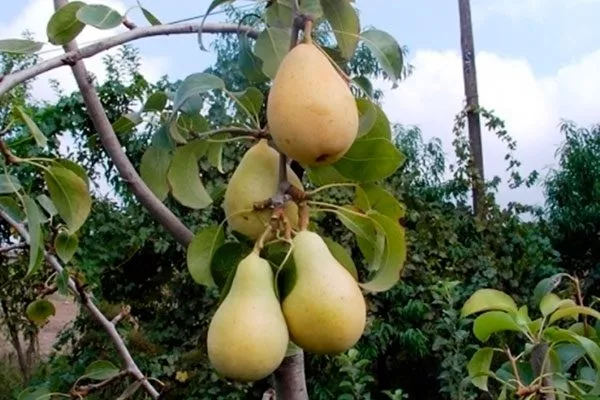
The taste of the fruit is harmonious and balanced, with a predominance of dessert sweetness and the presence of a slight sourness.
When does it ripen?
The Santa Maria pear is an autumn variety. The fruit is harvested in September. Firm fruits are typically picked, as they ripen safely indoors. This variety is early-bearing—with favorable agricultural practices, the tree produces fruit in the third year after planting.
Productivity
The yield of the Santa Maria pear depends largely on the tree's age, growing conditions, and the correct agricultural practices. On average, this variety yields 50-120 kg per tree.
Self-fertility
The variety is partially self-fertile, so it cannot produce large harvests on its own. To ensure a high yield, pollinators must be planted in the area. The best varieties are considered to be Koschia, Williams, or Abate Fetel.
If it's not possible to plant a pear tree from the varieties listed above, other options are available. The key is to ensure that the trees planted bloom at the same time as the Santa Maria variety.
Pros and cons
Before planting the Santa Maria pear variety in your garden, it's worth evaluating all its advantages and disadvantages. This will help you determine how suitable this pear is for your intended purposes.
Pros:
The variety in question has no particular drawbacks, except that it requires careful care, as this affects the yield.
Landing features
The variety is sensitive to its growing location, and the planting process itself is equally important. The tree's future growth, development, and fruiting potential depend on how well it is planted.
- ✓ The soil pH level should be strictly within 6.0-7.0 for optimal nutrient absorption.
- ✓ The depth of the fertile layer is at least 60 cm to provide the root system with the necessary nutrition.
Features of planting the Santa Maria variety:
- The tree grows best in sunny, wind-protected areas. The maximum groundwater level is 1.5 meters above the ground surface.
- The soil should be fertile, not waterlogged, and neutral in pH. Planting pear trees in low-lying areas is contraindicated. If the soil is acidic, it must first be deacidified using alkaline fertilizers, lime, wood ash, or dolomite flour.
- It's best to purchase seedlings from reputable, specialized nurseries; otherwise, after a few years, you may not get the results you expected. When choosing seedlings, choose 1-2-year-old specimens without damage or cracks, with well-developed roots, and smooth, even bark.
- In southern regions, planting occurs in the fall, about a month before winter sets in. During this period, the tree has time to establish itself, grow stronger, and adapt to its new location, allowing it to survive the winter cold. In temperate regions, spring planting is preferred, as the risk of freezing for seedlings planted in the winter is too high.
- Prepare the plot at least 2-3 weeks before planting. Dig the soil deeply, adding organic matter such as compost, humus, and rotted manure. If necessary, add sand to loosen overly clayey soil. For spring planting, these steps can be done in the fall.
- Planting holes 60-70 cm deep are dug a week before planting the pear seedlings. Spaces of 2-3 meters are left between adjacent holes, with rows spaced 4 meters apart. Drainage and a nutritious soil mixture made from fertile soil, organic matter, and mineral fertilizers are added to the bottom of the holes. This nutrient supply will last the young tree at least two years.
- The seedling is placed on a mound of earth formed by filling the hole with potting soil. A stake is first placed in the center of the hole, or rather, at a short distance from it. It is driven into the soil to provide a secure support for the young tree.
- The planted seedling is watered generously with warm, settled water. The area around the tree trunk is mulched with straw, freshly cut grass, or another suitable material.
Growing and care
To obtain good harvests and large, high-quality fruits, it is important to properly care for the Santa Maria pear.
Care features:
- Fertilizing the tree begins in the third year after planting. Trenches are dug around the perimeter of the tree's trunk to apply fertilizer. Nitrogen fertilizers are applied in the spring, followed by potassium and phosphorus fertilizers later, according to the standard schedule for fruit trees.
It's important to avoid applying nitrogen during the summer and fall, as it negatively impacts crop quality. Organic fertilizers are applied once every few years—in spring or fall. Typically, compost or rotted manure is used. - Sanitary and formative pruning is performed every spring. After winter, all frozen, dead, diseased, damaged, and inward-growing branches are removed. This type of pruning also helps prevent the crown from becoming too dense. Crown shaping is performed only in the spring, as pruning in the fall should be minimal—to prevent stress from interfering with the tree's ability to prepare for winter.
- Water the pear tree in the evenings, using settled water. A mature tree needs two waterings per season, while young, newly planted trees require more frequent watering. Water is poured into trenches to prevent water from touching the trunk. The recommended watering for a young pear tree is 10 liters, but as it ages, the requirement increases to 40-50 liters. Watering should be stopped during rainy weather.
- After each watering, irrigation, or rain, the tree trunks are loosened, removing weeds along the way. These not only absorb water and nutrients but can also attract insect pests. Mulching is recommended for young pear trees, but this is not recommended for mature trees.
Diseases and pests
The variety has a strong immune system and, under favorable conditions, is almost never susceptible to disease. However, under adverse conditions, especially multiple factors—rainy and cold weather, lack of preventative spraying, poor care, etc.—the tree may become infected with scab or other fungal infections.
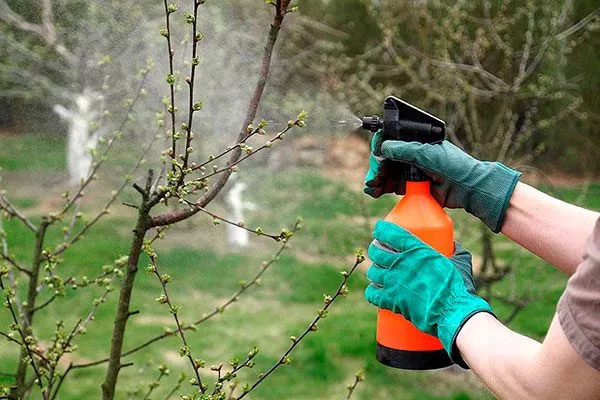
- Carry out the first spraying with copper sulfate before the buds open.
- The second spraying with Bordeaux mixture is carried out in the pink bud phase.
- The third spraying after flowering with sulfur-based preparations.
Due to diseases, the taste of the fruit may deteriorate; if treatment is not started in time, the tree may die.
But the greatest threat to the Santa Maria pear is not diseases, but pests. Most often, this variety is attacked by leaf and fruit midges, which feed on the leaves and fruit, respectively. These midges can cause irreparable damage to the tree.
Insecticide spraying before flowering and then according to a prescribed schedule can help prevent damage. Santa Maria pears are also susceptible to the pear leafhopper. Insecticides can be used before and after fruiting. During fruit formation, it is recommended to use products safe for humans or folk remedies such as ash or soap solutions, or ammonia.
Reproduction
Most gardeners and amateur gardeners prefer to buy ready-made seedlings, but if you already have a pear tree on your property, you can always propagate it yourself. Ordinary gardeners don't use seeds, opting for faster and more affordable methods—vegetative propagation.
The Santa Maria variety can be propagated:
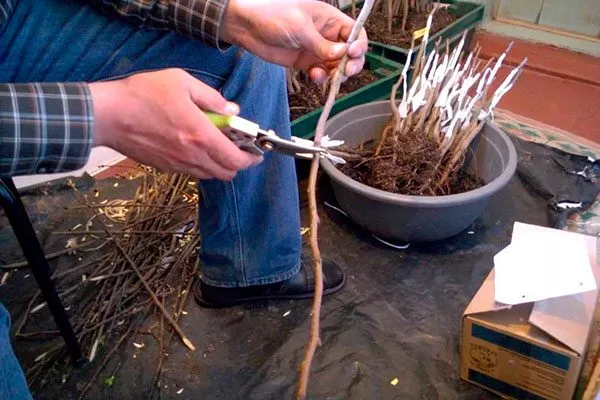
- Cuttings. Planting material is collected in the spring, but preparation begins in winter. First, a suitable, well-ripened branch is selected and broken in several places. The broken sections are wrapped in adhesive tape. In the spring, the adhesive tape is removed, and the branch is divided into cuttings, which are placed in containers of water. The first roots will appear in about a month.

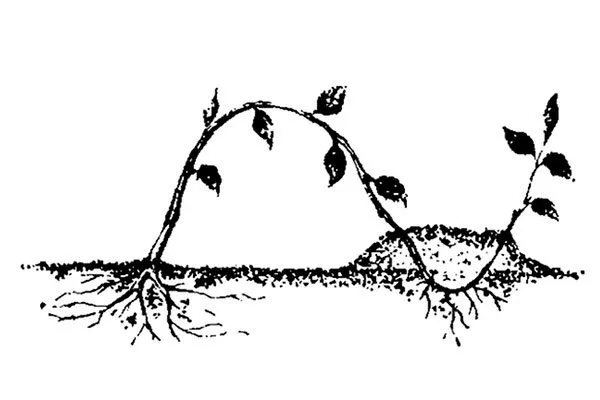
- By layering. Place a box filled with fertile soil under the pear tree. Make cuts in the lower branch, bend it to the ground, secure it with pins, and lightly cover it with soil. To speed up root development, water the layer with Kornevin, a growth stimulant. Insulate it for the winter, cover the box with snow, and in the spring, the rooted layer can be separated and transplanted to its permanent location.
Harvesting and storage
It's important to time the harvest correctly—the fruit must be ripe enough to be picked. Even a week late can significantly degrade the quality of the fruit, often causing it to simply spoil on the tree. As the fruit ripens, it gradually changes color from green to yellow, so it's important not to miss this moment. If the seeds begin to brown, it's time to harvest.
When picking pears, don't pull them down. Instead, grasp them with your fingers and gently press on the stem where they connect to the branch, lifting the fruit sideways or upwards. Ripe pears should separate from the branch very easily. If this doesn't happen, you need to wait another 2-3 days.
It's recommended to pick the fruit while it's still relatively firm and green. Then, they're stored in dry, semi-dark areas to ripen for about 10 days. After that, they're ready to be shipped to retail outlets. Under favorable conditions, Santa Maria pears can be stored for a maximum of about a month.
Application
The Santa Maria variety not only boasts excellent flavor but is also versatile, suitable for both fresh consumption and cooking, as well as for making all kinds of preserves. Santa Maria fruits are perfect for desserts and baked goods.
The Santa Maria pear is a truly remarkable variety, ideal for both amateur and commercial gardening. But before planting this delicious and beautiful pear in your garden, consider the local climate—the Italian pear is not suited to harsh Russian winters.