
The Prazdnichnaya pear creates a festive mood with its juicy, sweet fruits with hints of tropical fruit. This tall, compact variety doesn't take up much garden space, yet still rewards gardeners with abundant and consistent harvests. It's resilient to many adverse factors and easy to grow.
History of selection
The Prazdnichnaya pear variety has earned the trust of gardeners over many years; it was developed in 1960. After a series of tests, it was registered in the State Register of Breeding Achievements in 1963.
Description of the Prazdnichnaya pear variety
The variety is considered sun-loving—only in well-lit areas will the fruit ripen sweetly and acquire a beautiful marketable appearance. One peculiarity is that the tree is strongly opposed to low-lying areas, as water accumulates there and subsequently stagnates.
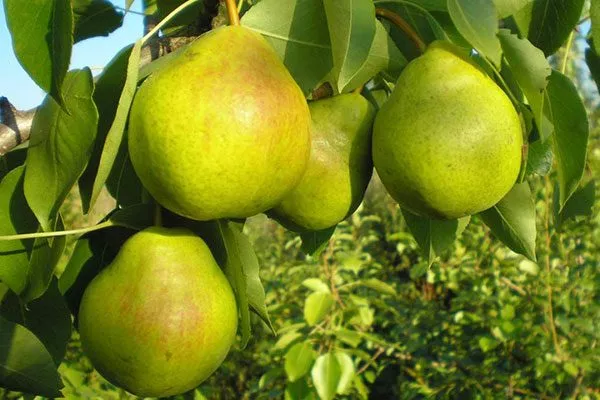
Tree
The plant reaches a height of 500-600 cm in adulthood. The crown resembles a trapezoid with upright shoots growing upward. This prevents the plant from spreading, allowing for a limited space. Other characteristics:
- the root system is clearly developed;
- branch growth - at a right angle;
- foliage – dense;
- leaf blades are elongated-oval, dark green, with a shiny surface and clearly visible veins;
- flowers are large in size, sweet in aroma.
- ✓ The fruits have a distinct tropical fruit aroma, which is rare among other pear varieties.
- ✓ The tree requires minimal pruning due to its compact crown and upright shoots.
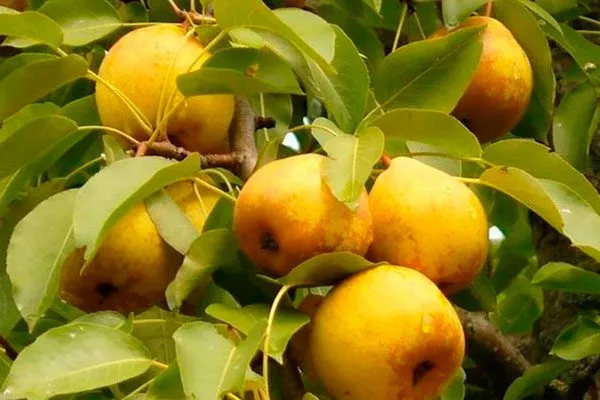
Ovaries are formed mainly on ringed shoots.
Fruit
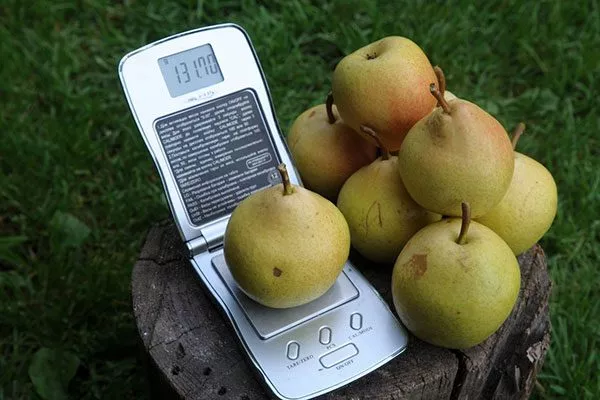
Pears are considered medium-large, as their weight ranges from 100 to 150 grams—the more fruits formed on the branches, the smaller the size of the pears. Consider other characteristics of the fruit's appearance and properties:
- the pulp is white and juicy;
- the structure of the pulp is fine-grained and loose;
- shape – round-wide, regular pear-shaped;
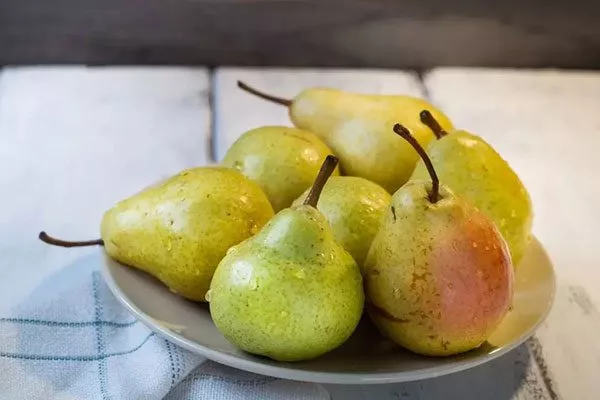
- the skin color is bright yellow, but as it ripens, a reddish, blurry cover appears on one side;
- skin type – thin but hardened, easy to chew;
- Subcutaneous specks – multiple, small in size, rusty-brown.
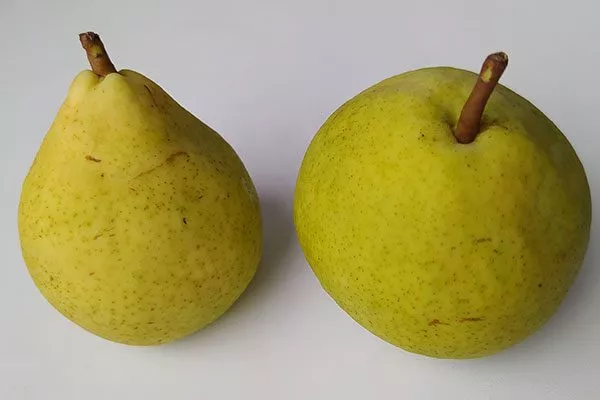
The pears have excellent flavor—they lack acidity, so they are considered sugary—to the point of being cloying, as some consumers note. The aroma, like the aftertaste, is distinct and has hints of tropical fruit.
Characteristics
Thanks to the characteristic properties and capabilities of a variety, it is possible to determine in advance whether planting a tree in a particular region is possible and how easy it will be for a gardener to care for the crop.
Drought and frost resistance
The variety tolerates drought well, but strongly dislikes high humidity. Avoid frequent watering, and it's advisable to choose elevated planting sites. In damp, low-lying areas, the roots may rot, which can lead to the tree's death.
This variety is characterized by sufficient frost resistance for mid-latitudes, withstanding temperatures down to -30-35 degrees Celsius. In colder regions, additional protection will be required: a well-insulated tree trunk and a layer of non-woven covering material.
Resistance to diseases and pests
This pear variety is resistant to scab and powdery mildew, but is susceptible to the bacterial disease bacteriosis. In high-humidity conditions, there is a risk of root rot. Scale insects, codling moths, and aphids are potential pests for this variety.
Flowering period and ripening time
Flowering occurs in May, and the fruits of this summer pear reach harvesting maturity in late August or early September, ripening simultaneously. Over-ripening the fruits on the tree is not recommended, as this can negatively affect their flavor.
The harvest withstands transportation well, but has a relatively short shelf life – about two weeks, which is typical for most summer varieties.
Productivity and fruiting
This variety begins bearing fruit quickly, with the first harvest expected in the fourth year after planting. The tree produces fruit annually without interruption. In the first five years of fruiting, a single tree can yield approximately 55-65 kg of pears, and subsequently, the yield can increase to 100-110 kg.
Pear pollinators
Although the pear tree has a female flowering type, problems with fertilization usually do not arise if pollinator varieties such as Bergamot Moskovsky, Chizhovskaya, and Rogneda are planted nearby.
Growing regions
Recommended for growing in the central region and the south of the country. If planted in harsher climates, the tree will need to be insulated for the winter.
Application of fruits
The variety is versatile – the fruits are excellent for fresh consumption, as well as for making preserves, juices, jams, compotes and desserts.
Chemical composition of fruits
Prazdnichnaya pears contain a huge amount of vitamins, amino acids, and antioxidants, which promote overall health and reduce inflammation.
Information on the chemical composition of the Festive Pear per 100 grams of product:
- 0.4 g protein;
- 85 g liquid;
- 3 g fiber;
- 15.5 g carbohydrates;
- 0.3 g ash;
- 0.1 g fat;
- 0.0056 g of B vitamins;
- 0.15 g potassium compounds;
- 0.004 g “ascorbic acid”;
- 0.015 g phosphorus;
- 0.05 g saturated fatty acids;
- 0.13 g Omega-3;
- 6.5 g fructose;
- 0.17 g unsaturated fatty acids;
- 0.18 g of replaceable amino acids;
- 0.018 g calcium;
- 0.1 g essential amino acids;
- 2.7 g glucose;
- 0.5 g starch;
- 0.012 g magnesium.
The energy value (caloric content) of the Festive pear is approximately 55-65 kcal per 100 g. This information should be taken into account by those on a diet and those with endocrine disorders.
Advantages and disadvantages of the variety
The variety is characterized by many positive qualities, among which the following stand out in particular:
The only disadvantages worth noting are the need for additional pollinators and the relatively short shelf life of the crop – up to 15 days.
Landing rules
Planting a young tree can be done either in the spring in April or in the fall in October. It is recommended to prepare the site for planting two weeks in advance. Important points during planting for successful survival:
- Choose a location for your pear tree that receives good light, warmth, and protection from the wind. A shallow slope facing south or southwest is ideal.
- It is important to avoid proximity to buildings, walls or other tall plants that may create shade.
- Pear trees require conditions with low levels of dampness and humidity, therefore the groundwater level should be at least 300 cm from the surface.
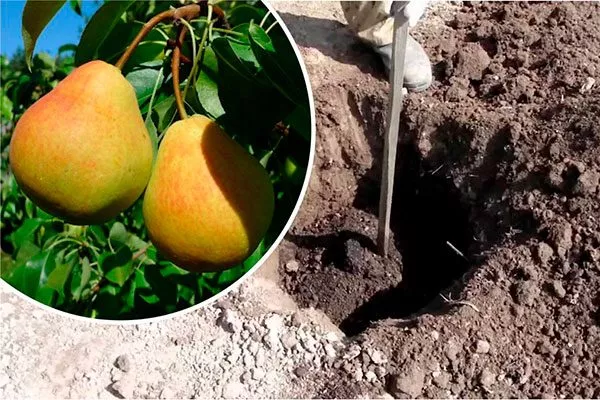
- Two to three weeks before the planned planting, prepare a planting hole approximately 55-65 cm deep and up to 35-45 cm wide. Place a drainage layer of brick fragments and gravel at the bottom, and a fertile layer of soil mixed with humus or horse manure on top.
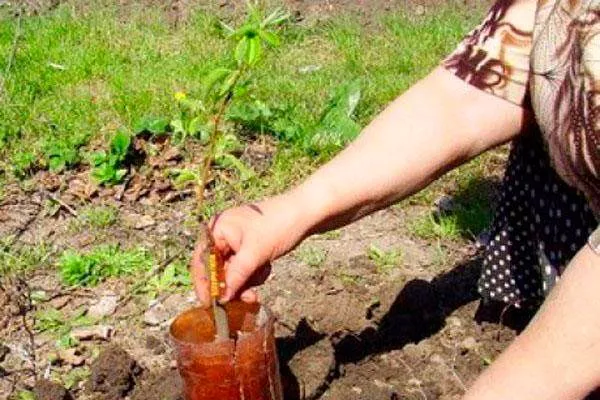
After this, add a layer of garden soil, water it, and form a low mound. Also, dig a stake next to the hole to serve as a support for the seedling. - Once the soil has warmed up well, after about two weeks, you can begin planting the seedling. Carefully place it in the center of the hole, spread the roots, and fill them with soil, compacting them lightly. Make sure the root collar is 4-5 cm above the soil.
- The tree must be watered generously, using approximately 20 liters of warm water, after which the trunk circle should be mulched with peat or sawdust to retain moisture and prevent weed growth.
- ✓ The seedling should be planted at a depth such that the root collar is 4-5 cm above ground level, which will prevent it from rotting.
- ✓ The distance to the nearest buildings or other trees should be at least 5 meters to ensure sufficient lighting and air circulation.
Care Features
The Prazdnichnaya pear variety is easy to grow and suitable even for those with no gardening experience. The plants don't require a lot of attention, so care is simple and easy.
- Protecting plants from diseases and pests. Pear is resistant to scab and powdery mildew, as confirmed by the variety description and gardener reviews. However, there is a risk of bacterial blight, which is difficult to treat. As a preventative measure, spring spraying is recommended. Prolonged precipitation may cause root rot, which can be effectively controlled with copper sulfate. Insecticides or folk remedies can be used to control aphids, scale insects, and codling moths.
- Watering. It's important to ensure regular watering: young trees should be watered once a week, while mature trees should be watered once or twice a month, unless there's rainfall.
- Fertilizing. It is recommended to fertilize the plant twice per season. The first application of potassium nitrate (45-55 g per 10 liters of water) is made two weeks before flowering. The second application, a potassium-phosphorus solution, is made in early August.
- Pruning and crown shaping. In the spring, remove dried, damaged, and frozen branches, and in the fall, thin out the crown by trimming excess and abnormally growing shoots.
In cold climates, winter protection of the tree requires special attention: the trunk circle should be mulched with straw, the trunk should be wrapped in burlap, and protective shields should be installed on the north side.
Pollination and reproduction
To ensure a bountiful pear harvest, it's crucial to pay attention to the quality of pollination during flowering. If a tree blooms profusely but produces few fruits, the problem is often due to insufficient pollination. There are two types of pear pollination:
- self-pollination, in which fertilization occurs with pollen from the same tree;
- cross-pollination, which depends on the presence of pollen from other pear varieties.
Important points:
- Cross-pollination requires the fulfillment of several conditions: synchronous flowering of different varieties, abundant release of pollen by the pollinator, stable flowering of trees, the absence of cross-sterility between them and the coincidence of their development phases.
- When planting pollinated varieties, a spacing of 1-1.5 m should be maintained between plants, while the optimal distance between pear trees and their pollinators should not exceed approximately 13-15 m.
- If your orchard is limited to a single pear tree and there's no way to plant additional pollinators, you can use artificial pollination. This is often practiced in commercial orchards using specialized pollen distribution equipment.
At your garden, simply use a brush or cotton swab to transfer pollen from flower to flower. It's most effective to transfer pollen from a tree of a different variety, preferably from a neighboring garden, as different varieties can improve pollination.
To successfully grow the Prazdnichnaya variety, it's important to select suitable varieties for cross-pollination and consider their compatibility with other plants in your garden. Selecting adjacent crops is also important:
- Chinese cabbage, tomatoes, onions, cucumbers and lettuce can support pear yield;
- proximity to stone fruit crops or conifers can be harmful;
- hostas, primroses, violets and bellflowers can grow in the partial shade of a pear tree trunk and support its health;
- Certain plants, such as mint, marigolds, and calendula, may attract beneficial insects or repel pests.
Pear trees can be propagated in a variety of ways: by cuttings, root suckers, seedlings, air layering, or grafting onto rootstock. Each method has its own characteristics, advantages, and disadvantages, which should be considered when choosing a propagation method.
Collection and storage
It is recommended to process these pears immediately after harvesting, as they do not last longer than two weeks fresh, even when stored in the refrigerator.
Gardeners' reviews
The Prazdnichnaya pear is an ideal choice for both commercial and home cultivation. The variety is resistant to major diseases and pests, and tolerates frosts well in the central, southern, and even central parts of the country. It offers gardeners the opportunity to harvest a bountiful crop every year.