
A pear tree's lack of bloom is a common problem faced by many gardeners. After all, blooming lays the foundation for a future harvest, and if the tree doesn't produce flower buds, there's no point in expecting fruit. There can be many reasons why a pear tree doesn't bloom, ranging from improper care and unfavorable conditions to cultivar characteristics and weather factors.
Key reasons for the absence of flowers on a pear tree
The flowering period is determined by the region's climate, weather, varietal characteristics, growing conditions, and plant care. It's not uncommon for some trees to bloom earlier than others, and this is not uncommon.
Peculiarities of the pear variety and the age of the tree
If a pear tree isn't blooming, the tree's age may be the cause. Young plants often haven't yet reached the stage where they're capable of forming flower buds.
Different pear varieties begin bearing fruit at different times: some as early as the third year after planting, while others don't begin bearing until the sixth or even tenth year. It all depends on the varietal characteristics. For example, the following varieties are considered late bearers:
- Bere Slutskaya;
- Bere Ardanpon;
- Ussuriyskand others.
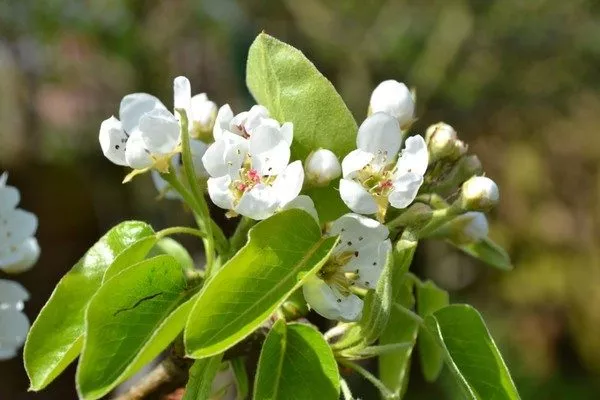
The timing of flowering and fruiting also depends on the type of rootstock. If a tree is grafted onto a vigorous rootstock, it will likely take longer to gain mass before flowering. Pears grown on wild pears brought from the forest take especially long to develop—in this case, the harvest can take many years to arrive.
Pear trees are not getting enough sunlight.
This plant is quite demanding when it comes to site selection. For full flowering and fruit production, it requires as much sunlight as possible. In the shade, the tree may not bloom at all, or its blooms may be weak and fruitless.
If the pear tree was initially planted in an open area, but over time ended up in the shade from buildings or overgrown trees, it is better to transplant it to a more illuminated place.
Lack of nutrients in the soil
Pear trees begin to form flower buds in the summer, when the effects of spring fertilization have already worn off, and fall fertilization is still a long way off. This problem is especially acute in depleted, poor soils, where the tree simply lacks resources—under such conditions, flowering may be a distant memory.
At this stage the pear especially needs:
- phosphorus;
- potassium;
- iron.
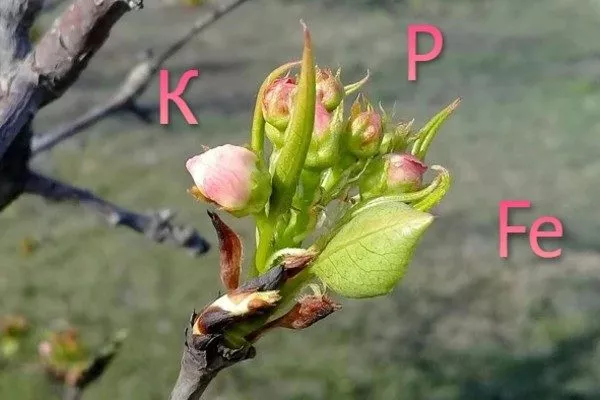
They play a key role in the formation of future flower buds. The solution is regular fertilizing, both root and foliar, with essential nutrients including both macronutrients and micronutrients.
Freezing of pear trees in winter
Even winter-hardy pear varieties don't always withstand the vagaries of nature. Sudden temperature fluctuations damage not so much the large branches or trunk as the rhizomes—the short fruiting shoots on which flowers form. If they freeze, they fail to bloom the following spring.
Other features:
- Freezing rains, which have become more frequent in recent years in the Central Russian region, are no less dangerous for pear trees. The weight of the ice causes the thin branches of young trees to crack, and future flower buds to die along with them.
- According to gardeners, frost cracks are more common on pear trees than on apple trees. Young seedlings and older plants, whose resistance to weather stress is reduced, are particularly vulnerable.
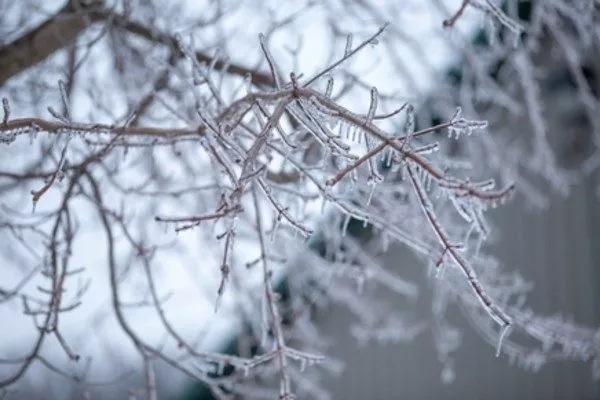
Unfortunately, it's impossible to completely eliminate this problem. However, a tree that has been properly prepared for winter and given reliable shelter has a significantly higher chance of preserving its seedlings and blooming successfully in the spring.
Inadequacy for the region
When choosing seedlings, it's important to consider not only the fruit's flavor and yield, but also the variety's adaptation to regional conditions. Choose varieties that are suitable for specific regions—they better tolerate local climates, whether frost, drought, or excess rainfall.
If a pear tree is unsuited to its environment, it will focus all its energy on survival rather than flowering and fruit production. As a result, even an apparently healthy tree may go years without producing fruit.
Incorrect landing
Lack of flowering in pear trees is often due to cultivation errors. Important points:
- It is necessary to choose the right location: the area should be sunny, protected from drafts, with deep groundwater.
- Pear trees do not tolerate stagnant moisture at the roots; if the plant is overwatered, its growth slows, it gets sick more often, and it does not form flower buds.
- A lack of light also prevents the tree from forming flower buds – this is especially critical for the pear tree, which is more sensitive to light than the apple tree.
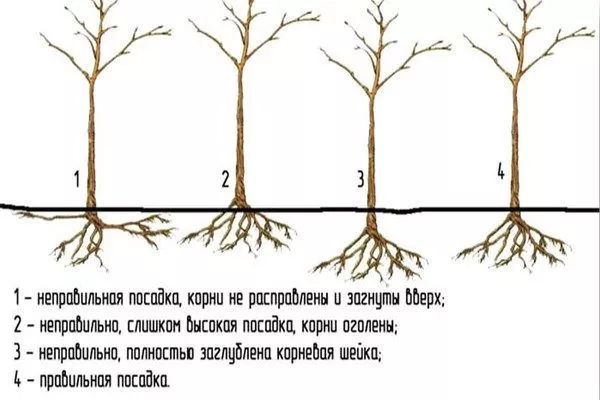
Delayed flowering is often caused by planting too deeply. If the root collar is planted too deeply, the bark in that area begins to rot, and the seedling's development is significantly slowed. In this case, try one of the following:
- carefully dig up the trunk at the base to expose the root collar;
- Replant the tree, maintaining the correct depth.
Moisture deficiency
A lack of moisture negatively impacts the growth and development of pear trees. Drought stresses the tree, slowing its metabolism, and especially the formation of flower buds. Furthermore, a dehydrated plant overwinters poorly, making its tissues more vulnerable to frost.
Young trees are especially sensitive to moisture stress. To avoid problems, it's important to follow watering guidelines:
- pour 20-30 liters of water under seedlings in their first year of life;
- trees aged 3-5 years require 50-80 liters;
- adult pears - up to 100 liters.
Water the crop rarely, but generously, so that moisture penetrates deep into the root zone.
Soaking of pear roots
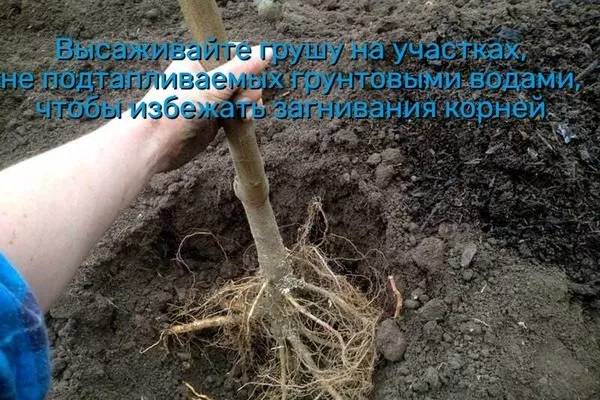
Stagnant water in the area, heavy clay soil, or a high water table are common reasons why pear trees delay flowering. The tree is particularly sensitive to overwatering: its fine roots easily rot when exposed to excess moisture, which disrupts nutrition and slows development.
To avoid problems, plant the crop in well-drained areas. Prepare the planting hole in advance – make it deep, fill it with loose, fertile soil, and ensure moderate watering. If after planting you discover the site is damp and unsuitable, replant the plant to a suitable location.
Pear pests and diseases
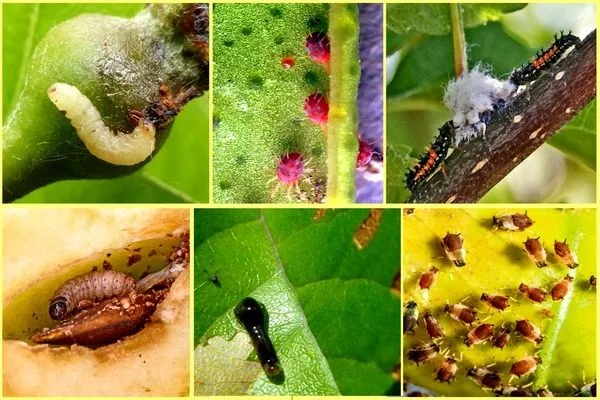
The plant is attacked by a variety of harmful insects, many of which happily feed on delicate buds and flowers. If you notice buds falling off without opening, it's likely due to winged or crawling pests.
Insects that can weaken a young tree, preventing it from producing a harvest:
- apple blossom weevil;
- goldtail;
- apple psyllid.
Among the diseases that affect flowers and ovaries, the following are especially dangerous:
- powdery mildew;
- downy mildew;
- black cancer.
Pest and disease control isn't easy—it requires a comprehensive approach. Apply treatments several times per season at specific times, and repeat them every year, otherwise the protection will be temporary. You'll find more details about what's wrong with pear trees and how to treat them. Here.
Incorrect formation of the pear crown
Most varieties grow very quickly—in just a couple of years, the crown can become so dense that it turns into a dense ball or a veritable broom. Beginners often delight in the abundance of foliage, but this deprives them of the opportunity to harvest a full crop.
In the dense shade of the branches, flowers either do not set or remain invisible to pollinating insects.
For abundant fruiting, follow these recommendations:
- Every year, starting from the year of planting, prune and shape the tree (you will find more details on how to properly carry out the procedure Here).
- Simply removing excess shoots isn't enough. Branches often grow too close to the trunk or at a sharp angle, so to correct this, gently bend them back using hanging weights or loops.
Overloading of the tree in the previous season
Some plants bloom and bear fruit not every year, but every other year. If the tree was literally covered in fruit last season, but there haven't been any flowers in the current or previous year, the problem is likely due to the irregularity of fruiting.
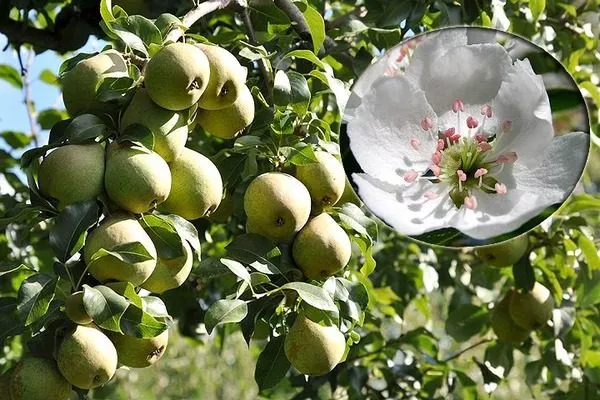
This phenomenon is more common in apple trees and less common in pear trees. The causes can vary, ranging from varietal characteristics to improper care, especially improper pruning, as well as nutrient deficiencies.
To minimize the frequency of fruiting, it is important to provide the plant with competent care:
- Perform proper pruning regularly;
- apply fertilizer.
After a bountiful harvest, the tree requires a lot of energy to recover, and without sufficient nutrition, it will not be able to set flower buds for the following year.
If your garden is growing pear varieties that have an innate tendency to bear fruit every other year, it's unlikely you'll be able to completely change this cycle—you'll have to accept that you'll only have a harvest every two years.
Ways to stimulate flowering
In some cases, solving the problem of lack of bloom without drastic measures is impossible—for example, if a pear tree is growing in marshy areas or in dense shade. The only way to help the tree in such conditions is by repotting, but this procedure is very stressful for an adult plant:
- it may not take root;
- There is a risk of significant weakening, which will delay flowering for several years.
But most factors that interfere with flowering can be corrected without major interventions:
- If the root collar is too high when planting, mound it up with soil periodically. If the planting is too deep, carefully remove the top layer of soil around the trunk. If frost damage or cracked bark occurs, seal the wounds with garden pitch or clay and cover with cloth.
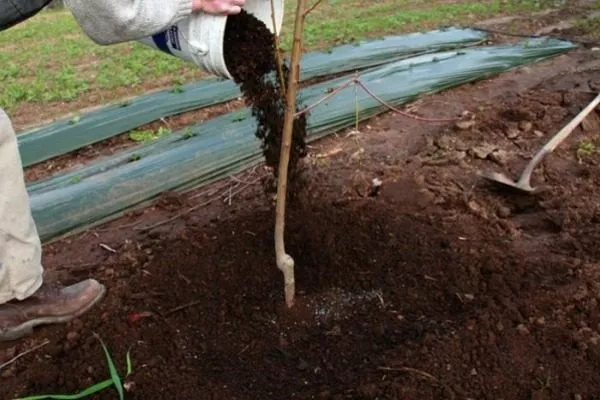
- In case of widespread leafhopper infestation, use insecticides. Spray during bud break, or if flowering occurs, after the flowers have fallen. If there are no flowers, spray in early summer, when the second generation of pests emerges.
To enhance the effect, use biological preparations and folk remedies: fumigation with peat and tobacco, treatment with decoctions of yarrow, dandelion or tobacco. - If possible, protect trees growing in drafty areas with a windbreak, such as a decorative wall or a support for climbing plants.
- Trees weakened by pruning, bad weather, improper care, or damage from diseases and pests should be supported with foliar feeding with phosphorus and potassium during the summer.
- To increase the fertility of depleted soil, apply organic matter per square meter: compost (15-20 kg), and for alkaline soil, peat (3-4 kg). In early spring and late fall, it is beneficial to add rotted manure – 20 kg per square meter for young trees and up to 30 kg for plants over 7 years old.
In this case, in addition to limiting nitrogen fertilization, it is recommended to drive several nails into the trunk and sow nitrogen-absorbing grasses under the tree: clover, legumes, sweet clover, etc.
Prevention of the problem
Healthy and strong young trees that have reached a productive age will produce a harvest if they are provided with the right environment. However, certain agricultural practices are particularly important for full flowering, and they deserve special attention.
When landing
Start creating favorable conditions for pear flowering and fruit set as early as planting. Key points:
- Choose a sunny location for your pear tree, but avoid excessive heat. West or southwest exposures are ideal.
- Plant the tree in a quiet corner of the garden, protected from strong gusts of wind. It's best if there's a barrier on the north side—a fence, a row of trees, or the south wall of a house.
- If the site is located in a lowland, create an artificial mound for planting the pear tree. This will prevent water stagnation near the roots after rain.
However, with high groundwater levels, this method is ineffective, as the tree's roots penetrate to a depth of 6-8 meters. In such cases, some gardeners install drainage ditches to remove excess moisture.
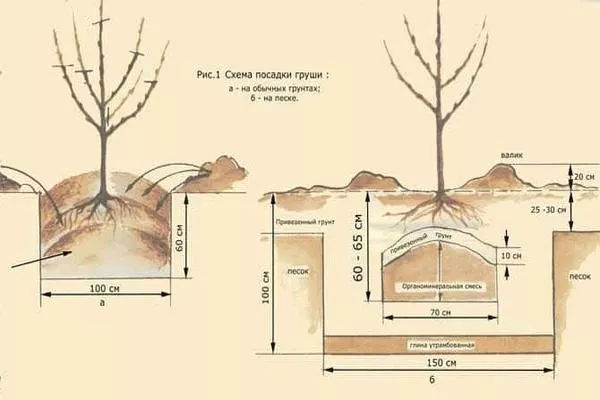
- Follow the pear planting pattern. The root collar of the seedling should be approximately level with the soil surface.
- Avoid planting crops with deep root systems and tall stems near pear trees, such as corn or sunflowers, which quickly deplete the soil. However, you can grow cabbage, legumes, radishes, and other shallow-rooted plants.
Care instructions
During the summer, water approximately every two weeks, applying 50-70 liters of water per mature tree. In spring and fall, natural rainfall is usually sufficient, but continue watering during dry periods.
Other agricultural measures:
- In the fall, to protect the roots from freezing, cover the tree's trunk area with mulch that matches the crown's projection. Pine needles are ideal, but only leaves and branches from healthy plants free of fungal diseases are suitable.
- In spring, carry out preventative treatments against pests and diseases: the first - during the period of budding, the second - at the beginning of budding.
- In the spring, give the tree a basic dose of nitrogen fertilizer, and also add potassium and phosphorus. In the fall, apply only phosphorus and potassium fertilizers; it's best not to use nitrogen after midsummer. You can find more details on fertilizing pear trees here. Here.
- Before the pear tree begins to bear fruit, prune it minimally or do not prune it at all.
Insufficient pruning can reduce yield: due to the dense crown, the fruits receive little sunlight and grow small.
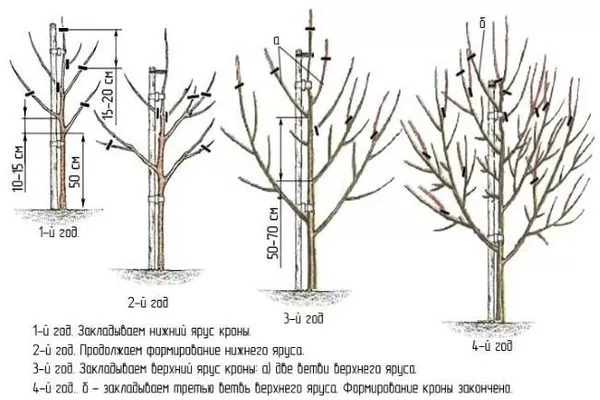
For trees that have already begun to bear fruit, not only sanitary but also formative pruning is recommended, including the removal of branches growing inward from the crown.
Selecting a variety
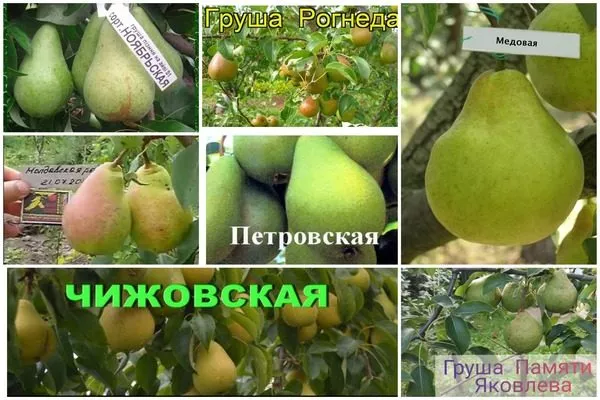
If you want to harvest pears within a few years of planting, it's important to consider varieties with early fruiting. Pear varieties that begin bearing fruit in the 3rd or 4th year after planting include:
- November;
- Rogneda;
- Honey;
- Moldavian early;
- Petrovskaya;
- Chizhovskaya;
- In memory of Yakovlev.
Pears that begin to bear fruit at the age of 5-7 years:
- Early maturing;
- Nika;
- Williams;
- Veles;
- Duchess;
- Treasure;
- Fairytale;
- Victoria;
- Forest beauty.
Understanding why a pear tree isn't blooming is the first step to solving the problem. Choosing the right location, providing timely care, proper fertilizing, and protecting against pests and diseases will help restore normal flowering. Even if the tree hasn't bloomed for a long time, with proper attention and care, its vigor can be restored.