
Pears begin to bear fruit for the first time at different times. Some trees don't bear fruit until 7 to 15 years later. However, this period can be shortened with regular and proper pruning. If a mature tree fails to bloom, it's important to determine the cause and then take appropriate cultural measures to encourage fruiting.

Reasons for the absence of fruits and methods for solving the problem
The pear tree is considered a rather capricious tree: it often freezes in winter and suffers from various diseases in summer. Therefore, not every gardener dares to plant this tree. Many note that after planting, the seedlings take a long time to grow, and sometimes the pear tree simply stops producing fruit.
Pear varietal characteristics and age
One of the most common reasons why a pear tree doesn't bear fruit is its varietal maturity. This is a biological characteristic that doesn't pose any problems, other than a longer wait for the first fruiting. To avoid this, find out in advance when exactly the pear variety you've chosen begins to bear fruit.
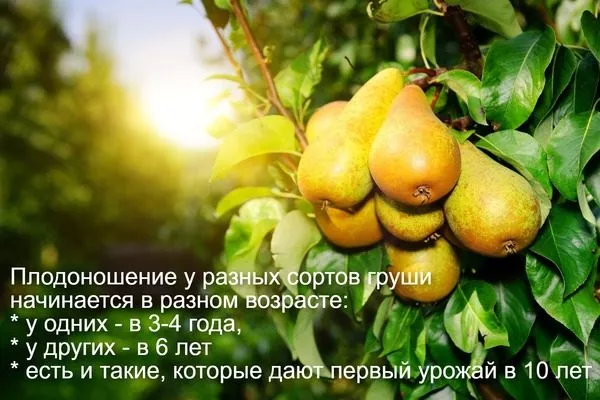
Each species and variety has its own unique fruiting period. Listing the exact dates for each variety's fruiting period is pointless, so here are some approximate dates for the most popular and common ones:
- Muscovite, In memory of Yakovlev - will begin to bear fruit in three to four years;
- Larinskaya, Patriotic and Red-sided - will bear fruit five years after planting;
- Leningradskaya and Krasavitsa – will delight you with fruits in six seasons;
- Josephine, Mechel and Take Slutskaya – will begin to bear fruit only ten years after planting in a permanent location.
The age of the seedling also plays a role:
- When planting annual plants, pears take root faster and the time it takes to begin producing fruit can be reduced by a year;
- If you plant two-year-olds, which gardeners rarely do because of the difficulty of digging them out of the nursery, they take longer to take root, and fruiting may begin about a year later.
Poor pollination
To ensure good productivity, it's recommended to plant fruit trees in pairs rather than individually, as they require cross-pollination. Starting with two seedlings is sufficient, with one tree serving as the pollinator for the other. Read on to learn how to choose the right pollen donor for your pear tree. Here.
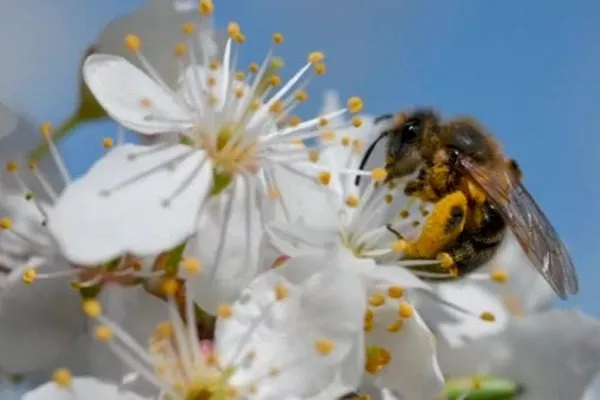
Bees and other insects play a role in this process. Their participation is critical for successful pollination and, consequently, a bountiful harvest.
If there aren't enough pollinators, artificial pollination using a brush is possible. This method, although labor-intensive and time-consuming for gardeners in the spring, can be quite effective in ensuring high pear productivity.
Lack of nutrients in the soil
Another reason why a pear tree may not produce fruit for a long time is a lack of certain nutrients in the soil. Under these conditions, the tree enters a kind of dormancy, and all its processes slow down. Meanwhile, the root system can actively expand both in depth and outward.
Roots stretch in search of nourishment, and while they grow, if nutrients are insufficient, fruit does not form. The pear tree may not bud at all, or it may bloom but not produce fruit, and if fruit does appear, it soon falls off.
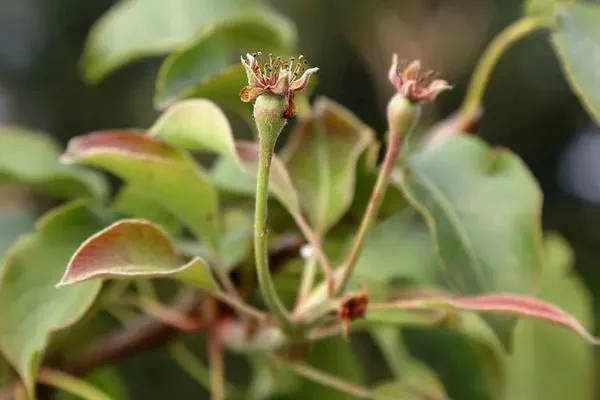
To correct nutrient deficiencies, pear trees need to be fertilized, but this should be done with caution. For example:
- Excess nitrogen in the soil can trigger active growth of the pear tree, an increase in green mass (leaves, shoots), but flowering will not occur.
- To properly balance nutrition, it's recommended to have your soil tested in a laboratory. Only a complete analysis will reveal which elements are lacking or excessive.
- If you apply fertilizer without knowing the soil's composition, you can overload it with certain nutrients and not add enough of others, which will not only fail to improve the situation but will actually make it worse. You can find more details about fertilizing fruit crops here. Here.
- Nitrogen fertilizers should be applied to pear trees only in the spring. Since pear trees are not particularly frost-hardy, applying nitrogen in the second half of summer or fall can stimulate vigorous growth, preventing shoots from becoming woody before winter and causing them to freeze. Phosphorus and potassium fertilizers can be applied in the spring, summer, and fall.
- Recommended times for applying fertilizer: early spring (during bud break), early summer, mid-summer and late September.
- With the arrival of spring, usually between early and mid-April, when nature awakens, pear trees sprout their first leaves. At this point, it's helpful to nourish them with 1-1.5 kg of well-rotted manure or compost mixed with 300-400 g of wood ash.
- It is recommended to apply nitroammophoska, first dissolving 20-25 g of fertilizer in 10 liters of water for each tree.

- At the beginning of summer, plants need phosphorus, which can be provided in the form of superphosphate, and potassium, in the form of potassium sulfate. Superphosphate, at a rate of 15 g per tree, should be applied dry to pre-loosened and moistened soil.
After the procedure, the soil can be mulched with humus. Potassium sulfate is preferably used in dissolved form, at a rate of 10 g per 10 liters of water. - In mid-summer, repeat the fertilization with Superphosphate and potassium sulfate in the same quantities and in the same way as at the beginning of summer.
- In autumn, applying these fertilizers is also beneficial, but the dosage should be halved, while maintaining the same application method as in the summer season.

Mistakes when planting plants
Pear trees are extremely sensitive to improper planting: it's important to precisely maintain the root collar depth and, preferably, orient the seedlings to the cardinal directions in the same way they were grown in the nursery. Ignoring these seemingly simple recommendations can significantly delay fruiting.
Rules:
- Pear seedlings should be planted so that the root collar (the point where the roots meet the trunk, not the graft, as many mistakenly believe) is at ground level. If the root collar is buried, the pear tree may begin bearing fruit several years later than expected.
If you leave it too high above the ground, the roots may freeze, especially in winter when frosts have already arrived and there is no snow yet or not enough.
- In such winters, the root system often freezes, especially young and vital roots. Although these roots are restored during the growing season, under such conditions the pear tree will focus on root restoration rather than fruit production.
- An equally important aspect when planting pear trees is considering their orientation to the cardinal directions. Due to the rapid growth of the seedlings, their extensive root system, and their extensive above-ground growth, pears are most often sold at one year of age in specialized nurseries.
Such young trees may experience stress after transplantation and take a long time to adapt to the new conditions, which, in turn, delays the onset of fruiting. To minimize these problems, it is important to maintain the original orientation of the seedling when planting: the south side should face south.
You can determine which side of the tree was on the south side by the bark: on the south side, it is usually darker and more saturated in color, while the north side has a lighter shade.
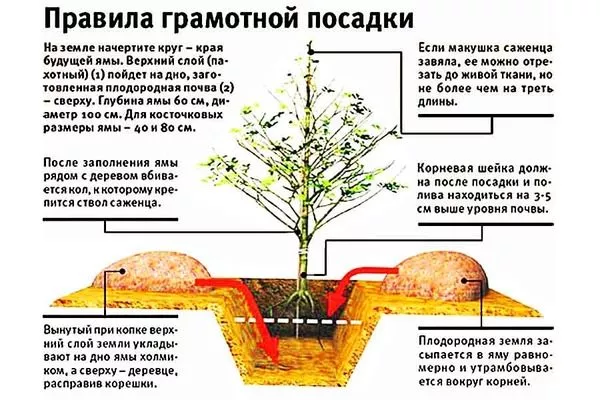
If you made a mistake when planting a pear tree, for example, you buried the root collar too deep or, conversely, left it too high above the ground, the situation can still be corrected:
- If you plant the seedling deep, you can carefully dig it up and add soil under the roots (this is only possible for recently planted trees, no older than one or two years).
- If the root collar is too high, you can cover the trunk of the seedling with soil, compacting it thoroughly.
Wild pear
If you purchase seedlings from a private seller rather than a specialized nursery, your pear tree may grow vigorously but fail to bloom. This happens when you're not being sold a cultivar grafted onto a rootstock, but a common seedling—that is, a wild specimen.
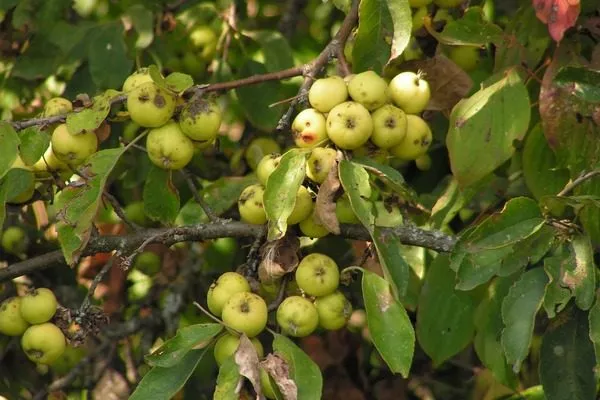
In this situation, even if you do manage to get fruit, the results will be disappointing – the fruit will be small and sour, and the tree itself will grow to enormous sizes, exceeding 10-12 meters in height. Unfortunately, it's difficult to offer an effective solution here. But:
- Some gardeners prune part of the tree to reduce its growth;
- cuttings of other varieties are grafted into the crown;
- They cut down the tree and plant a new varietal seedling.
Please also pay attention to the height:
- Typically, a one-year-old pear tree reaches 200 cm, has thick roots and two or three branches.
- Much depends on the variety; for example, Bystrinka can reach a height of 250 cm, already with well-developed roots and five or six branches.
Lack of lighting
Choosing the wrong planting location is a common mistake. Often, considering the pear tree's size, gardeners plant it in the shade, believing that over time it will stretch and outgrow the shade. While this seems reasonable, in practice, this approach is incorrect.
For a long time, while the pear tree struggles to reach for the light, stretching and possibly becoming deformed, fruiting is not expected. This period can last a decade or more.
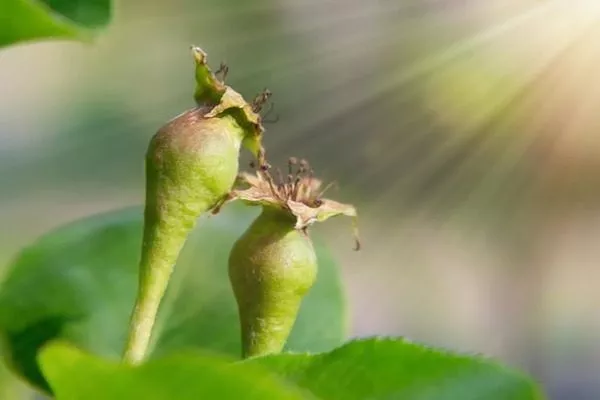
The pear tree is very demanding in terms of lighting, as a lack of light negatively affects its ability to bear fruit.
Plant damage by pests and diseases
If fungal or other diseases of garden trees are not treated promptly, there will be no fruit at all or very little. Pear trees will also fail to produce a bountiful harvest if they are attacked by pests that attack buds on branches while they are still developing.
Experts recommend using Alatar to combat pear psyllid. If codling moths are bothering you, as they penetrate the ovaries and destroy the seeds, the plants should be treated with Ivanhoe. This treatment is recommended in late spring and repeated two weeks after the initial treatment.
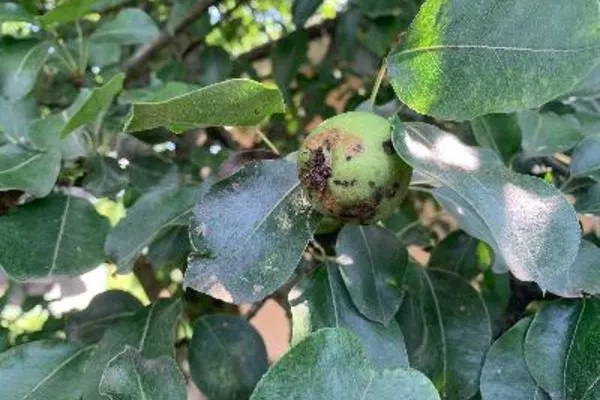
You can read the maximum amount of useful information about what diseases pear trees suffer from, how to treat them, and how to prevent infection. Here.
Overloaded with harvest last season
Of course, this may seem strange, but the lack of fruit this season could be the result of the tree's excessive fruiting last year. Even if the plant escaped damage (large branches often break under the weight of the fruit), a heavy harvest can weaken the pear tree's winter hardiness.
If you don't pay enough attention, you'll soon notice that fruiting is irregular: one year the branches are laden with fruit, while the next, there's no harvest at all.
This problem can be solved by care:
- perform proper pruning;
- feed the tree;
- provide sufficient watering;
- Make sure that the load on the tree is not excessive in fruitful years.
Excess of ovaries
This could also be the reason for poor fruiting. In spring, garden trees bloom and pollinate vigorously. Good weather conditions stimulate fruit set, but the plant may reject them. Excessive soil fertilization or high humidity can cause the tree to become lazy and stop producing fruit at its full potential.
In this case, the plant lacks nutrition, so it is necessary to manually remove excess ovaries, since the pear is not always able to independently regulate their number.
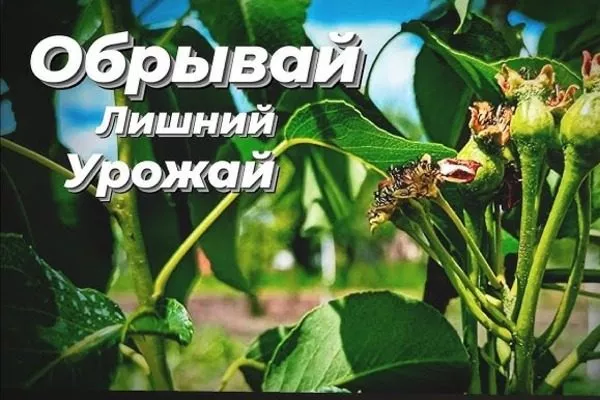
It's important to remember that the optimal distance between fruits should be approximately 13-15 cm. If there are too many, this reduces the tree's frost resistance, which can lead to a loss of harvest next year.
Damage to young branches
As already noted, strong gusts of wind pose a threat to the normal growth and even the survival of young seedlings. In winter, when heavy precipitation occurs, branches laden with snow or ice become especially vulnerable and may not withstand the additional wind load.
Therefore, it's crucial to protect plants from potential damage. Experienced gardeners carefully monitor young trees, remove snow, and prune excess branches.
Improper care
Perhaps one of the most common reasons why pear trees fail to bear fruit is inadequate care by orchard owners. Pear trees grow to considerable heights and have a branched crown, necessitating the need for specific care guidelines.
Although tree pruning is a significant procedure, it is important to observe moderation so as not to weaken the plant:
- There are some major branches that are not recommended for removal. Only those growing inward should be removed.
- If a pear tree has a large number of dry and old branches, they must be removed immediately, as they can harm healthy shoots that will bear fruit in the coming season.
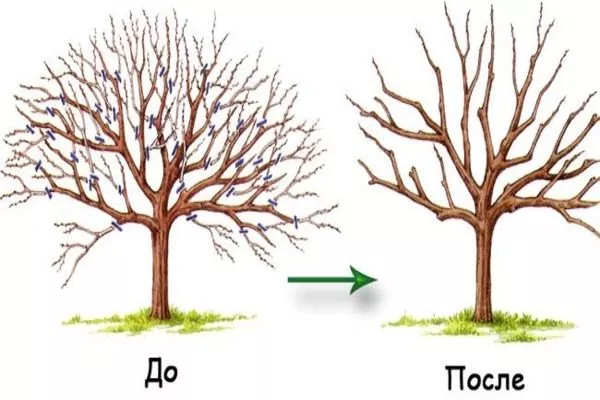
Proper pruning will ensure unimpeded access of light and air. You can find more details about this maintenance procedure and the rules for its implementation here. Here.
Weather conditions
Unfavorable climatic conditions often affect the health of garden trees. If a plant isn't protected from cold and wind, fruit production may be significantly reduced or even absent. This is especially true for early-blooming varieties that begin blooming as early as May.
When choosing a pear variety, it is necessary to take into account the climatic features of the region:
- In the southern regions, early ripening varieties bear fruit well;
- For gardens located in the north of the country, preference should be given to winter and autumn varieties.
Heavy rains and hail can easily knock blossoms off trees, but it's virtually impossible to completely prevent this. Therefore, it's best to plant the pear tree in a secluded corner of the garden, protected on one side by a fence or natural plantings.
The pear tree produces flowers but no fruit.
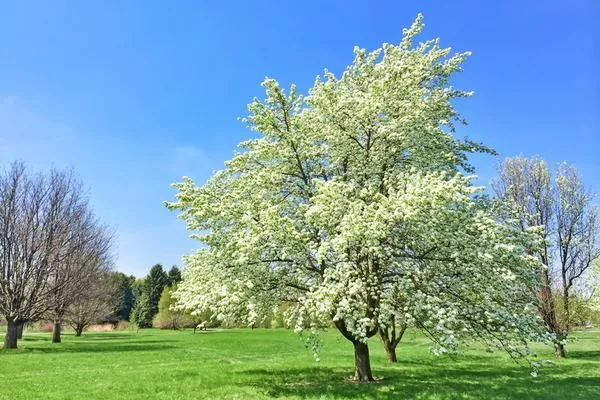
It's not uncommon for a pear tree to bloom profusely but fail to set fruit. This can be due to two main reasons: lack of pollination or frost damage to the blossoms.
What to do:
- To ensure good pollination, it is recommended to grow at least two different pear varieties in the same plot, with flowering times coinciding. Cross-pollination between them will significantly increase the chances of a regular and abundant harvest.
- To improve the receptivity of pistils to pollen, at the peak of pear blossoming, you can spray the trees with a one percent solution of boric acid.
- Protecting against spring frosts is a difficult task. Frosts can destroy young ovaries or render flowers sterile, unable to pollinate. Sometimes gardeners resort to misting the garden during periods of possible frost, but this method isn't always effective.
- If frosts occur annually in your area, it is preferable to choose pear varieties with a later flowering period, such as autumn and winter varieties.
Helpful Tips
When gardeners strive to increase the yield of pear trees, they employ a number of approaches that can stimulate fruiting even in older trees. It's possible to accelerate fruiting and slow down the aging and decay of the tree. Regardless of the pear tree's age, proper care and prompt resolution of any problems that arise are essential:
- Maintain a distance of at least 4 m between rows of different pear trees and select a pollinator tree that can pollinate an area of up to 12 acres.
- When planning to plant several varieties, make sure they bloom at the same time to ensure proper pollination.
- Placing beehives near the garden promotes active flowering and, as a result, increased yields.
- If trees are already planted with improper conditions, replanting is possible, but pears do not tolerate this procedure well. Replanting is best done in spring or fall, depending on the climate. Careful digging is essential to avoid damaging the roots.
- To increase yields, regularly loosen the soil under the trees, ensuring oxygen reaches the roots.
- During dry periods, abundant watering is necessary, followed by mulching to retain moisture.
- Fertilizing is important for growth and fruiting. Use compost or mineral supplements, applying them simultaneously with loosening the soil.
- Before winter, protect your trees from frost and pests. To do this, dig around the trunk, treat for pests, prune dry and diseased branches, graft a productive variety, and moisten the soil. Don't forget to insulate the root system with mulch.
How to Get a Pear Tree to Bear Fruit: A Cheat Sheet for Beginners
Since the 1970s, it has been known that grafting generative buds is one of the most effective methods for accelerating fruiting. For this procedure, use cuttings exclusively from fruiting trees.
Other events:
- You can apply a fruiting belt to the pear tree. The woody tissue will expand, and the wire used for the belt will compress it, preventing the flow of nutrients to the roots. As a result, the sap concentrated in the branches will promote the formation and development of fruit buds.
The fruiting belt is installed in the spring and removed after the leaves have fallen, although some gardeners prefer to leave it in place for a year and a half. After this period, it's important to remove the structure, otherwise the branch may dry out, exhausting its resources. If you were planning to remove such a branch, simply saw it off above the belt; new growth will appear below.
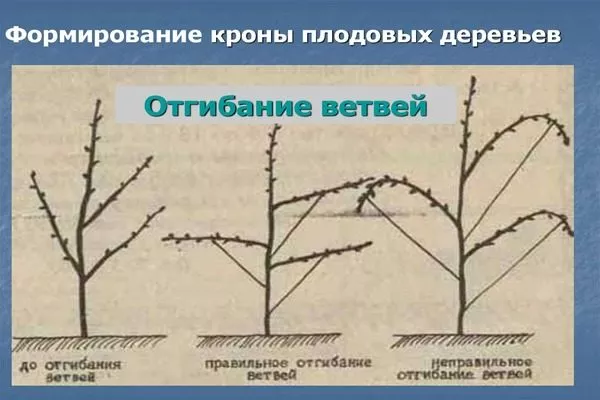
- Another popular method for encouraging pear tree fruiting is bending branches. This not only accelerates fruiting but also increases the area of the tree.
If a branch grows vertically, it will quickly lengthen. However, if it's moved to a horizontal position, vertical growths will begin to form on the lower part of the wood.
The optimal branch angle is 50-60 degrees. At this radius, both vegetative and fruiting wood develop on the shoot, including fruiting buds and fruiting branches.
These are examples of the most common reasons why a pear tree may not bear fruit. Knowing them will help you avoid problems and enjoy a full harvest. But remember the most important thing: always plant a pollinator tree nearby that blooms at the same time as your pear tree.